The Genesis of Abstraction: From Figurative Roots to Revolutionary Expression
The story of Abstract Expressionism isn’t one of sudden creation, but rather a gradual unfolding—a deliberate dismantling of established artistic conventions born from the tumultuous socio-political landscape of the early 20th century. For centuries, Western art had been tethered to representation, striving for an increasingly accurate depiction of the visible world. The Renaissance pursuit of perspective, the meticulous realism of the 19th century – these were traditions that held sway until a growing dissatisfaction began to simmer beneath the surface. Artists felt constrained by the limitations of mimicking reality, sensing a deeper potential within art itself, one that moved beyond mere imitation towards expressing inner states and universal truths. This shift wasn’t solely aesthetic; it was profoundly philosophical, reflecting a world grappling with rapid industrialization, the horrors of war, and evolving understandings of the human psyche. Early pioneers like Wassily Kandinsky, with his explorations of color and form divorced from recognizable objects, laid crucial groundwork. His theories on the spiritual in art, published around 1910, posited that color possessed an inherent emotional resonance, capable of bypassing rational thought and speaking directly to the soul. This idea, coupled with the Surrealist emphasis on accessing the unconscious mind—particularly through techniques like automatism championed by Joan Miró—provided fertile ground for a new generation of American artists.
New York Ascendant: The Rise of Abstract Expressionism & the 'New School'
The seismic shift in the art world’s center from Paris to New York City following World War II was no accident. Europe, devastated by conflict, found its artistic infrastructure fractured and its émigré artists seeking refuge elsewhere. New York, conversely, became a magnet for talent—a vibrant hub brimming with intellectual energy and a burgeoning art scene. This influx of European modernists, including figures like Arshile Gorky, Marcel Duchamp, and Piet Mondrian, proved pivotal. They brought with them radical ideas and techniques that profoundly influenced the emerging American artists. The term “Abstract Expressionism” itself wasn’t immediately embraced; it was coined by art critic Robert Coates in 1946 as a way to categorize this diverse group of painters working in New York. More commonly, they were known as the ‘New York School.’ What united them wasn't a shared style, but rather a common set of aspirations: a rejection of traditional subject matter, an emphasis on spontaneous expression, and a desire to create art that was monumental in scale and deeply personal in its impact. The Federal Art Project, established during the Great Depression, also played a crucial role, providing many artists with employment and fostering a sense of community. However, it was the post-war environment—a climate of anxiety, uncertainty, and existential questioning—that truly fueled the movement’s explosive growth.
Action vs. Color Field: Defining Styles Within the Movement
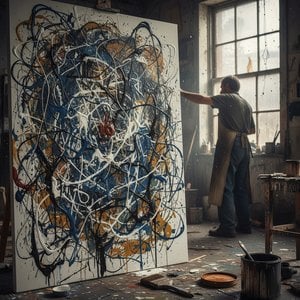
Despite their shared ethos, Abstract Expressionism encompassed a remarkable range of stylistic approaches. Broadly speaking, the movement can be divided into two main tendencies: Action Painting and Color Field painting. Action Painting, exemplified by Jackson Pollock’s revolutionary drip technique, was characterized by its dynamic energy and gestural application of paint. Pollock famously abandoned traditional easel painting, placing his canvas on the floor and using sticks, brushes, or even pouring paint directly from cans to create intricate webs of color and line. This process wasn't merely about creating a visual image; it *was* the art—a direct translation of the artist’s inner impulses onto the canvas. Willem de Kooning, another key figure in this group, employed bold brushstrokes and aggressive mark-making to capture the essence of the human figure, often distorted and fragmented. In contrast, Color Field painting, led by Mark Rothko, Barnett Newman, and Clyfford Still, focused on large areas of flat color intended to evoke a contemplative or meditational response in the viewer. These artists sought to create immersive experiences that bypassed narrative and representation, aiming instead for pure emotional resonance through the power of color itself. Rothko’s signature stacked rectangles, for example, were not simply arrangements of pigment; they were meant to be experienced as luminous fields of energy, inviting viewers into a state of profound introspection.
Formalism and Beyond: Exploring the Theoretical Underpinnings of Abstract Art
Formalism may refer to: Legal formalism, legal positivist view that the substantive justice of a law is a question for the legislature rather than the judiciary Formalism (linguistics) Scientific formalism A rough synonym to the Formal system, a mat...
The rise of Abstract Expressionism coincided with the growing influence of formalist art criticism, particularly that of Clement Greenberg. Greenberg championed the idea that art should be judged solely on its formal qualities—its composition, color, texture, and brushwork—rather than its subject matter or narrative content. He believed that abstract art represented a purification of painting, stripping away extraneous elements to reveal the essential nature of the medium itself. This emphasis on formalism provided a theoretical framework for understanding Abstract Expressionism’s rejection of representation and its focus on purely visual concerns. However, reducing the movement solely to formalist principles overlooks the profound emotional and psychological dimensions that drove these artists. Many Abstract Expressionists were deeply interested in exploring universal themes—mythology, religion, and the human condition—and their abstract forms can be seen as attempts to tap into archetypal symbols and primal emotions. Hans Hofmann, a highly influential teacher, emphasized the importance of ‘push and pull’ – the dynamic interplay between color and form that creates visual tension and energy. He encouraged his students to explore the expressive potential of color and shape, but also stressed the importance of underlying structure and composition.
The Lasting Legacy: How Abstract Expressionism Shaped Subsequent Artistic Movements
Abstract Expressionism’s impact on the art world was nothing short of revolutionary. It not only shifted the center of artistic innovation from Paris to New York, but it also fundamentally altered our understanding of what art could be and what it could achieve. The movement paved the way for a host of subsequent styles, including Color Field painting (which evolved directly from Abstract Expressionism), Pop Art, Minimalism, and Post-Painterly Abstraction. Artists like Frank Stella reacted against the emotional intensity of Abstract Expressionism, embracing geometric forms and precise execution in an attempt to create art that was more objective and impersonal. Similarly, Jasper Johns and Robert Rauschenberg challenged the movement’s emphasis on pure abstraction by incorporating everyday objects and imagery into their work. The legacy of Abstract Expressionism extends beyond specific stylistic influences; it also lies in its embrace of experimentation and its willingness to push boundaries. The idea that art should be a direct expression of the artist’s inner state, coupled with the emphasis on process and spontaneity, continues to resonate with artists today. It fostered an environment where artistic freedom was paramount, encouraging generations of painters to explore new techniques, mediums, and conceptual frameworks.
Collecting Abstract Expressionism: Considerations for Building a Significant Collection
For collectors seeking to build a significant collection, Abstract Expressionism presents both exciting opportunities and unique challenges. The market for works by established figures like Pollock, de Kooning, Rothko, and Newman remains highly competitive, with prices reaching substantial levels. However, there are also lesser-known artists from the period—such as Lee Krasner, Adolph Gottlieb, and Clyfford Still—whose work offers compelling aesthetic value and potential investment opportunities. Provenance is crucial when acquiring Abstract Expressionist paintings; verifying authenticity and establishing a clear chain of ownership is essential. Given the movement’s emphasis on spontaneity and experimentation, condition can also be a significant factor. Careful examination for signs of restoration or damage is paramount. Beyond financial considerations, collecting Abstract Expressionism should be driven by a genuine appreciation for the art itself—its emotional power, its formal complexity, and its historical significance. Consider your personal aesthetic preferences and seek out works that resonate with you on a deeper level. ArtsDot offers high-quality reproductions of masterpieces from this period, allowing collectors to experience the beauty and impact of Abstract Expressionism firsthand. Explore our collection today and discover the transformative power of abstract art.