


Bilden anpassas efter dina val: , .
Beskrivning av samlarobjekt
André Derain's 'The Lighthouse at Collioure' (1905) – A vibrant Fauvist masterpiece showcasing bold colors and dynamic composition. Own a piece of art history!
 Visa mer
Konstnärens biografi
André Derain (1880-1954): En nyckelfigur i fauvismen, känd för sin djärva färg och uttrycksfulla stil. Utforska hans ikoniska Londonmålningar och utvecklingen mot klassicismen.
Handgjord oljereproduktion
Handmålad olja på duk i din valda storlek och ram, tillverkad efter beställning av våra konstnärer. ( Byt till tryck Byt till digital bild)
Mer om denna målning
 Förhandsvisa
 Skicka
 Dela
Dela
 Visa detaljer
 Guide
Guide

 Ladda ner
 Liknande objekt
 Röntgen
 Bildspel
 Frågor och svar
 Statistik
Beställ din målning i fyra enkla steg
Ta god tid på dig. Du kan ändra alla svar; priset i din varukorg uppdateras efter varje val.
1 Steg ett av fyra
Vilken storlek önskar du?
Dessa storlekar bibehåller originalmålningens proportioner. Illustrationen visar ditt val på en vägg, ovanför en två meter lång soffa.
Eller ange egna mått
Välj bland våra förinställda storlekar som motsvarar konstverkets ursprungliga proportioner.

Ange den bredd och höjd du behöver för att passa din ram eller din vägg. Eftersom detta är handmålat kan konstnären, vid ett annat format, måla lite mer runt bilden eller beskära den något – det är du som väljer. Vi skickar en digital mockup för godkännande innan målningen påbörjas. Bilden som visas på denna sida representerar inte det slutgiltiga resultatet — det är endast mockuppen som visar det.
2 Steg två av fyra
Hur ska den förberedas: rullad, uppspänd eller inramad?
Priserna nedan gäller för den storlek du valde i steg ett.
Välj kanter för den uppspända duken
Välj din ram

Vit kant Skr1

Suddig kantfinish Skr1

Fortsatt motiv Skr1

P118B Skr10

P118H Skr10

P118W Skr10

P438Z Skr10

P508JH Skr12

P508YH Skr12

P805H Skr10

P805Z Skr10

P919BZ Skr10

P919G Skr10

P919XJ Skr10

P959ZH Skr10

P968JZ Skr12

W106C Skr8

W218G Skr10

W218JH Skr8

W218Y Skr10

W307PJ Skr10

W316G Skr10

W316PJ Skr8

W316Y Skr10

W398PJ Skr8

W4111J Skr10

W500HY Skr15

W500JH Skr15

W692G Skr12

W849H Skr8

W940BG Skr15

W953PJ Skr8

H24-GOLD Skr30

H24-SILVER Skr30

H36-GOLD Skr45

H36-SILVER Skr45
Inramad
Profil: . Total storlek inklusive ram: .
3 Steg tre av fyra
Skulle du vilja ändra något i målningen?
De flesta svarar nej. Eftersom varje målning är handgjord kan vår konstnär även anpassa den efter dina önskemål.
Efter beställning kommer ArtsDot.com team att skicka ett e-postmeddelande till kunden för instruktioner och tillhandahålla en förhandsvisning av utkastet
4 Steg fyra av fyra
Några alternativ för ytbehandling
Alla är valfria. De svar som redan har valts kostar inget extra.
Vem är konstnären?
Leverans över hela världen () på 3–4 veckor istället för standard 5 veckor. (4 november). Inga kompromisser med kvaliteten.
En skylt, precis som på ett museum?
Detaljer för graverad bronsplatta
This elegant plaque features the artist's name and the title of the artwork, finely engraved for a timeless presentation.
It is made from bronze with a refined, elegant finish. The text is precisely laser-engraved for a sharp and permanent result. Measuring 9x2 cm, the plaque is compact yet easy to read. It's built to be durable and scratch-resistant, offering a professional, museum-quality look. Mounting is simple thanks to the included adhesive backing.
Detaljer för transparent akrylplatta
The plaque includes essential engraved details such as the artist's name, the title of the artwork, the date it was created, the type of media used-like oil on canvas or watercolor-a brief description of the piece, and a QR code that links to the complete artwork information.
It is crafted from clear acrylic, offering a sleek, modern appearance. The text is UV-engraved in black to ensure strong visual contrast. With a size of 10x15 cm, it ensures optimal readability. It comes equipped with two metal hooks for secure wall mounting. The plaque is designed to be weather-resistant, making it suitable for various environments, and it includes interactive features that work seamlessly with smartphone scanning.
Detaljer för svart akrylplatta
This elegant plaque includes engraved information such as the artist's name, the title of the artwork, the date it was created, the type of media used (like oil on canvas or watercolor), a short description of the artwork, and a QR code for quick access to more information.
The plaque itself is made from refined black acrylic with a premium finish. The text is laser-engraved in white for high contrast and readability. Its size is 10x15 cm, designed to be easy to read. It comes with two metal hooks for professional mounting. The design is sleek and fits any interior style. It is also weather-resistant and durable, with built-in digital integration for mobile compatibility.
Ett skyddande fernissa?
När behöver du den?
✓ Kontrollera och beställ
Din målning, precis som du beställt den

The Lighthouse at Collioure
Reproduktionsmetod
Storlek på reproduktion
-

Elitkonstnär av högsta klass
Mer detaljrikedom, finess och extra produktionstid
-

Inramning av reproduktion
-
-
För konstverk eller reproduktioner som är större än 105 cm (cirka 41 tum) på någon sida, levereras ramen som ett isärplockat kit. Denna metod säkerställer en trygg leverans och förhindrar skador under transport.
Professionell montering krävs – detta är inte en produkt för självmontering.
Kitet måste monteras och duken spännas av en erfaren professionell inramare med hjälp av trälim (ingår ej), en spänntång för duk och klämmor för att hålla sargen rak medan limmet torkar. Felaktig montering eller ojämn spänning av duken kan orsaka permanenta skador på konstverket och täcks
 För konstverk eller reproduktioner som är större än 105 cm (cirka 41 tum) på någon sida, levereras ramen som ett isärplockat kit. Denna metod säkerställer en trygg leverans och förhindrar skador under transport.
Alla massiva träribbor ingår, exakt tillkapade efter mått.
Monteras med de medföljande skruvarna, samt trälim för hörnfogarna, vilket inte ingår och måste anskaffas av din ramverkare.
Professionella verktyg krävs och ingår ej: en dukspännare och klämmor för att hålla listerna raka medan limmet torkar.
Viktigt:
Hörnjunctionerna kräver trälim, listerna måste hållas på plats med tvingar tills limmet har torkat helt, och för att spänna duken på den monterade ramen krävs en spänntång för duk. Inget av detta ingår i kitet. Vänligen kontakta en erfaren professionell rammakare innan du beställer denna storlek.

Namnskylt
-
-

Skyddande fernissa
Glansig fernissa (förstärker färgerna, skyddar mot ljus och fukt)
-

Anpassa mitt konstverk
Exempel på vad som kan ändras: Byt ut ansiktet mot ett foto från kunden; Lägg till ett husdjur (t.ex. byt ut en katt mot en hund); Inkludera ett dolt meddelande i bakgrunden; Ändra bakgrundens landskap eller detaljer.
-

Expressleverans
Leverans över hela världen () inom 3–4 veckor istället för standardiserade 5 veckor. (4 november). Inga kompromisser med kvaliteten.
-
Expressleverans
Leverans över hela världen () inom 5 veckor. (11 november).
Ingår
Slutgiltigt pris
Skr 2628
Glasalternativet är endast tillgängligt i storlekar under 110 cm.
Ingår i varje beställning
- Fri expressfrakt över hela världen
- Högkvalitativ linnecanvas
- Fullständig fraktförsäkring
- Garantier för återbetalning av tullavgifter
- Garantier för exakt färgåtergivning
- 100 dagars returrätt (endast vid fel)
- 100% pengarna tillbaka-garanti
- Mängdrabatt erbjuds


The Lighthouse at Collioure: A Fauvist Symphony of Light and Emotion
André Derain’s “The Lighthouse at Collioure,” painted in 1905, isn't merely a depiction of a coastal scene; it’s an immersive experience—a vibrant explosion of color and movement that encapsulates the heart of the Fauvist movement. Housed within the Musée d’art Moderne de la Ville de Paris, this oil on canvas transports the viewer to the picturesque harbor village of Collioure in southern France, capturing not just a landscape but also a fleeting moment of intense feeling. The painting immediately assaults the senses with its audacious palette: searing yellows and oranges dominate the sky and buildings, juxtaposed against deep ultramarine blues and greens of the sea and surrounding vegetation. This deliberate departure from naturalistic color was a defining characteristic of Fauvism – a rebellion against academic tradition where color served not to represent reality but to express emotion directly.
Derain’s technique is equally striking. He employs loose, expressive brushstrokes, applying paint with a visible and energetic hand. The forms are simplified and flattened, prioritizing the impact of color and light over meticulous detail. Notice how he uses broken color—small dabs of contrasting hues layered upon each other—to create shimmering effects on the water and to suggest the play of sunlight. This technique, combined with his use of bold outlines, contributes to a sense of dynamism and immediacy, as if the scene is constantly shifting and evolving before our eyes. The lighthouse itself, rendered in stark white against the vibrant backdrop, acts as a focal point, drawing the viewer’s gaze into the heart of the composition.
A Window into Fauvism's Soul
To understand “The Lighthouse at Collioure,” it’s crucial to grasp the context of its creation. The late 1890s and early 1900s witnessed a profound shift in artistic sensibilities, fueled by advancements in color theory and a growing dissatisfaction with the constraints of academic art. Derain, along with Henri Matisse, spearheaded the Fauvist movement – a short-lived but hugely influential period characterized by its unrestrained use of color, often divorced from naturalistic representation. The term “Fauves” (wild beasts) was initially applied derisively by critic Louis Vauxcelles, reflecting the critics’ perception of the artists' work as chaotic and primitive. However, the Fauves embraced this label, recognizing it as a badge of rebellion against established artistic norms.
The painting reflects the Fauvist fascination with light and atmosphere. Derain wasn’t simply recording what he saw; he was attempting to capture the *feeling* of being present in that particular moment – the warmth of the sun, the freshness of the sea air, the vibrant energy of the harbor. The inclusion of multiple smaller lighthouses scattered throughout the scene adds a layer of complexity and reinforces this sense of movement and visual richness. The composition itself is deliberately unbalanced, creating a dynamic tension that mirrors the emotional intensity of the subject matter.
Symbolism and Emotional Resonance
Beyond its purely aesthetic qualities, “The Lighthouse at Collioure” carries significant symbolic weight. The lighthouse, a traditional symbol of guidance and safety, can be interpreted as representing hope and stability amidst the chaos of life. Its stark white form stands in contrast to the swirling colors of the surrounding landscape, suggesting a desire for clarity and direction. The harbor itself, with its bustling activity and diverse elements – boats, buildings, people – embodies the complexities and contradictions of human experience. The painting’s overall mood is one of joyful exuberance tempered by a subtle undercurrent of melancholy—a recognition that even in moments of beauty and vibrancy, there exists an underlying sense of transience.
The choice of Collioure as the setting for this pivotal work is also noteworthy. The village, with its distinctive architecture and stunning coastal scenery, provided Derain with a perfect canvas for his artistic experiments. It was a place where he could freely explore color and form without the constraints of traditional expectations. “The Lighthouse at Collioure” remains a powerful testament to Derain’s genius—a vibrant celebration of light, color, and emotion that continues to captivate viewers over a century later.
Frågor och svar
Upplevs färgerna i "The Lighthouse at Collioure" som starka eller mjuka?
Färgintensiteten i "The Lighthouse at Collioure" är Vivid. Intensitet beskriver hur starka färgerna upplevs.
När skapades "The Lighthouse at Collioure" av André Derain?
"The Lighthouse at Collioure" dateras till 1905. Datumet placerar verket inom André Derains karriär och dess epok.
Vilka färger dominerar i "The Lighthouse at Collioure" av André Derain?
"The Lighthouse at Collioure" definieras av en Earthy-palett med Orange (#e8a716) som dominerande färg.
Liknande konstverk


André Derain
1880 - 1954, Frankrike
Konstnärsbiografi
Early Life and the Seeds of Fauvism
André Derain, född 10 juni 1880 i den charmiga byn Chatou nära Paris, var inte från början tänkt att leva ett liv fyllt av färg och duk. Till skillnad från vissa berättelser som antyder en omedelbar konstnärlig uppvakning genom möten med andra målare som Vlaminck eller Matisse, började Derain sin konstnärliga resa oberoende runt 1895. Dessa tidiga utforskningar ägde ofta rum tillsammans med Fadre Jacomin och hans söner under landsbygdsutflykter – en formativ upplevelse som inställde en djup uppskattning för den naturliga världen. Han studerade kort vid Académie Camillo 1898, där han olyckligtvis kom att träffas av Henri Matisse, vilket inledde ett avgörande konstnärligt partnerskap. Ytterligare studier under Eugène Carrière skärpte hans grundläggande färdigheter, men det var militärtjänsten från 1901 till 1904 som tillfälligt avbröt hans blomstrande karriär. Vid sin återkomst, övertygad av Matisses oavrådliga tro, lämnade Derain beslutsamt engineering och engagerade sig fullt ut i målarverksamheten, fortsatte han sina studier vid Académie Julian. Detta beslut markerade en vändpunkt, som lade grunden för att bli en central figur i en av modern konst’s mest revolutionära rörelser.The Explosive Birth of Color: Fauvism
Sommaren 1905 blev en explosiv stund för Derain och Matisse när de samarbetade i den solblekta kustbyn Collioure. Denna period föddes verk som “Mountains at Collioure”, karakteriserat av ett radikalt avståndstagande från representativ färg. Landskapen var inte bara skildringar av platser; de var uttryck för känslor, målade genom intensivt livfulla, icke-naturliga nyanser. När deras verk visades på Salon d’Automne samma år, väckte det vrede och häpnad. Kritikern Louis Vauxcelles döpte dem upprört till “Les Fauves” – de vilda djuren – ett namn som först avsågs vara nedlåtande men som snarare omfamnades av konstnärerna själva. Derains bidrag till denna rörelse var inte bara stilistiskt; han besatt en unik förmåga att översätta emotionell intensitet till ren färg. 1906 anlitade Ambroise Vollard honom för att måla London, vilket resulterade i en serie slående tavlor som skildrade Themsen och Tower Bridge. Dessa var inte konventionella stadsscener; de var djärva tolkningar, som fångade Londons energi och atmosfär genom ett icke-konventionellt perspektiv – ett testamente till Derains innovativa vision. Påverkade av konstnärer som Van Gogh och Cézanne, pressade han gränserna för färg och form, vilket lade grunden för framtida generationers expressionistiska målare.Beyond Fauvism: A Shifting Aesthetic
Den initiala feberheten i Fauvismen definierade inte Derains hela konstnärliga bana. Runt 1907 började hans stil genomgå en betydande utveckling, och avvek från den okontrollerade kromatiska utstudsen mot mer dämpade toner och ett ökat fokus på form. Denna period, ofta benämnd som hans “gothiska” fas (1911-1914), återspeglade ett växande intresse för struktur och komposition. Han sjönk ner i studier av de gamla mästarna, införlivade element från kubismen samtidigt som han sökte inspiration från klassiska former. Detta var inte en avvisning av hans tidigare verk utan snarare en expansion av hans konstnärliga ordförråd. Derain’s mångsidighet sträckte sig bortom målarverksamheten; 1919 designade han baletten “La Boutique Fantasque” för Sergei Diaghilevs Ballets Russes, vilket visade hans aptit för teaterskapande och ytterligare visade upp hans mångfaldiga talanger. Nyckelverk från denna era, såsom "Harlequin and Pierrot" och den monumentala väggen “Return of Ulysses”, exemplifierar denna stilistiska förändring – ett steg mot en mer kontrollerad och intellektuellt krävande konstnärlig approach.Major Achievements and Legacy
André Derain’s plats i konshistorien är säkerställd som medgrundare till Fauvismen, en rörelse som oåterkalleligt förändrade modern konst’s landskap. Hans unika syn på London, fångad i hans livfulla tavlor, erbjöd ett nytt perspektiv på en ikonisk stad. Efter första världskriget fick han ny erkännelse för sina bidrag till en återupplivning av klassicismen, vilket visade sig vara hans anpassningsförmåga och bestående konstnärliga relevans. Derain’s resa är ett bevis på den konstnärliga innovationens kraft och komplexiteterna som ligger inbäddade i att navigera en snabbt föränderlig värld.

Relaterade artiklar

André Derain: Fauvism's Bold Visionary & the Evolution of Modern Color
Explore the revolutionary art of André Derain, co-founder of Fauvism. Discover his bold use of color, evolution from radical expressionism to classicism, and lasting influence on modern art history. Learn more at ArtsDot.

Impressionismens Mästverk: Topp 10 Verk som Fångar Ögonblicket | ArtsDot
Upptäck impressionismens magi! Utforska 10 ikoniska verk av Monet, Renoir & Degas. Lär känna historien bakom mästerverken och hitta inspiration till din inredning med konsttryck från ArtsDot.com.
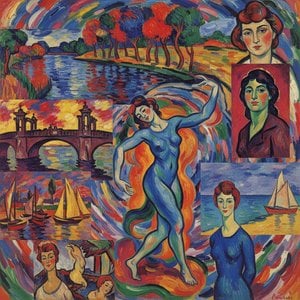
Fauvismens 10 Mästerverk: Konst som Väckte Färg till Livet | ArtsDot
Upptäck fauvismens 10 mästerverk! Fördjupa dig i Henri Matisses och André Derains djärva färger & expressionistiska konst. Köp reproduktioner av kända målningar online hos ArtsDot – museumkvalitet för ditt hem. Utforska samlingen nu!