The Lens of Witness: The Visionary World of Timothy Greenfield-Sanders
To look into a portrait by Timothy Greenfield-Sanders is to engage in a profound act of witnessing. Born in 1952 amidst the vibrant atmosphere of Miami Beach, Florida, Greenfield-Sanders carries within his work a unique sensitivity to the human condition—a trait nurtured by a childhood steeped in both musical rhythm and visual culture. The son of musician Ruth W. Greenfield and lawyer Arnold Merrin Greenfield, his early life provided a dual foundation of emotional resonance and intellectual rigor. This duality would later manifest in his ability to bridge the gap between the technical precision of large-format photography and the soulful, narrative depth of documentary filmmaking. His academic journey, moving from a BA in Art History at Columbia University to an MFA in Film at the American Film Institute, equipped him with the tools to not only capture faces but to interpret the very essence of identity through a sophisticated cinematic lens.
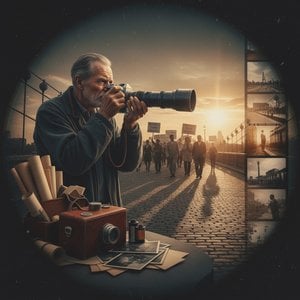
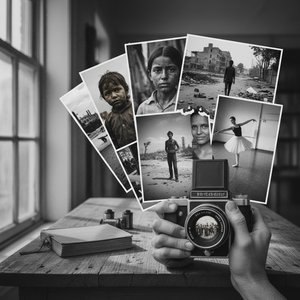
The hallmark of Greenfield-Sanders’ photographic practice lies in his deliberate embrace of large-format cameras, most notably the Hasselblad. This choice is far more than a technical preference; it is a philosophical commitment to clarity and presence. By utilizing a format that demands patience and meticulousness, he achieves an unparalleled level of detail and tonal range, allowing the textures of skin, the light in an eye, and the subtle contours of expression to emerge with startling immediacy. His work possesses a palpable stillness, a quietude that invites the viewer to linger on the subject. In his hands, the camera becomes a tool for distillation, stripping away the superficial to reveal the indelible impressions of the individuals he encounters. Whether documenting world leaders or cultural icons, his approach remains centered on a desire to confront the subject head-on, capturing them within an expansive frame that reflects their inherent complexity and significance.
A Tapestry of Icons: Cinematic Storytelling and Social Portraiture
Beyond the still image, Greenfield-Sanders has carved a monumental space in the realm of documentary film, where his eye for portraiture finds its most fluid expression. His filmography is a celebrated collection of visual biographies, characterized by an intimate exploration of those who have shaped our cultural landscape. Through works such as Lou Reed: Rock and Roll Heart, which earned him a Grammy Award, and the poignant Toni Morrison: The Pieces I Am, he has demonstrated a masterful ability to weave personal narrative with historical weight. His cinematic projects often function as extensions of his photographic series, creating a multi-sensory experience that celebrates diversity and explores the nuances of identity across various communities.
His contributions to the "List" series—including The Black List, The Latino List, The Out List, The Women’s List, and The Trans List—represent some of his most culturally significant achievements. These projects are not merely collections of portraits but are profound sociological documents that bring visibility to marginalized and influential groups, fostering a deeper dialogue about representation in the modern era. Through these works, he has achieved widespread critical acclaim, earning accolades such as the NAACP Image Award and the Sundance Grand Jury Prize. His ability to capture the dignity and strength of his subjects has made him a vital voice in contemporary portraiture, ensuring that the stories of these icons are preserved with both grace and truth.
Legacy and Artistic Significance
The enduring impact of Timothy Greenfield-Sanders is reflected in the prestigious institutions that house his work. His photographs reside in the permanent collections of some of the world's most esteemed museums, including:
- The Museum of Modern Art (MoMA)
- The National Portrait Gallery
- The Museum of Fine Arts, Houston
- The Brooklyn Museum
His legacy is defined by a lifelong pursuit of the "portrait of witness." By merging the meticulousness of fine art photography with the narrative urgency of documentary film, he has created a body of work that transcends simple documentation. He has transformed the act of photographing a person into an act of preservation, ensuring that the brilliance of the human spirit is captured in all its multifaceted glory. In an age of fleeting digital images, Greenfield-Sanders’ commitment to the monumental and the enduring serves as a powerful reminder of the importance of truly seeing one another.