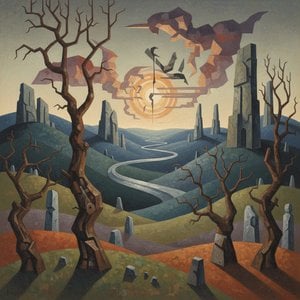
A Life Etched in Landscape and Conflict: The Story of Robert Henderson Blyth
Robert Henderson Blyth, born in 1919 and tragically lost too soon in 1970, remains a compelling figure within the narrative of British art. His life, spanning two World Wars and their immediate aftermath, profoundly shaped his artistic vision – one deeply rooted in the Scottish landscape yet indelibly marked by the realities of conflict. While not a household name, Blyth’s work offers a uniquely poignant perspective on a generation grappling with trauma, resilience, and the search for beauty amidst devastation. He wasn't simply *recording* history; he was embodying it, translating personal experience into evocative depictions of place and the human condition.
Early Years and Artistic Formation
Details surrounding Blyth’s early life are somewhat scarce, adding to the mystique that surrounds his oeuvre. What is known suggests a strong connection to Scotland from youth. The rugged beauty of its hills, lochs, and coastal regions would become a recurring motif throughout his career. He received formal artistic training, though the specifics remain undocumented. However, the influence of the Scottish Colourists – artists like Samuel Peploe and Francis Cadell – is readily apparent in his early works. Their bold use of color and expressive brushwork likely provided a foundation for Blyth’s own developing style. It's believed he initially focused on traditional landscape painting, honing his technical skills before the seismic events of World War II irrevocably altered his artistic trajectory. The pre-war landscapes possess a quiet lyricism, hinting at an underlying emotional depth that would later explode onto the canvas with raw intensity.
Wartime Experiences and Artistic Response
The outbreak of World War II proved to be a pivotal moment in Blyth’s life and art. He served during the conflict, most notably participating in the Dunkirk evacuation – an experience that would haunt and inspire him for decades. Unlike many war artists commissioned to create heroic or propagandistic imagery, Blyth's depictions of wartime Britain are strikingly personal and often unsettling. His paintings don’t glorify battle; they focus on the quiet desperation, the exhaustion, and the psychological toll exacted upon soldiers and civilians alike.
Dunkirk as a Turning Point: The scenes from Dunkirk aren't grand panoramas of rescue but intimate studies of men waiting, huddled together, their faces etched with fear and uncertainty. These works are characterized by muted colors, fragmented forms, and a palpable sense of anxiety.
The Home Front: Blyth also documented life on the home front, portraying bomb-damaged streets, air raid shelters, and the stoic resilience of ordinary people facing extraordinary circumstances. These paintings are often imbued with a melancholic beauty, highlighting the fragility of everyday life.
Expressionist Tendencies: The war years saw Blyth’s style evolve towards a more expressionistic approach. He abandoned meticulous realism in favor of bolder brushstrokes, distorted perspectives, and a heightened emotional intensity. This shift reflects his attempt to convey the subjective experience of trauma and loss.
Post-War Development and Legacy
Following the war, Blyth continued to paint landscapes, but they were never quite the same. The idyllic scenes of his youth had been irrevocably tainted by the horrors he had witnessed. His post-war work is characterized by a sense of alienation and unease, often depicting desolate landscapes and isolated figures. He explored themes of memory, loss, and the enduring power of nature. While he exhibited regularly throughout his career, Blyth remained largely outside the mainstream art world.
His paintings weren’t always easy to look at; they demanded a confrontation with uncomfortable truths. However, in recent years, there has been a growing appreciation for his unique artistic vision and historical significance. He is now recognized as an important voice within the tradition of wartime art, offering a powerful counterpoint to more conventional depictions of conflict. His work serves as a poignant reminder of the human cost of war and the enduring power of art to bear witness to trauma. The landscapes he created are not merely representations of place; they are psychological portraits of a generation scarred by conflict, seeking solace and meaning in a world forever changed. He is often referred to as a “War Baby” artist, capturing the unique perspective of those born into the shadow of global upheaval. His legacy lies in his ability to transform personal experience into universal statements about loss, resilience, and the enduring search for beauty amidst devastation.
Explore the life & art of John Constable, the Romantic painter who revolutionized landscape with emotive scenes of rural England. Discover his techniques, legacy, and key works – perfect for collectors & enthusiasts.
Explore the evocative landscapes & poignant war art of Paul Nash (1889-1946), a key figure in British Modernism. Discover his unique style and lasting impact on art history with ArtsDot.
Mogu li da proučim način na koji Robert Henderson Blyth koristi boju u svim svojim delima?
Kolorit dela umetnika Robert Henderson Blyth možete videti na njegovoj stranici Genom palete.
U kom gradu i državi je rođen/a Robert Henderson Blyth?
Robert Henderson Blyth je rođen/a u gradu Glasgow, u državi United Kingdom.
Kako se umetnost autora Robert Henderson Blyth razvijala tokom vremena?
Karijera umetnika Robert Henderson Blyth razvija se period po period na stranici Hronika: kroz horizontalnu vremensku liniju dela, grupisanih u poglavlja prema periodima stvaranja.
Gde se mogu pronaći dela umetnika Robert Henderson Blyth grupisanja po tehnici?
Radove umetnika Robert Henderson Blyth možete pregledati prema tehnici na stranici Svi mediji.
Koja dela umetnika Robert Henderson Blyth imaju najviše pregleda?
Statistika o delima umetnika Robert Henderson Blyth dostupna je na njegovoj stranici Statistika.
Gde se mogu pronaći dela umetnika Robert Henderson Blyth organizovana po boji?
Spektar boja umetnika Robert Henderson Blyth je stranica koja organizuje njegova dela prema bojama.
Kako mogu pratiti radove umetnika Robert Henderson Blyth hronološki?
Dostupna je hronologija dela umetnika Robert Henderson Blyth: na stranici Hronologija dela, umetnikova dela su poređana prema datumu nastanka.
Mogu li da posetim virtuelni muzej dela umetnika Robert Henderson Blyth?
Moguća je i virtuelna poseta: stranica 3D galerija umetnika Robert Henderson Blyth predstavlja njegova dela u trodimenzionalnoj galeriji.
Koliko je umetničkih dela autora Robert Henderson Blyth dostupno u katalogu?
Možete pregledati 18 umetnička dela dela umetnika Robert Henderson Blyth na stranici Sva umetnička dela.