Portret Prosper Marilhat

Upoznajte 23 najpoznatijih dela umetnika Prosper Marilhat

Ažurirano: октобар 2026 · rangirano prema našem koeficijentu popularnosti (pretrage, posete i porudžbine za svako delo) · 27 dela Prosper Marilhat u našem katalogu

Ukratko

Ako znate bilo koju sliku koju je stvorio Prosper Marilhat, to je verovatno Arabes Syriens En Voyage, koja se nalazi u muzeju Musée Condé, Šantije. View of Ezbekiyah, Cairo (1835) i Souvenir of the Rosetta Campaign (1835) dopunjuju tri dela koja ljudi odmah prepoznaju. Naš katalog sadrži 27 dela umetnika Prosper Marilhat. Ispod su 23 najpoznatijih dela, sa informacijama o godini nastanka, mestu gde se mogu pronaći i onome što ih čini posebnim.

1811 – 1847, Vertaizon Orientalism Najviše dela: Wallace Collection

Počnite ovde: 10 najpoznatijih dela umetnika Prosper Marilhat

1
Arabes Syriens En Voyage čiji je Prosper Marilhat

Arabes Syriens En Voyage

Oil · Musée Condé, Šantije

The work titled Arabes syriens en voyage was painted by Prosper Marilhat. Created about 1844, this oil on wood captures a specific moment of movement through a desert landscape. The scene focuses on Syrian themes, featuring dromedaries and a buffalo amidst the arid terrain.

Rukom oslikana uljana reprodukcija od $225 39 × 26 cm
Naručite ovo delo Saznajte više o ovom delu
3
Souvenir of the Rosetta Campaign (1835) čiji je Prosper Marilhat

Souvenir of the Rosetta Campaign

1835 · Oil On Canvas · Musée Condé, Šantije

The sun hangs heavy over the Delta of the Nile in Souvenir of the Rosetta Campaign. This oil on canvas, painted by Prosper Marilhat, captures a specific moment in North Egypt. The scene unfolds around Rosetta, where the landscape meets the architecture of a distant land. It is a view that feels caught in the heat of the day, a quiet fragment of the Egyptian landscape from about 1835.

Rukom oslikana uljana reprodukcija od $175 28 × 36 cm Isti veličine kao original $221 44 × 58 cm Naručite u originalnim dimenzijama →
Naručite ovo delo Saznajte više o ovom delu

Još Prosper Marilhat omiljenih dela, od 11 do 23

Šta je Prosper Marilhat najčešće slikao

Četiri teme koje se najčešće pojavljuju u ovim delima, svaka sa svojim najpoznatijim primerom.

Gde možete pogledati slike umetnika Prosper Marilhat

5 muzeja u kojima se nalazi najviše slika sa ove stranice.
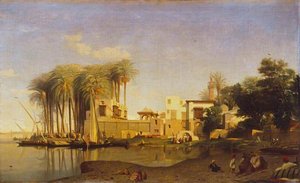
Muzej Grad Radovi umetnika Prosper Marilhat Slike iz ovog spiska
Wallace Collection, LondonWallace Collection London 4 On the Banks of the Nile, Beni Suef on the Nile, The Erechtheion, Athens
Musée Condé, ŠantijeMusée Condé Šantije 3 Arabes Syriens En Voyage, Souvenir of the Rosetta Campaign, View of Lattaquieh (Syria)
Amsterdam Museum, AmsterdamAmsterdam Museum Amsterdam 1 In an Oriental Landscape a Caravan Crosses a River
Musée des Beaux-Arts, RemMusée des Beaux-Arts Rem 1 View of Villeneuve-lès-Avignon, Saint-André Castle
Walters Art Museum, BaltimoreWalters Art Museum Baltimore 1 Landscape With Mosque

Prosper Marilhat iz godine u godinu: istaknita dela

9 godina, od 1833 do 1841: to je čitav vremenski period radova umetnika Prosper Marilhat koji se ovde nalaze. Pregledajte ih godinu po godinu.

Radovi po godinama

Izaberite godinu da biste videli njena dela.

Vaša pitanja o slikama umetnika Prosper Marilhat

Koja slika umetnika Prosper Marilhat je najpoznatija?Pogledajte odgovor

Na vrhu liste je Arabes Syriens En Voyage, Musée Condé, Šantije. Odmah za njim su: View of Ezbekiyah, Cairo (1835) i Souvenir of the Rosetta Campaign (1835).

Koja su 10 najpoznatijih dela umetnika Prosper Marilhat?Pogledajte odgovor

Arabes Syriens En Voyage, View of Ezbekiyah, Cairo, Souvenir of the Rosetta Campaign, In an Oriental Landscape a Caravan Crosses a River, View of Villeneuve-lès-Avignon, Saint-André Castle, Farmyard with sheep, View of Lattaquieh (Syria), On the Banks of the Nile, Beni Suef on the Nile i View of the surroundings of Thiers (Puy-de-Dôme). Godinu i muzej za svako od njih možete pronaći u gornjem spisku.

Koliko je slika stvorio/la Prosper Marilhat?Pogledajte odgovor

U našem katalogu imamo 27 dela umetnika Prosper Marilhat, datiranih od 1833 do 1841.

Gde možete videti čuvena dela umetnika Prosper Marilhat?Pogledajte odgovor

Većinu njih možete pronaći u Wallace Collection (London), Musée Condé (Šantije) i Amsterdam Museum (Amsterdam). Na spisku muzeja iznad nalazi se detaljan pregled.

Kada je Prosper Marilhat naslikao svoja najpoznatija dela?Pogledajte odgovor

U 1840, više nego ikada ranije: 3 od 23 dela na ovoj stranici potiče iz tog vremena, od čega je View of Lattaquieh (Syria) među njima.

Koja su najpoznatija dela umetnika Prosper Marilhat nastala prva, a koja poslednja?Pogledajte odgovor

Najstarije delo ovde je Palm Trees (1833); najnovije je The Erechtheion, Athens (1841).

Koje teme se najčešće pojavljuju u slikama umetnika Prosper Marilhat?Pogledajte odgovor

Landscape (3), People (2) i Sky (2) od ukupno 23 dela na ovoj stranici.

Sa kojim materijalima je Prosper Marilhat najčešće slikao?Pogledajte odgovor

Oil On Canvas, korišćeno u 2 od 23 dela na ovoj stranici.

Koji umetnički pravac je Prosper Marilhat zastupao?Pogledajte odgovor

Orientalism, kao što možete videti u delima na ovoj stranici.

Koja dela umetnika Prosper Marilhat možete videti u muzeju Wallace Collection?Pogledajte odgovor

Na ovoj stranici možete videti 4 dela u muzeju Wallace Collection, London, uključujući On the Banks of the Nile, Beni Suef on the Nile i The Erechtheion, Athens.

Mogu li dobiti reprodukciju slike autora Prosper Marilhat?Pogledajte odgovor

Da. Svaka slika na ovoj stranici dostupna je kao ručno slikano ulje na platnu ili kao štampa, u veličini koja vam odgovara. Samo otvorite stranicu slike da biste izvršili porudžbinu.

Upoznajte Prosper Marilhat

Antoine-George-Prosper Marilhat: A Painter of the Orient’s Echoes

Prosper Marilhat (1811-1847), a name perhaps less familiar than many of his contemporaries, remains a captivating figure in 19th-century French art. He was an Orientalist painter, deeply immersed in the burgeoning fascination with the Middle East that swept across Europe during this era. His legacy isn’t one of grand, monumental works, but rather a collection of intensely evocative scenes—ruined mosques bathed in golden light, bustling marketplaces teeming with life, and solitary figures contemplating the vastness of desert landscapes—that capture the spirit and romance of Egypt and Syria. Marilhat's art is not merely a record of places; it’s an emotional response to them, imbued with a sense of longing, mystery, and a profound appreciation for the beauty of the unfamiliar.

Early Life and Artistic Beginnings

Born in Vertaizon, a small village in the Puy-de-Dôme region of France, Marilhat’s artistic journey began not with grand ambitions but with humble roots. His parents, involved in the cutlery business of Thiers, envisioned a practical future for their son—a life far removed from the world of paint and canvas. However, the Baron de Barante, a prominent figure who recognized Marilhat's innate talent and passion, intervened, advocating for his artistic pursuits. This pivotal moment propelled young Prosper to Paris in 1829, where he enrolled under the tutelage of Camille Roqueplan, a respected academic painter. His debut at the Paris Salon in 1831 with *Site d’Auvergne* marked the beginning of his career, showcasing an early talent for capturing the rugged beauty of the French countryside. This initial success, however, was merely a prelude to the transformative experiences that awaited him in Egypt.

The Egyptian Years: Sketches as Foundations

In May 1831, Marilhat’s life took an extraordinary turn when he joined Charles von Hügel on an expedition to Egypt. While the journey itself was brief, it proved to be a watershed moment. He accompanied Hügel only as far as Alexandria, but during the subsequent months—from October 1831 to May 1833—he embarked on a prolific sketching campaign, producing ten albums filled with detailed drawings that would later serve as the basis for his most celebrated paintings. These sketches weren’t simply preparatory studies; they were deeply felt impressions of the landscape, architecture, and people he encountered. The meticulous detail evident in these works reveals Marilhat's keen observational skills and his ability to translate fleeting moments into enduring images. Crucially, it was during this period that he developed a distinctive style—a blend of realism and romanticism, characterized by dramatic lighting, vibrant colors, and an emphasis on atmosphere.

A Palette of Ruin and Romance: Major Works and Influences

Marilhat’s artistic output after 1838 is marked by a shift towards larger-scale paintings, often inspired by his Egyptian experiences. *Ruines de la mosquée El-Hakem au Caire* (1840), for example, became renowned for its ability to capture both the monumental scale of the ruined structure and the evocative atmosphere of decay—a testament to the passage of time and the grandeur of a lost civilization. Theophile Gautier, a prominent literary figure of the era, famously described *Place de l’Esbekieh au Caire* as inducing “sickness at heart,” expressing a yearning for the Orient he had not yet explored. This reaction speaks volumes about Marilhat's ability to transport viewers to distant lands and evoke powerful emotions through his art. His work also demonstrates an influence from earlier Romantic painters, particularly in its emphasis on dramatic landscapes and the sublime—a fascination with nature’s power and beauty. Furthermore, he was influenced by the works of Eugène Delacroix, evident in his use of color and dynamic compositions.

Legacy and Lasting Impact

Prosper Marilhat's life was tragically cut short at the age of 36 due to illness—likely syphilis—and he spent his final years in a Parisian asylum. Despite his untimely death, his artistic legacy endures. His paintings, particularly those depicting Egyptian scenes, continue to captivate viewers with their evocative beauty and atmospheric depth. Works like *Arabes syriens en voyage* (1844), now housed at the Musée Condé in Chantilly, remain prized examples of Orientalist art. Marilhat’s contribution lies not just in his individual paintings but also in his role as a pioneer—one of the first French artists to fully embrace and authentically portray the exotic allure of the Middle East, shaping perceptions and fueling the European fascination with this ancient and mysterious region. His meticulous sketches and evocative paintings offer a valuable window into a bygone era, reminding us of the power of art to transcend time and place.
