Ukratko
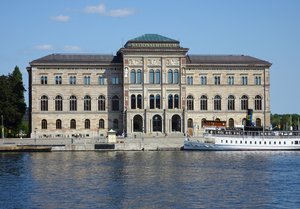
Najpoznatija slika koju je Nils Andersson stvorio je Heimdal Returns Brisingamen to Freya (1846), a možete je videti u muzeju Nationalmuseum, Стокхолм. Odmah nakon toga slede Marcus Larson (1825-1864), artist, married to Adelaide Roos (1849) i Driving Cattle in Småland (1863). Od 6 dela umetnika Nils Andersson u našem katalogu, ovih 6 su najpoznatija. Svako od njih sadrži godinu nastanka, muzej u kojem se nalazi i kratak opis onoga što ga izdvaja.
Top 10 dela Nils Andersson: remek-dela koja svi znaju
Gde možete pogledati slike umetnika Nils Andersson
2 muzeja u kojima se nalazi najviše slika sa ove stranice.
| Muzeji | Grad | Radovi umetnika Nils Andersson | Slike iz ovog spiska |
|---|---|---|---|
| Стокхолм | 5 | Heimdal Returns Brisingamen to Freya, Driving Cattle in Småland, Forest Landscape with a Shepherd Boy and Cattle | |
| Strängnäs | 1 | Marcus Larson (1825-1864), artist, married to Adelaide Roos |
Jedno poznato delo umetnika Nils Andersson za svaku deceniju
Radovi po decenijama
Izaberite deceniju da biste videli njeno najistaknutije delo.
Slike autora Nils Andersson: šta ljudi žele da znaju
Po čemu je Nils Andersson najpoznatiji/a?Pogledajte odgovor
Na vrhu liste je Heimdal Returns Brisingamen to Freya (1846), Nationalmuseum, Стокхолм. Odmah za njim su: Marcus Larson (1825-1864), artist, married to Adelaide Roos (1849) i Driving Cattle in Småland (1863).
Koliko je godina imao/la Nils Andersson u vreme nastanka dela Heimdal Returns Brisingamen to Freya?Pogledajte odgovor
29 godina. Nils Andersson je rođen/a 1817, a delo Heimdal Returns Brisingamen to Freya datira iz 1846.
Koliko ima dela umetnika Nils Andersson?Pogledajte odgovor
U našem katalogu imamo 6 dela umetnika Nils Andersson, datiranih od 1846 do 1863.
U kojim muzejima se nalaze najpoznatija dela Nils Andersson?Pogledajte odgovor
Većinu njih možete pronaći u Nationalmuseum (Стокхолм) i National Portrait Gallery of Sweden (Strängnäs). Na spisku muzeja iznad nalazi se detaljan pregled.
Kada su nastala najpoznatija dela umetnika Nils Andersson?Pogledajte odgovor
U 1840s, više nego ikada ranije: 2 od 6 dela na ovoj stranici potiče iz tog vremena, od čega je Heimdal Returns Brisingamen to Freya među njima.
Koja su najstarija i najnovija poznata dela Nils Andersson?Pogledajte odgovor
Najstarije delo ovde je Heimdal Returns Brisingamen to Freya (1846); najnovije je Driving Cattle in Småland (1863).
Šta možete videti od dela Nils Andersson u muzeju Nationalmuseum?Pogledajte odgovor
Na ovoj stranici možete videti 5 dela u muzeju Nationalmuseum, Стокхолм, uključujući Heimdal Returns Brisingamen to Freya, Driving Cattle in Småland i Forest Landscape with a Shepherd Boy and Cattle.
Mogu li da naručim reprodukciju Nils Andersson za svoj dom?Pogledajte odgovor
Da. Svaka slika na ovoj stranici dostupna je kao ručno slikano ulje na platnu ili kao štampa, u veličini koja vam odgovara. Samo otvorite stranicu slike da biste izvršili porudžbinu.
Upoznajte Nils Andersson
A Life Rooted in the Swedish Soil
Born into the humble surroundings of Kattilstads parish in East Gothland, Nils Andersson began his life as the son of a peasant. This early connection to the land and the rhythms of rural life would later find its way onto his canvases. His path took him far from the fields of Östergötland, leading him first to the studios of Stockholm where he received his initial instruction. The young painter possessed an ambition that could not be contained by his provincial beginnings, prompting him to seek the great artistic centers of Europe.
In 1851, he joined a group of Swedish pioneers traveling toward Düsseldorf. This movement was part of a larger tide of Nordic talent seeking refinement abroad. His travels eventually brought him to Paris in 1854, where he spent two years immersed in the French capital's intense creative atmosphere. It was here that he studied under Couture, an experience that refined his hand and deepened his understanding of form and light.
The Brush and the Subject
Upon returning to Stockholm, Andersson’s talent earned him a place within the Academy and, by 1858, the prestigious title of professor. His work reflected a commitment to classical realism, often focusing on the quiet dignity of everyday existence. He found beauty in the mundane, turning his attention to landscapes that featured animals, farm scene genre paintings, and figures captured in natural settings. There was a certain honesty in how he approached historical pieces and portraits, seeking to document life with clarity.
His repertoire included various subjects that spoke to the era's interests:
- Landscape paintings often featuring animals and rural scenery.
- Genre paintings depicting farm scenes and daily life.
- Historical compositions and figure studies.
A Legacy in the National Collection
Though his life was cut short in Vaxholm near Stockholm, the traces of his career remain visible in the halls of the National Museum at Stockholm. His presence in the art world was marked by both academic achievement and a technical skill that allowed him to navigate the transition between different European styles. While some works from the period have faced scrutiny regarding their authenticity, the true essence of his contribution lies in his role as a bridge between the Swedish countryside and the formal traditions of the continent.