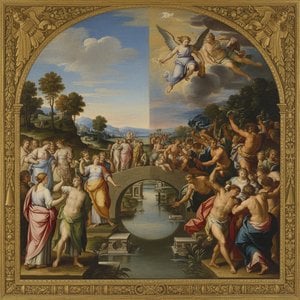
Rimski Karavađev sen
Karlo Saraceni, ime koje odjekuje dramatičnim intenzitetom rane barokne ere, ostaje jedna od najfascinantnijih figura sedamnaestog veka. Iako je njegov život bio relativno kratak, trajan od 1579. do 1620. godine, njegov uticaj na rimsku umetničku scenu bio je dubok. Rođen u Veneciji u porodici duboko upletenoj u umetničke tradicije, Saracenijeve rane godine oblikovale su pedantno posmatranje i klasični ideali svojstveni venecijanskoj obuci. Njegovo majstorstvo u disegno i pictura pružilo mu je čvrste temelje, ali je upravo njegov odlazak od spokojnih tradicija rodnog mesta taj koji će na kraju definisati njegovo nasleđe. Preselivši se u Rim 1598. godine, ušao je u žarište inovacija, pridruživši se prestižnoj Akademiji San Luka i pozicionirajući se u samom srcu bujne umetničke revolucije.
Tok Saracenijeve karijere nepovratno je izmenjen susretom sa revolucionarnim tehnikama Karavađa. Iako nije samo oponašao majstora, umesto da postane puki sledbenik, Saraceni je postigao sofisticiranu asimilaciju tenebrizma—dramatičnog korišćenja intenzivne svetlosti i duboke senke. Ovo majstorstvo u chiaroscuro omogućilo mu je da svoja platna prožme emocionalnom težinom i fizičkim prisustvom koji su očarali kako njegove savremenike, tako i moderne istraživače. Njegovo delo služi kao most između atmosferskih pejzaža Adama Elšajmera i visceralne, antropocentrične drame pokreta Karavađista. U delima kao što je Rođenje Device, može se svedočiti ovoj jedinstvenoj sintezi, gde je božanska lepota prikazana kroz prizmu dubokog, dramatičnog osvetljenja i bogatih, taktilnih detalja.
Sinteza stilova i duha
Saracenijeva umetnička evolucija bila je obeležena izvanrednom sposobnošću da različite uticaje spoji u kohezivan, lični jezik. Njegovo rano fasciniranje pejzažnim slikarstvom Adama Elšajmera unelo je osećaj dubine i narativnog razmera u njegov rad, koji je kasnije nadgradio teškim, dramatičnim senkama rimske škole. Ova stilska dualnost možda je najočiglednija u delima poput Rajskog vrta, gde umetnik uspešno spaja venecijanske umetničke tradicije sa uticajima iz Severne Evrope. U ovoj kompoziciji, prikaz Svetog Trojstva odražava ključni trenutak u baroknoj istoriji, pokazujući njegovu sposobnost da rukuje složenim teološkim temama kroz prizmu majstorskog tenebrizma.
Pored tehničke briljantnosti njegovog poteza četkicom, Saracenijevo delo je poznato po svojoj dubokoj simboličkoj težini i emocionalnoj rezonanci. Njegove religiozne i mitološke scene retko su puke ilustracije; one su psihološka istraživanja. U delu Sveti Grgorio Veliki, pedantni detalji simboličkih elemenata, poput prisustva golubova, rade u tandemu sa oštro osvetljenom kompozicijom kako bi stvorili atmosferu božanske intervencije i svečanosti. Ova sposobnost da privuče pažnju posmatrača putem svetlosti i senke osigurala mu je mesto među vodećim praktičarima svog doba, donoseći mu reputaciju koja je, iako je historičari nekada klasifikovali kao slikara "drugog reda", zasluženo uzdignuta modernom naukom kako bi se priznala njegova prava briljantnost.
Istorijski značaj Karla Saracenija leži u njegovoj ulozi ključne figure unutar rimske barokne pokreta. Njegov život i rad predstavljaju raskrsnicu venecijanske gracioznosti i rimske drame. Iako nikada nije putovao u Francusku, njegov kulturni domet bio je širok, što dokazuje njegovo poznavanje francuskog jezika i estetska senzibilnost koja je odjekivala međunarodnim ukusima. Danas se njegova remek-dela čuvaju u nekim od najcenjenijih svetskih kolekcija, kao što su Palazzo del Quirinale i Galleria Nazionale d'Arte Antica, služeći kao trajni dokazi umetnika koji je ovladao veštinom hvatanja božanskog unutar senki.
Pitanja i odgovori
Mogu li da sortiram dela umetnika Karlo Saraceni prema boji?
Spektar boja umetnika Karlo Saraceni je stranica koja organizuje njegova dela prema bojama.
Gde mogu da vidim dela umetnika Karlo Saraceni poređana prema atmosferi?
Na stranici Soba po raspoloženju umetnika Karlo Saraceni možete pronaći njegova dela raspoređena prema raspoloženju.
Gde se mogu pronaći dela umetnika Karlo Saraceni grupisanom prema umetničkim pravcima?
Stranica Svi umetnički pravci grupiše dela umetnika Karlo Saraceni prema umetničkom pravcu.