

The Dawn of a New Aesthetic: Artistic Transformations in 1910

Sadržaj
The Seeds of Disruption: Precursors to 1910’s Artistic Revolution
Modernism was an early 20th-century movement in literature, visual arts, performing arts, and music that emphasized experimentation, abstraction, and subjective experience. Philosophy, politics, architecture, and social issues were all aspects of thi...
The year 1910 did not erupt from a vacuum; it was the culmination of decades of simmering discontent and artistic experimentation. The late 19th century, while seemingly defined by Impressionism's delicate dance with light and fleeting moments, also harbored a growing unease – a sense that traditional modes of representation were insufficient to capture the complexities of modern life. The rapid industrialization sweeping across Europe, coupled with advancements in psychology and philosophy, fundamentally altered perceptions of reality. Artists began questioning not just *what* they depicted, but *how* they depicted it, and even *why*. The foundations laid by Post-Impressionists like Cézanne, Van Gogh, and Gauguin – their emphasis on subjective experience, flattened perspectives, and symbolic color – proved to be the fertile ground from which Modernism would blossom. Cézanne’s relentless pursuit of form, breaking down objects into geometric components, was particularly influential, foreshadowing the radical fragmentation that would soon characterize Cubism. Van Gogh's emotional intensity and Gauguin’s exploration of primitive aesthetics signaled a rejection of academic realism in favor of personal expression and a search for deeper meaning beyond mere surface appearances.
Fauvism's Explosive Palette: A Bold New Vision Emerges
Fauvism ( FOH-viz-əm) is a style of painting and an art movement that emerged in France at the beginning of the 20th century. It was the style of les Fauves (French pronunciation: [le fov], the wild beasts), a group of modern artists whose works emph...
If the seeds were sown by the Post-Impressionists, Fauvism was their shockingly vibrant bloom. Emerging around 1905 with artists like Henri Matisse and André Derain at its helm, this movement – derisively dubbed “Les Fauves” (the wild beasts) by a critic – unleashed an unprecedented freedom of color. Forget subtle gradations and naturalistic hues; the Fauves employed pure, unmodulated colors directly from the tube, often applied with bold, expressive brushstrokes. This wasn’t about accurately representing the world as it *was*, but rather conveying the artist's emotional response to it. Matisse’s “Woman with a Hat” (1905), for example, scandalized viewers with its jarring juxtaposition of colors and seemingly arbitrary application of paint. The effect was deliberately unsettling, challenging conventional notions of beauty and harmony. The influence extended beyond mere aesthetics; Fauvism represented a liberation from academic constraints, prioritizing the painterly qualities of the medium itself – texture, brushwork, and the sheer physicality of color. While short-lived as a cohesive movement (lasting roughly 1905-1908), its impact was profound, paving the way for more radical explorations of form and expression.
Cubism Takes Form: Challenging Perspective and Representation
Following in Fauvism’s wake, Cubism – spearheaded by Pablo Picasso and Georges Braque – represented an even more fundamental break with tradition. Where Fauvism liberated color, Cubism dismantled form itself. Inspired by Cézanne's geometric approach and a fascination with non-Western art (particularly African masks), Cubist artists sought to represent objects from multiple viewpoints simultaneously. This resulted in fragmented compositions where figures and landscapes were broken down into angular shapes and reassembled on the canvas, often collapsing foreground and background. Early Cubism, known as Analytical Cubism, employed a muted palette of browns, grays, and blacks, focusing primarily on dissecting form. Later, Synthetic Cubism introduced collage elements – fragments of newspaper, wallpaper, or fabric – further blurring the boundaries between painting and reality. The goal wasn’t to depict an object realistically, but rather to explore its underlying structure and present a more comprehensive understanding of its essence. It was a revolutionary approach that fundamentally altered the way artists perceived and represented space.
Beyond France: The International Resonance of Early Modernist Ideas
While Paris remained the epicenter of artistic innovation, the ideas of Fauvism and Cubism quickly spread beyond French borders, igniting similar movements across Europe. In Russia, artists like Kazimir Malevich, initially influenced by Cubo-Futurism, began developing his own unique style – Suprematism – characterized by purely abstract geometric forms and a rejection of representational imagery. Works such as “On the Boulevard” (c. 1913) demonstrate Malevich’s early exploration of color and form before fully embracing non-objectivity. Simultaneously, artists in Germany were experimenting with Expressionism, using distorted forms and jarring colors to convey intense emotional states. Alice Bailly, a Swiss painter working in Paris, embraced Cubist principles while also incorporating elements of Fauvism and Dada, creating a distinctive and highly personal style. David Burliuk, often called the “Father of Russian Futurism,” played a crucial role in introducing avant-garde ideas to Russia, fostering a vibrant artistic community that challenged traditional norms. This international exchange of ideas demonstrates that Modernism wasn’t a monolithic movement but rather a complex network of interconnected experiments.
The Role of the Avant-Garde in Shaping a New Aesthetic Landscape
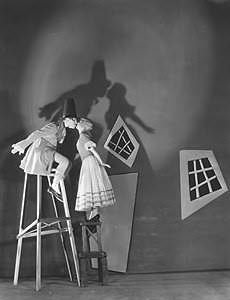 Wikipedia: Avant-garde
In the arts and literature, the term avant-garde (from French meaning 'advance guard' or 'vanguard') identifies an experimental genre or work of art, and the artist who created it, which usually is aesthetically innovative, whilst initially being ide...
Central to these transformations was the rise of the avant-garde. These artists weren't simply creating new styles; they were actively challenging the established art world, rejecting academic conventions and seeking to redefine the very purpose of art. They embraced experimentation, often shocking audiences with their unconventional techniques and subject matter. The avant-garde wasn’t just about aesthetics; it was also deeply intertwined with political and social ideologies, advocating for progressive change and questioning societal norms. They established independent salons and galleries, bypassing traditional institutions and creating alternative spaces to showcase their work. This rebellious spirit fostered a climate of innovation and encouraged artists to push the boundaries of what was considered acceptable. The military metaphor – “advance guard” or “vanguard” – aptly describes their role: they were at the forefront of artistic change, leading the charge towards a new aesthetic landscape.
Collecting at the Cusp of Change: Identifying Key Works from 1910
For today’s collector, acquiring works from this pivotal period represents an opportunity to own pieces that fundamentally altered the course of art history. Identifying key examples requires careful consideration. Look for artists who were actively involved in the Fauvist and Cubist movements – Matisse, Derain, Picasso, Braque, and Gris are obvious choices, but also explore lesser-known figures like Vuillard and Bailly whose contributions were equally significant. Pay attention to stylistic characteristics: bold, unmodulated colors in Fauvism; fragmented forms and multiple perspectives in Cubism. Early works by artists transitioning between styles – such as Malevich’s paintings from around 1910-1913 – can be particularly valuable, offering a glimpse into their artistic development. “Lady in a Tram” (1913) by Malevich, for instance, bridges Cubo-Futurism and Suprematism, showcasing his innovative approach to form and color. Provenance is also crucial; understanding the history of ownership can add significant value to a piece. ArtsDot offers a curated selection of museum-quality reproductions, allowing collectors to experience the beauty and innovation of this era firsthand. Our expert art consultants are available to provide personalized guidance, helping you build a collection that reflects your unique taste and appreciation for artistic excellence.
Povezani članci
The Resonance of Boldness: Exploring Emotional Impact & Artistic Expression
Explore the powerful world of Expressionism with ArtsDot. Discover key artists like Kirchner & Rothko, understand its emotional impact, and learn how to collect this influential art movement. Expert insights for discerning collectors.

Geometric Design in Art: A Historical Survey & Contemporary Appeal for Collectors
Explore the enduring legacy of geometric abstraction! Discover key artists, historical movements & investment insights for discerning art collectors. Expert guidance from ArtsDot.

Beyond Form & Color: Geometric Abstraction's Evolution in 20th/21st Century Art
Explore the evolution of geometric abstraction from Cubism to contemporary art. Discover key artists like Malevich & Mondrian, investment insights, and expert collecting advice at ArtsDot.

Beyond Form & Color: Geometric Abstraction's Enduring Legacy in Art History
Explore the captivating world of geometric abstraction! Discover its origins, key artists like Malevich & Mondrian, and why this movement remains highly valued by art collectors today. Expert insights at ArtsDot.

