

 Pregledaj u prostoru
 Pošalji
 Podeli
 Detalji o delu

 Преузми
 Slični predmeti
 Rendgenski snimak
 Slajdovi
Панорама
 Ulje na platnu
- Umetnost za zidove
- Dutch Baroque
 1670
1670 24.0 x 30.0 cm
 Hermitage Museum
 Pročitaj više
Ručno rađena uljana reprodukcija
Ručno oslikano uljanim bojama na platnu u dimenzijama i okviru po vašem izboru, izrađeno po porudžbini od strane naših umetnika. ( Kupi print Kupi digitalnu sliku)




P118B $10

P118H $10

P118W $10

P438Z $10

P508JH $12

P508YH $12

P805H $10

P805Z $10

P919BZ $10

P919G $10

P919XJ $10

P959ZH $10

P968JZ $12

W106C $8

W218G $10

W218JH $8

W218Y $10

W307PJ $10

W316G $10

W316PJ $8

W316Y $10

W398PJ $8

W4111J $10

W500HY $15

W500JH $15

W692G $12

W849H $8

W940BG $15

W953PJ $8




Izaberite jednu od naših unapred definisanih veličina koje odgovaraju originalnim proporcijama umetničkog dela.

Можете унети сопствене димензије како бисте прилагодили дело одређеном оквиру или простору. Ако одабрана величина не одговара пропорцијама оригинала, слика ће бити исечена или проширена додатним елементима који се ручно насликавају. Дигитални prikaz ће вам бити послат на одобрење пре почетка производње.
Имајте на уму да преглед на екрану не одражава стварно исецање или проширење. Само приказ (mockup) ће тачно приказати коначну композицију.
Иако су доступне прилагођене величине, препоручујемо да одаберете димензију из дефинисане листе како бисте сачували оригиналне пропорције.
Nakon narudžbine, tim ArtsDot.com će klijentu putem e-pošte poslati uputstva i dostaviti prikaz predloženog rešenja
Isporuka širom sveta () za 3/4 nedelje umesto uobičajenih 5 nedelja. (18 август). Bez kompromisa po pitanju kvaliteta.

Besplatna ekspresna dostava širom sveta

Visokokvalitetno laneno platno

Kompletno osiguranje transporta

Garancija povraćaja carine i uvoznih dažbina

Garancija vernosti boja

Politika povrata u roku od 60 dana (samo u slučaju nedostataka)

Garancija povrata novca od 100%

Popust pri grupnoj kupovini
 Opcija sa staklom dostupna je samo za dimenzije manje od 110 cm

Панорама
Tehnika reprodukcije
Dimenzije reprodukcije
-


Konačna cena
$ 263
Opis umetničkog dela
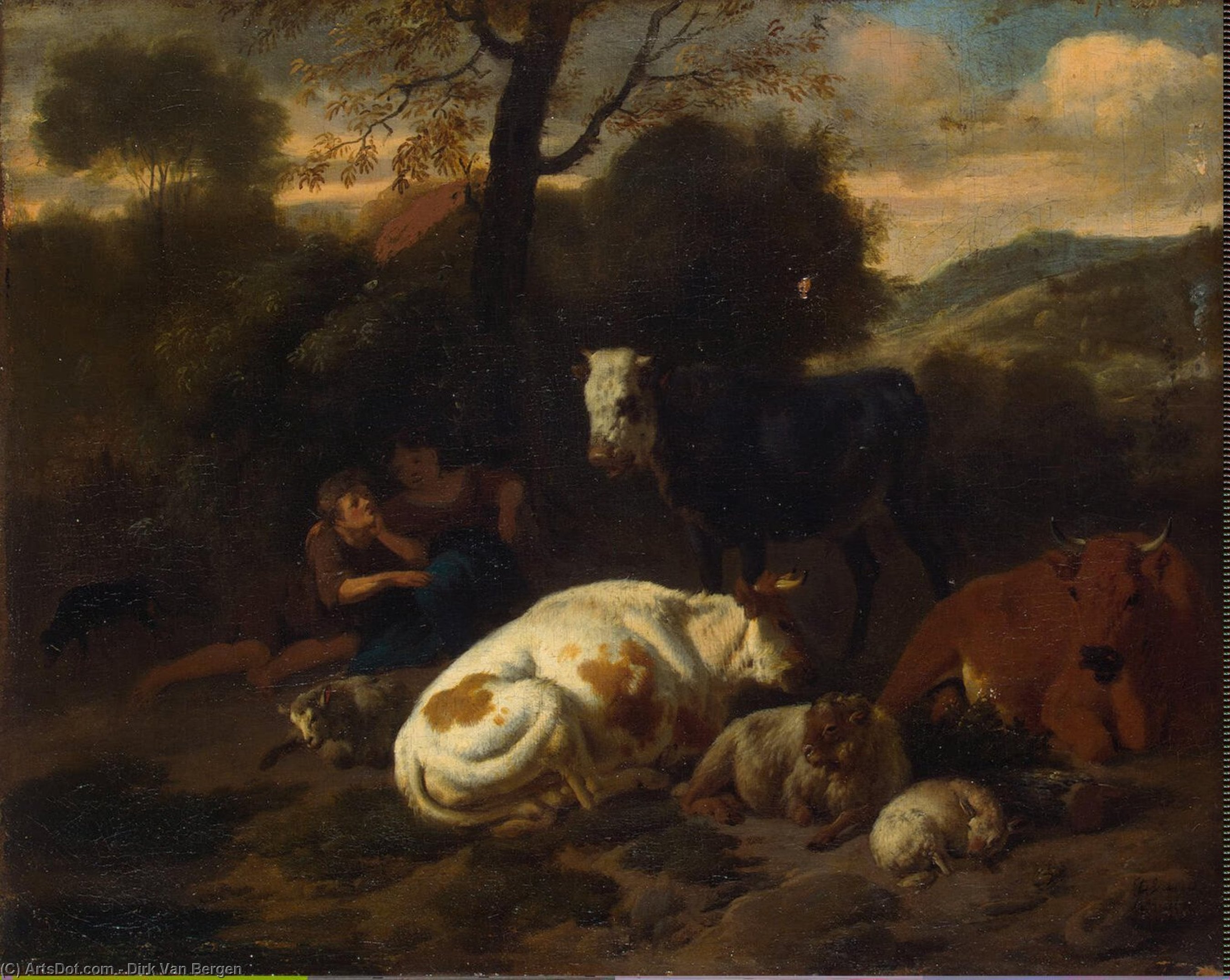
Dirk van Bergen: A Serene Vision of Dutch Pastoral
Dirk van Bergen (c. 1645 – Haarlem, ca. 1700) stands as a cornerstone of the Dutch Golden Age landscape tradition, recognized for his profound ability to capture the tranquil beauty of rural Holland—a realm where mythology subtly intertwines with meticulous observation and an unwavering devotion to peaceful contemplation.
Early Life & Training: Born in Haarlem around 1645, Van Bergen’s artistic journey commenced under the tutelage of Adriaen van de Velde in Amsterdam. This formative influence instilled within him a foundational understanding of atmospheric perspective and compositional balance – techniques that would become hallmarks of his entire oeuvre. The Velde’s teachings emphasized realism combined with an artist's sensitivity to light and shadow, shaping Van Bergen’s approach to portraying the natural world.
Style & Technique: Van Bergen’s distinctive style is characterized by painstaking attention to detail, particularly in rendering the textures of foliage and animal fur. He eschewed flamboyant colors, favoring muted palettes dominated by greens, browns, and blues—a deliberate choice that fostered landscapes imbued with a palpable sense of serenity and introspection. His brushstrokes are delicate yet purposeful, conveying movement and vitality without disrupting the overarching stillness of his scenes. Unlike many contemporaries who sought dramatic grandeur, Van Bergen prioritized subtlety and nuance, aiming to evoke an emotional response rooted in quiet observation.
Historical Context & Symbolism: Van Bergen’s landscapes emerged during a period of artistic flourishing in Amsterdam—a city that served as the epicenter of Dutch commerce and intellectual curiosity. The Baroque aesthetic, influenced by Italian masters like Caravaggio and Bernini, permeated European art circles, yet Van Bergen skillfully adapted these stylistic impulses to express distinctly Dutch sensibilities. Recurring motifs within his paintings – shepherds tending flocks, cows grazing peacefully, trees laden with fruit – resonate with biblical imagery and symbolize themes of fertility, abundance, and divine providence. The inclusion of mythological figures like Mercury and Battus adds a layer of intellectual depth, referencing classical mythology and elevating the landscape beyond mere visual representation.
Emotional Impact: Viewing Van Bergen’s landscapes is akin to stepping into a realm untouched by worldly concerns—a space where time seems to slow down and the beauty of nature reigns supreme. His paintings invite contemplation and offer solace from the pressures of daily life, transporting viewers to idyllic vistas brimming with tranquility and harmony. They exemplify the Dutch humanist ideal of finding spiritual enrichment in the natural world, reflecting a profound appreciation for the sublime grandeur of God’s creation.
Notable Works: Among Van Bergen's celebrated compositions are “Landscape with Mercury and Battus,” depicting mythological figures amidst a pastoral scene; “Landscape with a Nursing Herdswoman,” showcasing a serene depiction of rural life; and “Landscape,” capturing the quintessential Dutch countryside bathed in soft light.
Further Exploration: For more information on Dirk van Bergen’s artistic legacy, visit Landscape by BERGEN, Dirk van at the Web Gallery of Art.
Srodna umetnička dela


Biografija umetnika
The Serene Vision of Dirk van Bergen
In the golden twilight of the Dutch Golden Age, few artists captured the quiet pulse of the countryside with as much tenderness as Dirk van Bergen. Born in the vibrant artistic hub of Haarlem around 1645, Van Bergen emerged during an era when the Netherlands was redefining the boundaries of landscape painting. His work does not shout with the dramatic turbulence found in some of his contemporaries; instead, it whispers of pastoral peace, inviting the viewer into a world where time seems to slow beneath a soft, atmospheric sky. Through his eyes, the Dutch landscape became more than mere topography—it became a sanctuary of light and tranquility.
Van Bergen’s artistic foundation was laid in Amsterdam under the watchful eye of Adria rien van de Velde, one of the most esteemed masters of the era. This apprenticeship was transformative, gifting him a profound understanding of atmospheric perspective and the delicate balance required to compose a scene that feels both expansive and intimate. From Van de Velde, he inherited a mastery of light that allowed him to render the subtle shifts in a midday sun or the hazy glow of an approaching dusk. As his style matured, he began to weave subtle threads of classical mythology into his rural settings, creating a unique dialogue between the humble reality of Dutch farming life and the lofty ideals of humanist tradition.
Technique and the Art of Detail
To observe a Van Bergen landscape is to embark on a journey of discovery through texture and tone. He possessed an extraordinary ability to render the tactile world, from the coarse hair of a resting bull to the delicate, translucent leaves of a summer canopy. His palette was intentionally restrained, favoring a harmonious blend of earthy browns, deep forest greens, and soft, ethereal blues. This muted color scheme served a higher purpose: it prevented any single element from overwhelming the composition, ensuring that the viewer’s eye could wander freely across the canvas, discovering small wonders in every corner.
While his brushwork was deliberate and precise, there remained an underlying fluidity that breathed life into his subjects. He avoided the harsh, jagged edges of dramatic chiaroscuro, opting instead for soft tonal gradations that mimicked the natural diffusion of light through moisture-laden air. This technique allowed him to create a sense of depth that felt almost palpable, as if one could step directly into the meadow. His ability to capture the weight of livestock and the gentle posture of a shepherdess contributed to a sense of profound realism, grounded in an unwavering commitment to natural harmony.
Legacy of the Pastoral Ideal
The significance of Dirk van Bergen lies in his role as a custodian of the pastoral idyll. While the art world often gravitates toward the revolutionary and the chaotic, Van Bergen’s oeuvre stands as a testament to the enduring power of the serene. His works, such as “Landscape with Mercury and Battus”, demonstrate how he could elevate a simple scene of cattle and shepherds into something timeless by infusing it with classical narrative. He bridged the gap between the everyday and the eternal, making the local Dutch landscape feel part of a much larger, universal story.
Though many of his paintings remain in small, intimate formats, their impact is monumental. His influence can be traced through the way he balanced the realism of the Dutch tradition with a poetic sensibility that would inspire later generations of landscape painters. Today, his legacy survives in the quiet majesty of his compositions, reminding us that there is profound beauty to be found in the stillness of a sun-drenched field and the rhythmic, peaceful existence of the natural world.

dirk van bergen
1645 - 1700 , Netherlands
Osnovne informacije
- Artistic Movement Or Style: Landscape Painting
- Artists Who Influenced This Artist: [Adriaen van de Velde]
- Date Of Birth: ca. 1645
- Full Name: Dirk van Bergen
- Nationality: Dutch
- Notable Artworks: ['Landscape with Mercury and Battus']
- Place Of Birth: Haarlem, Netherlands
Povezani članci
25 Remek-Dela Vincenta van Goga: Umetnička Lepota za Vaš Dom | ArtsDot
Uronite u svet Vincenta van Goga sa 25 remek-dela! Otkrijte priče iza slika, impresionistički stil i emotivne boje. Kvalitetne reprodukcije za dekoraciju enterijera dostupne na ArtsDot.com. Istražite celu kolekciju online!

Zlatno doba Holandske umetnosti: Top 10 remek dela za vaš dom
Otkrijte remek dela Holandskog zlatnog doba! Uronite u svet Rembrandta, Vermeera i drugih majstora. 10 ikoničnih slika koje su definisale umetnost. Inspiracija za vaš dom i kolekciju - ekskluzivne reprodukcije na ArtsDot.com!

Rembrandt van Rijn: 25 Majstorstava Svetla i Senke za Vaš Dom | ArtsDot
Uronite u svet Rembrandta van Rijna! Otkrijte 25 najlepših dela holandskog majstora – portrete, istorijske scene i biblijska platna. Kvalitetne reprodukcije slika za dekoraciju enterijera dostupne na ArtsDot.com.

Golden Light & Dutch Skies: Bringing the Magic of Dutch Golden Age Landscapes into Your Home
Transform your home with the breathtaking light of Dutch Golden Age landscapes. Discover how hand-painted oil reproductions of masterworks like Ruisdael and Vermeer bring timeless elegance, atmosphere, and soulful texture to modern interiors. Elevate your space with museum-quality art.

Charles Leickert: Capturing the Dutch Golden Age Light – A Comprehensive Study of Technique, Context, and Legacy
Explore the captivating winter landscapes of Charles Leickert, a master of Dutch Golden Age light & atmosphere. Discover his techniques, symbolism, and lasting legacy – a comprehensive study for art enthusiasts and collectors.

