


 Pregledaj u prostoru
 Podeli
 Podeli
 Detalji
 Vodič
Vodič

 Preuzmi sliku
 Slični predmeti
 Rendgenski snimak
 Automatska prezentacija
 Statistika
Crucifixion


 Pročitaj više
Ručno rađena uljana reprodukcija
Ručno oslikano uljanim bojama na platnu u dimenzijama i okviru po vašem izboru, izrađeno po porudžbini od strane naših umetnika. ( Pređi na prodaju štampanih primeraka Pređi na prodaju digitalnih slika)




P118B дин10

P118H дин10

P118W дин10

P438Z дин10

P508JH дин12

P508YH дин12

P805H дин10

P805Z дин10

P919BZ дин10

P919G дин10

P919XJ дин10

P959ZH дин10

P968JZ дин12

W106C дин8

W218G дин10

W218JH дин8

W218Y дин10

W307PJ дин10

W316G дин10

W316PJ дин8

W316Y дин10

W398PJ дин8

W4111J дин10

W500HY дин15

W500JH дин15

W692G дин12

W849H дин8

W940BG дин15

W953PJ дин8




Izaberite jednu od naših unapred definisanih veličina koje odgovaraju originalnim proporcijama umetničkog dela.

Možete uneti sopstvene dimenzije kako biste prilagodili umetničko delo određenom okviru ili prostoru. Ako odabrana veličina ne odgovara proporcijama originala, slika će biti isečena ili proširena dodatnim elementima koji se ručno oslikavaju. Digitalni prikaz će vam biti poslat na odobrenje pre početka proizvodnje.
Imajte na umu da pregled na ekranu ne odražava stvarno prisecanje ili proširenje. Samo mockup će precizno prikazati konačnu kompoziciju.
Iako su dostupne prilagođene veličine, preporučujemo da izaberete dimenziju iz unapred definisane liste kako biste sačuvali originalne proporcije.
Nakon narudžbine, tim ArtsDot.com će klijentu putem e-pošte poslati uputstva i dostaviti prikaz predloženog rešenja
Svetska isporuka () za 3/4 nedelje umesto uobičajenih 5 nedelja. (14 октобар). Bez kompromisa po pitanju kvaliteta.

Besplatna ekspresna dostava širom sveta

Visokokvalitetno laneno platno

Sveobuhvatno osiguranje transporta

Garancija povraćaja carine i uvoznih dažbina

Garancija vernosti boja i autentičnosti pri reprodukciji

Politika povraćaja u roku od 100 dana (samo u slučaju nedostataka)

Garancija povrata 100% novca

Popust pri većoj količini
 Opcija sa staklom dostupna je samo za dimenzije manje od 110 cm

Crucifixion
Tehnika izrade reprodukcije
Veličina reprodukcije
-


Ukupna cena
дин 31833
Léonard Limosin’s Crucifixion: A Gothic Masterpiece Illuminated
The Crucifixion by Léonard Limosin stands as an unparalleled achievement of enamel painting from the High Renaissance, embodying both exquisite craftsmanship and profound theological contemplation. Created in 1553 for Saint Chapelle in Paris – a testament to royal piety during the Reformation – this retable transcends mere visual representation; it’s a meticulously constructed narrative designed to inspire awe and convey the solemn drama of Christian faith.Composition and Style: Radial Harmony Within Religious Narrative
Limosin's artistic vision is immediately evident in the painting’s striking radial symmetry. At its core lies a monumental circular medallion depicting Jesus Christ crucified, bathed in radiant gold leaf – a deliberate choice reflecting the divine glory at the heart of Christian belief. Surrounding this central image are twelve smaller circles or ovals, each housing scenes from the Passion narrative: the Annunciation, Nativity, Temptation, Crucifixion itself, Descent into Hell, Resurrection, Ascension, Pentecost and Coronation of Mary. This intricate arrangement wasn’t merely decorative; it mirrored the cosmos as understood by medieval theologians, symbolizing God's dominion over all creation and reinforcing the spiritual significance of the depicted events. The overall style leans heavily into Gothic influences, characterized by elongated figures, expressive drapery folds, and a dramatic chiaroscuro effect – techniques honed during Limosin’s formative years under the tutelage of Jean Nardon Pénaud, a fellow enamelist who championed German Renaissance art as inspiration.Technique: Layers of Color and Detail - The Art of Enamel
The painting's breathtaking beauty stems from Limosin’s masterful command of enamel technique – a painstaking process involving multiple layers of translucent glass powders fused onto metal sheets. This method, perfected in the Rhineland centuries earlier, allowed for unparalleled color vibrancy and luminosity. Skilled artisans meticulously applied thin glazes of pigment—primarily lapis lazuli for brilliant blues—onto gilded backgrounds, creating textures that shimmered with ethereal light. The artist’s meticulous attention to detail is palpable throughout the composition: delicately rendered angelic figures, intricately embroidered robes, and painstakingly crafted architectural elements contribute to a sense of grandeur and realism unattainable through other mediums. Furthermore, Limosin skillfully employed gold leaf – hammered thin sheets of pure gold – to highlight key areas like Christ's halo and the central medallion, symbolizing divine majesty and elevating the spiritual impact of the artwork.Historical Context: Patronage and Reformation Symbolism
Saint Chapelle’s retable represents more than just a religious depiction; it embodies the fervent piety of François I and his wife Claude de France – patrons who commissioned Limosin to commemorate their unwavering faith during a turbulent period marked by religious upheaval. The inclusion of portraits of the monarchs underscores the importance of royal authority in shaping artistic expression, reflecting the humanist ideals prevalent at the time alongside deeply rooted Christian beliefs. The painting’s commission coincided with the Protestant Reformation, highlighting the enduring power of visual art to communicate theological ideas and solidify spiritual convictions. Its subsequent acquisition by Queen Victoria solidified its place as a cornerstone of British art history—a testament to Limosin's legacy as one of the foremost enamelists of his era.Emotional Impact: A Window into Divine Glory
Ultimately, Léonard Limosin’s Crucifixion transcends mere visual aesthetics; it evokes profound emotional resonance. The dramatic lighting and masterful composition capture the agony and compassion inherent in Christ’s sacrifice—a scene designed to inspire contemplation and reaffirm faith. As a masterpiece of Renaissance art, it continues to captivate audiences today, reminding us of the enduring power of beauty to communicate spiritual truths and elevate the human spirit.Pitanja i odgovori
Koje su dimenzije originalnog dela „Crucifixion”, Léonard Limosin?
Dimenzije originalnog dela „Crucifixion”, Léonard Limosin su 106 x 74 cm.
Koliko je "Crucifixion" ukupno svetla?
Sveukupno, "Crucifixion" je zabeležen kao deep_shadow. Percepcija osvetljenosti opisuje koliko delo deluje svetlo ili tamno.
Koju fazu razvoja umetnika Léonard Limosin predstavlja delo "Crucifixion"?
„Crucifixion“ pripada Late Medieval u karijeri umetnika Léonard Limosin. Ova klasifikacija povezuje delo sa razvojem samog umetnika.
Kako se umetnički pravac i epoha susreću u delu „Crucifixion”, Léonard Limosin?
„Crucifixion”, Léonard Limosin pripada Gothic pravcu, unutar Renaissance ere svog tvorca.
Kakvo raspoloženje i emociju izražava „Crucifixion”, Léonard Limosin?
„Crucifixion”, Léonard Limosin prenosi Spiritual osećaj unutar opšte Dramatic atmosfere.
Mogu li da pregledam „Crucifixion”, Léonard Limosin pre naručivanja?
Pregled dela „Crucifixion”, Léonard Limosin dostupan je na stranici Pregled za prikaz umetničkog dela.
Kakve boje koristi "Crucifixion"?
„Crucifixion”, Léonard Limosin koristi Earthy paletu boja. Ova paleta sažima opšti koloristički karakter dela.
Da li se "Crucifixion" nalazi u zemlji svog autora?
Da - umetničko delo se čuva u matičnoj zemlji umetnika. Umetnik je rođen u France, dok se originalno delo nalazi u France.
Srodna umetnička dela


Biografija umetnika
Biography
Léonard Limosin (b. ca. 1505, Limoges, d. ca. 1575/77) stands as one of the most celebrated enamel painters of Renaissance France, a figure whose legacy continues to inspire admiration for his masterful technique and profound artistic vision. Born in Limoges – a city renowned for its vibrant enamel tradition – he descended from a family of seven skilled enamellers, establishing him within a lineage deeply rooted in this distinctive art form. While precise details surrounding his early life remain elusive, scholarly consensus suggests that Limosin honed his craft under the tutelage of Jean Nardon Pénaud, a prominent Limoges artist whose influence undoubtedly shaped his formative years.- Early Influences: Limosin’s artistic journey commenced with an undeniable connection to German Renaissance art. His inaugural authenticated work, dated 1532, comprises eighteen enamel plaques depicting the Passion of Christ – a direct adaptation of prints by Albrecht Dürer. This stylistic debt underscores the pervasive impact of Northern European artistic sensibilities on French painters during this period.
- The Fontainebleau School: Recognizing the importance of broadening his artistic horizons, Limosin actively sought inspiration from the Italian masters residing at Fontainebleau Palace. Artists such as Primaticcio, Rosso Fiorentino, Giulio Romano and Andrea Solari captivated him with their innovative use of arabesque ornament and their exploration of mythological subjects—elements that would subsequently permeate his own oeuvre.
- Service to Royalty: In 1530 Limosin entered the service of Francis I as painter and valet de chambre, a position he maintained throughout Henry II’s reign. This patronage afforded him unparalleled access to royal commissions, resulting in numerous portraits executed in enamel—among them striking depictions of Diane de Poitiers, who served as Henry II's mistress, and elaborate decorative works adorning the palaces of Versailles and Fontainebleau.
Major Achievements & Legacy
Limosin’s contribution to art history is undeniable, primarily evidenced by his monumental achievement: the creation of approximately two thousand enamels—a staggering number that testifies to his prolific creativity and unwavering dedication to his craft. Among his most enduring masterpieces are the two votive tablets commissioned for Sainte Chapelle in Paris – a breathtaking assemblage of twenty-three plaques meticulously crafted according to Dürer’s designs, symbolizing faith and devotion. These tablets remain treasured relics of Gothic art, captivating visitors with their exquisite artistry and symbolic grandeur. Furthermore, Limosin's portraits—including depictions of Henry II, Marguerite de Valois, the Duke of Guise and Cardinal Lorraine—are considered cornerstones of Renaissance portraiture, capturing the dignity and complexity of royal figures with unparalleled skill. His works continue to be exhibited at prestigious institutions such as the Louvre Museum, ensuring that his artistic legacy persists for generations to come.Notable Works
Limosin’s oeuvre encompasses a diverse range of projects—from monumental enamel plaques to intimate miniature paintings—each reflecting his distinctive stylistic sensibilities and technical prowess. His most celebrated achievements include:- The Sainte Chapelle Votive Tablets
- Portraits of Henry II, Marguerite de Valois, Duke of Guise & Cardinal Lorraine
- Enamel Plaques Depicting Diane de Poitiers

Léonard Limosin
1505 - 1575 , France
Brzi pregled
- Full Name: Léonard Limosin
- Nationality: French
- Date Of Birth: 1505
- Date Of Death: 1575
- Place Of Birth: France
- Notable Artworks:
- Crucifixion
- Resurrection
- Portrait of Galiot de Genouillac
- Artistic Movement Or Style: Renaissance enamel art
- Artists Who Influenced This Artist:
- Albrecht Dürer
- Francesco Primaticcio
- Rosso
- Artists Or Movements Influenced By This Artist: ['Italian Mannerists']
Srodni članci

The Shadow of Faith: Exploring Gothic Art's Spiritual Intensity & Architectural Innovation
Explore the spiritual intensity & architectural innovation of Gothic art! Discover the symbolism behind cathedrals, stained glass & master artists like Giotto and Monet. A deep dive into medieval history & artistic expression.

The Radiant Dusk of Medieval Vision: Exploring Late Gothic Art's Synthesis of Faith, Form & Emotionality (c. 1300-1500)
Explore the exquisite beauty & spiritual depth of Late Gothic art (c. 1300-1500). Discover key artists, symbolism, and its lasting influence on the Renaissance. Expert insights at ArtsDot.
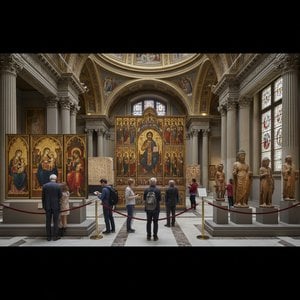
Sacred Narratives Embodied: A Comprehensive Exploration of Religious Iconography in Art History
Explore the rich history of religious iconography in art! Discover symbolism, movements & masterpieces from Byzantine to Renaissance periods. Expert insights for collectors and enthusiasts at ArtsDot.

Beyond Borders: The Spiritual & Stylistic Innovations of International Gothic Art
Explore the exquisite beauty & spiritual depth of International Gothic art. Discover key artists like Simone Martini & Pol de Limbourg, its origins, symbolism, and lasting influence on European painting. Expert insights at ArtsDot.

Sacred Narratives on Canvas: Exploring Religious Painting Through History
Explore the rich history of religious painting with ArtsDot.com! Discover iconic artworks, symbolism & techniques from antiquity to the Renaissance. Enhance your art appreciation today.