


Slika prati vaše izbore: , .
Opis predmeta
 Pročitaj više
Biografija umetnika
Explore the landscapes & Orientalist works of Eugène Cicéri, a 19th-century French painter known for his realistic watercolors & lithographs.
Naručite svoj u četiri jednostavna koraka
Ne žurite. Možete promeniti bilo koji odgovor; cena u vašoj korpi se ažurira nakon svakog izbora.
1 Prvi od četiri koraka
Koju veličinu želite?
Ovi formati zadržavaju proporcije originalnog slikarskog dela. Crtež prikazuje vaš izbor na zidu, iznad dvometarske garniture.
Ili unesite sopstvene dimenzije
Izaberite jednu od naših unapred definisanih veličina koje odgovaraju originalnim proporcijama umetničkog dela.

Unesite potrebnu širinu i visinu kako bi se slika uklopila u vaš ram ili zid. Pošto je ovo ručno oslikano delo, umetnik može za dimenzije drugačijeg oblika naslikati malo više prostora oko slike ili malo skratiti ivice — izbor je na vama. Pre početka rada, poslaćemo vam digitalni prikaz radi potvrde. Slika prikazana na ovoj stranici ne predstavlja konačan rezultat — samo digitalni prikaz pokazuje stvarnu sliku.
2 Drugi od četiri koraka
Na koji način želite da bude pripremljeno: u rolni, na platnu ili u ramu?
Cene u nastavku odnose se na dimenziju koju ste izabrali u prvom koraku.
Izaberite ivice platna
Izaberite svoj okvir

Beli rub дин1

zamrljene ivice дин1

Prošireno дин1

P118B дин10

P118H дин10

P118W дин10

P438Z дин10

P508JH дин12

P508YH дин12

P805H дин10

P805Z дин10

P919BZ дин10

P919G дин10

P919XJ дин10

P959ZH дин10

P968JZ дин12

W106C дин8

W218G дин10

W218JH дин8

W218Y дин10

W307PJ дин10

W316G дин10

W316PJ дин8

W316Y дин10

W398PJ дин8

W4111J дин10

W500HY дин15

W500JH дин15

W692G дин12

W849H дин8

W940BG дин15

W953PJ дин8

H24-GOLD дин30

H24-SILVER дин30

H36-GOLD дин45

H36-SILVER дин45
Uokvireno
Profil: . Ukupna veličina sa okvirom: .
3 Treći od četiri koraka
Da li biste želeli da nešto promenite na slici?
Većina ljudi odgovara sa ne. Pošto je svaka slika ručno rađena, naš umetnik je može i prilagoditi vašim željama.
Nakon porudžbine, tim ArtsDot.com će poslati imejl klijentu radi dobijanja uputstava i dostaviti prikaz makete
4 Četvrti korak od četiri
Nekoliko opcija za završnu obradu
Sve su opcione. Odgovori koji su već izabrani ne podrazumevaju dodatni trošak.
Ko je autor?
Svetska isporuka () za 3/4 nedelje umesto uobičajenih 5 nedelja. (21 новембар). Bez kompromisa po pitanju kvaliteta.
Plakica, kao u muzeju?
Detalji gravirane bronze ploče
This elegant plaque features the artist's name and the title of the artwork, finely engraved for a timeless presentation.
It is made from bronze with a refined, elegant finish. The text is precisely laser-engraved for a sharp and permanent result. Measuring 9x2 cm, the plaque is compact yet easy to read. It's built to be durable and scratch-resistant, offering a professional, museum-quality look. Mounting is simple thanks to the included adhesive backing.
Detalji prozirne akrilne pločice
The plaque includes essential engraved details such as the artist's name, the title of the artwork, the date it was created, the type of media used-like oil on canvas or watercolor-a brief description of the piece, and a QR code that links to the complete artwork information.
It is crafted from clear acrylic, offering a sleek, modern appearance. The text is UV-engraved in black to ensure strong visual contrast. With a size of 10x15 cm, it ensures optimal readability. It comes equipped with two metal hooks for secure wall mounting. The plaque is designed to be weather-resistant, making it suitable for various environments, and it includes interactive features that work seamlessly with smartphone scanning.
Detalji crne akrilne pločice
This elegant plaque includes engraved information such as the artist's name, the title of the artwork, the date it was created, the type of media used (like oil on canvas or watercolor), a short description of the artwork, and a QR code for quick access to more information.
The plaque itself is made from refined black acrylic with a premium finish. The text is laser-engraved in white for high contrast and readability. Its size is 10x15 cm, designed to be easy to read. It comes with two metal hooks for professional mounting. The design is sleek and fits any interior style. It is also weather-resistant and durable, with built-in digital integration for mobile compatibility.
Zaštitni lak?
Kada vam je potrebno?
✓ Proverite i naručite
Vaša slika, upravo onakva kakvu ste naručili

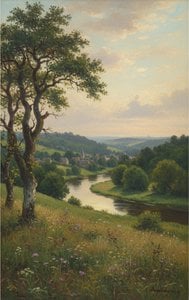
Landscape
Tehnika reprodukcije
Dimenzije reprodukcije
-

Vrhunski maestri umetnosti
Više detalja, prefinjenosti i dodatnog vremena za izradu
-

Okvir za reprodukciju
-
-
Za umetnička dela ili reprodukcije čija je bilo koja strana veća od 105 cm (približno 41 inč), okvir će biti isporučen u obliku rastavljenog seta za sklapanje. Ovaj metod osigurava bezbednu dostavu i sprečava oštećenja tokom transporta.
Potrebna je profesionalna montaža – ovo nije proizvod namenjen samostalnoj izradi.
Set mora sastaviti i platno zategnuti iskusni profesionalni ramitelj, koristeći drveni lepak (nije uključen u set), hvataljku za zatezanje platna i stege kako bi se održao prav ugao okvira dok se lepak suši. Nepravilno sklapanje ili neravnomerno zategnuto platno mogu trajno oštetiti umetničko delo, što nije pokriveno našom garancijom.
 Za umetnička dela ili reprodukcije čija je bilo koja strana veća od 105 cm (približno 41 inč), okvir će biti isporučen u obliku rastavljenog seta za sklapanje. Ovaj metod osigurava bezbednu dostavu i sprečava oštećenja tokom transporta.
Sve šipke od masivnog drveta su uključene, precizno isečene po veličini.
Montira se pomoću priloženih šrafova, uz dodatno korišćenje lepka za drvo za spojeve u uglovima, koji nije uključen u set i koji vaš čuvar okvira mora obezbediti.
Potreban je profesionalni alat koji nije uključen u set: klešta za zatezanje platna (zatezač) i stege za održavanje pravih uglova letvica tokom sušenja lepka.
Važno:
Za spojeve u uglovima neophodan je lepak za drvo, šipke se moraju pričvrstiti stezgama dok lepak potpuno ne osuši, a za zatezanje platna na sklopljenom ramu potrebne su hvataljke za zatezanje platna. Nijedan od ovih alata nije uključen u komplet. Pre naručivanja ove veličine, molimo Vas da unapred obezbedite iskusnog profesionalca za ramačenje.

Kratki opis natpisa
-
-

Zaštitni lak
Sjajni lak (pojačava intenzitet boja, štiti od svetlosti i vlage)
-

Personalizujte svoje umetničko delo
Primeri mogućnosti izmene: Zamena lica fotografijom kupca; Dodavanje ljubimca (npr. zamena mačke psom); Uključivanje skrivene poruke u pozadini; Promena pejzaža ili elemenata pozadine.
-

Hitna dostava
Svetska isporuka () za 3/4 nedelje umesto uobičajenih 5 nedelja. (21 новембар). Bez kompromisa po pitanju kvaliteta.
-
Brza dostava
Dostava širom sveta () u roku od 5 nedelja. (28 новембар).
Uključeno u cenu
Ukupna cena
дин 27591
Opcija sa staklom dostupna je samo za dimenzije manje od 110 cm
Uključeno uz svaku porudžbinu
- Besplatna ekspresna dostava širom sveta
- Visokokvalitetno laneno platno
- Potpuno osiguranje transporta
- Garancija povraćaja carine i uvoznih dažbina
- Garancija vernosti boja
- Politika povraćaja u roku od 100 dana (samo u slučaju nedostataka)
- Garancija povrata 100% novca
- Popust na više proizvoda


Pitanja i odgovori
Pod kojim drugim imenima je Eugène Cicéri poznat/a?
Ostala imena zabeležena za Eugène Cicéri, autora dela "Landscape", uključuju Eugenio Ciceri, E. Ciceri, Eug. Ciceri, Eug. Cicery, Cicery.
Koja je dominantna boja dela „Landscape”, autor Eugène Cicéri?
Dominantna boja dela „Landscape”, autor Eugène Cicéri je Cobalt Violet (#869dc4).
Da li postoji prezentacija u obliku slajdova za „Landscape”, autor Eugène Cicéri?
Dijaporama dela "Landscape" dostupna je na stranici Galerija slika tog umetničkog dela.
Saznajte više o ovoj slici
 Pregledaj u prostoru
 Pređi na štampu
 Pošalji
 Podeli
 Detalji o delu
 Vodič
Vodič

 Preuzmi
 Slični predmeti
 Rendgenski snimak
 Automatska prezentacija
 Pitanja i odgovori
 Statistika
Srodna umetnička dela


Eugène Cicéri
1813 - 1890, France
Biografija umetnika
Eugène Cicéri: A Painter of Soul and Alpine Landscapes
Eugène Cicéri (1813 – 1890) was a French landscape painter who emerged from the Bourron-Marlotte School, a movement dedicated to capturing the essence of rural life and the sublime beauty of the French Alps. Though overshadowed by his contemporaries like Jean-François Millet and Frédéric Bazille, Cicéri’s distinctive style—characterized by meticulous realism combined with expressive tonal harmonies—earned him recognition within the Barbizon School and established him as a significant contributor to European Romanticism.- Early Life & Training: Born in Paris, Cicéri received his initial artistic training from Jean-Baptiste Camille Bouchardy, a respected teacher known for his academic approach to painting. This grounding in classical principles would profoundly influence his later work, shaping his meticulous observation of nature and his commitment to portraying it with accuracy.
- The Bourron School & Alpine Inspiration: Cicéri joined the Bourron School around 1840, immersing himself in a collective effort to depict the landscapes of Auvergne and Provence. The school’s ethos—rooted in plein air painting and an idealized vision of rural life—provided Cicéri with fertile ground for experimentation and artistic growth. However, it was his fascination with the Alpine region that truly captivated him, becoming the dominant subject of his oeuvre.
- Technique & Style: Cicéri’s technique was marked by painstaking detail and a masterful command of watercolor pigments. He employed subtle gradations of tone—a hallmark of Barbizon painting—to convey atmospheric depth and luminosity. Unlike some of his peers who favored looser brushstrokes, Cicéri meticulously rendered textures and contours, striving to capture the palpable presence of the natural world.
- Notable Works & Recognition: Cicéri’s landscapes gained considerable acclaim during his lifetime, particularly those depicting Alpine vistas bathed in golden light. Among his most celebrated paintings are “Wallachians,” a dramatic depiction of Romanian peasants amidst rugged mountains, and “Lithograph of Mosburg in Wiesbaden,” showcasing the grandeur of Wiesbaden Castle against a backdrop of snow-capped peaks. His prints were exhibited at the Salon and garnered critical praise for their artistic merit.
- Legacy & Influence: Cicéri’s work continues to resonate with viewers today, embodying the Romantic ideal of communion with nature and reflecting the profound impact of topographical illustration on 19th-century art. Although he didn't achieve the fame of some other Barbizon artists, his dedication to realism and tonal harmony cemented his place as a pivotal figure in French landscape painting—a painter who truly captured ‘the soul’ of Alpine scenery.
Connections & Collaborations
Cicéri's artistic journey intersected with the influential Isabey family, particularly Jean-Hippolyte Isabey Sr., who championed his work and encouraged him to explore lithography as a medium for disseminating landscape prints. This collaboration resulted in stunning topographical illustrations that documented Alpine expeditions and contributed significantly to the visual culture of the era. Furthermore, Cicéri’s artistic sensibilities aligned with those of Eugène Carrière and Frédéric Bazille—fellow Bourron School members—creating a vibrant intellectual and aesthetic environment conducive to artistic innovation.Povezani članci
Henri-Joseph Harpignies: Capturing the Poetic Essence of the French Landscape
Explore the serene landscapes of Henri-Joseph Harpignies, a master of the Barbizon School. Discover his atmospheric paintings, recurring themes & enduring legacy in 19th-century French art. Learn more at ArtsDot.

25 Masterpieces by Ernst Ludwig Kirchner: The Soul of German Expressionism
Explore 25 iconic Ernst Ludwig Kirchner masterpieces of German Expressionism. Discover the full collection online at ArtsDot.com.

Masterpieces of the Soil: The Top 25 Artworks by Jean-François Millet
Immerse yourself in the soul of French Realism with our curated guide to the top 25 Jean-François Millet artworks. Explore the profound beauty of Barbizon school masterpieces and find museum-quality art reproductions for your home. Discover all masterpieces on ArtsDot.com.