Portrait of Georges Seurat

Your Guide to the 100 Most Famous Georges Seurat Paintings

Updated oktober 2026 · ranked by our popularity score (searches, visits and orders for each work) · 438 works by Georges Seurat in our catalogue

In short

Georges Seurat's best-known piece is Georges Pierre Seurat Pionir svetleče natančnosti: Življenje in umetnost Georga Seurata Paris Francija 1859 1886 1891 Pariški nedeljski dan: Ujeti moderno življenje 208 x 308 cm Nedelja na otoku La Grande Jatte A Sunday Afternoon on the Island o (1886). You'll find it at the Art Institute of Chicago in Chicago. Next on the list are Kopatelji v Asnieresu, 1889 and Cirkuski Seans (Parada cirkusa) (1888). We have 438 works by Georges Seurat in our catalogue; this guide picks out the 100 best known, with the year, the museum and the story of each piece.

1859 – 1891, nekdanje 5. pariško okrožje Neoimpresionizem Most works: Musée d'Orsay

The 10 Georges Seurat paintings to know first

1
Georges Pierre Seurat

Pionir svetleče natančnosti: Življenje in umetnost Georga Seurata

Paris

Francija

1859

1886

1891

Pariški nedeljski dan: Ujeti moderno življenje

208 x 308 cm

Nedelja na otoku La Grande Jatte

A Sunday Afternoon on the Island o (1886) by Georges Seurat

Georges Pierre Seurat Pionir svetleče natančnosti: Življenje in umetnost Georga Seurata Paris Francija 1859 1886 1891 Pariški nedeljski dan: Ujeti moderno življenje 208 x 308 cm Nedelja na otoku La Grande Jatte A Sunday Afternoon on the Island o

1886 · Olje na platnu · Art Institute of Chicago, Chicago

Nedelja na otoku La Grande Jatte: Simfonija barve in modernega življenja Georges Seuratovo mojstrovino "A Sunday Afternoon on the Island of La Grande Jatte" ni le prikaz nedeljskega dopoldneva ob Seni; je revolucionarno raziskovanje barve, svetlobe in nastajajoče sodobne dobe. Ustvarjeno med letoma 1884 in 1886, ta ikonična slika nas popelje na mirno obrežje otoka La Grande Jatte, kjer se nam odpre pogled v pariško družbo v ključnem zgodovinskem trenutku.…

2
Kopatelji v Asnieresu, 1889 by Georges Seurat

Kopatelji v Asnieresu, 1889

Olje na platnu · National Gallery, London

Georges Seuratovo delo "Bañistas en Asnieres" (Kopatelji v Asnieresu) iz leta 1889 ni le poslikana scena; je vizualna pesem o poletnem popoldnevu, sprostitvi in družbenem življenju. To mojstrovina nas potaplja v svet nežnih pastelnih odtenkov, kjer se ljudje veselijo dneva ob vodi, izžarejajoč občutek miru in radosti. Seurat je z neverjetno natančnostjo zajel trenutek sprostitve, ki nas poziva, da se pridružimo temu prizoru in uživamo v toplini sonca ter nežnem…

3
Cirkuski Seans (Parada cirkusa) (1888) by Georges Seurat

Cirkuski Seans (Parada cirkusa)

1888 · Olje na platnu · Metropolitanski muzej umetnosti, New York

Cirkuski Sideshow: Ujetost Dinamike in Barve Georges Pierre Seuratovo delo "Cirkuski Sideshow" (Parade de cirque) iz leta 1888 ni le slika, temveč vizualna poezija, ki oživi živahnost cirkuske predstave. To mojstrstvo, ustvarjeno s pomočjo inovativne tehnike pointilizma, je pričevanje Seuratovega neposrednega razumevanja sodobnega življenja in njegove sposobnosti, da z izjemno natančnostjo in barvo ujame bistvo trenutka. Slika nas potaplja v svet gibanja in energije, kjer se vsak pikasta točka barve…

4
Models (1887) by Georges Seurat

Models

1887 · Acrylic On Canvas · Barnes Foundation, Philadelphia

Georges Pierre Seurat’s “Models,” completed in 1887, stands as an emblem of the Impressionist movement's final gasp before embracing the radical innovations of Post-Impressionism. Painted during a period of intense artistic experimentation—a time when artists wrestled with reconciling scientific understanding with expressive emotion—the canvas embodies Seurat’s groundbreaking Pointillist technique and offers a glimpse into the intellectual fervor that fueled this transformative era.

5
Nedelja popoldne na otoku La Grande Jatte by Georges Seurat

Nedelja popoldne na otoku La Grande Jatte

Olje na platnu

Del Georgesa Seurata, Nedelja popoldne na otoku La Grande Jatte (1884–1886), ni le preprosta prikazovanje prostora za druženje; je revolucionarna izjava o percepciji, družbi in osvitu moderne umetnosti. To monumentalno platno – z impresivnimi dimenzijami 208 x 308 cm – gledalca vabi v skrbno konstruiran svet ter ponuja vpogled v parizsko življenje v ključnem trenutku zgodovine.

6
Bañistas en Asnieres (1884) by Georges Seurat

Bañistas en Asnieres

1884 · Olje na platnu

(Bañisti pri Asnièresih), ki ga je Georges Seurat ustvaril leta 1884, predstavlja monumentalno del, ki najbolje ponazarja pionirsko tehniko umetnika – puncillizem. Ta slika velikega formata zajema mirno obrežno sceno blizu Pariza, kjer se postave v uživajo v prostoračenih dejavnostah ob vodi. Kompozicija je uravnotežena, a hkrati dinamična, z jasno razdelitvijo med prvim in zadnjim planom, kar ustvarja občutek globine in perspektive.

7
The circus by Georges Seurat

The circus

Mosaic · Musée d'Orsay, Pariz

Step into the luminous heart of the nineteenth century with Georges Seurat’s breathtaking exploration of spectacle, The Circus. This masterpiece does not merely depict a scene; it captures the very pulse of an era. At its center, a magnificent white horse and its rider command the arena, frozen in a moment of poised athleticism that radiates grace and strength. Surrounding this central performance, the viewer is enveloped by tiered boxes…

8
Studija za "Un dimanche après midi à l'île de la Grande Jatte" (1884) by Georges Seurat

Studija za "Un dimanche après midi à l'île de la Grande Jatte"

1884 · Akril na platnu · Musée d'Orsay, Pariz

Georges Seurat: A Moment Frozen in Light – The Study for “Un dimanche après midi à l'île de la Grande Jatte” Seuratova *Studija za "Un dimanche après midi à l'île de la Grande Jatte"* iz leta 1884 je več kot le skica; to je samostojno delo, ki nam zagovori o umetnikovem razmišljanju in revolucionarnem pristopu k slikanju. Ta majhna, le 16 x 25 cm velika konté cvetna risba nas popelje…

9
Končni skic za Pliškanje na Asnièresu (1884) by Georges Seurat

Končni skic za Pliškanje na Asnièresu

1884 · Akril na platnu · Art Institute of Chicago, Chicago

Georges Seurat in Asnieres: A Moment of Quiet Revolution Georges Pierre Seuratova *Final Study for Bathing at Asnières* iz leta 1884 je več kot le skica; to je koncentrirana različica idej, ki so kasneje razcvetle v njegovem monumentalnem delu *Bathers at Asnières*. Ta intimna oljna slika na platnu (15 x 25 cm) nam ponuja poglobljen pogled v rojstvo Neo-Impressionizma in Seuratovo revolucionarno pristop k risanju. Slednja je ključna za razumevanje…

10
Les poseuses (1886) by Georges Seurat

Les poseuses

1886 · Oil On Canvas

A Summer’s Day Frozen in Time: Exploring Seurat's *Les Poseuses* Les Poseuses (The Posed Women), painted in 1886 by Georges Pierre Seurat, is a quintessential example of Neo-Impressionism and a landmark work within the Post-Impressionist movement. This large-scale canvas isn’t merely a depiction of nude figures; it's a meticulously constructed exploration of color, light, and modern life. Subject & Composition: A Scene of Leisurely Modernity The painting presents a group…

Numbers 11 to 100: more Georges Seurat paintings

11Čoln (1884) by Georges SeuratČoln1884 · National Gallery of Art 12Eiffelov torn (1889) by Georges SeuratEiffelov torn1889 · Fine Arts Museums of San Francisco 13Bridge at Courbevoie (1887) by Georges SeuratBridge at Courbevoie1887 · Courtauld Gallery 14Chahut (1890) by Georges SeuratChahut1890 · Kröller-Müller Museum 15The Eiffel tower (1889) by Georges SeuratThe Eiffel tower1889 16Study for 'A Sunday Afternoon on the Island of La Grande Jatte' (1886) by Georges SeuratStudy for 'A Sunday Afternoon on the Island of La Grande Jatte'1886 · Musée d'Orsay 17grande jatte (large scan) by Georges Seuratgrande jatte (large scan) 18Farm Women at Work (1883) by Georges SeuratFarm Women at Work1883 · Solomon R. Guggenheim Museum 19Study for 'La Grande Jatte' (1885) by Georges SeuratStudy for 'La Grande Jatte'1885 · Art Institute of Chicago 20Le Chahut (1890) by Georges SeuratLe Chahut1890 · Kröller-Müller Museum 21The river Seine at La Grande-Jatte (1888) by Georges SeuratThe river Seine at La Grande-Jatte1888 22At the ''Concert Européen'' by Georges SeuratAt the ''Concert Européen'' 23Village Road (1883) by Georges SeuratVillage Road1883 · Musée d'Orsay 24Women by the Water (1884) by Georges SeuratWomen by the Water1884 25Watering Can (1883) by Georges SeuratWatering Can1883 26Rainbow (1883) by Georges SeuratRainbow1883 · National Gallery 27Stone breakers, Le-Raincy (1881) by Georges SeuratStone breakers, Le-Raincy1881 28Woman with Umbrella (1884) by Georges SeuratWoman with Umbrella1884 29The Artist's Mother by Georges SeuratThe Artist's Mother 30Seine pri La Grandjatte pomladno (1888) by Georges SeuratSeine pri La Grandjatte pomladno1888 · Metropolitanski muzej umetnosti 31Portret Edmonda-Françoisa Aman-Jeana (1883) by Georges SeuratPortret Edmonda-Françoisa Aman-Jeana1883 · Metropolitanski muzej umetnosti 32Port-en-Bessin, the Semaphore and Cliffs (1888) by Georges SeuratPort-en-Bessin, the Semaphore and Cliffs1888 · National Gallery of Art 33Une baignade, Asniéres, NG, Lond (1884) by Georges SeuratUne baignade, Asniéres, NG, Lond1884 34Group of Figures (Study for "Un dimanche à la Grande Jatte") (1884) by Georges SeuratGroup of Figures (Study for "Un dimanche à la Grande Jatte")1884 · Barnes Foundation 35La Grande Jatte (1884) by Georges SeuratLa Grande Jatte1884 36Port-en-Bessin, vhod v zunanjo pristanišče (1888) by Georges SeuratPort-en-Bessin, vhod v zunanjo pristanišče1888 · MoMA - Muzej moderne umetnosti 37Artist at work (1884) by Georges SeuratArtist at work1884 38Port-en-Bessin (1888) by Georges SeuratPort-en-Bessin1888 39White dog (1885) by Georges SeuratWhite dog1885 · Galerie Rosengart 40Study for 'Invitation to the Sideshow' (1888) by Georges SeuratStudy for 'Invitation to the Sideshow'1888 · Foundation E.G. Bührle Collection 41Rock-Breakers, Le Raincy (1882) by Georges SeuratRock-Breakers, Le Raincy1882 · Norton Simon Museum 42Sedeči akt: Študija za (1883) by Georges SeuratSedeči akt: Študija za1883 · Scottish National Gallery 43The Circus (1891) by Georges SeuratThe Circus1891 · Musée d'Orsay 44Boy with horse (1883) by Georges SeuratBoy with horse1883 45untitled (1662) by Georges Seuratuntitled (1662) 46Port-en-Bessin Entrance to the Harbor (1888) by Georges SeuratPort-en-Bessin Entrance to the Harbor1888 47Landscape by Georges SeuratLandscape 48untitled (4494) by Georges Seuratuntitled (4494) 49The Mower (1882) by Georges SeuratThe Mower1882 · Metropolitanski muzej umetnosti 50Seascape (Gravelines) (1890) by Georges SeuratSeascape (Gravelines)1890 · National Gallery of Art 51The Models (1888) by Georges SeuratThe Models1888 52La Grande Jatte (Študija VI) (1884) by Georges SeuratLa Grande Jatte (Študija VI)1884 · National Gallery 53Studija za »Nedelja na otoku La Grand Jatte« – Hodec para by Georges SeuratStudija za »Nedelja na otoku La Grand Jatte« – Hodec paraFitzwilliam College 54Young Peasant in Blue (1881) by Georges SeuratYoung Peasant in Blue1881 · Musée d'Orsay 55La Grande Jatte - Woman Fishing and Seated Figures by Georges SeuratLa Grande Jatte - Woman Fishing and Seated Figures 56Seated Man. Study for ''Bathers at Asnieres'' (1883) by Georges SeuratSeated Man. Study for ''Bathers at Asnieres''1883 · Cleveland Museum of Art 57Ville d'Avray, France, maisons blanches (1882) by Georges SeuratVille d'Avray, France, maisons blanches1882 · Walker Art Gallery 58Ženska, ki se dela lepša (1890) by Georges SeuratŽenska, ki se dela lepša1890 · Courtauld Gallery 59The Channel at Gravelines, Grand Fort-Philippe (1890) by Georges SeuratThe Channel at Gravelines, Grand Fort-Philippe1890 60Sidewalk Show (1884) by Georges SeuratSidewalk Show1884 61A River Bank (The Seine at Asnieres) (1883) by Georges SeuratA River Bank (The Seine at Asnieres)1883 62Gray Weather by Georges SeuratGray Weather 63POSEUSE DE DOS by Georges SeuratPOSEUSE DE DOS 64Study for ''The Circus'' by Georges SeuratStudy for ''The Circus'' 65Study for Bathers, Asnières by Georges SeuratStudy for Bathers, Asnières 66View of Fort Samson (1885) by Georges SeuratView of Fort Samson1885 · Ermitaž 67Une Perissoire (1884) by Georges SeuratUne Perissoire1884 68Le Bec du Hoc, Grandcamp (1885) by Georges SeuratLe Bec du Hoc, Grandcamp1885 69The Riverside (1883) by Georges SeuratThe Riverside1883 70The Hedge (also known as The Clearing) (1882) by Georges SeuratThe Hedge (also known as The Clearing)1882 71Madame Seurat Reading by Georges SeuratMadame Seurat Reading 72Sleeping Woman by Georges SeuratSleeping Woman 73Peasant with Hoe (1882) by Georges SeuratPeasant with Hoe1882 74Boy Sitting in a Meadow (1883) by Georges SeuratBoy Sitting in a Meadow1883 · Kelvingrove Art Gallery and Museum 75Young Girl Seated, Sewing by Georges SeuratYoung Girl Seated, Sewing 76The Bec du Hoc at Grandcamp Sun by Georges SeuratThe Bec du Hoc at Grandcamp Sun 77The Harbour and the Quays at Port-en-Bessin (1888) by Georges SeuratThe Harbour and the Quays at Port-en-Bessin1888 · Minneapolis Institute of Art 78Low Tide at Grandcamp (1885) by Georges SeuratLow Tide at Grandcamp1885 · Pola Museum of Art 79Beached Boats, Grandcamp by Georges SeuratBeached Boats, Grandcamp 80Beach at Gravelines (1890) by Georges SeuratBeach at Gravelines1890 81La Luzerne, Saint Denis (1885) by Georges SeuratLa Luzerne, Saint Denis1885 82Part of the studio (1887) by Georges SeuratPart of the studio1887 83Portrait of Paul Signac (1890) by Georges SeuratPortrait of Paul Signac1890 84View of Le Crotoy from Upstream by Georges SeuratView of Le Crotoy from Upstream 85On the road (1882) by Georges SeuratOn the road1882 86Preliv pri Gravelines, Grand-Fort-Philippe (1890) by Georges SeuratPreliv pri Gravelines, Grand-Fort-Philippe1890 · National Gallery 87Parade de cirque, Metropolitan (1888) by Georges SeuratParade de cirque, Metropolitan1888 88Alfalfa, St. Denis (1886) by Georges SeuratAlfalfa, St. Denis1886 89Nurse sitting holding her baby by Georges SeuratNurse sitting holding her baby 90Study for 'Une Baignade' (1883) by Georges SeuratStudy for 'Une Baignade'1883 91Man Reading on a Terrace by Georges SeuratMan Reading on a Terrace 92Forest Path, Barbizon (1883) by Georges SeuratForest Path, Barbizon1883 93ETUDE POUR UN DIMANCHE APRES MIDI A L'ILE DE LA GRANDE JATTE by Georges SeuratETUDE POUR UN DIMANCHE APRES MIDI A L'ILE DE LA GRANDE JATTE 94Horses in the Water by Georges SeuratHorses in the Water 95Grassy Riverbank (1881) by Georges SeuratGrassy Riverbank1881 96Port-en-Bessin by Georges SeuratPort-en-Bessin 97Gozd v Pontaubertu (1881) by Georges SeuratGozd v Pontaubertu1881 98Seated Woman (1882) by Georges SeuratSeated Woman1882 99Bathing at Asnieres - Clothing on the Grass by Georges SeuratBathing at Asnieres - Clothing on the Grass 100Etude dans l'Ile (1883) by Georges SeuratEtude dans l'Ile1883

Georges Seurat's paintings, period by period

What Georges Seurat painted most

The four subjects that come up most often in these pieces, each with its best-known example.

Where you can see Georges Seurat's paintings

The 8 museums that hold the most of the paintings on this page.

Museum City Works by Georges Seurat Paintings from this list
Musée d'Orsay, ParizMusée d'Orsay Pariz 21 The circus, Studija za "Un dimanche après midi à l'île de la Grande Jatte", Study for 'A Sunday Afternoon on the Island of La Grande Jatte'
National Gallery, LondonNational Gallery London 13 Kopatelji v Asnieresu, 1889, Rainbow, La Grande Jatte (Študija VI)
Metropolitanski muzej umetnosti, New YorkMetropolitanski muzej umetnosti New York 12 Cirkuski Seans (Parada cirkusa), Seine pri La Grandjatte pomladno, Portret Edmonda-Françoisa Aman-Jeana
National Gallery of Art, WashingtonNational Gallery of Art Washington 16 Čoln, Port-en-Bessin, the Semaphore and Cliffs, Seascape (Gravelines)
Art Institute of Chicago, ChicagoArt Institute of Chicago Chicago 4 Georges Pierre Seurat Pionir svetleče natančnosti: Življenje in umetnost Georga Seurata Paris Francija 1859 1886 1891 Pariški nedeljski dan: Ujeti moderno življenje 208 x 308 cm Nedelja na otoku La Grande Jatte A Sunday Afternoon on the Island o, Končni skic za Pliškanje na Asnièresu, Study for 'La Grande Jatte'
Courtauld Gallery, LondonCourtauld Gallery London 12 Bridge at Courbevoie, Ženska, ki se dela lepša
Kröller-Müller Museum, OtterloKröller-Müller Museum Otterlo 7 Chahut, Le Chahut
Barnes Foundation, PhiladelphiaBarnes Foundation Philadelphia 6 Models, Group of Figures (Study for "Un dimanche à la Grande Jatte")

Year by year: the best-known Georges Seurat pieces

Here's a decade of Georges Seurat, more or less: 11 years from 1881 to 1891, shown year by year through the best-known pieces.

Works per year

Pick a year to see its pieces.

Georges Seurat: quick answers about the paintings

What is Georges Seurat's best-known painting?See the answer

Top of the list is Georges Pierre Seurat Pionir svetleče natančnosti: Življenje in umetnost Georga Seurata Paris Francija 1859 1886 1891 Pariški nedeljski dan: Ujeti moderno življenje 208 x 308 cm Nedelja na otoku La Grande Jatte A Sunday Afternoon on the Island o (1886), Art Institute of Chicago, Chicago. Right behind it: Kopatelji v Asnieresu, 1889 and Cirkuski Seans (Parada cirkusa) (1888).

What age was Georges Seurat when creating Georges Pierre Seurat Pionir svetleče natančnosti: Življenje in umetnost Georga Seurata Paris Francija 1859 1886 1891 Pariški nedeljski dan: Ujeti moderno življenje 208 x 308 cm Nedelja na otoku La Grande Jatte A Sunday Afternoon on the Island o?See the answer

27 years old. Georges Seurat was born in 1859, and Georges Pierre Seurat Pionir svetleče natančnosti: Življenje in umetnost Georga Seurata Paris Francija 1859 1886 1891 Pariški nedeljski dan: Ujeti moderno življenje 208 x 308 cm Nedelja na otoku La Grande Jatte A Sunday Afternoon on the Island o dates from 1886.

What are Georges Seurat's top 10 paintings?See the answer

Georges Pierre Seurat Pionir svetleče natančnosti: Življenje in umetnost Georga Seurata Paris Francija 1859 1886 1891 Pariški nedeljski dan: Ujeti moderno življenje 208 x 308 cm Nedelja na otoku La Grande Jatte A Sunday Afternoon on the Island o, Kopatelji v Asnieresu, 1889, Cirkuski Seans (Parada cirkusa), Models, Nedelja popoldne na otoku La Grande Jatte, Bañistas en Asnieres, The circus, Studija za "Un dimanche après midi à l'île de la Grande Jatte", Končni skic za Pliškanje na Asnièresu and Les poseuses. You'll find the year and the museum of each in the list above.

How many works by Georges Seurat are in your catalogue?See the answer

We have 438 works by Georges Seurat in our catalogue, dated 1881 to 1891.

In which museums can you see Georges Seurat's famous works?See the answer

You'll find most of them in Musée d'Orsay (Pariz), National Gallery (London) and Metropolitanski muzej umetnosti (New York). The museum list above has the full breakdown.

When did Georges Seurat make the most famous pieces?See the answer

In 1883, more than any other time: 14 of the 100 pieces on this page date from then, Farm Women at Work among them.

What are Georges Seurat's first and last famous pieces?See the answer

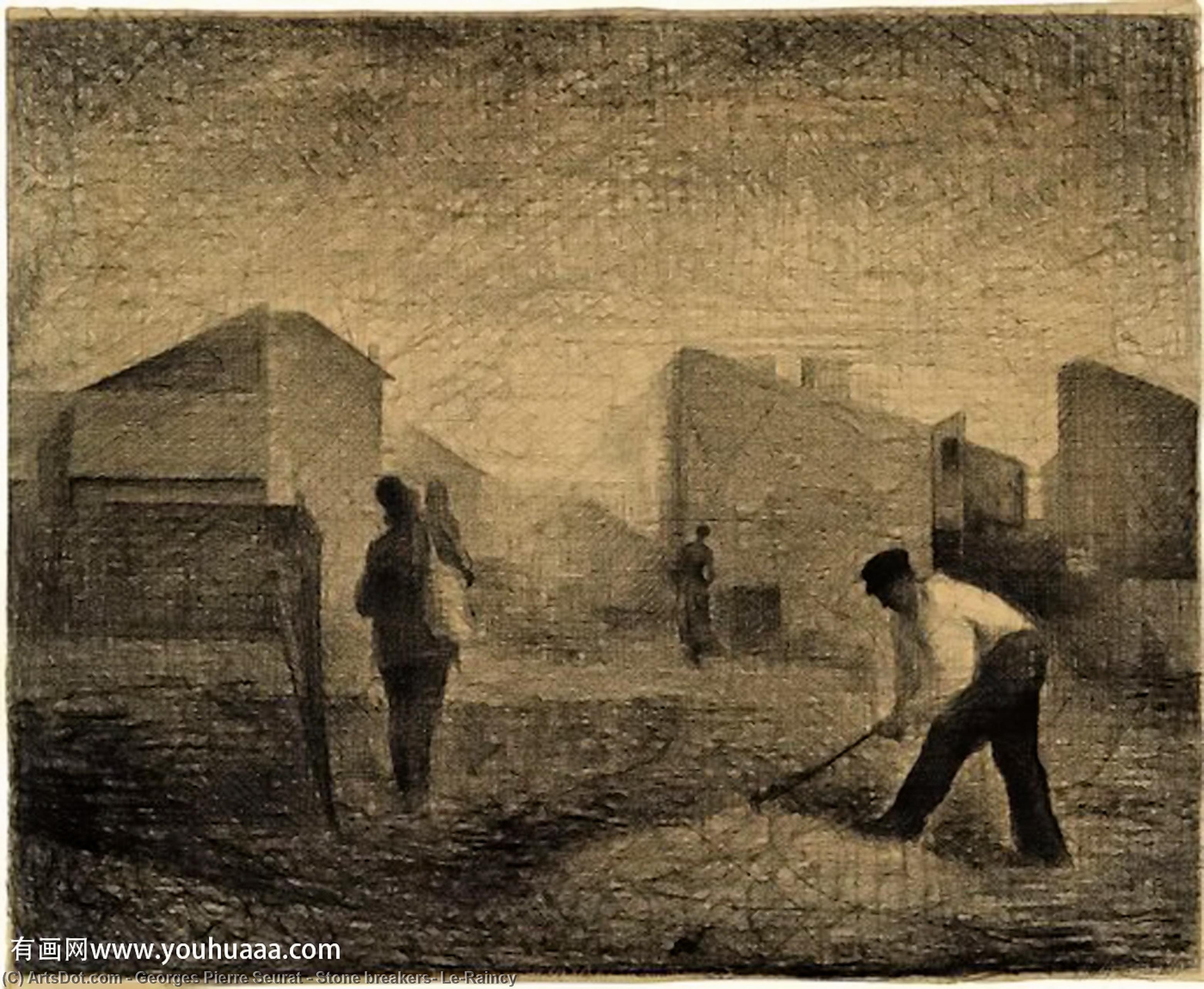
The earliest piece here is Stone breakers, Le-Raincy (1881); the most recent is The Circus (1891).

Which subjects did Georges Seurat paint most often?See the answer

Landscape (25), Color theory (23) and Leisure (10), out of the 100 pieces on this page.

Which medium shows up most in Georges Seurat's paintings?See the answer

Oil On Canvas, used in 47 of the 100 pieces on this page.

What style or movement is Georges Seurat known for?See the answer

Neoimpresionizem, as you can see in the pieces on this page.

Which famous Georges Seurat paintings are at the Musée d'Orsay?See the answer

You can see 6 of the pieces on this page at the Musée d'Orsay, Pariz, including The circus, Studija za "Un dimanche après midi à l'île de la Grande Jatte" and Study for 'A Sunday Afternoon on the Island of La Grande Jatte'.

Where can I order a Georges Seurat reproduction?See the answer

Yes. Every painting on this page is available as a hand-painted oil reproduction or a print, in the size that suits you. Just open the painting's page to order.

Georges Seurat's story

Življenje Žorža Pjerja Seurata

Da bi razumeli potek moderne slikarstva, je treba pogledati na kratko, a izjemno intenzivno obstojanje, ki ga je imel Žorž Pjer Seurat. Rodil se je v Parizu, v Franciji, 2. decembra 1859, kot sin Ernestine Faivre in Antoineja Chrysostoma Seurata, mozaika, ki je prešel od pravnega uradnika do nepremičninskega špekulanta v šampanjski regiji. Ta družinska ozadja so mu zagotovila stabilnost, ki je bila nujna za njegov hiter in discipliniran vzpon v pariški umetniški sceni. On ni le slikaril; on je arhitektonsko načrtoval nov način gledanja na svet, ki je izzival spontane impulse njegovih predhodnikov.

Njegova kariera je bila sprint, ne maraton. Umrl je v Parizu, v Franciji, 29. marca 1891, v age 31 let. Ta premature konec je pustil celovito delo, ki deluje koncentrirano in načrtovano, brez tiste razgibljene in razpelišče razvite evolucije, ki jo vidimo pri mnogih njegovih sodobnikih. Tudi njegovi zadnji, nedokončani prizori, kot je Cirk, razkrivajo um, ki je bil popolnoma zaposlen s strukturno mehaniko svetlobe in družbenim redom. Zamenjal je prebliski, bežči pogled z izračunano, trajno natančnostjo.

Vpliv njegovega kratkega življenja se meri z neprebojno gostoto njegovih tehničnih inovacij. Umetnost je odmaknil od čustvene spontanosti trenutka proti sistematičnemu, skoraj matematičnemu uporabi barv. Njegova prisotnost v zgodovini devetnajstega stoletja ostaja opredeljena po tej zavesti, da se ne bo zanahal le na intuicijo. Na platnu je iskal logiko, ki ostaja vidna v vsaki piki pigmenta, ki jo je zapustil za nas.

Z early life, družina in izobraževanje

Žorž Pjer Seurat je svojo umetniško pot začel v Parizu, kjer se je njegova družina shortly po njegovem rojstvu preselila v ulico Boulevard de Magenta. Njegovo obdobje odrajanja je oblikovalo stabilno okolje, ki ga je zagotavljal oče, Antoine Chrysostome Seurat, nekdanji pravni uradnik, ki je postal nepremičninski špekulant. Ta družinska ozadnina je mlademu umetniku omogočila dostop do formalne izobrazbe, ki je bila ključna za izzivanje ustanovljenih norm poznega 19. stoletja. Njegov razvoj ni temeljil na zgolj intuiciji; bil je zgrajen na temeljih strogo sistematične in disciplinirane obuke.

Njegova formalna izobrazba se je začela v šoli École Municipale de Sculpture et Dessin, kjer je študiral pod skulptorjem Justinom Lequienom. Ta zgodnji stik s kiparstvom je verjetno prisdelil strukturni, skoraj frizovski kakovosti, ki jo pozneje prepoznavamo v njegovih kompozicijah. Do leta 1878 se je premestil v višje sloje francuske umetnostne izobrazbe in se vpisal na prestižno šolo École des Beaux-Arts. Med svojim bivalniščem tam je študiral pod Henrijem Lehmannom, v obdobju, ki mu je vdelo tradicionalne tehnike in kompozicijsko disciplino, ki jo bo kasneje s svojo znanstveno analizo popolnoma dekonstruiral.

Tehnika in slog

Žorž Pjer Seurat je spontan, intuitivenčrt brushwork svojih predhodnikov zamenjal z izračunanim, sistematičnim pristopom k svetlobi. Razvil je pointillizem, metodo, ki jo opredelja nanašanje majhnih, ločenih pikov čiste barve na platno. To ni bila le estetska ali dekorativna izbira, temveč funkcionalna odločitev. Z uporabo divisionizma je lokalno barvo razdelil na posamezne pike, pri čemer se je zanahal na oko gledalca, ki je z optičnim mešanjem ustvarilo celovito sliko. Ta proces, ki ga je imenoval kromoluminarizem, je barvo obravnaval kot znanost, ne le kot čisto čustvo. S natančnim umeščanjem pigmenta je želel ponoviti samo fiziko vida.

Njegova natančnost se je prehajala tudi v pripravalnih delih. Za načrtovanje kompozicij je pogosto uporabljal konté kred na grobem papirju. Ta disciplinirana metoda je zagotavljala, da je vsaka pika v njegovih končnih, velikostnih delih del širše, matematično orkestrirane strukture. Rezultirajoče površine imajo ritmično, vibrirajočo kakovost, ki izvira iz napetosti med posameznimi točkami barve in enotno podobo, ki jo njihovo oko ustvari na mrežnici. Njegovo del ostaja fascinantna študija o tem, kako lahko tehnična rigoroznost usmerja vizualno percepcijo.

Ključna dela in umetniška vizija

Žorž Pjer Seurat je svojo vizijo gradil na strogem, matematičnem pristopu k svetlobi. Namesto spontanega, čutnegačnega črtanja, ki ga je uporabljali njegovi predhodniki, je izbral sistematično rekonstrukcijo vida. Ta metoda je platno spremenila v prostor optičnega izračuna, ne le v zrcalo opazovanja. Njegovo del je skušalo zajeti bistveno, neustrajno strukturo scene skozi natančno uporabo teorije barv. On ni le slikal naravo; on je tehnično zasnoval vizualno izkušnjo, ki je temeljila na tem, kako človeško oko procesira svetlobo in pigment.

Njegove monumentalne kompozicije odrazijo to neomovljivo predanost redu. A Sunday Afternoon on the Island of La Grande Jatte (1884–1886) uporablja veličastno razmerje, da bi skozi gosto mozaiko piko predstavil prizorišče pariškega prostakostja. To del deluje kot manifest Neo-impresionizma, ki fluidno gibanje nadomesti z občutkom trajne, rezaborske nepremihanosti. Podobno Bathers at Asnières (1884) prikazuje njegovo zgodnjo sposobnost združevanja klasičnih, frizastih tipov postaci z moderno, industrialno realnostjo reke Seine. Te slike dokazujejo, da je bil njegov interes skriti v stičišču znanstvene natančnosti in sodobnega življenja.

Tudi njegovi zadnji, nedokončani prizori razkrivajo nenehno preokupljenost napetjem med gibanjem in strukturo. The Circus (1890–91) uporablja neo-impresionistični slog za prikazovanje energije javnega spektakla, vendar ostaja zakorenjen v njegovi značilni nadzorovanosti oblike. V delu Young Woman Powdering Herself (1889–1890) je svojo tehniko uporabil na samotni temi in raziskoval umetnost človeške ponavosti skozi visoko konstruirano okolje. Njegovo ustvarjanje je bilo nenehno iskanje logike v svetlobi, ki jo preletni pogled impresionizma ni mogel zagotoviti.

Dediščina in vpliv

Vpliv, ki ga je Žorž Pjer Seurat pustil na poti moderne umetnosti, je mogoče meriti skozi radikalne preobratov, ki jih je njegova metoda prisilila v naslednja umetniška gibanja. Z razširjanjem meja tistega, kar lahko slika sploh doseže, je z zamenjavo intuitivnih potež predhodnikov s sistematičnim, znanstvenim pristopom k barvi in svetlobi, premaknil meje vizualnega izražanja. Ta intelektualna rigoroznost je umetnost odmaknila od zgolj reprezentacije in jo usmerila proti strukturiranemu analiziranju percepcije. Njegovo vztrajstvo pri optičnem mešanju pigmentov je temeljito spremenilo osnovno mehaniko interakcije gledalca z platnom.

Valovi njegovih tehničnih inovacij so se razlili daleč zdlaj, izven kroga neoimpresionistov. Fauvisti so prevzeli njegov poudarek na drznih, ne-naturalističnih barvah, kubisti pa so črpali iz njegove sposobnosti dekonstrukcije oblik v geometrijske komponente. Celo abstrakni ekspresionisti, ki so se osredotočili na surovost gesta, dolgujejo svojo svobodo načinu, na katerem je Seurat osvobodil barvo iz okležev tradicionalnega mešanja. Dokazal je, da je umetnost lahko hkrati tako stroga intelektualna poteljava kot tudi metod za zajemanje tiste neulovljive esence sodobnega življenja.

All 438 works by Georges Seurat →