


1


Posodobljeno november 2026 · uvrščeno glede na naš skoraj priljubljenosti (iskanja, obiske in naročila za vsako delo) · 16 del v našem katalogu avtorja Knud Agger
Kratek opis
Sliko, ki jo najbolj pozna Knud Agger, predstavlja Uncle Hugo from Vansittart (1932), ki jo lahko vidite v muzeju Statens Museum For Kunst v mestu Kopenhagen. Takoj za tem sledita Portrait of a Lady with Red Background (1934) in At the Window (1939). Od 16 del umetnika Knud Agger v našem katalogu so teh 16 najbolj znanih. Vsako od njih vključuje leto nastanka, muzej in kratek opis tistega, kar ga izpostavlja.


1 muzejev, ki vsebujo največ slik na tej strani.
| Muzeji | Mesto | Sloga Knud Agger | Slike iz tega seznama |
|---|---|---|---|
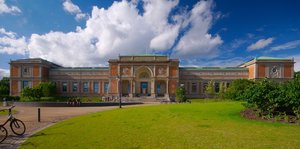 Statens Museum For Kunst |
Kopenhagen | 16 | Uncle Hugo from Vansittart, Portrait of a Lady with Red Background, At the Window |
Izberite desetletje, da si ogledate njegovo najboljše delo.
Na vrhu liste je Uncle Hugo from Vansittart (1932), Statens Museum For Kunst, Kopenhagen. Takoj za njim sta Portrait of a Lady with Red Background (1934) in At the Window (1939).
Starosti 37 let. Knud Agger se je rodil(a) leta 1895, njegovo/njino delo Uncle Hugo from Vansittart pa izvira iz leta 1932.
Uncle Hugo from Vansittart, Portrait of a Lady with Red Background, At the Window, The Veranda. September, Lady Wearing a Black Hat, Ingeborg Agger, née Stuhlmann, Wife of the Artist, A Woman and two Children at the Beach, Late Afternoon by the Sea, Surf at Hvide Sande in On the Balcony. Summer. Leto in muzej vsakega dela boste našli v zgornjem seznamu.
V našem katalogu je 16 del umetnika Knud Agger, datiranih od 1925 do 1966.
Večino njih boste našli v Statens Museum For Kunst (Kopenhagen). Na seznamu muzejev zgoraj je naveden celoten pregled.
V obdobju 1930s, bolj kot koli drugič: 6 od 16 del na tej strani izvira iz tega obdobja, med katerimi je Uncle Hugo from Vansittart.
Najstarejše delo tukaj je A Woman and two Children at the Beach (1925); najsodobnejše je Study of a Stone (1966).
Na tej strani lahko v muzeju Statens Museum For Kunst, Kopenhagen vidite 16 dela, vključno s Uncle Hugo from Vansittart, Portrait of a Lady with Red Background in At the Window.
To look at the work of Knud Agger is to confront a specific, heavy reality. He was not a man of academic pretension, but a self-taught Danish painter who moved from the architectural precision of his studies in Copenhagen toward a deeply existentialist mode of expression. His trajectory followed a path from the literal to the symbolic. Early on, his canvases captured the mundane rhythms of everyday life, yet there was an inevitable shift occurring. By the time he settled in Helsingør, his focus had narrowed and deepened, moving away from mere observation toward a style that felt both visionary and grounded in the physical earth.
His development was marked by a retreat into the landscape, specifically the regions of Limfjorden and Venø. In 1928, he returned to his native Jutland to document these landscapes, but it was his later years that defined his true aesthetic impact. The work became less about what the eye sees and more about what the spirit feels under pressure. He utilized oil on canvas to create scenes like Rolling Hills Under Heavy Sky, where the atmosphere is thick with a sense of brooding presence. This was not decorative art; it was an engagement with the weight of existence.
Agger’s technical evolution reveals a painter obsessed with the tactile elements of his environment. While he began with traditional figurative approaches, his later methods became increasingly experimental and tied to the literal soil of Denmark. He did not merely paint the sky; he sought to incorporate its essence through unconventional means.
The following elements defined his late-stage approach:
This reliance on found objects—the stones from Venø—transformed his work from landscape painting into something more sculptural and textured. The stones eventually dominated his compositions, forcing the viewer to acknowledge the physical reality of the land he inhabited.
Agger’s geography was his destiny. From his origins in Holstebro to his long residence in Helsingør, his movements were dictated by a need to remain connected to specific landscapes. His work in 1939 for the state high school at Struer, which included depictions of the town and its harbor, shows an artist capable of large-scale, communal engagement. However, it was the summerhouse on Venø that served as his true laboratory.
Even as heart problems forced him to cease his journeys to Venø in 1965, the influence of that island remained embedded in his final works. He had moved through Expressionism and Figurative Art to reach a point where the distinction between the subject and the medium began to dissolve. His receipt of the Thorvaldsen Medal in 1971 serves as a concrete marker of the recognition his rigorous, self-directed path eventually commanded within the Danish art scene.


