Portret Floris van Dyck

Vaš vodnik po 6 najbolj znanih slikah avtorja Floris van Dyck

Posodobljeno oktober 2026 · uvrščeno glede na naš skoraj priljubljenosti (iskanja, obiske in naročila za vsako delo) · 6 del v našem katalogu avtorja Floris van Dyck

Kratek opis

Najbolj znano delo umetnika Floris van Dyck je Laid Table with Cheeses and Fruit (detail) (1615). Najdete ga v muzeju Rijksmuseum v mestu Amsterdam. Na seznamu sta še Laid Table with Cheese, Fruit and a Berkemeyer (1610) in Laid Table (1622). V našem katalogu imamo 6 del avtorja Floris van Dyck; ta vodnik izpostavlja 6 najbolj znanih del, vključno z letom nastanka, muzejem in zgodbojo vsake slike.

1575 – 1651, Delft Največ del: Rijksmuseum

10 slik umetnika Floris van Dyck, ki jih morate najprej poznati

1
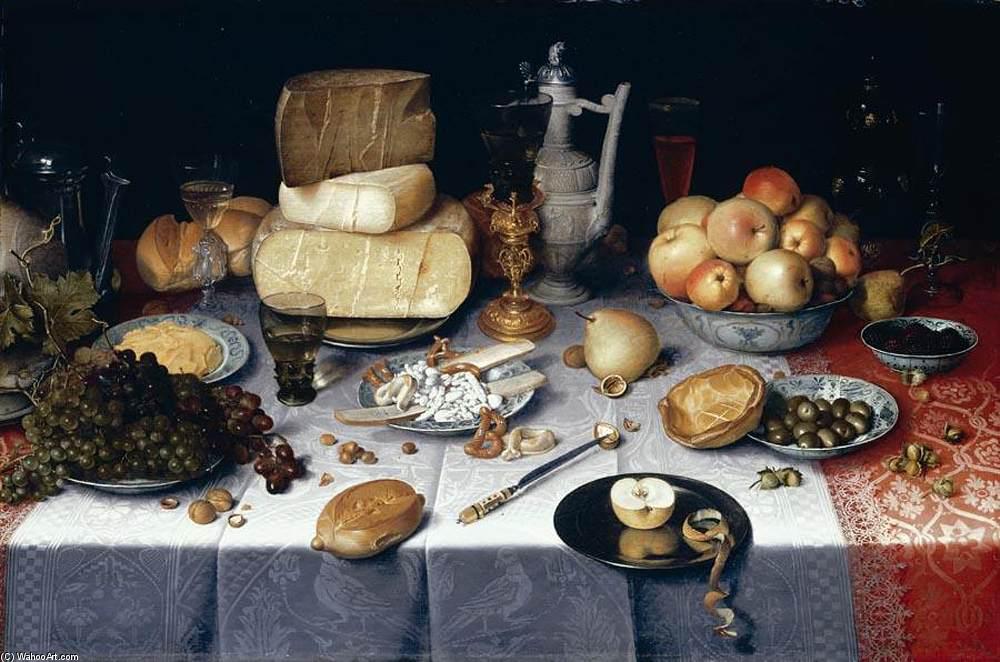
Laid Table with Cheeses and Fruit (detail) (1615) avtorja Floris van Dyck

Laid Table with Cheeses and Fruit (detail)

1615 · Oil · Rijksmuseum, Amsterdam

In the quiet, contemplative realm of Dutch Golden Age still life, few artists captured the ephemeral beauty of a moment as exquisitely as Floris Claesz van Dijck. His work, Laid Table with Cheeses and Fruit (detail), serves as a breathtaking masterclass in the art of observation. At first glance, the viewer is greeted by a scene of deceptive simplicity: a table draped in white cloth, scattered with the bountiful offerings…

Hand-painted oil reproduction from $175 29 × 35 cm
Pridobite ročno naslikano Preberite njegovo zgodbo

Kaj je Floris van Dyck naslikal največ

Četiri teme, ki se v teh delih najpogosteje pojavljajo, vsaka z svojim najbolj znanim primerom.

Kje si lahko ogledate slike avtorja Floris van Dyck

3 muzejev, ki vsebujo največ slik na tej strani.

Muzej Mesto Sloga Floris van Dyck Slike iz tega seznama
Rijksmuseum, AmsterdamRijksmuseum Amsterdam 2 Laid Table with Cheeses and Fruit (detail), Laid Table with Cheeses and Fruit
National Gallery, LondonNational Gallery London 1 Laid Table
Frans Halsmuseum, HarenFrans Halsmuseum Haren 1 Still-Life with Fruit, Nuts and Cheese

Leto za letom: najbolj znana dela umetnika Floris van Dyck

Delo umetnika Floris van Dyck tukaj obdaja obdobje 13 let, od 1610 do 1622. Pregledajte jih letopisno.

Delo po letih

Izberite leto in oglej njegova dela.

Floris van Dyck: hitri odgovori o slikah

Katero je najbolj znano sliko umetnika Floris van Dyck?Poglejte odgovor

Na vrhu liste je Laid Table with Cheeses and Fruit (detail) (1615), Rijksmuseum, Amsterdam. Takoj za njim sta Laid Table with Cheese, Fruit and a Berkemeyer (1610) in Laid Table (1622).

Koliko je bil Floris van Dyck let, ko je ustvaril Laid Table with Cheeses and Fruit (detail)?Poglejte odgovor

Starosti 40 let. Floris van Dyck se je rodil(a) leta 1575, njegovo/njino delo Laid Table with Cheeses and Fruit (detail) pa izvira iz leta 1615.

Koliko del umetnika Floris van Dyck je v vašem katalogu?Poglejte odgovor

V našem katalogu je 6 del umetnika Floris van Dyck, datiranih od 1610 do 1622.

V katerih muzejih lahko vidite znana dela umetnika Floris van Dyck?Poglejte odgovor

Večino njih boste našli v Rijksmuseum (Amsterdam), National Gallery (London) in Frans Halsmuseum (Haren). Na seznamu muzejev zgoraj je naveden celoten pregled.

Kdaj je Floris van Dyck ustvaril svoja najbolj znana dela?Poglejte odgovor

V obdobju 1610, bolj kot koli drugič: 2 od 6 del na tej strani izvira iz tega obdobja, med katerimi je Laid Table with Cheese, Fruit and a Berkemeyer.

Kateri sta prva in zadnja znana dela umetnika Floris van Dyck?Poglejte odgovor

Najstarejše delo tukaj je Laid Table with Cheese, Fruit and a Berkemeyer (1610); najsodobnejše je Laid Table (1622).

Katera slavna slika umetnika Floris van Dyck se nahaja v muzeju Rijksmuseum?Poglejte odgovor

Na tej strani lahko v muzeju Rijksmuseum, Amsterdam vidite 2 dela, vključno s作品ami Laid Table with Cheeses and Fruit (detail) in Laid Table with Cheeses and Fruit.

Kje lahko naročim reprodukcijo Floris van Dyck?Poglejte odgovor

Da. Vsaka slika na tej strani je na voljo kot ročno slikano oljno reprodukcijo ali tiskano kopijo v velikosti, ki vam ustreza. Za naročilo le odprite stran slike.

Zgodba umetnika Floris van Dyck

The Master of the Banquet Still Life

In the quiet, contemplative realm of the Dutch Golden Age, few artists captured the ephemeral beauty of a moment as exquisitely as Floris Claesz van Dijck. A pioneer of the still-life genre, his work serves as a breathtaking masterclass in the art of observation. Born in Delft, Netherlands, his early life and travels would eventually shape him into one of the most significant figures in the development of the banketje, or banquet still life. This specific subgenre, characterized by tables laid with bountiful offerings of cheese, fruit, nuts, and fine tableware, found its definitive voice through his meticulous brushwork.

Van Dijck's artistic journey was marked by a profound connection to the broader European art scene. Around 1600, he was documented in Rome, where he moved within influential circles, including a friendship with Joseph van Arpino. This period of exposure to Italian influences likely contributed to the sophisticated light and texture found in his later works. Upon returning to the Netherlands in 1606, he settled in Haarlem, a city that would become his primary home and the stage for his greatest achievements. In this vibrant artistic hub, he became an established presence, eventually joining the Haarlem Guild of St. Luke and serving as its dean.

A Symphony of Light and Texture

The true magic of Van Dijck’s oeuvre lies in his ability to breathe life into inanimate objects. He did not merely paint surfaces; he explored the very essence of matter. Through a masterful manipulation of illumination, he created a world where one can almost feel the velvety skin of an apple or the cool, reflective sheen of a polished pewter plate. Unlike the more aggressive shadows seen in the works of the Caravaggisti, Van Dijck employed a soft, diffused glow that sculpted his subjects, creating an illusion of depth and tactile reality.

His technical prowess allowed him to differentiate between various states of existence with extraordinary precision:

  • The crispness of a fruit's skin under the light.
  • The translucent delicacy of a fine wine glass.
  • The heavy, crumbly richness of a piece of cheese.
This level of descriptive detail transformed simple meal scenes into profound sensory experiences, inviting the viewer to linger on the beauty of the mundane.

Legacy and Historical Significance

Beyond his individual technical skill, Floris Claesz van Dijck holds a vital place in art history as an innovator. Alongside Nicolaes Gillis, he is credited with inventing the ontbijt, or breakfast and banquet display piece. His influence rippled through the Dutch Golden Age, shaping the trajectories of subsequent painters such as Pieter Claesz and Roelof Koets. He acted as a bridge between the stylized elegance of Mannerism and the robust naturalism of the Baroque period.

While his surviving works are remarkably rare—with fewer than twenty known pieces existing today—their impact remains monumental. Most of his masterpieces are now preserved in prestigious institutions like the Rijksmuseum and the National Gallery, serving as enduring testaments to a man who could turn a simple table setting into a profound exploration of light, order, and the fleeting nature of life.