

1930s Art: 10 Masterpieces Reflecting a Decade of Change | ArtsDot

Kazalo vsebine
Introduction
The 1930s—a decade etched with both profound hardship and resilient hope. It was a period defined by the Great Depression, political upheaval, and the looming shadow of war, yet also one brimming with artistic innovation and social commentary. The artworks born from this era aren’t merely reflections of a time gone by; they are visceral echoes of human experience—struggle, loss, anxiety, but also an unwavering search for beauty and meaning amidst chaos.
Following the roaring excesses of the 1920s, the world abruptly shifted. The economic collapse triggered widespread poverty and displacement, profoundly impacting artists who responded with a new sense of urgency and realism. Social Realism gained prominence, depicting the plight of the working class and marginalized communities. Simultaneously, Surrealism offered an escape into the subconscious, grappling with psychological trauma and existential questions. The rise of totalitarian regimes in Europe fueled politically charged art, often serving as both protest and warning.
These weren’t simply paintings or sculptures; they were acts of witness, cries for change, and explorations of the human spirit under immense pressure. The artists of the 1930s dared to confront uncomfortable truths, challenging societal norms and prompting viewers to reflect on their own roles in a rapidly changing world.
Today, these artworks continue to resonate with remarkable power. They remind us that economic hardship, political instability, and social injustice are not unique to the past—they are recurring themes in human history. By examining these pieces, we gain insight into the enduring struggles for equality, dignity, and hope.
Join us as we delve into ten exceptional artworks that encapsulate the spirit of the 1930s, each a poignant testament to a decade that continues to shape our understanding of art, society, and ourselves.
City Roofs - Edward Hopper
 City Roofs - Edward Hopper
Imagine a quiet dawn breaking over a city still hushed with sleep. A golden light washes across rooftops, hinting at the day to come but holding onto the stillness of the night. This is the world Edward Hopper invites us into with “City Roofs” (1932), a painting that isn’t about bustling streets or grand monuments, but rather the subtle poetry of urban existence.
Hopper, a master of American Realism, captures a profound sense of isolation within this seemingly simple scene. The tightly cropped composition and flattened perspective emphasize the imposing scale of the buildings, while the two benches offer silent invitations to contemplation—or perhaps quiet loneliness. Painted during the depths of the Great Depression, “City Roofs” speaks volumes about the anxieties and uncertainties of the era.
What makes this artwork so enduring is its ability to resonate with our own experiences of modern life. The feeling of detachment, the search for beauty in the mundane—these are universal themes that transcend time and place. The painting’s geometric abstraction and masterful use of light foreshadow later modernist movements, yet it remains deeply rooted in Hopper's commitment to portraying the *truth* of his surroundings.
“City Roofs” reminds us that even within the vastness of a city, moments of serenity can be found. It’s a testament to the power of art to transform everyday scenes into poignant reflections on the human condition—a quality that makes it an essential piece in understanding 1930s art and its lasting legacy. Bringing such evocative imagery into our homes allows us to pause, reflect, and find beauty amidst the complexities of modern life.
Self-Portrait - Kazimir Malevich
 Self-Portrait - Kazimir Malevich
Imagine a gaze that meets yours across decades—a directness that is both unsettling and profoundly compelling. Kazimir Malevich’s 1933 “Self-Portrait” isn't simply an image of the artist; it’s a declaration, a testament to a life dedicated to reshaping our understanding of art itself.
Painted during a turbulent period for modernist movements in Russia, this work reveals Malevich grappling with his artistic legacy. The vibrant red cap and richly patterned robe—elements of formality—contrast sharply with the fractured geometry that defines his earlier Suprematist works. The thick impasto textures invite us to feel the materiality of the paint, while the flattened perspective rejects traditional representation in favor of pure form.
What makes this portrait so powerful is its raw honesty. Malevich, the founder of Suprematism—a movement that sought to transcend the visible world—returns to figuration not as a retreat, but as a deliberate act of self-examination. It’s a glimpse into the mind of an artist wrestling with political pressures and his own evolving vision.
“Self-Portrait” is a vital piece in understanding 1930s art and its complex relationship to ideology and identity. Bringing this artwork into your space isn’t merely about aesthetic appeal; it's about inviting a dialogue with the past—a reminder that even amidst upheaval, the pursuit of artistic truth endures. It offers a moment for quiet contemplation on the nature of self-expression and the enduring power of abstract art .
Portrait of Marie-Thérèse Walter 1 - Pablo Picasso
 Portrait of Marie-Thérèse Walter 1 - Pablo Picasso
A whisper of forbidden passion, a fragmented beauty captured in blues and reds—Pablo Picasso’s “Portrait of Marie-Thérèse Walter 1” (1937) is more than just a painting; it's an intimate glimpse into a complex relationship and a pivotal moment in the artist’s evolution.
Created during a period of personal turmoil, this portrait showcases Picasso’s mastery of Cubism. The fragmented form—Walter’s face presented from multiple perspectives simultaneously—challenges traditional notions of representation, inviting us to see her not as a single image but as a constellation of emotions and sensations. The vibrant red shirt against the cool blue backdrop creates a striking contrast, emphasizing both sensuality and vulnerability.
What sets this artwork apart is its ability to convey intimacy through abstraction. The bird soaring above hints at freedom and fleeting moments, while the visible brushstrokes add a tactile quality that draws us closer. “Portrait of Marie-Thérèse Walter 1” embodies the spirit of 1930s art —a bold exploration of form, emotion, and the complexities of modern life.
Bringing this artwork’s aesthetic into your space evokes a similar sense of dynamic energy and subtle intrigue. The interplay of blues and reds can transform a room, creating an atmosphere that is both sophisticated and deeply personal—a reminder that true beauty often lies in embracing imperfection and celebrating the multifaceted nature of human experience.
Composition X - Wassily Kandinsky
 Composition X - Wassily Kandinsky
Close your eyes and imagine a world beyond form—a symphony of color and emotion resonating directly with your soul. This is the experience Wassily Kandinsky invites us into with *Composition X* (1939), a masterpiece that stands as a culmination of his lifelong exploration of abstraction.
Created towards the end of the 1930s, this large-scale painting isn’t merely an arrangement of shapes; it's a visual articulation of “inner necessity”—Kandinsky’s term for the driving force behind authentic artistic expression. Influenced by Theosophy and a belief in the spiritual power of art, he sought to bypass recognizable imagery, creating a purely non-objective language that resonated directly with the viewer.
The dynamic interplay of geometric forms—circles, triangles, lines—against a grounding black background creates a sense of movement and energy. Kandinsky believed color possessed inherent emotional qualities, and *Composition X* is a testament to this conviction. This artwork embodies the spirit of 1930s art —a bold departure from tradition and a profound exploration of the human psyche.
Bringing this painting’s energy into your space isn't simply about aesthetic appeal; it's about inviting contemplation, fostering creativity, and embracing the power of pure feeling. *Composition X* reminds us that art can transcend the visual realm, transforming our environments and enriching our inner lives.
Young Woman in a Blue Blouse (Portrait of Lydia Delectorskaya, the Artist's Secretary) - Henri Matisse
 Young Woman in a Blue Blouse (Portrait of Lydia Delectorskaya, the Artist's Secretary) - Henri Matisse
A quiet intimacy captured in shades of blue—Henri Matisse’s “Young Woman in a Blue Blouse” (1936) is more than just a portrait; it's a testament to the profound connection between artist and muse, and a pivotal moment in Matisse’s artistic journey.
Painted during a period of personal transition for Matisse—following the loss of his wife and the burgeoning relationship with Lydia Delectorskaya—this work embodies a shift from the unrestrained exuberance of Fauvism towards a more refined, expressive style. The restrained palette, dominated by cool blues, evokes both serenity and a subtle melancholy, highlighting Delectorskaya’s youthful beauty.
What sets this portrait apart is its ability to convey emotion through simplification. Matisse reduces form to essential shapes, flattening planes and focusing on the interplay of color and light. This artwork embodies the spirit of 1930s art —a move away from representational accuracy towards a more subjective exploration of feeling.
Bringing this painting’s aesthetic into your space evokes a similar sense of calm and contemplation. The cool blues, paired with warm accents, create an atmosphere that is both sophisticated and deeply personal—a reminder that true beauty often lies in the subtle nuances of human connection and the power of color to transform our emotions.
Owl's Clover (Orthocarpus erianthus) - Mary Vaux Walcott
 Owl's Clover (Orthocarpus erianthus) - Mary Vaux Walcott
A whisper of sunlight captured on delicate petals—Mary Vaux Walcott’s “Owl's Clover (Orthocarpus erianthus)” (1935) is more than just a botanical illustration; it’s a testament to the beauty and fragility of the natural world.
Walcott, known as the “Audubon of Botany,” possessed an extraordinary ability to capture the intricate details of wildflowers with scientific accuracy and artistic grace. This piece exemplifies her meticulous technique—layering washes of watercolor to build depth and form, creating a sense of realism that is both captivating and informative.
What sets this artwork apart is its unique blend of art and science. Walcott’s paintings weren't merely aesthetic expressions; they were invaluable resources for botanists, providing detailed visual records of plant species. “Owl’s Clover” embodies the spirit of 1930s art —a renewed appreciation for nature and a commitment to preserving its beauty.
Bringing this painting’s aesthetic into your space evokes a sense of calm and tranquility, reminding us of the delicate balance within the natural world. Its soft colors and intricate details can transform any room into a sanctuary—a quiet retreat from the complexities of modern life.
Gilia arizonica - Mary Vaux Walcott
 Gilia arizonica - Mary Vaux Walcott
A delicate bloom captured with unwavering precision—Mary Vaux Walcott’s “Gilia arizonica” (1931) is more than just a botanical illustration; it's a testament to the enduring power of observation and the quiet beauty found within the natural world.
Walcott, affectionately known as the “Audubon of Botany,” possessed an extraordinary ability to translate scientific accuracy into artistic grace. This watercolor on paper exemplifies her meticulous technique—layering washes of color to build depth and form, creating a sense of realism that is both captivating and informative.
What sets this artwork apart is its unique blend of art and science. “Gilia arizonica” embodies the spirit of 1930s art —a renewed appreciation for nature and a commitment to preserving its beauty through detailed documentation. It reminds us that true artistry lies not only in creative expression but also in careful observation and unwavering dedication.
Bringing this painting’s aesthetic into your space evokes a sense of calm and tranquility, inviting you to slow down and appreciate the intricate details of the natural world. Its soft colors and delicate forms can transform any room into a sanctuary—a quiet retreat from the complexities of modern life.
Fox and Goose - Anna Vaughn Hyatt Huntington
 Fox and Goose - Anna Vaughn Hyatt Huntington
There’s a captivating energy frozen in metal—a playful tension between predator and prey captured with remarkable lifelikeness in Anna Vaughn Hyatt Huntington’s “Fox and Goose” (1936). This sculpture isn't merely a depiction of animals; it’s an embodiment of instinct, grace, and the delicate balance of nature.
Huntington, a pioneer for women artists, possessed an extraordinary ability to translate movement and emotion into bronze and silver. “Fox and Goose” exemplifies her skill—capturing the textures and expressions of these creatures with unwavering precision. This piece embodies the spirit of 1930s art —a renewed appreciation for natural forms and a commitment to capturing their essence.
What sets this artwork apart is its ability to evoke a sense of wonder and contemplation. The sculpture’s dynamic pose and intricate details invite us to reflect on the beauty and complexity of the animal world. At ArtsDot, we believe that art should be accessible to all, which is why we offer faithful reproductions of Huntington's masterpieces—preserving the emotion and texture of the original for your home.
Bringing this sculpture’s energy into your space evokes a sense of vitality and connection with nature. It’s a reminder that true artistry lies in capturing the fleeting moments of beauty that surround us, transforming any room into a sanctuary—a quiet retreat from the complexities of modern life.
Alexander Brook - Peggy Bacon
 Alexander Brook - Peggy Bacon
Before a canvas blooms, there is often a moment of raw energy—a passionate struggle captured with striking immediacy in Peggy Bacon’s “Alexander Brook” (1934). This pen drawing isn't simply a portrait; it’s a window into the creative process itself.
Bacon, a keen observer of modern life, possessed an extraordinary ability to translate emotion and movement onto paper. “Alexander Brook” exemplifies her unique style—capturing the essence of her subject with bold lines and expressive gestures. This piece embodies the spirit of 1930s art —a renewed focus on individual expression and a willingness to challenge traditional artistic conventions.
What sets this artwork apart is its ability to evoke a sense of intimacy and authenticity. The drawing’s minimalist background allows us to concentrate on the artist's face, conveying a sense of intensity and emotion. At ArtsDot, we believe that art should be accessible to all, which is why we offer faithful reproductions of Bacon's masterpieces—preserving the energy and texture of the original for your home.
Bringing this artwork’s spirit into your space evokes a sense of vitality and connection with the creative process. It’s a reminder that true artistry lies in capturing the fleeting moments of beauty and emotion that surround us, transforming any room into a sanctuary—a quiet retreat from the complexities of modern life.
Sleeping nude - Zinaida Serebriakova
 Sleeping nude - Zinaida Serebriakova
There is a quietude that settles over you when gazing upon Zinaida Serebriakova’s “Sleeping Nude” (1932)—a moment of intimate repose captured with breathtaking sensitivity. This painting isn't merely an image; it’s an invitation to pause, breathe, and connect with the universal experience of vulnerability and peace.
Serebriakova, a key figure in early 20th-century Russian art, possessed an extraordinary ability to blend realism with impressionistic techniques. “Sleeping Nude” exemplifies her unique style—capturing the essence of her subject through loose brushstrokes and a deliberately muted color palette. This piece embodies the spirit of 1930s art —a renewed focus on individual expression and a willingness to explore the complexities of human emotion.
What sets this artwork apart is its ability to evoke a sense of intimacy and serenity. The painting’s minimalistic background allows us to fully immerse ourselves in the scene, appreciating the softness of skin and the quietude of sleep. At ArtsDot, we believe that art should be accessible to all, which is why we offer faithful reproductions of Serebriakova's masterpieces—preserving the emotion and texture of the original for your home.
Bringing this artwork’s tranquility into your space evokes a sense of calm and connection with the human spirit. It’s a reminder that true artistry lies in capturing the fleeting moments of beauty and emotion that surround us, transforming any room into a sanctuary—a quiet retreat from the complexities of modern life.
Conclusion
As the light fades, casting long shadows across these canvases—whether viewed within the hushed halls of a museum or now imagined within the warmth of your own home—we are reminded that art is not merely a reflection of history, but a living force. The spirit of the 1930s, with its blend of resilience, introspection, and quiet beauty, continues to resonate deeply.
These ten artworks—each a testament to human creativity and emotion—offer more than just aesthetic pleasure; they provide glimpses into shared experiences, universal truths, and the enduring power of the human spirit. From the delicate blooms captured by Mary Vaux Walcott to the intimate repose of Zinaida Serebriakova’s nude, each piece whispers stories across time.
At ArtsDot, we believe that art should be accessible to all—a source of inspiration and solace in our daily lives. We are honored to offer faithful reproductions of these masterpieces, allowing you to bring their beauty and emotion into your own space. Explore the full collection here , and discover the artwork that speaks most deeply to your soul.
May these paintings continue to inspire contemplation, spark conversation, and remind us of the enduring power of art to connect us across generations. As you step back into the world, carry with you the quiet beauty and profound emotion of the 1930s—a legacy that continues to illuminate our lives.
Sorodni članki

Willem de Kooning: Abstraction, Gesture & the Evolution of Post-War American Painting
Explore the evolution of Willem de Kooning's iconic Abstract Expressionist paintings. Discover his signature style, key themes & investment potential with expert insights for discerning art collectors.

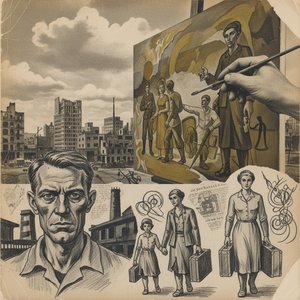
Echoes of a Decade: Artistic Responses to Sociopolitical Realities in 1940s Art
Explore the powerful artistic responses to the sociopolitical realities of the 1940s. Discover key movements like Expressionism & Abstract Expressionism, and learn how to collect investment-worthy masterpieces with ArtsDot.

Graphite Masters: 10 Iconic Paintings & Timeless Art for Your Home
Explore 10 iconic paintings dominated by graphite tones – from Rembrandt's chiaroscuro to Goya’s drama. Discover art history, techniques & find museum-quality reproductions for your home at . Explore the full collection online.

Top 10 Modern Masterpieces: Iconic Art for Your Home | ArtsDot
Journey through 10 defining modern masterpieces! Explore iconic paintings by Picasso, Monet & Van Gogh. Discover art history, techniques & emotional depth. Find museum-quality reproductions for your home at ArtsDot.com.

