


 Predogled
 Pošlji
 Deli
Deli
 Podrobnosti o delu

 Prenesi
 Podobni izdelki
 Rentgenski posnetek
 Predvajaj diaporama
Moški zabava in človek, ki igra flačo
 Akril na platnu
- Stenska umetnost
- Baroque Period
 1675
1675 38.0 x 31.0 cm
 National Trust
 Razviljaj več
Ročno izdelana oljna reprodukcija
Ročno slikano olje na platnu v vaši izbiri velikosti in okvirja, izdelano po naročilu naših umetnikov. ( Switch to Print Preklop na sliko)




P118B $10

P118H $10

P118W $10

P438Z $10

P508JH $12

P508YH $12

P805H $10

P805Z $10

P919BZ $10

P919G $10

P919XJ $10

P959ZH $10

P968JZ $12

W106C $8

W218G $10

W218JH $8

W218Y $10

W307PJ $10

W316G $10

W316PJ $8

W316Y $10

W398PJ $8

W4111J $10

W500HY $15

W500JH $15

W692G $12

W849H $8

W940BG $15

W953PJ $8




Izberite eno od naših vnaprej določenih velikosti, ki ustrezajo prvotnim proporcijam umetničkega dela.

Svoje dimenzije lahko vnesete tako, da se prilagodite določenemu okvirju ali prostoru. Če izbrana velikost ne ustreza razmerjem originalne slike, bomo umetniško delo obrezali ali sliko dopolnili z dodatnimi ročno naslikanimi elementi. Pred začetkom proizvodnje vam bo poslan digitalni osnutek v odobritev.
Upoštevajte, da predogled na zaslonu ne odraža dejanskega obrezovanja ali podaljšanja. Le osnutek bo natančno prikazal končno kompozicijo.
Čeprav so na voljo velikosti po meri, priporočamo izbiro dimenzije s preddefiniranega seznama, da ohranimo originalne razmere.
Po oddaji naročila bo ekipa ArtsDot.com stranki po e-pošti poslala navodila in predogled digitalnega predogleda.
Svetska dostava () za 3/4 nedelje umesto uobičajenih 5 nedelja. (9 avgust). Bez kompromisa po pitanju kvaliteta.

Brezplačna ekspresna dostava po vsem svetu

Visokokakovostno laneno platno

Popolno zavarovanje pošiljke

Garancija povračila carine in uvoznih davkov

Garancija popolnega ujemanja barv

60-dnevna politika vračanja (le v primeru napak)

Garancija 100% povračila denarja

Popust pri večjem naročilu
 Možnost stekla je na voljo le za velikosti pod 110 cm

Moški zabava in človek, ki igra flačo
Tehnika reprodukcije
Velikost reprodukcije
-


Skupna končna cena
$ 263
Opis umetninine
Men Carousing and a Man Playing a Flute – A Window Into Baroque Bohemia
“Men Carousing and a Man Playing a Flute,” attributed to Egbert van Heemskerck II, is more than just a depiction of merriment; it’s a meticulously crafted snapshot of 17th-century Dutch society—a testament to the artistic fervor and social complexities of the Baroque period. Executed in 1675, this oil on canvas masterpiece resides at the National Trust in Sevenoaks, United Kingdom, measuring just 38 x 31 cm – a deceptively modest size that belies the richness of its visual storytelling.
- Subject Matter: The painting captures a convivial gathering of men indulging in wine and conversation. Dominating the composition is a central figure dressed in a flamboyant red coat, instantly drawing the eye with his confident posture and gaze. Beside him, another man skillfully maneuvers a flute, injecting an element of musical entertainment into the scene.
- Style & Technique: Van Heemskerck II’s style exemplifies the Dutch Baroque tradition – characterized by dramatic lighting, meticulous detail, and a masterful use of color to convey emotion. The artist employs chiaroscuro—the interplay between light and shadow—to sculpt the figures and create depth within the interior space of what appears to be a tavern or similar establishment.
- Historical Context: Painted during the Dutch Golden Age, this artwork reflects the cultural dynamism of the era. It speaks to a period marked by economic prosperity, artistic innovation, and intellectual curiosity – themes frequently explored in Baroque art. The scene portrays not merely leisure but also social interaction and celebration, mirroring the values of the time.
- Symbolism: Beyond its immediate depiction of merriment, the painting carries symbolic weight. The flute symbolizes musical artistry and refinement, while the wine represents indulgence and conviviality. The window with curtains serves as a visual anchor, framing the scene and subtly hinting at an idealized domestic interior – a common motif in Baroque art intended to convey harmony and beauty.
- Emotional Impact: “Men Carousing and a Man Playing a Flute” evokes a palpable sense of warmth and camaraderie. The artist’s skillful rendering captures the joyfulness of human connection, inviting viewers to contemplate the pleasures of social gatherings and artistic expression. It's an image that resonates with timeless appeal – reminding us of the importance of beauty, pleasure, and shared experience.
A reproduction of this captivating artwork would undoubtedly bring a touch of Baroque elegance into any interior space, offering a glimpse into a bygone era and celebrating the enduring power of visual storytelling.
Sorodna umetniška dela


Biografija umetnika
Jacques Callot: The Chronicler of a Turbulent Age
Jacques Callot, born around 1592 in Nancy, Duchy of Lorraine, and passing away in 1635, remains a pivotal figure in the history of printmaking. More than simply an engraver, he was a chronicler—a visual recorder of his time, capturing the anxieties, entertainments, and hardships of 17th-century Europe with remarkable detail and unsettling honesty. His work, largely focused on scenes of soldiers, clowns, drunken revelers, Romani people, beggars, and even depictions of court life, offers a unique window into a world grappling with war, poverty, and social upheaval. Callot’s legacy isn't defined by grand masterpieces but rather by the sheer volume and poignant realism of his prints—over 1,400 images that collectively form a sprawling tapestry of everyday existence.Early Life and Training: From Goldsmith to Master Engraver
Callot’s early life was steeped in craftsmanship. His father, a master goldsmith, initially intended for him to follow the family trade. However, a youthful fascination with drawing led him to apprentice under a goldsmith first, then a glass engraver named Abraham Toorenvliet. This formative period instilled in him a meticulous attention to detail and an understanding of line quality—skills that would prove crucial to his later success. Crucially, Callot traveled to Rome around 1612, immersing himself in the artistic traditions of the Renaissance. He studied under Philippe Thomassin, a French expatriate engraver who had established a studio there, absorbing techniques and developing his own distinctive style. It was during this time that he honed his skills in etching, a process that allowed for greater subtlety and nuance than engraving alone. His training wasn’t solely focused on technique; Callot's exposure to Roman antiquities and classical literature profoundly shaped his artistic sensibilities, influencing his later depictions of mythological scenes and allegorical narratives.Technical Innovations: Shaping the Old Master Print
Callot was not merely a skilled reproducer of existing images; he was an innovator who significantly advanced the art of printmaking. He is credited with several key technical breakthroughs that fundamentally altered the possibilities of the medium. Perhaps most notably, he developed the *échoppe*, a specialized engraving needle featuring a slanting oval section at its tip. This ingenious tool allowed engravers to create swelling lines—a technique previously unattainable—mimicking the effect of brushstrokes and adding depth and dynamism to his prints. Furthermore, Callot refined the etching ground recipe, utilizing lute-makers’ varnish instead of traditional wax-based formulations. This alteration dramatically increased the durability of the ground, extending the lifespan of the plate and reducing the risk of “foul-biting,” a common problem that could ruin an entire print. These innovations were not simply technical refinements; they represented a shift in the way artists approached printmaking, paving the way for future generations of engravers and establishing Callot as a pioneer of the *old master print*.The “Suite” and Social Commentary: A Chronicle of His Time
Callot’s most enduring contribution lies in his development of the “suite”—a series of prints united by a common theme or narrative. He pioneered this format, meticulously planning each image to work together as a cohesive whole. This approach allowed him to explore complex social and political issues with unprecedented depth and nuance. His most famous suites, *Les Moeurs Natures de Tous les Ages* (The Customs of All Ages), are a searing indictment of the excesses and injustices of his time. These prints depict a wide range of human experiences—from the brutality of war to the poverty and exploitation of the marginalized—with unflinching realism. He also created suites focused on the lives of soldiers, clowns, and Romani people, offering glimpses into their worlds and challenging prevailing stereotypes. His work wasn’t simply observational; it often carried a subtle moral message, prompting viewers to confront uncomfortable truths about themselves and society.Influence and Legacy: A Foundation for Future Artists
Jacques Callot's influence on subsequent generations of printmakers is undeniable. Rembrandt van Rijn, one of the greatest painters of all time, was a devoted collector of Callot’s prints, recognizing their technical brilliance and emotional power. Nicolas Poussin, another influential artist known for his classical compositions, also drew inspiration from Callot's work, particularly his depictions of landscapes and human figures. Callot’s innovations in etching—the *échoppe* and improved ground recipe—were adopted by other engravers, shaping the development of printmaking techniques for decades to come. While he may not be remembered for grand paintings or monumental sculptures, Jacques Callot's legacy rests on his extraordinary prints—a testament to his skill, vision, and profound understanding of the human condition. His work continues to resonate today, offering a powerful reminder of the complexities and contradictions of 17th-century Europe and serving as a poignant commentary on the enduring challenges of social justice and human dignity.
egbert van heemskerck ii
1635 - 1704
Hitri podatki
- Artistic Movement Or Style: Baroque printmaker
- Artists Or Movements Influenced By This Artist: ['Rembrandt']
- Artists Who Influenced This Artist: ['Philippe Thomassin']
- Date Of Death: 1635
- Full Name: Jacques Callot
- Nationality: French
- Notable Artworks:
- The Triumph of Pan
- The Triumph of Bacchus
- Place Of Birth: Nancy, France
Sorodni članki
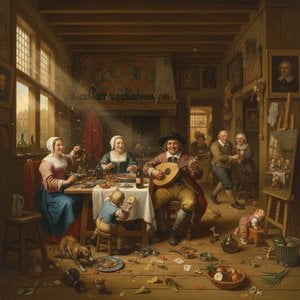
Jan Steen: A Master of Dutch Genre Painting & the Golden Age
Explore the life & art of Jan Steen, a leading Dutch Golden Age painter renowned for his humorous genre scenes & insightful social commentary. Discover his techniques, legacy, and collecting tips.

Pieter de Hooch: Illuminating Dutch Domestic Life & Golden Age Charm
Explore the captivating world of Pieter de Hooch, a master of Dutch Golden Age painting. Discover his innovative use of light, intimate domestic scenes, and lasting influence on art history. Learn more at ArtsDot.

Golden Age Reflections: Dutch Baroque Painting & Cultural Innovation
Explore the Dutch Golden Age of painting! Discover key artists like Vermeer & ter Borch, their innovative techniques, and the rich cultural context behind these Baroque masterpieces. Learn about collecting & appreciating this iconic art period.
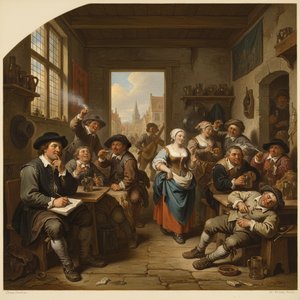
David Teniers the Younger: Genre Painting & Social Commentary in Baroque Flanders
Explore the captivating world of David Teniers the Younger, a leading Flemish Baroque painter. Discover his genre scenes, social commentary, and lasting influence on 17th-century art. Learn about his life, techniques & legacy.

Genre Painting: A Window into Daily Life & Societal Values of the Dutch Golden Age
Explore the captivating world of Dutch Golden Age genre painting! Discover realistic depictions of daily life, masterful artists like Ostade & Metsu, and hidden symbolism. Learn about this influential art movement with ArtsDot.


