


 Preverite v realnem okolju
 Pošlji kot čestitko
 Deli
Deli
 Podrobnosti
 Navodila

 Prenesi
 Podobni artefakti
 Rentgenski posnetek
 Predvajaj diaporama
 Statistika
Holy Family z Elizabeto, mladim Jožefom in Janezom Evanjelistom


 Preberi več
Ročno izdelana oljna reprodukcija
Ročno slikano olje na platnu v vaši izbiri velikosti in okvirja, izdelano po naročilu naših umetnikov. ( Preklop na tiskanine Preklop na digitalno sliko)




P118B $10

P118H $10

P118W $10

P438Z $10

P508JH $12

P508YH $12

P805H $10

P805Z $10

P919BZ $10

P919G $10

P919XJ $10

P959ZH $10

P968JZ $12

W106C $8

W218G $10

W218JH $8

W218Y $10

W307PJ $10

W316G $10

W316PJ $8

W316Y $10

W398PJ $8

W4111J $10

W500HY $15

W500JH $15

W692G $12

W849H $8

W940BG $15

W953PJ $8




Izberite eno od naših vnaprej določenih velikosti, ki ustrezajo prvotnim proporcijam umetničkega dela.

Svoje dimenzije lahko vnesete tako, da se prilagodite določenemu okvirju ali prostoru. Če izbrana velikost ne ustreza razmerjem originalne slike, bomo umetniško delo obrezali ali sliko dopolnili z dodatnimi ročno naslikanimi elementi. Pred začetkom proizvodnje vam bo poslan digitalni osnutek v odobritev.
Upoštevajte, da predogled na zaslonu ne odraža dejanskega obrezovanja ali podaljšanja. Le osnutek bo natančno prikazal končno kompozicijo.
Čeprav so na voljo velikosti po meri, priporočamo izbiro dimenzije s preddefiniranega seznama, da ohranimo originalne razmere.
Po oddaji naročila bo ekipa ArtsDot.com stranki po e-pošti poslala navodila in predogled digitalnega predogleda.
Mednarodna dostava () v 3/4 tednih namesto običajnih 5 tednov. (22 september). Brez kompromisov pri kakovosti.

Brezplačna ekspresna dostava po vsem svetu

Visokokakovostno laneno platno

Popolno zavarovanje pošiljke

Garancija povračila carine in uvoznih davkov

Garancija popolnega barvnega ujemanja

Politika vračila v 100 dneh (le v primeru okvar)

Garancija 100% povračila denarja

Popust pri večjem naročilu
 Možnost stekla je na voljo le za velikosti pod 110 cm

Holy Family z Elizabeto, mladim Jožefom in Janezom Evanjelistom
Tehnika reprodukcije
Velikost reprodukcije
-


Skupna cena
$ 263
Holy Family with St Elizabeth, the Young St John the Baptist and an Angel – A Symphony of Light and Faith
The painting “Holy Family with Saint Elizabeth, the Young St John the Baptist and an Angel” by Orazio Borgianni, completed around 1609, stands as a testament to the artistic fervor of the Florentine Mannerist period. More than just a depiction of biblical figures—Mary, Joseph, Jesus, Saint Elizabeth, Saint John the Baptist, and an angel—it’s a carefully orchestrated visual meditation on divine grace and familial devotion, executed with masterful technique and imbued with profound symbolic resonance. Located in Palazzo Barberini, Rome, this artwork offers a glimpse into the artistic sensibilities of its time and continues to captivate viewers today. ### Artistic Style and Technique – Embracing Mannerist Complexity Borgianni’s approach aligns squarely with the tenets of Mannerism, rejecting the idealized beauty championed by Raphael and Leonardo da Vinci in favor of an expressive style characterized by elongated figures, distorted perspectives, and dramatic chiaroscuro—the interplay between light and shadow. Unlike earlier Renaissance art which sought harmony and balance, Borgianni deliberately destabilizes visual conventions to convey emotion and psychological depth. The painting’s composition is asymmetrical, drawing the eye towards a central point of illumination that emanates from an angel positioned on the left side of the canvas. This deliberate imbalance mirrors the turbulent spiritual landscape of the era, reflecting anxieties about faith and mortality. The artist skillfully employs oil paint on canvas—a technique favored during this period—allowing for nuanced tonal gradations and capturing the subtle textures of drapery and flesh. Borgianni’s meticulous attention to detail is evident in the rendering of Saint Elizabeth's face, conveying a serene expression that contrasts sharply with the dynamic movement of Saint John the Baptist. The violin, subtly integrated into the scene near the center-left area, serves as an additional compositional element, adding visual interest and reinforcing the sense of theatrical grandeur. ### Historical Context – Florence Under Medici Patronage The painting’s creation coincided with a period of significant artistic innovation in Florence under the patronage of Cosimo II de' Medici and his son Ferdinando I. The Medicis actively fostered humanist scholarship and artistic experimentation, attracting artists from across Europe to their court. Borgianni benefited immensely from this environment, immersing himself in the stylistic currents circulating amongst leading Mannerist painters like Giulio Romano and Andrea Palladio. This context underscores the painting’s ambition—to elevate religious narrative into a vehicle for conveying complex psychological states and exploring philosophical ideas about divine providence. ### Symbolism – Light, Grace, and Divine Presence The dominant light source—positioned behind the angel—represents divine illumination, symbolizing God's grace penetrating into human experience. The dark background serves as a foil to this radiant glow, emphasizing the vulnerability of humanity against the immensity of God’s power. Saint Elizabeth embodies humility and piety, while Saint John the Baptist embodies prophetic fervor and spiritual contemplation. The angel’s gesture—pointing upwards—suggests aspiration towards heaven and reinforces the overarching theme of divine transcendence. Furthermore, the inclusion of the violin is noteworthy; it symbolizes musical harmony and reflects the Renaissance preoccupation with integrating art into broader cultural pursuits. ### Emotional Impact – A Moment Frozen in Time “Holy Family with Saint Elizabeth, the Young St John the Baptist and an Angel” transcends mere representation; it aspires to evoke a profound emotional response from the viewer. The painting’s dramatic lighting and expressive figures convey a palpable sense of solemnity and reverence—a reflection of the spiritual fervor that characterized the Florentine Mannerist tradition. It invites contemplation on themes of faith, family devotion, and divine grace, leaving an indelible impression on anyone who encounters its beauty. Its enduring appeal testifies to Borgianni’s ability to capture not only visual splendor but also the essence of human experience—a timeless masterpiece destined to inspire generations to come.Sorodna umetniška dela


Biografija umetnika
Giorgio Vasari: The Architect of Artistic Biography
Giorgio Vasari, born in Arezzo in 1511 and tragically passing away in Florence in 1574, wasn’t merely a painter or architect; he was the pivotal figure who essentially invented the modern art historical biography. Often considered the “minister of culture” to the powerful Medici court in Florence, Vasari’s magnum opus, *The Lives of the Most Excellent Painters, Sculptors, and Architects*, remains a cornerstone of Western artistic understanding, shaping how we perceive and interpret the careers of countless artists from the Renaissance onwards. His work wasn't simply a chronicle; it was a deliberate construction of an idealized narrative, elevating Florence as the undisputed center of artistic innovation – a perspective that, while now recognized for its inherent biases, fundamentally altered the trajectory of art historical scholarship.
Vasari’s early life provided a surprisingly robust foundation for his later endeavors. Initially apprenticed to Guillaume de Marcillat, a stained-glass artist and painter in Arezzo, he received a grounding in both technical skill and humanist learning, including Latin. This early exposure to classical thought would prove crucial in shaping his approach to art history. He then moved to Florence, where he honed his skills under the tutelage of Andrea del Sarto and Baccio Bandinelli, absorbing the prevailing artistic trends of the time. Crucially, Vasari’s education extended beyond the purely visual; he was a keen observer of human nature and possessed an astute understanding of patronage and social dynamics – qualities that would later inform his biographical writing.
A Renaissance Man: Painter, Architect, and Art Historian
Vasari's career spanned diverse artistic disciplines. He excelled as both a painter and architect, contributing significantly to the aesthetic landscape of Florence during the High Renaissance. His architectural designs are particularly noteworthy, including the grand loggia of the Palazzo degli Uffizi, a masterpiece that still dominates the Florentine skyline. However, it’s his role as an art historian – specifically, the author of *The Lives* – that secures his enduring legacy. This monumental work wasn't simply a collection of artist portraits; it was a carefully constructed argument for the importance of artistic innovation and the elevation of Florence as the birthplace of Western art.
The structure of *The Lives* is itself remarkable. Vasari organized his subjects chronologically, grouping them into categories – painters, sculptors, and architects – and presenting each artist’s life alongside a detailed analysis of their works. He meticulously documented not only the artistic achievements but also the personal circumstances, struggles, and even supposed moral failings of each subject. This biographical approach, unprecedented in its scope and ambition, established a new standard for art historical writing. It's important to acknowledge that Vasari’s account is often riddled with inaccuracies and embellishments; he frequently invented details or exaggerated events to bolster his narrative. However, despite these flaws, *The Lives* remains an invaluable source of information about the Renaissance artistic world.
Influences and Artistic Style
Vasari's artistic style reflects the prevailing trends of the Mannerist period, a transitional phase between the High Renaissance and the Baroque. His paintings are characterized by a refined elegance, meticulous detail, and a sophisticated use of color and composition. While he embraced the stylistic innovations of his time – such as complex spatial arrangements and dramatic lighting – he also retained a strong sense of classical proportion and harmony. His architectural work similarly demonstrates a mastery of Renaissance principles, blending functionality with aesthetic beauty.
Vasari was profoundly influenced by several key figures. Leonardo da Vinci, for instance, held a particularly revered position in his writings, serving as a model for artistic excellence and intellectual curiosity. Michelangelo, despite Vasari’s later reservations about the sculptor's temper, also received considerable attention. Furthermore, Vasari drew inspiration from classical texts and humanist ideals, seeking to understand art within a broader cultural context. He was deeply influenced by the concept of *rinascita* (rebirth), popularized by Jules Michelet, which emphasized the revival of classical learning and artistic values during the Renaissance.
Legacy and Historical Significance
Giorgio Vasari’s impact on art history is immeasurable. His *Lives* established a precedent for biographical writing that continues to shape our understanding of artists today. He not only documented the lives of the great masters but also shaped their reputations, often elevating them to legendary status. His emphasis on Florence as the center of artistic innovation helped to solidify the city’s position as a cultural powerhouse – a narrative that has been both celebrated and critiqued over time.
Despite criticisms regarding factual inaccuracies and his inherent bias in favor of Florentine artists, Vasari remains a foundational figure in Western art history. His work provides invaluable insights into the Renaissance artistic world and continues to be studied and debated by scholars today. His legacy extends beyond the realm of art history; he is also considered one of the first cultural critics, offering a unique perspective on the relationship between art, society, and power.

orazio borgianni
1574 - 1616 , Italy
Ključne informacije
- Artistic Movement Or Style: Mannerism, Renaissance
- Artists Or Movements Influenced By This Artist:
- Renaissance artists
- Vasari's concept
- Artists Who Influenced This Artist:
- Guglielmo da Marsiglia
- Andrea del Sarto
- Date Of Birth: July 30, 1511
- Date Of Death: June 27, 1574
- Full Name: Giorgio Vasari
- Nationality: Italian
- Notable Artworks:
- Lives of the Most Eminent Painters...
- Tomb of Michelangelo
- Place Of Birth: Arezzo, Tuscany
Sorodni članki

Cecco del Caravaggio: Rediscovering the Shadowy Genius of Francesco Buoneri
Explore the captivating world of Cecco del Caravaggio (Francesco Buoneri), a pivotal Baroque artist. Discover his dramatic realism, mysterious life, and lasting legacy with ArtsDot's expert analysis.

The Enduring Legacy of Family Portraiture: A Historical & Artistic Exploration
Explore the rich history of family portraiture with ArtsDot. Discover artistic styles, symbolism & collecting insights. Commission a custom oil painting or appraise your existing artwork today!

Evolving Portraits: Personalized Art as a Chronicle of Family Life Across Generations
Create a timeless family legacy with custom portraits! ArtsDot connects you with skilled artists for heirloom-quality paintings & prints. Explore styles, commission your unique artwork today.
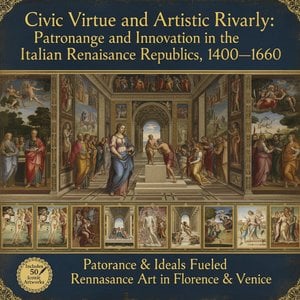
Civic Virtue and Artistic Rivalry: Patronage and Innovation in the Italian Renaissance Republics, 1400–1600
Explore the Italian Renaissance! Discover how competitive patronage & humanist ideals fueled artistic innovation in republics like Florence & Venice. Expert insights for art lovers and collectors.

Caravaggio's Revolutionary Realism: A Study of Light, Shadow, and the Human Condition
Explore the revolutionary realism of Caravaggio! Discover his mastery of light & shadow (tenebrism), dramatic religious scenes, and lasting influence on Baroque art history. A comprehensive guide for art enthusiasts.
