


 Preverite v realnem okolju
 Pošlji kot čestitko
 Deli
Deli
 Podrobnosti
 Priročnik

 Prenesi
 Podobni artefakti
 Rentgenski posnetek
 Predvajaj diaporama
 Statistika
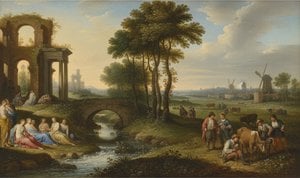
Italian Landscape with Roman Warriors
 Oil On Canvas
- WallArt
- Baroque Landscape
 1650
1650 154.0 x 174.0 cm
 Hermitage Museum
 Preberi več
Ročno izdelana oljna reprodukcija
Ročno slikano olje na platnu v vaši izbiri velikosti in okvirja, izdelano po naročilu naših umetnikov. ( Preklop na tiskanine Preklop na digitalno sliko)




P118B €10

P118H €10

P118W €10

P438Z €10

P508JH €12

P508YH €12

P805H €10

P805Z €10

P919BZ €10

P919G €10

P919XJ €10

P959ZH €10

P968JZ €12

W106C €8

W218G €10

W218JH €8

W218Y €10

W307PJ €10

W316G €10

W316PJ €8

W316Y €10

W398PJ €8

W4111J €10

W500HY €15

W500JH €15

W692G €12

W849H €8

W940BG €15

W953PJ €8




Izberite eno od naših vnaprej določenih velikosti, ki ustrezajo prvotnim proporcijam umetničkega dela.

Vnesite širino in višino, ki jih potrebujete, da se slika prilega vašemu okviru ali steni. Ker je delo ročno slikano, lahko umetnik pri različnih oblikih slik pri robovih doda malo več barve ali pa jih malo odreže — izberite sami. Pred začetkom slikanja vam pošljemo digitalni predogled za potrditev. Slika, prikazana na tej strani, ni končni rezultat — le predogled prikazuje dejansko podobo.
Po oddaji naročila bo ekipa ArtsDot.com stranki po e-pošti poslala navodila in predogled digitalnega predogleda.
Mednarodna dostava () v 3/4 tednih namesto običajnih 5 tednov. (24 oktober). Brez kompromisov pri kakovosti.

Brezplačna ekspresna dostava po vsem svetu

Visokokakovostno laneno platno

Popolno zavarovanje pošiljke

Garancija povračila carine in uvoznih davkov

Garancija popolnega barvnega ujemanja

Politika vračila v 100 dneh (le v primeru okvar)

Garancija 100% povračila denarja

Popust pri večjem naročilu
 Možnost stekla je na voljo le za velikosti pod 110 cm

Italian Landscape with Roman Warriors
Tehnika reprodukcije
Velikost reprodukcije
-


Skupna cena
€ 231
The Vision of Jan Both: A Mediterranean Masterpiece
Jan Dirksz Both’s “Italian Landscape with Roman Warriors,” painted around 1650, isn't merely a depiction of a picturesque Italian vista; it’s an immersive experience. Born in Utrecht and trained within the traditions of Flemish painting, Both embarked on a transformative journey to Rome, a pivotal moment that fundamentally altered his artistic trajectory. This work stands as a testament to that shift – a vibrant synthesis of Northern realism and Southern light, capturing not just a scene but a mood, an atmosphere steeped in the grandeur and drama of the Italian Renaissance.
The painting immediately draws the eye with its expansive composition. A sweeping river dominates the foreground, reflecting the azure sky above, while rolling hills cascade into the distance, culminating in hazy mountains that seem to bleed into the horizon. Yet, it’s not simply a topographical rendering; Both masterfully employs atmospheric perspective – a technique borrowed from Claude Lorrain and other Italian landscape masters – to create an illusion of depth and vastness. The colors become softer, cooler, and less saturated as they recede, drawing the viewer's eye into the heart of the scene.
The Language of Light: A Baroque Revelation
Both’s signature style is characterized by a luminous quality that elevates the landscape beyond mere representation. He was deeply influenced by the Baroque tradition, particularly its emphasis on dramatic lighting and theatrical effects. Notice how the sunlight, seemingly originating from an unseen source, bathes the scene in a golden glow, highlighting specific elements – the shimmering water, the textured foliage, and the confident postures of the Roman warriors. This isn’t a flat, even illumination; it's a dynamic interplay of light and shadow that imbues the painting with a sense of vitality and movement.
The use of color is equally deliberate. Rich ochres, deep greens, and vibrant blues are juxtaposed to create visual interest and depth. The earthy tones of the landscape contrast sharply with the gleaming armor of the soldiers, further emphasizing their power and authority. The subtle variations in hue – a hint of purple in the distant mountains, a touch of pink in the clouds – contribute to the overall sense of realism and atmospheric detail.
Symbolism and Power: The Roman Presence
Beyond its purely aesthetic qualities, “Italian Landscape with Roman Warriors” is laden with symbolic meaning. The presence of the Roman soldiers, clad in their imposing armor and wielding spears, speaks to themes of power, conquest, and military might. They are not simply figures within a landscape; they are active participants, shaping the scene and asserting dominance over it. The bandits leading prisoners further reinforces this narrative, suggesting a world of conflict and political intrigue.
However, the painting isn’t solely focused on warfare. The inclusion of a river, trees, and a sense of leisure hints at a more complex vision – one that acknowledges both the beauty and the brutality of the Italian landscape. The figures are engaged in activities that suggest a harmonious coexistence between humanity and nature, albeit within a framework of power and control.
A Legacy of Light: Both’s Enduring Influence
Jan Dirksz Both's “Italian Landscape with Roman Warriors” represents a pivotal moment in the development of Dutch landscape painting. It showcases his mastery of technique, his deep understanding of color and light, and his ability to synthesize diverse artistic influences. His work continues to captivate viewers today, offering a glimpse into a world of beauty, drama, and timeless symbolism. Reproductions of this stunning artwork capture the essence of Both’s vision, allowing us to experience its luminous quality and evocative power firsthand.
Vprašanja in odgovori
Katera so priporočena prostora za izpostavo dela "Italian Landscape with Roman Warriors", glede na njegovo barvno paleto?
Z svojo paleto Earthy je delo "Italian Landscape with Roman Warriors" avtorja Jan Both priporočljivo za Living Room. Barve so eden razlogov za to predlog.
Kaj ima "Italian Landscape with Roman Warriors" skupnega z ostalo celotno tvorbino umetnika Jan Both?
V celotnem delu umetnika Jan Both se delo "Italian Landscape with Roman Warriors" prikloni slogu Baroque Landscape, ki vključuje tematiko mediterranean light, roman ideals, classical landscape, heroic figures, religious allegory, moral themes, baroque drama, emotional depth.
Kakšne barve uporablja "Italian Landscape with Roman Warriors"?
Barve dela "Italian Landscape with Roman Warriors" tvorijo Earthy paleto. Ta klasifikacija opisuje prevladujoče barvne družine.
Sorodna umetniška dela


Biografija umetnika
Jan Both (1610–1652): Gospod mediteranske svetlobe
Jan Dirksz Both je bil nizozemski slikar, oskivalec in dobrotelj etike, ki se je izstopil kot ena najpomembnejših postav v vzpenjajoči gibanju "italijaniziranega" pejzaža med obdobjem nizozemskega zlatiega age. Rod se je okoli leta 1615/1618 v Utrechtu, bil pa je mlajši brat Andriesa Botha. Njun oče, Dirck Both, ki je bil steklar in slikar stekla, je obema sinoma vstopil v zgodnje spoštovanje do umetniškega rokodelstva. Čeprav so biografski podatki o njem precej redki, strokovna raziskava nakazuje, da je Janovo izobraževanje vključevalo poučevanje pod Abrahamom Bloemaertom in Gerritom van Honthorstom, kar ga je uvrstilo med vplivne umetnike svojega časa.- Zgodnje življenje in usposabljanje: Bothove formative leta so potekala v Utrechtu, kjer je alongside brata Andriesa izpiljal svoje veščine in prevzel tehnike iz očetovega steklarske prakse – krojstva, ki je bilo globoko zakoreninjeno v flamovskih tradicije.
- Rimski vpliv: Okoli leta 1638 sta Jan in Andries začela preobrazbno potovanje v Rim preko Francije, kjer so se potopili v umetniško vročino papestega dvora in srečali svetavce, kot sta Bloemaert in Gerrit van Honthorst. Ta izkušnja je temeljito oblikovala njuni stilski občutek.
Romanizirani slog in sodelovanje z Lorrainom
Rim se je izkazal za krčev za Bothov umetniški razvoj. Medtem ko se je Andries osredotočal na žanrske scene v slogu Pietersa van Laerja, se je Jan posvetil predvsem slikanju pejzažev – slogu, ki je močno dolgovan Claudeu Lorrainu – in s nepremočljivo obvladavo svetlobe ter barve zajel eterično lepoto mediteranske regije. Posebej izstopajo njegovo tesno sodelovanje z Hermanom van Swaneveltom pri monumentalnem projektu za palačo Buen Retiro v Madridu, kar je dokazalo njegovo ambicioznost in umetniško zrelost v najvišjih Evropskih krogih pokroviteljstva. To partnerstvo je utrdilo Bothovo ugled vodilnega inovatorja pejzaža.Pomembne slike in umetniške značilnosti
Bothovo delo zaznamujejo prostrani, domišljijski pejzaži, navlaženi v svetlobni zlati oreh – značilnost Lorrainovega sloga in odraz širšjih umetniških tokov, ki so krožili po Evropi. Njegovo vrhunsko delo, „Pejzaž z banditi, ki vodijo ujetnike“ (Museum of Fine Arts, Boston), ponazarja to estetsko briljantnost. Diagonala cesta vodi oko v središče scene, kjer realistične figure postavlja v ozadje idiličnih razgledov, z denen dominira natančno prikazana vegetacija. Obdobje prepletajo tudi religiozni ali mitološki motivi – kot je videti v „Parisovem sodbi“ (London, National Gallery) – ki so jih pogosto izvajali tudi drugi umetniki iz Utrehta, kot je Cornelis van Poelenburch, kar poudarja Bothovo vpletenost v humanistične ideale in umetniške konvencije.Dediščina in vpliv
Bothov brat Andries je tragično umrl zaradi bolezni v Benetkah med povratnim potovanjem iz Rima. Kljub kratkosti svojega življenja se je Andries uveljavil kot spoštovan umetnik, specializiran za kmečke scene – žanr, ki odraža socialno realnost tistega časa. Janovo umetniško dediščino pa presega posamezne slike; deloval je kot učitelj za nadarjene تلاميذ, kot sta Barend Bispinck in Willem de Heusch, s čimer je zagotovil, da bodo njegove stilske inovacije še generacije navdihovale. Njegovo del ostaja proslavljeno zaradi svoje evokativne atmosfere, mojstrovske tehnike in prispevka k razvoju nizozemskega pejzažnega slikarstva – kot spomin na Bothov trajni vpliv na evropsko umetniško zgodovino.Zbirke
- Fitzwilliam Museum, Univerza v Cambridge
- Hermitage, Sankt Peterburg
- Kunsthistorisches Museum, Dunaj
- Louvre, Pariz
- Mauritshuis Royal Picture Gallery

Jan Both
1610 - 1652 , Nizozemska
Ključne informacije
- Artistic Movement Or Style: Italijanizirano slikanje pejzažev
- Artists Or Movements Influenced By This Artist: ['Claude Lorrain']
- Artists Who Influenced This Artist:
- Abraham Bloemaert
- Gerrit van Honthorst
- Date Of Birth: Utrecht, Nizozemska (1610)
- Date Of Death: 9. avgust 1652
- Full Name: Jan Dirksz Both
- Nationality: Nizozemski
- Notable Artworks:
- Sveta Ana z Devico in Otrokom
- Pejzaž z banditi, ki vodijo ujetnike
- Sodba Parisa
- Place Of Birth: Utrecht
Sorodni članki
Cornelis van Poelenburch: Bridging Mannerism & the Dutch Baroque Landscape
Discover Cornelis van Poelenburch, a pivotal Dutch Baroque landscape painter bridging Mannerism & Italianate styles. Explore his life, key works, and lasting influence on 17th-century art with ArtsDot.

Romantična pokrajina: 10 mojstrovin, ki so definirale gibanje | Umetnost za vaš dom z ArtsDot.com
Odkrijte 10 mojstrovin romantizma v slikarstvu! Caspar David Friedrich, Turner in drugi. Preučite zgodbe, tehnike in čustva teh ikoničnih krajinskih slik. Kvalitetne reprodukcije za vaš dom na ArtsDot.com

Evocations of Place: A Historical Journey Through Landscape Art
Explore the rich history of landscape art with ArtsDot. Discover renowned artists, movements like Impressionism & Romanticism, and expert guidance for collecting timeless pieces. Find your perfect serene escape today!

Jan Brueghel the Elder: A Master of Flemish Landscape & Allegory – Exploring Innovation & Influence
Explore the captivating world of Jan Brueghel the Elder, a Flemish Baroque master renowned for his stunning landscapes & allegorical paintings. Discover his collaborations with Rubens and lasting artistic legacy.

Claude Lorrain: Master of Light & Landscape in the Golden Age
Explore the luminous landscapes of Claude Lorrain, a Baroque master renowned for his masterful use of light & atmosphere. Discover his life, techniques, key works & enduring influence on art history.
