Portrét Jacques Bellange

Váš sprievodca 17 najznámejšími obrazmi od Jacques Bellange

Aktualizované október 2026 · zoradené podľa našej miery popularity (vyhľadávanie, návštevy a objednávky pre každou prácu) · 17 dielov umelca Jacques Bellange v našom katalógu

Stručne povedané

Najznámejším dielom umelca Jacques Bellange je The Three Marys at the Tomb (1620). Nájdete ho v múzeu British Museum v meste Londýn. Ďalšími v zozname sú Amazon on horseback (1606) a Annunciation of Mary. V našom katalógu máme 17 diel od umelca Jacques Bellange; tento sprievodca vyberá 17 najznámejších s uvedením roku, múzeí a príbehu každého diela.

1575 – 1616, Bassigny Northern mannerism Najviac diel: British Museum

10 obrazov Jacques Bellange, ktoré spoznáte ako prvé

1
The Three Marys at the Tomb (1620) od Jacques Bellange

The Three Marys at the Tomb

1620 · Engraving · British Museum, Londýn

Jacques Bellange’s “The Three Marys at the Tomb,” painted around 1620, is not merely a depiction of a biblical scene; it's a profound meditation on grief, faith, and the mysteries surrounding Christ’s death and resurrection. This arresting engraving, now housed within the walls of the Art Institute of Chicago, offers a rare glimpse into the intensely personal style of a Northern Mannerist artist largely obscured by history – Jacques Bellange…

Ručne maľovaná olejná reprodukcia od $300 26 × 39 cm
Urobte si ho podľa seba Spoznajte to
2
Amazon on horseback (1606) od Jacques Bellange

Amazon on horseback

1606 · Etching · Château de Chantilly, Chantilly

In the delicate yet commanding lines of Jacques Bellange’s Amazon on horseback, we encounter a window into the enigmatic world of Northern Mannerism. Created in 1606, this evocative work transcends mere illustration, offering instead a dramatic tableau of power and myth. The subject—a woman clad in regal, flowing attire—perches atop her steed with an air of sovereign authority. As she grips her sword, the viewer is immediately drawn into a…

Ručne maľovaná olejná reprodukcia od $175 28 × 36 cm
Objednať toto dielo Viac informácií o tomto diele

Čísla od 11 do 17: viac obrazov od Jacques Bellange

Obrazy umelca Jacques Bellange podľa jednotlivých období

Čo najčastejšie mal Jacques Bellange

Štyri témy, ktoré sa v týchto díelach najčastejšie vyskytujú, každá s jej najznámejším príkladom.

Kde si môžete pozrieť obrazy od Jacques Bellange

5 múzeá, v ktorých sa nachádza najviac obrazov z tejto stránky.

Múzeá Mesto Diela umelca Jacques Bellange Obrazy z tohto zoznamu
British Museum, LondýnBritish Museum Londýn 2 The Three Marys at the Tomb, The Annunciation
Château de Chantilly, ChantillyChâteau de Chantilly Chantilly 2 Amazon on horseback, Gentleman in ancient costume
Staatliche Kunsthalle Karlsruhe, KarlsruheStaatliche Kunsthalle Karlsruhe Karlsruhe 2 Annunciation of Mary, Angel of the Annunciation
Kráľovská knižnica Windsor, WindsorKráľovská knižnica Windsor Windsor 1 Hurdy-Gurdy Player
Hermitáž, PetrohradHermitáž Petrohrad 1 Lamentation

Rok od roku: najznámejšie diela od Jacques Bellange

Tu je dekáda tvorby Jacques Bellange, v podstate: 10 rokov od 1606 do 1615, zobrazených rok po roku prostredníctvom najznámejších diel.

Diela podľa roku

Vyberte si rok a pozrite si jeho diela.

Jacques Bellange: rýchle odpovede o obrazoch

Ktorý obraz je najznámejším dielom umelca Jacques Bellange?Zobraziť odpoveď

Na vrchole zoznamu je The Three Marys at the Tomb (1620), British Museum, Londýn. Hneď za ním nasledujú: Amazon on horseback (1606) a Annunciation of Mary.

Akých je 10 najznámejších obrazov umelca Jacques Bellange?Zobraziť odpoveď

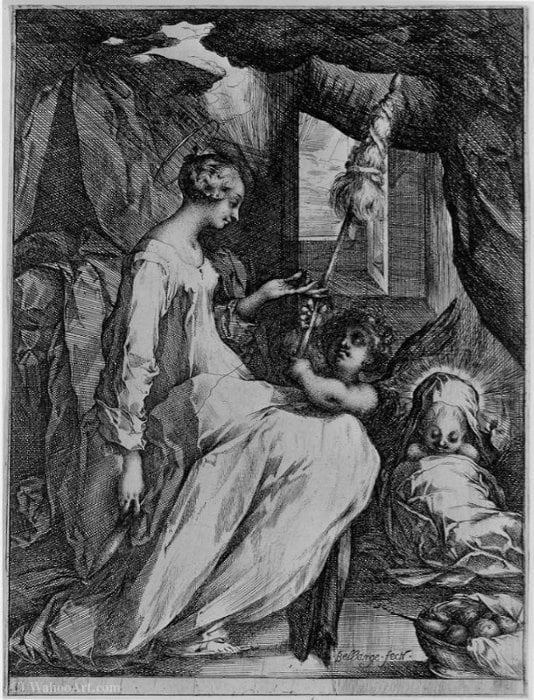
The Three Marys at the Tomb, Amazon on horseback, Annunciation of Mary, Angel of the Annunciation, Gardener with basket, a sequence of four teachers, The Virgin with a Spindle, he Virgin and Child with the Magdalen and Saint Anne, Military figures outside a city, Balthasar a Melchior, seen from behind, wearing a mantle trimmed with fur and a hat adorned with feathers. V zozname vyššie nájdete rok vytvorenia a múzeu každého z nich.

Koľko diel umelca Jacques Bellange sa nachádza vo vašom katalógu?Zobraziť odpoveď

V našom katalógu máme 17 diel od umelca Jacques Bellange, datovaných od 1606 do 1615.

V ktorých múzeách môžete vidieť slávne diela umelca Jacques Bellange?Zobraziť odpoveď

Väčšinu z nich nájdete v British Museum (Londýn), Château de Chantilly (Chantilly) a Staatliche Kunsthalle Karlsruhe (Karlsruhe). Zoznam múzeí vyššie obsahuje podrobný prehľad.

Kedy vytvoril/a Jacques Bellange svoje najznámejšie diela?Zobraziť odpoveď

V období 1606, viac než v akomkoľvek inom čase: 2 z 17 diel na tejto stránke pochádza z tohto obdobia, pričom Amazon on horseback z nich.

Aké sú prvé a posledné známe diela umelca Jacques Bellange?Zobraziť odpoveď

Najstaršie dielo je z Amazon on horseback (1606); najnovšie je z Lamentation (1615).

Aké témy mal(a) Jacques Bellange najčastejšie na svojich plátnoch?Zobraziť odpoveď

Mourning (2), Virgin (2) a Portrait (2), z celkového počtu 17 kusov na tejto stránke.

Ktoré médium sa najčastejšie objavuje v maľbách umelca Jacques Bellange?Zobraziť odpoveď

Engraving, použité v 2 z 17 dielov na tejto stránke.

Akým štýlom alebo smerom je známy/á Jacques Bellange?Zobraziť odpoveď

Northern mannerism, ako môžete vidieť na dielach na tejto stránke.

Aké slávne obrazy od Jacques Bellange sa nachádzajú v British Museum?Zobraziť odpoveď

Na tejto stránke môžete vidieť 2 diel v múzeu British Museum, Londýn, vrátane The Three Marys at the Tomb a The Annunciation.

Kde si môžem objednať reprodukciu Jacques Bellange?Zobraziť odpoveď

Áno. Každý obraz na tejto stránke je dostupný ako ručne maľovaná olejná reprodukcia alebo ako tlač, v rozmeroch, ktoré vám vyhovujú. Pre objednanie stačí otvoriť stránku konkrétneho obrazu.

Príbeh umelca Jacques Bellange

A Shadowy Master of the Northern Mannerist Spirit

Jacques Bellange remains one of the most enigmatic and captivating figures in the history of European printmaking. A master of the Northern Mannerist style, his life was lived in the twilight of the late Renaissance, a period defined by elongated forms, theatrical tension, and an almost feverish psychological intensity. Though much of his personal biography remains shrouded in the mists of the early 17th century, his artistic legacy is vibrantly clear through the intricate lines of his etchings. Born around 1575 in the Bâse-les-Vosges region of France, Bellange emerged from a landscape of shifting borders and intense religious fervor, eventually finding his creative home within the sophisticated courtly circles of Nancy.

The traces of his early life are as delicate and elusive as his etchings. While historical records regarding his family origins are sparse, scholars often point to his rapid ascent within the Duchy of Lorraine as evidence of a significant, perhaps even noble, connection. There is much speculation that he may have been the illegitimate son of a high-ranking patron, a theory supported by the prestigious title of "knight" attributed to him and his seamless integration into the court of the Dukes of Lorraine. By 1595, he was already established in La Mothe, honing a craft that would soon transform the medium of printmaking into a vehicle for profound emotional expression.

The Elegance of the Lorraine Court

Bellange’s career reached its zenith under the patronage of Henri II and Philippe III, the Dukes of Lorraine. This period of courtly stability provided him with the luxury of time and resources, allowing him to refine a technique that was uniquely his own. Unlike many of his contemporaries who focused on the clarity of the High Renaissance, Bellange embraced the complexities of Mannerism. His work is characterized by a restless energy, where figures seem to twist and writhe with an almost supernatural grace. In the halls of Nancy, he developed a visual language that blended the sacred with the profane, creating works that were as much about the human psyche as they were about religious devotion.

His mastery of the etching needle allowed him to manipulate light and shadow with unprecedented drama. Through the meticulous use of hatching and cross-hatching, he could conjure textures ranging from the heavy folds of ancient drapery to the weathered skin of a street performer. This technical prowess is perhaps most evident in his ability to imbue even the simplest subject with a sense of profound mystery. Whether depicting a noble figure or a common musician, Bellange’s hand is unmistakable, leaving behind a trail of silvery, luminous lines that seem to vibrate with life.

A Legacy Etched in Light and Shadow

The true significance of Jacques Bellange lies in his ability to capture the ephemeral. His oeuvre serves as a window into a world of intense spiritual struggle and theatrical beauty. Some of his most enduring works demonstrate this range:

  • The Three Marys at the Tomb: A striking example of his religious gravity, where dramatic figures and intricate details converge to create a moment of profound biblical tension.
  • Hurdy-Gurdy Player: A masterpiece of character study, showcasing his ability to use complex linework to capture the hunched, weary essence of a street musician, imbuing a common subject with deep psychological depth.
  • Gentleman in Ancient Costume: An exploration of the Mannerist obsession with historical fantasy and stylized elegance, featuring a warrior adorned in attire that evokes a sense of mythic grandeur.

Though his life was cut short in 1616, Bellange’s influence endured far beyond the borders of Lorraine. His rediscovery in the 20th century brought a renewed appreciation for the expressive potential of the etched line and the enduring power of the Mannerist aesthetic. Today, he is celebrated not merely as a court artist, but as a pioneer who pushed the boundaries of printmaking, leaving an indelible mark on the history of Western art through his hauntingly beautiful, shadow-drenched visions.