Portrét Anthonis van Dyck

Anthonis van Dyck's Most Famous Paintings: All 100, Ranked

Aktualizované október 2026 · zoradené podľa našej miery popularity (vyhľadávanie, návštevy a objednávky pre každou prácu) · 1 620 dielov umelca Anthonis van Dyck v našom katalógu

In short

The Anthonis van Dyck painting most people know is Charles I v Troch Pozíciách (1636), and you can see it at the Royal Collection, Londýn. Right after it come Family Portrait (1621) and Portrait of Isabella Clara Eugenia as Widow (1628). Out of 1,620 works by Anthonis van Dyck in our catalogue, these 100 are the best known. Each one comes with its year, its museum and a short note on what makes it stand out.

1599 – 1641, Antverpy Baroque style Najviac diel: Bavarské štátne múzeá výtvarného umenia

Anthonis van Dyck's top 10: the pieces everyone knows

1
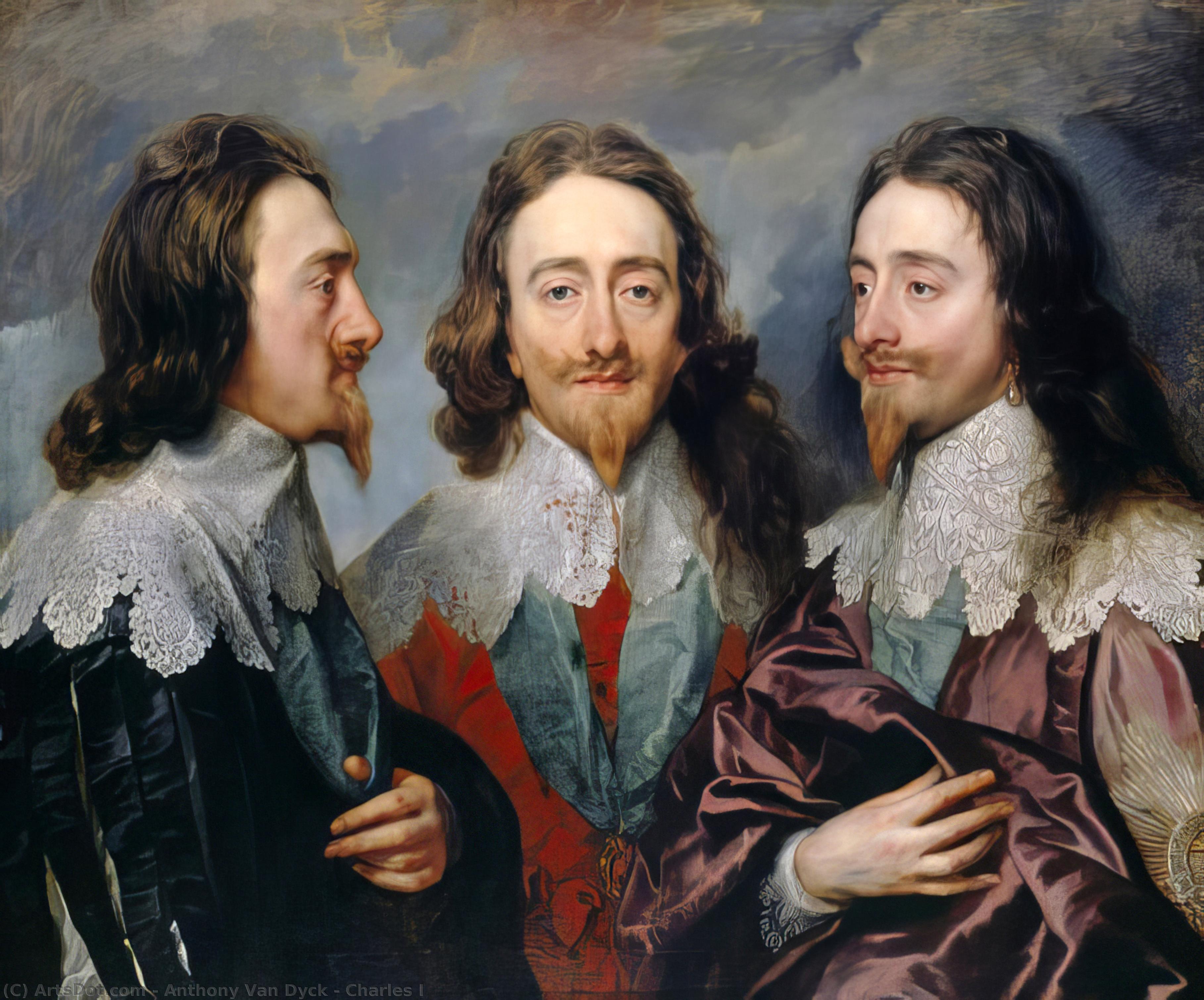
Charles I v Troch Pozíciách (1636) od Anthonis van Dyck

Charles I v Troch Pozíciách

1636 · Olej na plátne · Royal Collection, Londýn

Svetlo, tieň, postoj – tieto elementy sa v dielańte Sir Anthony van Dycka stretajú v úžasnej harmonii. Jeho obraz “Charles I in Three Positions”, vytvorený medzi rokmi 1635 a 1636, nie je len portrétom anglického kráľa, ale komplexnou symbolickou reprezentáciou moci, statusu a osobnosti. Tento dielo, aktuálne uložené v Kráľovskom zbore v Londýne, sa vyznačuje neobmedzeným zmyslom pre detail, dramatickým využitím svetla a tieňa a precíznym zachytávaním ľudskej podoby –…

2
Family Portrait (1621) od Anthonis van Dyck

Family Portrait

1621 · Oil On Canvas · Hermitáž, Petrohrad

To gaze upon this magnificent family portrait is to step directly into the opulent drawing rooms of the early seventeenth century. It captures not merely three figures—a distinguished man, an elegant woman, and a cherished child—but an entire tableau of familial pride and societal standing. The composition itself speaks volumes; every fold of fabric, every carefully placed hand, contributes to a narrative of enduring connection. The rich, dramatic red background…

3
Portrait of Isabella Clara Eugenia as Widow (1628) od Anthonis van Dyck

Portrait of Isabella Clara Eugenia as Widow

1628 · Oil On Canvas · Museo de Arte de Ponce, Ponce

Sir Anthony van Dyck’s “Portrait of Isabella Clara Eugenia as Widow” is more than just a depiction of a noblewoman; it's a carefully constructed tableau of power, grief, and the enduring legacy of a formidable ruler. Painted in 1628, this oil-on-canvas work transports us to the heart of the Spanish Netherlands during a period of significant political and personal upheaval. Isabella Clara Eugenia, daughter of Philip II of Spain, served…

4
Jacqueline van Caestre (1622) od Anthonis van Dyck

Jacqueline van Caestre

1622 · Oil On Panel · Royal Łazienki Museum, Varšava

The portrait of Jacqueline van Caestre, painted in 1622 by the masterful Sir Anthony van Dyck, is more than a mere likeness; it’s a carefully constructed tableau of wealth, status, and burgeoning domesticity. Within its richly layered composition lies a captivating story of a noblewoman navigating the complexities of marriage and courtly life in 17th-century Antwerp. Van Dyck, already establishing his signature style—characterized by an almost sensual realism and a…

5
Susanna and the Elders (1622) od Anthonis van Dyck

Susanna and the Elders

1622 · Olej na plátne · Alte Pinakothek, Mníchov

In the grand tapestry of the Flemish Baroque, few works capture the visceral intersection of vulnerability and voyeurism as profoundly as Sir Anthony van Dyck’s Susanna and the Elders. Painted around 1622, this monumental canvas is far more than a mere biblical illustration; it is a psychological drama frozen in time. The scene centers on Susanna, a figure of profound grace and purity, caught in a moment of harrowing intrusion.…

6
Genoese Noblewoman (1622) od Anthonis van Dyck

Genoese Noblewoman

1622 · Oil On Canvas · The Frick Collection, New York

Anthony van Dyck's "Genoese Noblewoman," painted circa 1625-1627, isn’t merely a portrait; it’s a meticulously crafted window into the opulent world of early 17th-century Genoa. This captivating work, now residing within The Frick Collection in New York City, offers a rare glimpse into the refined tastes and social dynamics of a wealthy Italian city-state – a vibrant hub of commerce, art, and cultural exchange during a period of immense artistic…

7
Henrietta Maria (1635) od Anthonis van Dyck

Henrietta Maria

1635 · Oil On Canvas

The gaze of Henrietta Maria meets the viewer through this commanding portrait by Anthony van Dyck. Executed in 1636, the work captures Henrietta Maria of France in a moment of poised royal dignity. She exists here as the Queen of England, a position she holds through her marriage to King Charles I. The painting functions as a visual declaration of her status and her presence within the English court.

8
Portrait of Queen Henrietta-Maria (1638) od Anthonis van Dyck

Portrait of Queen Henrietta-Maria

1638 · Oil On Canvas · Hermitáž, Petrohrad

To stand before this portrait is to encounter the quiet gravity of the seventeenth-century English court. The Queen stands slightly off-center, her figure anchored by the heavy weight of crimson drapery and a draped table. There is a certain stillness here, a moment caught between the political tensions of 1638 and the personal dignity of the sitter. Van Dyck uses light to sculpt her form, pulling her face and chest…

9
The healing of the paralytic (1620) od Anthonis van Dyck

The healing of the paralytic

1620 · Oil On Canvas · Bavarské štátne múzeá výtvarného umenia, Mních

In this oil painting, titled The healing of the paralytic, Anthony van Dyck explores a moment of profound spiritual intervention. The work, which dates to about 1618-20, captures the immediate aftermath of a miracle. We find ourselves witnessing the precise instant of transition between infirmity and restoration. The subject matter is drawn from the New Testament, specifically the narratives found in Matthew 9:1-8 or John 5:1-15.

10
Portrait of Alexandre della Faille (1589-1653) (1632) od Anthonis van Dyck

Portrait of Alexandre della Faille (1589-1653)

1632 · Oil On Canvas · Kráľovské múzeá krásnych umení Belgicka, Brusel

A dignified three-quarter length portrait, this work captures a middle-aged man positioned centrally against a dark, atmospheric background. The subject, Alexandre della Faille, is rendered with a sense of quiet authority and formal composure. A voluminous white ruff collar acts as the primary focal point, its crisp texture contrasting sharply against the heavy, dark fabric of his cloak. Light enters from the upper left, casting soft shadows across the right…

Keep exploring Anthonis van Dyck: 11 to 100

11Equestrian Portrait of Charles I of England (1620) od Anthonis van DyckEquestrian Portrait of Charles I of England1620 · Bavarské štátne múzeá výtvarného umenia 12The Pietà (1629) od Anthonis van DyckThe Pietà1629 · Museo del Prado 13Portrait of Charles Louis, Elector Palatine (1617-1680), in exile (1637) od Anthonis van DyckPortrait of Charles Louis, Elector Palatine (1617-1680), in exile1637 14Portrait of Charles, Marquis de Vieuville (1635) od Anthonis van DyckPortrait of Charles, Marquis de Vieuville1635 · Chrysler Museum of Art 15Portrait of Charles I, King of the Great Britain (1600-1649) (1638) od Anthonis van DyckPortrait of Charles I, King of the Great Britain (1600-1649)1638 · Hermitáž 16The Lomellini Family (1627) od Anthonis van DyckThe Lomellini Family1627 17Queen Henrietta Maria (1640) od Anthonis van DyckQueen Henrietta Maria1640 · Wallace Collection 18Portrait of Henrietta Maria of France, Queen of England, Scotland and Ireland (1637) od Anthonis van DyckPortrait of Henrietta Maria of France, Queen of England, Scotland and Ireland1637 19Moses and the Brazen Serpent (1530) od Anthonis van DyckMoses and the Brazen Serpent1530 20Christ on the Cross (1625) od Anthonis van DyckChrist on the Cross1625 · Courtauld Gallery 21Portrait of Queen Henriëtta Maria (1632) od Anthonis van DyckPortrait of Queen Henriëtta Maria1632 22Portrait of a Family (1620) od Anthonis van DyckPortrait of a Family1620 23Thomas Hamilton, 2nd Earl of Haddington, 1600 - 1640 (1637) od Anthonis van DyckThomas Hamilton, 2nd Earl of Haddington, 1600 - 16401637 · Škótska národná galéria portrétov 24Samson and Delilah (1630) od Anthonis van DyckSamson and Delilah1630 · Kunsthistorisches Museum 25Portrait of a Lady with her Daughter (1632) od Anthonis van DyckPortrait of a Lady with her Daughter1632 26Charles I (1600-49) on Horseback (1635) od Anthonis van DyckCharles I (1600-49) on Horseback1635 · Hampton Court Palace 27Cupid and Psyche (1640) od Anthonis van DyckCupid and Psyche1640 · Royal Collection 28Queen Henrietta Maria of England (1620) od Anthonis van DyckQueen Henrietta Maria of England1620 · Bavarské štátne múzeá výtvarného umenia 29A Family Group (1634) od Anthonis van DyckA Family Group1634 · Detroit Institute of Arts 30Queen Henrietta Maria of England (1639) od Anthonis van DyckQueen Henrietta Maria of England1639 · Statens Museum For Kunst 31Saint Sebastian and the Angel (1631) od Anthonis van DyckSaint Sebastian and the Angel1631 · Galleria Sabauda 32Portrait of a painter (1640) od Anthonis van DyckPortrait of a painter1640 · Kunstmuseum Basel 33Queen Henrietta Maria (1635) od Anthonis van DyckQueen Henrietta Maria1635 · Staatliche Kunstsammlungen Dresden 34Christ on the Cross with Saint Catherine of Siena, Saint Dominic and an Angel (1620) od Anthonis van DyckChrist on the Cross with Saint Catherine of Siena, Saint Dominic and an Angel1620 · Kráľovské múzeum výtvarných umení Antverpy 35St Jerome (1620) od Anthonis van DyckSt Jerome1620 · Národné múzeum 36Venetia, Lady Digby (1634) od Anthonis van DyckVenetia, Lady Digby1634 37Christ and the Penitent Magdalene (1620) od Anthonis van DyckChrist and the Penitent Magdalene1620 · Bavarské štátne múzeá výtvarného umenia 38Crucifixion (1622) od Anthonis van DyckCrucifixion1622 · San Zaccaria 39Portrait Of Frederik Hendrik (1632) od Anthonis van DyckPortrait Of Frederik Hendrik1632 · Baltimore Museum of Art 40Ottaviano Canevari (1627) od Anthonis van DyckOttaviano Canevari1627 · The Frick Collection 41Lamentation of Christ (1620) od Anthonis van DyckLamentation of Christ1620 · Bavarské štátne múzeá výtvarného umenia 42Portrait of an English Gentleman (1635) od Anthonis van DyckPortrait of an English Gentleman1635 · Palazzo Pitti 43Portrait of James Hay, 2nd Earl of Carlisle (c1612-1660) (1636) od Anthonis van DyckPortrait of James Hay, 2nd Earl of Carlisle (c1612-1660)1636 44Saint Sebastian (1620) od Anthonis van DyckSaint Sebastian1620 · Bavarské štátne múzeá výtvarného umenia 45The Martyrdom of Saint Sebastian (1616) od Anthonis van DyckThe Martyrdom of Saint Sebastian1616 · Bavarské štátne múzeá výtvarného umenia 46Sir Algernon Percy (1602–1668), 10th Earl of Northumberland, KG, His First Wife Lady Anne Cecil (d.1637), and Their Eldest Daughter, Lady Catherine Percy (1630–1638) (1635) od Anthonis van DyckSir Algernon Percy (1602–1668), 10th Earl of Northumberland, KG, His First Wife Lady Anne Cecil (d.1637), and Their Eldest Daughter, Lady Catherine Percy (1630–1638)1635 47Sir Kenelm Digby (1640) od Anthonis van DyckSir Kenelm Digby1640 · National Portrait Gallery 48Lord John Stuart and his Brother, Lord Bernard Stuart (1638) od Anthonis van DyckLord John Stuart and his Brother, Lord Bernard Stuart1638 49Portrait of an Old Man (1618) od Anthonis van DyckPortrait of an Old Man1618 · Liechtenstein Museum 50Portrait of a Man (1922) od Anthonis van DyckPortrait of a Man1922 · Bavarské štátne múzeá výtvarného umenia 51Charles I in Three Positions (1636) od Anthonis van DyckCharles I in Three Positions1636 · Royal Collection 52Portrait of Nicolaes van der Borght (1620) od Anthonis van DyckPortrait of Nicolaes van der Borght1620 53Portrait of a Genovese Gentleman (1621) od Anthonis van DyckPortrait of a Genovese Gentleman1621 · Gemäldegalerie 54James Stuart (1612–1655), 1st Duke of Richmond and 4th Duke of Lennox (1636) od Anthonis van DyckJames Stuart (1612–1655), 1st Duke of Richmond and 4th Duke of Lennox1636 · English Heritage 55Mountjoy Blount (1597–1665), 1st Earl of Newport George (1608–1657), Lord Goring, and a Page (1639) od Anthonis van DyckMountjoy Blount (1597–1665), 1st Earl of Newport George (1608–1657), Lord Goring, and a Page1639 · Petworth House 56The Martyrdom of Saint Sebastian (1620) od Anthonis van DyckThe Martyrdom of Saint Sebastian1620 · Bavarské štátne múzeá výtvarného umenia 57Rest on the Flight into Egypt (Madonna with Partridges) (1632) od Anthonis van DyckRest on the Flight into Egypt (Madonna with Partridges)1632 · Hermitáž 58Portrait of a Man (1618) od Anthonis van DyckPortrait of a Man1618 · Liechtenstein Museum 59Marie de Raet (1631) od Anthonis van DyckMarie de Raet1631 · Wallace Collection 60Mozes and the brass snake (1620) od Anthonis van DyckMozes and the brass snake1620 61Portrait of Prince Charles Louis, Elector Palatine (1641) od Anthonis van DyckPortrait of Prince Charles Louis, Elector Palatine1641 62Charles Seton (1615–1672), 2nd Earl of Dunfermline, Lord Privy Seal (1640) od Anthonis van DyckCharles Seton (1615–1672), 2nd Earl of Dunfermline, Lord Privy Seal1640 63The Virgin and Child (1631) od Anthonis van DyckThe Virgin and Child1631 · Buckingham Palace 64Lord George Stuart (1638) od Anthonis van DyckLord George Stuart1638 · National Portrait Gallery 65Portrait of Wolfgang William of Palatine-Neuburg (1630) od Anthonis van DyckPortrait of Wolfgang William of Palatine-Neuburg1630 · Kunsthalle Bremen 66Queen Henrietta Maria (1760) od Anthonis van DyckQueen Henrietta Maria1760 · Birmingham Museum and Art Gallery 67Portrait of Emmanuel Philibert (1624) od Anthonis van DyckPortrait of Emmanuel Philibert1624 68Portrait of Charles V on Horseback (1620) od Anthonis van DyckPortrait of Charles V on Horseback1620 · Galleria degli Uffizi 69The Polish Rider (1620) od Anthonis van DyckThe Polish Rider1620 · Bavarské štátne múzeá výtvarného umenia 70Charles I and the Knights of the Garter in Procession (1638) od Anthonis van DyckCharles I and the Knights of the Garter in Procession1638 · Ashmolean Museum 71Christus als Salvator Mundi (1620) od Anthonis van DyckChristus als Salvator Mundi1620 · Bildergalerie Sanssouci 72Charles I (1600–1649) (1639) od Anthonis van DyckCharles I (1600–1649)1639 · National Trust 73Kráľovná Henrietta Maria (1636) od Anthonis van DyckKráľovná Henrietta Maria1636 · Metropolitné múzeum umenia 74Lady Dacre (1633) od Anthonis van DyckLady Dacre1633 · Denver Art Museum 75Francis Junius (1591–1677) (1640) od Anthonis van DyckFrancis Junius (1591–1677)1640 · Bodleianské knižnice 76Charles i - (16) od Anthonis van DyckCharles i - (16) 77Deux têtes d (1650) od Anthonis van DyckDeux têtes d1650 · Museum of Fine Arts 78Princess Henrietta of Lorraine (1611–1660), Attended by a Page (1634) od Anthonis van DyckPrincess Henrietta of Lorraine (1611–1660), Attended by a Page1634 · English Heritage 79Portrait of Father Jean-Charles della Faille, S.J. (1629) od Anthonis van DyckPortrait of Father Jean-Charles della Faille, S.J.1629 80Equestrian Portrait of Charles I, King of England (1640) od Anthonis van DyckEquestrian Portrait of Charles I, King of England1640 81François Langlois (1589–1647) (1637) od Anthonis van DyckFrançois Langlois (1589–1647)1637 · The Barber Institute of Fine Arts 82Portrait of Charles I, King of England (1640) od Anthonis van DyckPortrait of Charles I, King of England1640 · USC Fisher Museum of Art 83Christ carrying the Cross od Anthonis van DyckChrist carrying the CrossMusei di Strada Nuova 84Portrait of the Painter Cornelis de Wae (1627) od Anthonis van DyckPortrait of the Painter Cornelis de Wae1627 · Koninklijk Museum voor Schone Kunsten 85Ecce Homo (1626) od Anthonis van DyckEcce Homo1626 · The Barber Institute of Fine Arts 86Margareta Snyders (1620) od Anthonis van DyckMargareta Snyders1620 87Margareta de Vos (1620) od Anthonis van DyckMargareta de Vos1620 · The Frick Collection 88Portrait of Anna Dalkeith, Countess of Morton, and Lady Anna Kirk (1631) od Anthonis van DyckPortrait of Anna Dalkeith, Countess of Morton, and Lady Anna Kirk1631 · Hermitáž 89Portrait Of Philip, Lord Wharton (1630) od Anthonis van DyckPortrait Of Philip, Lord Wharton1630 90Portrait of a Man (1618) od Anthonis van DyckPortrait of a Man1618 · Liechtenstein Museum 91Portrait of Henrietta Maria (1609–1699), Queen of England od Anthonis van DyckPortrait of Henrietta Maria (1609–1699), Queen of EnglandNárodné múzeum vo Varšave 92Portrait of James Hamilton (1630) od Anthonis van DyckPortrait of James Hamilton1630 · Liechtenstein Museum 93Štefan I na klise (1635) od Anthonis van DyckŠtefan I na klise1635 · National Gallery 94Thomas Killigrew and (.) William, Lord Croft (1638) od Anthonis van DyckThomas Killigrew and (.) William, Lord Croft1638 · Royal Collection 95Alexander Henderson (c.1583–1646), Presbyterian Divine and Diplomatist (1641) od Anthonis van DyckAlexander Henderson (c.1583–1646), Presbyterian Divine and Diplomatist1641 · Škótska národná galéria portrétov 96The Lomellini Family (1626) od Anthonis van DyckThe Lomellini Family1626 · Národná galéria Škótska 97Samson a Dalila (1620) od Anthonis van DyckSamson a Dalila1620 98Abraham and Isaac (1617) od Anthonis van DyckAbraham and Isaac1617 · Národní galerie Praha 99Portrait of Anna van Craesbecke (1635) od Anthonis van DyckPortrait of Anna van Craesbecke1635 · Staatliche Museen 100A wooded ridge (1630) od Anthonis van DyckA wooded ridge1630 · Art Gallery of South Australia

Anthonis van Dyck's paintings, period by period

What Anthonis van Dyck painted most

The four subjects that come up most often in these pieces, each with its best-known example.

Where you can see Anthonis van Dyck's paintings

8 múzeá, v ktorých sa nachádza najviac obrazov z tejto stránky.

Múzeá Mesto Diela umelca Anthonis van Dyck Obrazy z tohto zoznamu
Bavarské štátne múzeá výtvarného umenia, MníchBavarské štátne múzeá výtvarného umenia Mních 57 The healing of the paralytic, Equestrian Portrait of Charles I of England, Queen Henrietta Maria of England
Hermitáž, PetrohradHermitáž Petrohrad 25 Family Portrait, Portrait of Queen Henrietta-Maria, Portrait of Charles I, King of the Great Britain (1600-1649)
Royal Collection, LondýnRoyal Collection Londýn 29 Charles I v Troch Pozíciách, Cupid and Psyche, Charles I in Three Positions
Liechtenstein Museum, ViedeňLiechtenstein Museum Viedeň 23 Portrait of an Old Man, Portrait of a Man, Portrait of a Man
The Frick Collection, New YorkThe Frick Collection New York 8 Genoese Noblewoman, Ottaviano Canevari, Margareta de Vos
Wallace Collection, LondýnWallace Collection Londýn 9 Queen Henrietta Maria, Marie de Raet
National Portrait Gallery, LondýnNational Portrait Gallery Londýn 6 Sir Kenelm Digby, Lord George Stuart
Škótska národná galéria portrétov, EdinburghŠkótska národná galéria portrétov Edinburgh 5 Thomas Hamilton, 2nd Earl of Haddington, 1600 - 1640, Alexander Henderson (c.1583–1646), Presbyterian Divine and Diplomatist

One famous Anthonis van Dyck piece for every decade

Diela podľa dekád

Pick a decade to see its standout piece.

Anthonis van Dyck paintings: what people want to know

What painting is Anthonis van Dyck best known for?See the answer

Top of the list is Charles I v Troch Pozíciách (1636), Royal Collection, Londýn. Right behind it: Family Portrait (1621) and Portrait of Isabella Clara Eugenia as Widow (1628).

How old was Anthonis van Dyck at the time of Charles I v Troch Pozíciách?See the answer

37 years old. Anthonis van Dyck was born in 1599, and Charles I v Troch Pozíciách dates from 1636.

Which 10 Anthonis van Dyck paintings are the most famous?See the answer

Charles I v Troch Pozíciách, Family Portrait, Portrait of Isabella Clara Eugenia as Widow, Jacqueline van Caestre, Susanna and the Elders, Genoese Noblewoman, Henrietta Maria, Portrait of Queen Henrietta-Maria, The healing of the paralytic a Portrait of Alexandre della Faille (1589-1653). You'll find the year and the museum of each in the list above.

How many Anthonis van Dyck works are there?See the answer

We have 1,620 works by Anthonis van Dyck in our catalogue, dated 1616 to 1641.

Which museums have Anthonis van Dyck's best-known paintings?See the answer

You'll find most of them in Bavarské štátne múzeá výtvarného umenia (Mních), Hermitáž (Petrohrad) a Royal Collection (Londýn). The museum list above has the full breakdown.

When were Anthonis van Dyck's most famous pieces painted?See the answer

In 1630s, more than any other time: 44 of the 100 pieces on this page date from then, Charles I v Troch Pozíciách among them.

What are the oldest and newest famous paintings by Anthonis van Dyck?See the answer

The earliest piece here is The Martyrdom of Saint Sebastian (1616); the most recent is Portrait of Prince Charles Louis, Elector Palatine (1641).

What did Anthonis van Dyck paint most?See the answer

Man (22), Portraiture (21) a Portrait (17), out of the 100 pieces on this page.

What did Anthonis van Dyck usually paint with?See the answer

Oil On Canvas, used in 75 of the 100 pieces on this page.

Which art movement is Anthonis van Dyck linked to?See the answer

Baroque style, as you can see in the pieces on this page.

What can you see by Anthonis van Dyck at the Bavarské štátne múzeá výtvarného umenia?See the answer

You can see 10 of the pieces on this page at the Bavarské štátne múzeá výtvarného umenia, Mních, including The healing of the paralytic, Equestrian Portrait of Charles I of England a Queen Henrietta Maria of England.

Can I order a Anthonis van Dyck reproduction for my home?See the answer

Yes. Every painting on this page is available as a hand-painted oil reproduction or a print, in the size that suits you. Just open the painting's page to order.

Meet Anthonis van Dyck

Raný život, rodina a vzdelanie

Narodený v Antverpách 22. marca 1599, Sir Anthony Van Dyck vstúpil do sveta obchodu a remesla. Bol sedmým z dvanástich detí narodených Mariou Cupers a Francoïsom „Fransom“ van Dijckom, ktorý bol obchodníkom s hodvábom. Toto výchovné prostredie v prosperujúcej domácnosti poskytlo stabilný základ dieťaťu, ktoré prejavilo včasný a mimoriadny talent pre vizuálne umenie. Už v desiatich rokoch začal svoju formálnu edukáciu v oblasti maľby pod vedením Hendricka van Balena staršieho.

Jeho rozvoj bol poznačený rýchlym vzostupom v rámci tradičných štruktúr flámskeho umeleckého sveta. Neostal dlho v roli len obyčajného študenta; jeho technická zdatnosť mu umožnila s pozoruhodnou rýchlosťou smerovať k nezávislosti. K 18. októbrovi 1617 dosiahol významný milník, keď bol prijatý do antverpskej cechu svätého Lukáša ako slobodný majster. Toto skoré profesionálne uznanie signalizovalo príchod talentu, ktorý sa už neskoro vydal za hranice jeho rodného mesta.

  • Autoportrét (datovaný 1613–14)

Vplyv Petra Paula Rubensa

Trajektória kariéry, ktorú niesol Sir Anthony Van Dyck, bola zásadným spôsobom formovaná jeho časom strateným v ateliéri, kde pôsobil Peter Paul Rubens. Nešlo o len obyčajné učňovstvo; mladý umelec sa vypracoval na pozíciu hlavného asistenta majstra, čo si vyžadovalo nielen technickú precíznosť, ale aj schopnosť absorbovať komplexný vizuálny jazyk. Samotný Rubens rozpoznal výnimočný talent svojho protežé, keď mladého muža opísal ako najlepšieho zo svojich študentov. Toto mentorstvo poskytlo Sir Anthony Van Dyck priamu spojbu s dominantnými umeleckými prúdmi siedemnasteho storočia a umožnilo mu na vlastné oči sledovať vytváranie monumentálnych kompozícií a riadenie nesmierne produktívnej dielne.

Rubensov vplyv na mladého umelca sa prejavoval prostredníctvom spoločného sústredenia na expresiu, gestikuláciu a formu. Hoci Sir Anthony Van Dyck si neskôr vypracoval oveľa rafinovanejší a vyrovnanejší štýl, jeho rané roky boli zasvetené napodobovaniu energie a pozorovavateľnosti svojho mentora. Naučil sa prekladať vitalitu života do oleja a pigmentu, čo bola schopnosť, ktorá mu neskôr umožnila prekročiť robustnú energiu Rubensovho štýlu a posunúť sa k niečomu oveľa jemnejšiemu. Technické základy položené v tomto ateliéri mu poskytli nevyhnutné nástroje pre jeho neskorší vzostup na kráľovské dvory Európy.

Umelecké cestovanie po Taliansku a v Genove

U konca svojich teenagešských rokov už Sir Anthony Van Dyck dosiahol úspech ako nezávislý maliar, čo mu dodalo potrebný impulz na odchod z Nízkozemia. Medzi rokom 1621 a koncom roku 1627 putoval cez Taliansko, čo bolo obdobie, ktoré mu pomohlo vybieliť si schopnosť navigovať v zložitých sociálnych hierarchiách európskej šľachty. Táto éra cestovania nebola len náhodným blúdením, ale skôr strategickou imersiou do vizuálneho jazyka mediterránskej elity.

Jeho čas strávený v Genove sa ukázal ako obzvlášť významný. U genovských patricov získal stály okruh klientov, ktorých aristokratické citenie presne ladilo s jeho vyvíjajúcim sa štýlom. Jeho portréty týchto miestnych rodín boli v meste prijaté s veľkou obľubou, čím si vybudoval reputáciu maliara schopného zachytiť tú špecifickú dôstojnosť, ktorú si vysoká spoločnosť vyžadovala. V týchto portrétoch sa pohyboval ďaleko za hranice prostého zachytenia podobnosti; dokázal totiž vyjadriť spoločenské postavenie aj vnútorný charakter svojich modelov.

Služba na anglickom dvore

Sir Anthony Van Dyck sa spojil s anglickou korunou už dávno pred svojím trvalým usadením v Londýne. V roku 1620 vstúpil do služby kráľa Jakuba I., čo bolo len krátke spojenectvo, ktoré predchádzalo jeho rozleglým cestám cez Taliansko a holandské nížiny. Tieto roky neustálého pohybu a rozmanitých zakázok ho pripravili na oveľa hlbší a významnejší príchod. Do Anglicku sa vrátil v roku 1632 a usadil sa na dvore, kde sa jeho reputácia prvotriedného portrétistu definitívne upevnila. V tom istom roku bol vymenovaný za „hlavného kráľovského maliara“, čo ho okamžite postavilo do samotného srdca kráľovského života.

Jeho prítomnosť v Londýne zásadne transformovala vizuálny jazyk monarchie. Odklonil sa od rigidnej, formálnej portrétnej tvorby minulosti a namiesto toho sa rozhodol prezentovať kráľa a aristokraciu s pocitom prirodzenej elegancie a autority. Schopnosť zachytiť skutočný charakter jeho modelov mu umožnila stať sa najvýznamnejším dvorským maliarom v Anglicku. Nezaoberal sa len prostým zachytávaním tvárov; vytváral obraz moci, ktorý ovplyvňoval anglický dvôr po celé generácie. Jeho diela z tohto obdobia priniesli pocit dôstojnosti a vyrovnanosti, ktoré definovali estetiku celej epóchy.

Technika a umelecký štýl

Sir Anthony Van Dyck disponoval technickou všestrannosťou, ktorá mu umožnila plynule prechádzať medzi bohatou, hlbokou vrstvou olejnej farby a precízne, ostrými čiarami rytiny. Ako vášnivý a zdatný kreslenár si bol vedomý štrukturálnej nevyhnutnosti pevnej základne ešte predtým, než sa pustil do nanášania farieb. Jeho kompozície často vychádzali z majstrovsky dàných tvarov, ktoré využívali dramatickú hru svetla a tieňa na definovanie kontúr jeho predmetov. Tento dôsledný prístup k chiaroscuro dodával jeho dielam pocit hĺbky a objem, čo bolo obzvýčajne zreteľné v jeho náboženských a mytologických scenách, kde sa svetlo zdalo vyvádzať z temnoty, aby zvýraznilo konkrétny gesto alebo výraz tváre.

Jeho paleta bola charakteristická hlbokými, sýtymi farbami a neobyčajnou pozornosťou venovanou najmenším detailom textúry. Či už vykresľoval lesk hodvábu alebo jemné póry na ľudskej pokožke, zachovával pocit vyvinenosti a elegancie, čím sa vyhol vyhýbal hrubosti, ktorou sa vyznačovali niektorí jeho súčasníci. Táto precíznosť sa nezamedzávala len na jeho oficiálne zamavnávacie práce; schopnosť zachytiť pohyb a charakter mu umožnila vynikať v rôznych žánroch, od grandióznosti mytologických príbehov až po intímnu psychologickú hĺbku jeho portrétnej tvorby. Mal výnimočný talent využívať svetlo na naznačenie spoločenského postavenia alebo vnútorného temperamentu modela, pričom často využíval vznešené gestá a starostlivo vybrané pozadia, ktoré jednotlivca dokonale rámovali.

Odkaz a trvalý vplyv

Smrť, ktorou Sir Anthony Van Dyck skonal v Londýne 9. decembra 1641, znamenala konec kariéry, ktorá už dávno zásadne premenila vizuálny jazyk európských dvorov. Ako nástupca Petra Paula Rubensa sa vypracoval na najvýznamnejšieho flámskeho maliara siedemnasteho storočia. Jeho prítomnosť na anglickom dvore stanovila štandard portrétnej tvorby, ktorý ovplyvňoval smerovanie umenia počas nasledujúcich 150 rokov. Ovládal jedinečnú schopnosť definovať spoločenské postavenie a charakter svojich modelov prostredníctvom vypracovanej techniky, ktorá sa stala vzorom pre nasledujúce generácie umelcov.

Jeho pôsobenie zasiahlo oveľa ďalej než len k hraniciam Anglicko. Po celom období jeho dielo vyvádzalo hlboký vplyv na umenie vznikajúce v celom Španielskom a európskom prostredí. Tento široký dosah bol poháňaný jeho nesmiernou všestrannosťou, schopnosťou plynule prechádzať medzi nárokmi náboženských nárazov a sofistikovanými požiadavkami aristokracie. Sir Anthony Van Dyck nezapisoval len tváre; on konštruoval obraz autority a elegancie, ktorý sa stal obľúbenou estetikou pre tých, ktorí si chceli vyjadriť svoju moc a status.

  • Charles I in Three Positions (1636)
  • The Balbi Children
  • Self-Portrait (1622)

Všetky 1620 diela od Anthonis van Dyck →