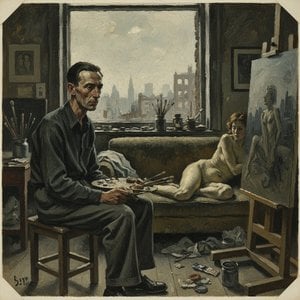
Život vytesaný do realismu: Svet Luciena Freuda
Lucian Michael Freud, narodený v Berlíne v roku 1922, nesol v sebe odkaz hlboko ponorený do intelektuálnych hodnôt – bol vnukom pionierskeho psychoanalytika Sigmunda Freuda. Mladý Lucian však svoju cestu nezasmeroval k skúmaniu podvedomia prostredníctvom teórie, ale našiel ju v intenzívnom, fyzickom akte maľovania. Tmavý tieň nacizmu prinútil jeho rodinu v roku 1933 opustiť Nemecko a usadiť sa v Londýne; toto presídlenie zásadne formovalo nielen jeho život, ale aj často smútny a znepokojivý tón, ktorý definoval jeho umeleckú víziu. Jeho raná vzdelávanie bolo fragmentované, poznačené vylučovaním zo školy Bryanston, no kľúčová sa ukázala formujúca výuka v East Anglian School of Painting and Drawing pod vedením Cedrica Morrisa. Práve tam sa v ňom zakorenil dôraz na priamu pozorovosť, čo sa stalo základným kameňom jeho vyvíjajúceho sa štýlu – zámerného odklonu od rastúcej abstrakcie, ktorú v tom čase prijali mnohí jeho súčasníci. Táto pevná základňa založená na dôslednom štúdiu viditeľného sveta ho odlíšila od ostatných a vytvorila jeho jedinečnú umeleckú identitu.Od surrealistických éch k neúprosným portrétom
Freudova umelecká cesta nezačala surovým realizmom, pre ktorý sa neskôr stal slávnym. Jeho raná tvorba svedovala k surrealizmu a nemeckému expresionizmu, pričom spájala snovečné obrazy s emocionálnou intenzitou. Tieto vplyvy však postupne skrystalizovali do niečoho, čo bolo výhradne jeho vlastným. Už na začiatku 50. rokov sa objavil charakteristický štýl – definovaný hrubým impastom, tlmenými pozdiešiami zosilňujúcimi tóny pleti a takmer brutálnou čestnosťou pri zobrazení ľudskej postavy. Vyhýbal sa idealizácii či pochlebovaniu; namiesto toho sa snažil zachytiť surovú fyzickosť, zraniteľnosť a psychologickú váhu. Tento intenzívny súraz s portrétom rýchlo ugruntoval Freuda ako poprednú postavu britského umenia, kronikára svojej doby, ktorého dielo rezonovalo s povojnovou citlivosťou čeliacou existenciálnym otázkam. Často pracoval zo živého modela a vyžadoval si vyčerpávajúce pózy – niekedy trvajúce hodiny či dokonca dni – aby dosiahol úroveň detailu a psychologickej hĺbky, ktorú si želal. Akt maľovania sa stal testom vytrdalosti pre umelca aj modela, čím vznikla jedinečná intimita, ktorá prenikla jeho plátna.Technika ako odhalenie: Taktilnosť bytia
Freudov technický prístup bol neoddeliteľnou súčasťou emocionálneho dopadu jeho obrazov. Uprednostňoval veľké štetce z divočiny, pričom nanášal farbu s fyzikalitou, ktorá zrkadlí samotnú tému diela. To vytvorilo textúrovaný povrch, takmer so sochárskych kvalít, kde každý ťah štetca odhaľoval váhu a podstatu tela. Kontrast medzi živými, často telesnými tónmi a striedmavou paletou interiérov či krajín umocňoval pocit izolácie a introspekcie. Často maľoval v postoji, pričom neskôr, s postupným vekom, začal používať vysokú stoličku, čím si udržal dynamický vzťah medzi plátnom a modelom. Táto fyzická angažovanosť nebola len technikou; bola to imerzia v akte videnia – skutočné *pozorovanie* subjektov a preklad tejto pozorovateľnosti do farby. Diela ako Dievča s mačiatkom (1947) demonštrujú tento raný vývoj, zatiaľ čo neskoršie diela, napríklad Benefits Supervisor Sleeping (1995), predstavujú jeho zrelý štýl – neúprosný pohľad na ľudskú kondíciu. Samotná materiálnosť farby sa stala prostredníkom na vyjadrenie nielen vzhľadu, ale aj vnímania a citu.Odkaz a vplyv: Trvalá stopa
Freudova šxtyročná kariéra zanechala nezmazateľnú stopu v britskom portrétne}`); umení a napísala novú kapitolu o konvenciách krásy a reprezentácie. Nebavilo ho zachytávať sociálny status či vonkajší vzhľad; snažil sa odhaliť niečo hlbšie, primárnejšie – podstatu ľudského bytia vo všetkej jeho komplexnosti a nedokonalosti. Jeho vplyv presahuje hranice maľby a inšpiruje umelcov naprieč rôznymi odbormi svojou nekompromisnou víziou a technickým majstrovstvom. Intenzita a psychologická hĺbka jeho tvorby naďalej fascinujú publikum po celom svete a zabezpečujú mu miesto jedného z najdôležitejších a najvplyvnejších umelcov 20. storočia. Bol kľúčovým členom „školy Londýna“ (School of London), skupiny figuratívnych maliarov pôsobiacich v Londýne v období dominancie abstraktného expresionizmu, spojených svojím záväzkom k priamemu pozorovaniu a emocionálnej pravdivosti. Jeho obrazy sú uchovávané vo významných múzeách po celom svete – v Tate v Londýne, Freudovom múzeu v Londýne či Goldsmiths’ College v Londýne – ako trvajúce svedectia jeho umeleckého génia. Jeho tvorba zostáva mocným pripomínadlom nesmiernej sily figuratívneho umenia, ktoré nás vie konfrontovať s nami samými.Otázky a odpovede
Odkiaľ pochádza Lucian Freud?
Lucian Freud sa narodil/a v krajine Nemecko.
Ako nájdem diela od Lucian Freud na konkrétnu tému?
Diela umelca Lucian Freud si môžete preskúmať podľa kľúčových slov na jeho stránke Podľa kľúčových slov. Každé kľúčové slovo spája súvisiace diela do tematických celkov.
Existuje chronologický prehľad tvorby umelca Lucian Freud?
Kariéra umelca Lucian Freud sa na jeho stránke Chronológia odvíja obdobie po období v podobe horizontálnej časovej osi diel, ktoré sú rozdelené do kapitol podľa jednotlivých období jeho tvorby.