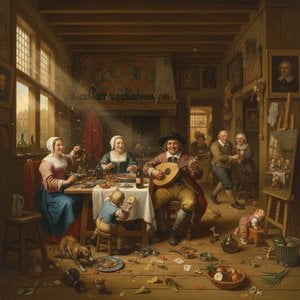
Život ponorený do detailu: Svet Franca van Mierisa Staršieho
Frans van Mieris Starší, meno synonymické s precíznym detailom a vyvinutým umením, zastáva významnú pozíciu v ére holandského zlatého veku. Narodený v Lejdene v roku 1635, odklonil svoju cestu od rodinného remesla zlatovníctva – recu, ktorú praktikoval jeho otec Jan Bastiaensz van Mieris – smerom k pútavému svetu maľby. Táto skorá sklônosť k kresleniu pripravila scénu pre kariéru, ktorá definovala štýl „fijnschilder“ a ponúkla intímny pohľad do holandskej spoločnosti 17. storočia. Jeho počiatočné školenie pod vedením Abrahama Toorenvlieta, následované kľúčovou výukou u uznávaného Gerrita Dou, položilo pevné základy, na ktorých vybudoval svoj vlastný, nezamiteľný umelecký hlas. Tieto formujúce roky mu vdechnuli nielen technickú zdatnosť, ale aj hlboké pochopenie naratívnej nuansov a sily jemného pozorovania.Vzostup „fijnschildera“
Van Mieris sa rýchlo stal osláveným majstrom štýlu *fijnschilder* – holandského termínu označujúceho „jemné maľovanie“. Túto techniku charakterizovala takmer obsesívna pozornosť k detailu, hladké a uhladené ťahy štetcom a preferencia menších plátien. Nešlo len o replikáciu reality; išlo o jej pozdvihnutie prostredníctvom nesmiernej presnosti. Povrchy v jeho obrazoch sa zdajú byť oživené – lesk saténu, jemná textúra zamatu či odlesky kovu sú vykreslené s ohromujúcou presnosťou. Nemaľoval len miestnosť; zrekonštruoval samotnú atmosféru v nej, čím pozval divákov do scén každodennosti a bohatstva. Jeho témy sa často točili okolo životov vyššej vrstvej: elegantné stretnutia, bohaté interiéry a portréty, ktoré zachytávali nielen podobnosť, ale aj charakter. Opakujúce sa motívy, ako napríklad hostiny s ústricami, lekári ošetrujúci pacientov či ženy zapojené do bežných činností, slúžili ako okná do zvykov a sociálnych rituálov vyšších tried. Hoci bol spočiatku silne ovplyvnený štýlom Gerrita Dou, Van Mieris postupne vyvinul vlastný prístup. Od preplnenia detailmi sa odklonil k greater zdôrazneniu interakcie medzi postavami a rozvíjajúcich sa príbehov v rámci jeho kompozícií. Neskoršie diela niekedy vykazujú tmavšie tónové vlastnosti v porovnaní s jasnejšou paletou jeho raných tvorieb, čo odráža rastúcu zrelosť a umelecké hľadanie.Významné diela a trvajúce oddedičstvo
Niekoľko kľúčových diel stojí ako dôkaz Van Mierisovej zručnosti a jeho evolúcie. Doctor's Visit (Návšteva lekára, 1657), považovaný za jedno z jeho najstarších a najdôležitejších diel, demonštruje jeho rodiacu sa nezávislosť od Douovho vplyvu. Tento obraz je majstrovským predvedením zachytenia tichého napätia lekárskeho vyšetrenia, vykresleného s neuveriteľnou úrovňou realismu. Jeho Self-Portrait with a Cittern (Autoportrét s citrou) je rovnako pútavý, pretože ukazuje jeho schopnosť zobraziť luxusné odevy a zároveň vyjadriť pocit osobnosti a introspekcie. Portrait of the Artist's Wife, Cunera van der Cock (Portrét manželky umelca, Cunery van der Cock) je príkladom jeho majstrovstva v portrétnej maľbe, zdôrazňujúc technickú obratnosť aj pochopenie *chiaroscuro* – dramatickej hry svetla a tieňa. Okrem žánrových scén a portrétov sa Van Mieris odvážil aj do alegorických malieb, ako sú tie zobrazujúce necnosti, ako je pitie, fajčenie či hazardovanie, čo dokazuje šírku jeho umeleckých schopností. Vplyv Franca van Mierisa presiahol daleko za jeho vlastný vek. Jeho odkaz rezonoval v rámci jeho rodiny; jeho syn Willem van Mieris (1662–1747) aj vnuk Frans van Mieris mladší (1689–1763) sa obaja stali úspešnými žánrovými maliarmami, čím pokračovali v umeleckej tradícii. Popularita jeho štýlu vytvorila aj početných imitátorov, medzi nich najmä A. D. Snaphaana, ktorý pôsobil v Lipsku a získal patronát na dvore Anhalt-Dessau.Trvalý prínos holandskému umeniu
Frans van Mieris zohral kľúčovú úlohu pri formovaní hnutia *fijnschilder* v rámci holandskej maľby zlatého veku. Jeho oddanosť detailu, realistické zobrazenie každodenného života a vyššej spoločnosti spolu s technickou brilanciou významne prispeli k ére, ktorá už bola známa svojou umeleckou inováciou. Požíval podporu významných osobností, vrátane arciduka Leopolda a Cosima III. de' Medici, čo je dôkazom medzinárodného uznania jeho talentu. Aj dnes jeho diela naďalej očarujú publikum svojím vynikajúcim remeslom a hlbokým vykreslením kultúry 17. storočia. Krádež autoportrétu z umeleckej galérie v New South Wales v Sydney slúži ako dojímavá pripomienka trvalej hodnoty a príťažlivosti jeho umenia – oddedičstva, ktoré naďalej inšpiruje a fascinuje zberateľov aj milovníkov umenia. Jeho obrazy nie sú len historickými artefaktmi; sú oknami do uplynutej éry, precízne vytvorenými a prenesenými do večného krásy.Otázky a odpovede
Kde nájdem diela umelca Frans van Mieris usporiadané podľa kľúčových slov?
Stránka Podľa kľúčových slov umelca Frans van Mieris spája diela daného umelca podľa ich kľúčových slov.
Môžem si prehliadnuť diela umelca Frans van Mieris podľa použitého média?
Diela umelca Frans van Mieris si môžete prehliadnuť podľa použitého média na jeho stránke Všetky techniky.
Môžem si pri všetkých dielo Frans van Mieris vyskúmať spôsob používania farieb?
Genetika palety umelca Frans van Mieris je stránka, ktorá predstavuje farebný profil jeho tvorby.