David Teniers mladší: Život a odkaz
Raný život a rodinné prostredie
- Narodenie: Antverpy, Belgicko, 15. decembra 1610.
- David Teniers mladší pochádzal z rodiny, ktorá bola hlboko zakorenená v umeleckej tradíencii Flándska. Jeho otec, David Teniers starší, bol tiež maliarom a niekoľko jeho súrodencov sa rozhodlo nasledovať túto umeleckú cestu.
- Školenie: Pôvodne študoval pod vedením svojho otca, kde získal základné vzdelanie v oblasti maliarskych techník a štýlov.
- Rodina sa v niektorých obdobiach potýkala s finančnými deťmi, čo mladého Davida donútilo vytvárať kopie starších majstrovských diel, aby pomohol prispieť k domácemu rozpočtu.
Umelecký rozvoj a vplyvy
- Rané vplyvy: Jeho raná tvorba bola silne ovplyvnená štýlom jeho otca, pričom sa zameriavala skôr na menšie kabinetné malby. Do svojej tvorby si však neskor začal osvojovať vplyvy aj iných flámskych majstrov, ako bol napríklad Pieter Bruegel starší. Rubensov dopad:
- Zlomovým momentom v Teniersovom vývoji bola jeho spolupráca s Peterom Paulom Rubensom. Oženil sa pre Annu Brueghel, dcéru Jana Brueghela staršieho, a Rubens bol pri ich svadbe dokonca svadobným svedkom, čo medzi nimi vytvorilo blízky vzťah.
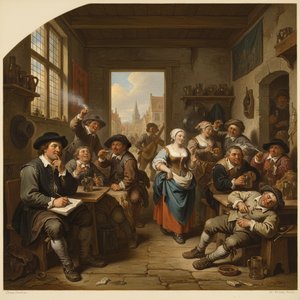
- Špecializácia na žáner: Teniers sa postupne špecializoval na žánrové malbas – zachytávanie každodenného života – a získal slávu vďaka svojim živým scénam z ľudových veselíc (kermess), interiérom krčiem a dedinskej krajine.
Hlavné diela a umelecký štýl
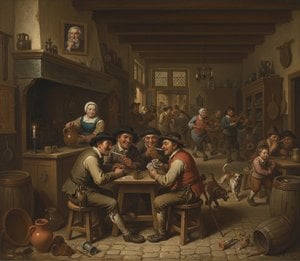
- Žánrové scény: Jeho najslávnejšie diela sú práve jeho žánrové obrazy. Tie často zobrazujú rušné scény zo života prostého ľudia, plné radosti, tanca, pitia a zábavy.
- Maľby kermess: Séria „Flemish Kermess“ je dokonalým príkladom jeho štýlu – plného živých farieb, detailných kompozícií a bystrej pozorování ľudského správania.
- Tvorba krajin
- Teniers vytváral aj očarujúce krajinárske maľby, ktoré často dopĺňali postavy zapojené do vidieckych činností.
- Interiéry krčiem: Jeho scény v krčmách sú obzvlášť významné pre svoj realistický portrét každodenného života a živú atmosféru, ktorá v týchto priestoroch panuje.
Dvorský maliar a kurátor
- Služba arcipadukovi Leopoldovi Wilhelmovi: Teniersovo nadanie si získalo uznanie na habsburskom dvore. Stal sa dvorským maliarom a kurátorom pre arcipaduka Leopolda Wilhelma, generálneho guvernéra Španielskeho Nizozemí.
- Správa zbierky: Ako kurátor bol zodpovedný za správu rozsiahlej umeleckej zbierky arcipaduka, čo zahŕňalo vytváraním inventárov a katalogizáciu jednotlivých diel.
- Založenie akadémie v Antverpách: Teniers zohral kľúčovú úlohu pri založení Antverpskej akadémie krásnych umení, pričom jeho cieľom bolo oživiť flámske maľby po období úpadku, ktoré nastalo po smrti Rubensov a Van Dycka.
Historický význam a odkaz
- Predná žánrová maliarka: David Teniers mladší je považovaný za najvýznamnejšieho flámskeho žánrového maliara svojej doby, ktorý dokázal s neuveriteľnou zručnosťou zachytiť podstatu života v 17. storočí.
- Vplyv na neskorších umelcov: Jeho tvorba ovplyvnila nasledujúce generácie severoeurópskych maliarov a zasiahla dokonca aj francúzskych umelcov obdobia rokoka, ako bol napríklad Antoine Watteau.
- Produktivita: Teniers bol nesmierne produktívnym umelcom, ktorý vytvoril obrovské dielo, ktoré je dodnes obdivované pre svoj šarm, detailnosť a historický vhľad.
- Smrť: V Antverpách zomrel 25. apríla 1690, pričom za sebou zanechal trvalý odkaz ako jeden z najdôležitejších barokných maliarov Flándska.