

Vasily Vereshchagin: Realism, War & Subversion in 19th-Century Russian Painting
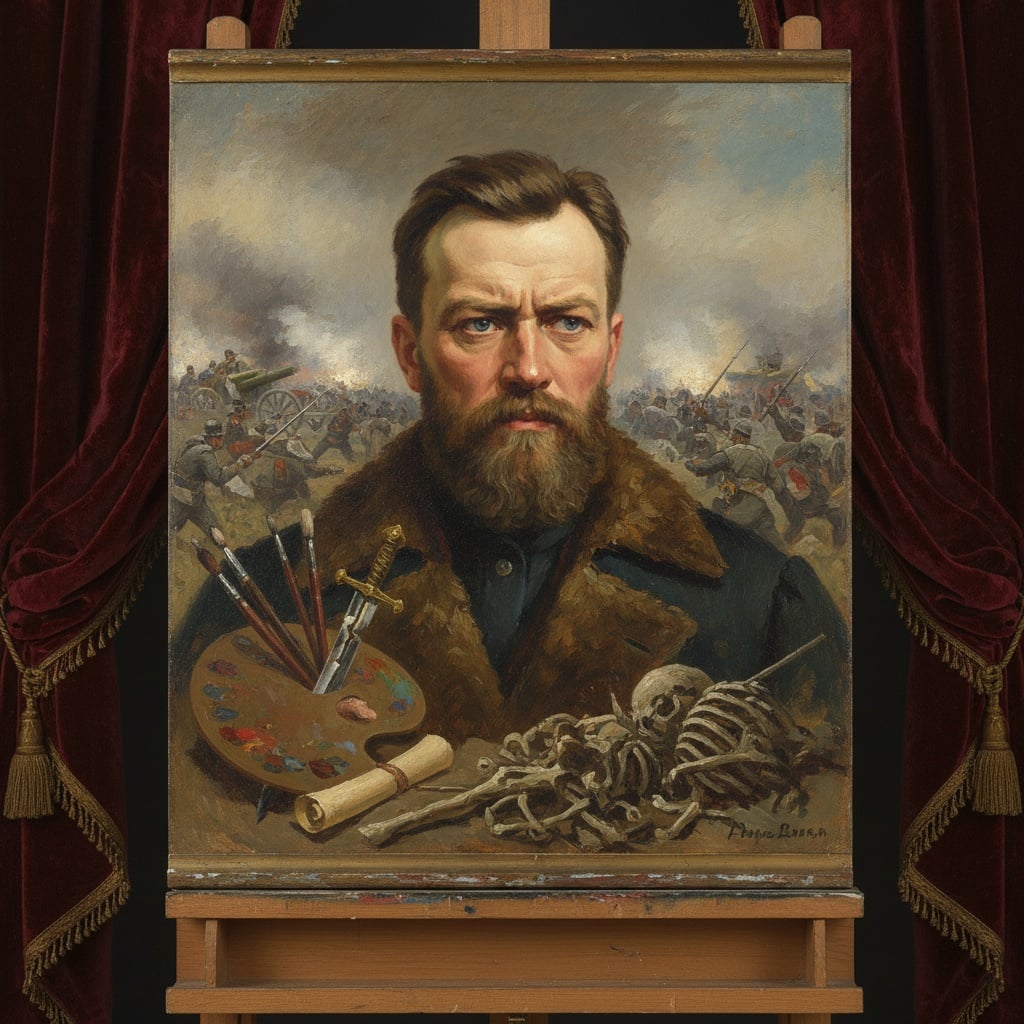
Obsah článku
The Rise of Realism: Challenging Academic Conventions
 Wikipedia: Vasily Vereshchagin
Vasily Vasilyevich Vereshchagin (Russian: Васи́лий Васи́льевич Вереща́гин; 26 October 1842 – 13 April 1904) was a Russian painter, war artist, and traveller. The graphic nature of his realist scenes led to many of them never being printed or exhibite...
The mid-19th century witnessed a seismic shift in the art world, a rebellion against the polished idealism that had dominated for generations. While Romanticism lingered, clinging to notions of heroism and sublime beauty, a new movement – Realism – began to take hold, demanding an unflinching portrayal of contemporary life, stripped bare of embellishment. This wasn’t merely a stylistic change; it was a philosophical one, born from the social upheavals of industrialization and a growing skepticism towards established authority. Artists sought not to depict how things *should* be, but how they *were*, often focusing on the lives of ordinary people and the harsh realities of their existence. Within this burgeoning movement, Vasily Vereshchagin emerged as a particularly compelling – and controversial – figure, one whose work would forever alter the landscape of war painting.
Prior to Realism, battle scenes were typically grand narratives filled with heroic gestures, idealized figures, and a sense of glorious triumph. Artists like Jacques-Louis David had meticulously crafted compositions that elevated warfare to an almost mythical status. Vereshchagin shattered this illusion. He wasn’t interested in celebrating victory; he was intent on exposing the brutal cost of conflict, the suffering of soldiers, and the senselessness of violence. This radical departure from tradition immediately set him apart, earning both admiration and fierce condemnation.
Vereshchagin’s Central Asian Campaigns: Witnessing a World Unseen
 Inside the Tent of a Rich Kirghiz
Experience Vasily Vereshchagin’s ‘Inside the Tent of a Rich Kirghiz.’ A stunning 1869 oil painting showcasing Central Asian culture & intricate detail. Explore Russian art history at the Tretyakov Gallery.
Born into a noble family with Tatar roots in 1842, Vasily Vereshchagin possessed an adventurous spirit that led him far beyond the confines of St. Petersburg's art academies. His early military service provided not just experience but access – access to the remote and largely unknown territories of Central Asia during Russia’s expansionist campaigns. Unlike many artists who relied on secondhand accounts or studio recreations, Vereshchagin *lived* his subject matter. He accompanied General Konstantin Kaufman's expedition in 1867, immersing himself in the cultures of Turkestan, meticulously documenting the landscapes, people, and daily life he encountered.
These travels were formative, shaping not only his artistic style but also his worldview. He wasn’t simply a detached observer; he actively engaged with the local populations, learning their customs and languages. This firsthand experience allowed him to portray Uzbek culture with an unprecedented level of authenticity – a stark contrast to the often-stereotyped depictions prevalent in European art of the time. Paintings like “Inside the Tent of a Rich Kirghiz” (1869) offer intimate glimpses into the domestic lives of Central Asian elites, showcasing intricate details of their clothing, furnishings, and social rituals. His commitment to realism extended beyond mere visual accuracy; he sought to capture the *essence* of this world, its vibrancy, complexity, and inherent dignity.
Brutal Honesty on Canvas: Depicting the Horrors of War
 Uzbek, the foreman (elder) village Hodzhagent
Experience Vasily Vereshchagin’s powerful war paintings! Witness realism & poignant scenes from Russo-Turkish/Japanese Wars. A Russian master of battle.
The Russo-Turkish War of 1877-1878 proved to be a turning point in Vereshchagin’s career. He returned to active service, determined to document the conflict with an uncompromising honesty that shocked and disturbed audiences. He wasn't painting grand strategies or valiant charges; he was focusing on the aftermath of battle – the piles of corpses, the wounded left to die, the desolate landscapes scarred by violence. “Apotheosis of War” (1871), a chilling depiction of skulls stacked outside a ruined city, became his most infamous work, a stark indictment of conquest and a powerful anti-war statement.
Other paintings from this period were equally harrowing. “Resting Place of Prisoners” (1878-79) showed gaunt figures huddled in the snow, their faces etched with despair. “Winners” (1878-79) depicted Ottoman soldiers stripping the corpses of Russian enemies, a brutal and unflinching portrayal of the dehumanizing aspects of conflict. Vereshchagin didn’t shy away from the gruesome details; he presented war as it truly was – chaotic, senseless, and profoundly tragic. This commitment to realism wasn't simply about shock value; it was a deliberate attempt to expose the hypocrisy of glorifying warfare and to challenge the romanticized narratives that had long dominated public perception.
Controversy and Criticism: A Rejection of Romantic Ideals
Unsurprisingly, Vereshchagin’s work met with fierce resistance from both the military establishment and conservative art critics. His paintings were deemed offensive, unpatriotic, and even subversive. Two works – “The Apotheosis of War” and “Left Behind” – were initially banned from public exhibition in Russia for portraying the Imperial Army in a negative light. The criticism wasn’t simply about the graphic nature of his depictions; it was about the fundamental challenge he posed to established norms.
His paintings questioned the very foundations of national pride and military glory. He dared to show the human cost of war, stripping away the veneer of heroism and exposing the suffering beneath. This rejection of Romantic ideals resonated with a growing anti-war sentiment but also alienated those who clung to traditional notions of patriotism and honor. Despite – or perhaps because of – the controversy, Vereshchagin’s work gained international recognition, exhibited in London, Berlin, Dresden, Vienna, and other major European cities. His exhibitions sparked heated debates about the nature of war, the role of art, and the responsibility of artists to bear witness to the truth.
Beyond Battlefields: Portraits of Uzbek Life and Culture
 Uzbek dishes seller
Witness Vasily Vereshchagin’s realism in "Uzbek Dishes Seller" (1873). A powerful depiction of 19th-century Uzbek life, explore this masterpiece's historical & cultural significance.
While Vereshchagin is best known for his war paintings, it’s crucial to recognize the breadth of his artistic vision. His time in Central Asia profoundly influenced his work, leading him to create a series of portraits that captured the diversity and richness of Uzbek life. Paintings like “Uzbek, the foreman (elder) village Hodzhagent” (date unknown) offer dignified portrayals of local leaders, showcasing their strength, wisdom, and cultural pride. “Uzbek Dishes Seller” (1873) provides an intimate glimpse into everyday commerce, capturing the vibrant colors and bustling energy of a Central Asian marketplace.
These works demonstrate Vereshchagin’s ability to move beyond simplistic representations. He wasn't simply documenting exotic cultures; he was seeking to understand them on their own terms, portraying individuals with respect and empathy. This commitment to authenticity extended to his ethnographic drawings, which meticulously documented the clothing, customs, and traditions of various Central Asian communities. His portraits weren’t merely artistic exercises; they were acts of cultural preservation, offering a valuable glimpse into a world that was rapidly changing under Russian imperial rule.
Vereshchagin’s Legacy: Impact and Enduring Relevance
Vasily Vereshchagin died in 1904, but his legacy continues to resonate today. He fundamentally altered the landscape of war painting, paving the way for future artists to depict conflict with greater honesty and realism. His work challenged established norms, sparked heated debates about the nature of violence, and forced audiences to confront the brutal realities of warfare. His influence can be seen in the works of later artists who sought to expose the human cost of conflict, from Otto Dix’s harrowing depictions of World War I to contemporary photographers documenting modern battlefields.
Today, Vereshchagin's paintings are held in major museums around the world, including the Tretyakov Gallery in Moscow and the New York Metropolitan Museum of Art. They serve as a powerful reminder of the enduring consequences of war and the importance of bearing witness to its horrors. For collectors seeking works that combine artistic mastery with profound social commentary, Vereshchagin represents an exceptional opportunity. ArtsDot.com offers high-quality reproductions of his most iconic paintings, allowing you to bring this powerful vision into your own home and engage with a legacy that continues to challenge and inspire.
Súvisiace články

Vladimir Makovsky: Realism, Social Commentary & Russian Life in Late 19th-Century Painting
Explore the captivating world of Vladimir Makovsky, a leading Russian realist painter. Discover his insightful depictions of 19th-century life, social commentary & legacy with ArtsDot.


The Evocative Embrace of Reality: Exploring Romantic Realism in 19th-Century Painting
Explore the captivating world of Romantic Realism! Discover key artists like Courbet & Millet, masterpieces, and the social context behind this influential art movement. Expert insights for collectors at ArtsDot.

Vasily Surikov: Historical Epic & Psychological Realism in 19th-Century Russian Painting
Explore the powerful historical paintings of Vasily Surikov, a leading figure of Russian Realism. Discover his dramatic compositions, psychological depth & lasting influence on 19th-century art. Learn about collecting Surikov's masterpieces.

Aleksey Savrasov: The Poetic Realism That Defined Russian Landscape Painting
Explore the poetic realism of Aleksey Savrasov, founder of Russian lyrical landscape painting. Discover his masterpieces like 'The Rooks Have Returned' and learn about his lasting influence on 19th-century art. ArtsDot offers high-quality reproductions.

