


 Zobraziť v interiéri
 Odoslať
 Zdieľať
 Podrobnosti
 Príručkovo

 Stiahnuť
 Podobné položky
 RTG skúška
 Prehliadanie diapo\]
 Štatistiky
The Garden at Giverny


 Prečítať si viac
Ručne maľovaná olejová reprodukcia
Ručne maľovaný olej na plátne vo vašej zvolenej veľkosti a v ráme, vyrobený na mieru našimi umelcami. ( Prepnúť na tlač Prepnúť na digitálnu verziu obrazu)




P118B $10

P118H $10

P118W $10

P438Z $10

P508JH $12

P508YH $12

P805H $10

P805Z $10

P919BZ $10

P919G $10

P919XJ $10

P959ZH $10

P968JZ $12

W106C $8

W218G $10

W218JH $8

W218Y $10

W307PJ $10

W316G $10

W316PJ $8

W316Y $10

W398PJ $8

W4111J $10

W500HY $15

W500JH $15

W692G $12

W849H $8

W940BG $15

W953PJ $8




Vyberte si z našich preddefinovaných rozmerov, ktoré zodpovedajú pôvodným pomeroḿ diela.

Môžete zadať vlastné rozmery tak, aby sa hodili do konkrétneho rámu alebo priestoru. Ak sa váš zvolený rozmer nezhoduje s pôvodnými proporciami obrazu, dielo buď orezáme, alebo ho doplníme ručne maľovanými prvkami. Pred začiatkom výroby vám zašleme digitálny náhľad na schválenie.
Upozorňujeme, že ukážka na obrazovke neodráža skutočné orezanie ani doplnenie. Skutočnú finálnu kompozíciu zobrazuje iba digitálny náhľad.
Hoci sú k dispozícii vlastné rozmery, odporúčame vybrať rozmer z preddefinovaného zoznamu, aby sme zachovali pôvodné proporcie.
Po odoslaní objednávky vám tím ArtsDot.com pošle e-mail s pokynmi a poskytne náhľad na návrh
Celosvetová doprava () za 3 až 4 týždne namiesto štandardných 5 týždňov. (23 september). Bez kompromisov v kvalite.

Bezplatná expresná doprava po celom svete

Vysokokvalitné lnianske plátno

Úplné poistenie prepravy

Záruka vrátenia colného poplatku

Záruka presného farebného zhodnutia

100-dená politika vrátenia tovaru (iba pri vadách)

100% záruka vrátenia peňazí

Ponuka množstevnej zľavy
 Možnosť skla je dostupná len pri rozmeroch pod 110 cm

The Garden at Giverny
Spôsob reprodukcie
Veľkosť reprodukcie
-


Celková cena
$ 263
The Garden at Giverny: A Symphony of Light and Impression
Claude Monet’s “The Garden at Giverny” transcends mere depiction; it embodies the very essence of Impressionism—a radical departure from academic conventions that sought to capture fleeting moments of beauty rather than precise representations. Created in 1922, this oil on canvas masterpiece resides within the Musée Marmottan Monet in Paris, France, offering visitors a privileged glimpse into Monet’s artistic vision and his profound connection with nature.The Essence of Impressionism
Monet's approach to painting was fundamentally driven by his belief that art should reflect how we perceive the world around us—not as it appears objectively, but as filtered through our senses. Unlike traditional artists who meticulously rendered details with painstaking accuracy, Monet prioritized capturing the interplay of light and color, prioritizing atmosphere over precise form. This philosophy is brilliantly exemplified in “The Garden at Giverny,” where he abandons sharp outlines and detailed shading to instead immerse the viewer in a vibrant tapestry of hues that shift subtly throughout the day. He famously declared, “I paint what I see—not what I think.” This statement encapsulates the core principle of Impressionism: prioritizing sensory experience over intellectual interpretation.Composition and Technique
The painting presents a captivating scene featuring three figures standing before a magnificent sunset, bathed in the warm glow of its fading light. These individuals are positioned strategically against a backdrop of Monet’s meticulously cultivated garden—a space he transformed into an experimental laboratory for artistic exploration. Monet's innovative technique involved applying paint in loose, broken brushstrokes—a hallmark of Impressionism—allowing colors to blend and merge organically on the canvas surface. This method wasn’t merely stylistic; it was a deliberate effort to convey the dynamism of nature and to capture its ephemeral qualities. The artist skillfully utilized complementary color palettes – reds and greens, oranges and blues – enhancing visual impact and creating depth within the composition. He meticulously observed how light transformed the colors of the flowers and foliage, striving to reproduce this fleeting beauty on canvas.Monet's Series Paintings
Claude Monet was renowned for his series paintings—a practice that solidified his reputation as one of the foremost artists of his time. He would revisit a single subject repeatedly over several months or years, documenting its transformations under varying conditions of light and weather. This systematic approach allowed him to distill the essence of a particular moment in time and to explore the subtle nuances of color and tonal variation. “The Garden at Giverny” is part of Monet’s extensive series on his garden at Giverny—a project that spanned decades and resulted in over 250 canvases, demonstrating his unwavering dedication to capturing the beauty of his surroundings. Other notable series by Monet include Haystacks, Water Lilies, and Rouen Cathedrals, each offering a unique perspective on artistic observation and experimentation.Historical Context and Symbolism
Painted during the height of Impressionist fervor, “The Garden at Giverny” reflects the broader intellectual climate of its time—a rejection of Romantic idealism in favor of empirical observation and subjective experience. Monet’s garden itself served as a symbol of artistic contemplation and a testament to his lifelong pursuit of capturing the sublime beauty of nature. The figures represent not just individuals but also humanity's connection with the natural world, mirroring Monet's own spiritual quest for harmony and understanding. The sunset symbolizes the passage of time and the fleeting nature of beauty—themes central to Impressionist aesthetics.To explore more of Monet’s works and other Impressionist paintings, visit the Musée Marmottan Monet in Paris or browse through the extensive collection at https://ArtsDot.com. Photo Description: The painting is a colorful artwork featuring three people standing in front of a sunset. The individuals appear to be enjoying the warmth of the setting sun as they stand together. The scene captures the essence of a beautiful day with vibrant colors and a sense of togetherness among the group. The painting is set against a backdrop of Monet’s meticulously cultivated garden, adding an element of nature to the composition. The people in the image are positioned at various angles, creating depth and interest within the scene. Overall, this artwork showcases the beauty of both human connection and the natural world. Size: Unknown Date: 1922 ARTIST INFORMATION: ================== Artist: Claude Monet Birth Year: 1840 Death Year: 1926 Birth City: Paris Birth Country: France Biography:
A Life Immersed in Light: The World of Claude Monet
Oscar-Claude Monet, a name synonymous with Impressionism, wasn't merely a painter of landscapes; he was a chronicler of fleeting moments, a poet of light and color. Born on November 14, 1840, his early life took an unexpected turn when his family relocated to Le Havre, Normandy, at the age of five. While initially destined for a commercial career by his father, Claude Adolphe Monet (1800–1871), young Claude’s innate artistic talent quickly surfaced, manifesting first in charcoal caricatures sold locally – a testament to both his skill and entrepreneurial spirit. However, it was his encounter with Eugène Boudin that proved pivotal. Boudin didn't just teach Monet *how* to paint; he instilled within him the revolutionary idea of painting en plein air—directly from nature—a practice that would define his entire artistic journey.
Monet’s formal training began in Paris, briefly at the Académie Suisse, and under the academic history painter Charles Gleyre, where he was a classmate of Auguste Renoir. His early works include landscapes, seascapes, and portraits, but attracted little attention. A key early influence was Eugène Boudin, who introduced him to the concept of plein air painting. From 1857, his mother died. He lived with his father and aunt, Marie-Jeanne Lecadre; Lecadre would be a source of support for Monet in his early art career.
Monet’s artistic development was profoundly shaped by Boudin's encouragement to embrace the Impressionist ethos—a rejection of academic conventions that prioritized meticulous detail and idealized representation. This marked a decisive break from traditional painting, prioritizing sensory experience over intellectual analysis. He continued his studies at the École Supérieure des Beaux-Arts in Paris, where he honed his technique and experimented with various styles.
Throughout his prolific career, Monet relentlessly pursued his artistic vision—capturing the ephemeral beauty of nature through innovative brushstrokes and a masterful understanding of color theory. His dedication to plein air painting—working outdoors under changing conditions of light—became synonymous with Impressionism itself. He established a studio in Argenteuil, where he painted alongside Renoir and Sisley, fostering a vibrant artistic community.
Monet’s fame grew steadily throughout the late 19th century as his paintings gained recognition from critics and collectors alike. His groundbreaking series on Haystacks, Water Lilies, and Rouen Cathedrals cemented his legacy as one of the most influential artists of his time—a pioneer who fundamentally transformed the landscape of modern art.
Claude Monet died peacefully in Giverny on December 5, 1926, surrounded by his beloved garden—a testament to a life devoted to artistic exploration and an enduring symbol of Impressionist achievement. His influence continues to inspire artists today, reminding us that beauty can be found in the simplest of observations and that art should strive to capture the essence of fleeting moments.
Súvisiace diela


Biografia umelca
Život ponorený do svetla: Svet Clauda Moneta
Oscar-Claude Monet, meno neoddeliteľne spojené s impresionizmom, nebol len maliar krajín; bol kronikárom prchavých okamihov, básnikom svetla a farieb. Narodil sa v Paríži 14. novembra 1840 roku, no jeho raný život nabral nečakaný smer, keď sa jeho rodina presťahovala do Le Havre v Normandii, keď mal päť rokov. Pôvodne určený na obchodnú dráhu otcom, mladého Clauda rýchlo objavil vrodený umelecký talent, ktorý sa najprv prejavil uhľovými karikatúrami predávanými lokálne – svedectvo jeho zručnosti a podnikateľského ducha. Kľúčovým momentom však bolo stretnutie s Eugénom Boudinom. Boudin Moneta nenaučil len ako maľovať; vložil mu do mysle revolučnú myšlienku maľovania en plein air – priamo z prírody – prax, ktorá definovala jeho celú umeleckú cestu.
Monetova formálna príprava začala v Paríži, krátko na Académie Suisse a neskôr u Charlesa Gleyra. Tu nadviazal trvalé priateľstvá s kolegami umelcami ako Auguste Renoir, puto založené na zdieľaných umeleckých frustráciách a túžbe oslobodiť sa od obmedzení tradičného akademického maliarstva. Jeho skoršie práce síce demonštrovali technickú zdatnosť, no postrádali výrazný hlas, ktorý by čoskoro charakterizoval jeho štýl. Nasledovalo obdobie turbulencií – francúzsko-pruskej vojny, ktorá prinútila Moneta utiecť do Londýna, kde sa ponoril do diela anglických krajinárskych majstrov ako J.M.W. Turner, absorbujúc ich atmosférické efekty a inovatívne využitie farieb.
Zrodenie estetickej revolúcie
Po návrate do Francúzska sa Monet stal ústrednou postavou rastúceho umeleckého povstania. Nesatisfakovaný konzervatívnymi štandardmi Salónu, spojil sily s ďalšími rovnako zmýšľajúcimi umelcami a organizoval nezávislé výstavy. Výstava v roku 1874 bola prelomovým momentom nielen pre Moneta, ale aj pre celý umelecký svet. Tu bol vystavený jeho obraz “Impresia, východ slnka” (Impression, soleil levant) – zahmlená zobrazenie prístavu Le Havre za úsvitu – a práve odtiaľ pochádza posmešné označenie "impresionizmus". Meno však uviazlo, vyvinulo sa v čestný odznak pre hnutie, ktoré sa snažilo zachytiť subjektívny *dojem* zo scény namiesto jej presnej reprezentácie.
Monetov charakteristický štýl rozkvitol počas tohto obdobia: voľné, viditeľné ťahy štetcom, živé a často nemiešané farby aplikované vedľa seba (technika známa ako “rozbitá farba”) a neochvejná snaha zachytiť pomíjajúce kvality svetla. Neustále sa venoval svojej praxi plein air, pracujúc rýchlo na zaznamenaní svojich okamžitých vnemov predtým, ako sa menia podmienky zmenili scénu. Táto oddanosť nebola len o zachytení toho, čo *videl*, ale skôr o tom, ako sa pri tom *cítil* – radikálny odklon od umeleckých konvencií.
Giverny: Raj svetla a odrazov
V roku 1883 sa Monet usadil v Giverny severozápadne od Paríža, založil si dom a záhradu, ktoré sa stali jeho útočiskom a zároveň najväčším zdrojom inšpirácie. Starostlivo premenil pozemok na rozsiahly raj, doplnený exotickými kvetmi, plačúcimi vrbami a predovšetkým jazierkom s leknami pretieneným japonským mostom. Toto nebola len dekoratívna záhrada; bolo to živé laboratórium, kde Monet mohol študovať účinky svetla na vodu, lístie a odrazy v kontrolovaných podmienkach.
Posledné desaťročia jeho života sa takmer úplne venovali maľovaniu jazierka s leknami v Giverny. Pustil sa do monumentálnej série Lekien (Nymphéas), vytvárajúc rozsiahle plátna, ktoré zobrazovali povrch jazierka ako neustále meniaci sa gobelín farieb a svetla. Toto neboli len obrazy kvetov; boli to pohlcujúce zážitky navrhnuté tak, aby obklopili diváka svetom pokojnej krásy a kontemplatívneho pokoja. Rozsah týchto diel je úchvatný, posúva hranice tradičného maliarstva a predpovedá abstraktný expresionizmus.
Odpor: Trvalý vplyv na dejiny umenia
Monetov vplyv na dejiny umenia je nesmierny. Nebol len zakladateľom impresionizmu; zásadne zmenil spôsob, akým umelci vnímali a reprezentovali svet okolo seba. Jeho dôraz na subjektívnu skúsenosť, prijatie maľovania plein air a inovatívne techniky pripravili cestu pre moderné umelecké skúmanie abstrakcie a nereprezentačných foriem.
Monet dosiahol počas svojho života značný komerčný úspech – rarita pre avantgardných umelcov jeho éry. Jeho dielo naďalej inšpiruje úžas a očarúva publikum po celom svete, čím upevňuje jeho postavenie ako jednej z najvýznamnejších osobností západného umenia. Zomrel 5. decembra 1926 roku a zanechal odkaz, ktorý rezonuje naprieč generáciami umelcov a milovníkov umenia. Významné zbierky jeho majstrovských diel sú uchovávané v prestížnych inštitúciách ako Musée d'Orsay a Musée Marmottan Monet v Paríži, čím sa zabezpečuje, že jeho vízia bude naďalej osvetľovať svet.
Kľúčové umelecké techniky
- Maľovanie en plein air: Kľúčové pre jeho vývoj, umožňujúce priame pozorovanie svetla a atmosféry.
- Rozbitá farba: Aplikácia malých ťahov čistej farby vedľa seba na optické miešanie.
- Sériové maľovanie: Zobrazenie toho istého objektu za rôznych svetelných a poveternostných podmienok – demonštruje transformačnú silu času a svetla.

Claude Monet
1840 - 1926 , Francúzsko
Rýchle fakty
- Artistic Movement Or Style: Impresionizmus
- Artists Or Movements Influenced By This Artist: ['Moderné umenie']
- Artists Who Influenced This Artist:
- Eugène Boudin
- J.M.W. Turner
- Date Of Birth: 14. november 1840
- Date Of Death: 5. december 1926
- Full Name: Oscar-Claude Monet
- Nationality: Francúz
- Notable Artworks:
- Impresia, východ slnka
- Vodné ľalie
- Senožety
- Rouenská katedrála
- Place Of Birth: Paríž, Francúzsko
Súvisiace články

Cultivating Paradise: A Historical & Artistic Exploration of Gardens in Painting
Explore the rich history of gardens in painting! Discover masterpieces from Renaissance to Impressionism & beyond. Learn about symbolism, artists like Monet & Klimt, and find your perfect artwork at ArtsDot.
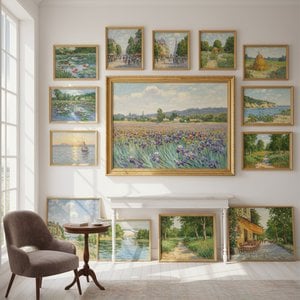
Top 10 impresionistických krajín: Majstrovské diela, ktoré zmenili umenie a dekoráciu interiéru
Ponorte sa do sveta impresionizmu! Objavte top 10 majstrovských diel krajinárstva od Monet, Renoir a ďalších. Inšpirujte sa farebnými plátnami a dekorujte svoj dom s ArtsDot.com – múzejnou kvalitou pre váš interiér. Preskúmajte kolekciu online!

Claude Monet: Top 25 Majstrovských Diel pre Váš Domov | ArtsDot.sk
Ponorte sa do sveta Claude Moneta s ArtsDot.sk! Objavte top 25 diel impresionistického majstra – od Vodných ľalií po Západ slnka. Reprodukcie obrazov pre váš domov a inšpirácia pre interiér. Preskúmajte plátna, farebné krajiny a ikonické motívy online.

Top 25 diel Musée d'Orsay: Majstri impresionizmu a postimpresionizmu pre váš domov
Objavte top 25 diel Musée d'Orsay! Ponorte sa do sveta impresionizmu a postimpresionizmu s Monetom, Renoirom, Van Goghom a ďalšími majstrami. Reprodukcie obrazov pre váš domov na ArtsDot.com – múzejná kvalita a inšpirácia pre interiér.

Top 10 impresionistických krajín: Majstrovské diela, ktoré zmenili umenie
Ponorte sa do sveta impresionizmu! Objavte top 10 majstrovských diel krajinárskej maľby od Monet, Renoir a ďalších. Inšpirujte sa farebnými plátnami a prineste si kúsok francúzskeho umenia do vášho interiéru s ArtsDot.com. Preskúmajte rozsiahlu kolekciu online!


