

 Náhľad
 Odoslať
 Zdieľať
 Podrobnosti o dielo

 Stiahnuť
 Podobné diela
 RTG skúška
 Prezentácia
Altár
 Akryl na plátne
- WallArt
- Baroque Decorative Style
 1725
1725 5.0 x 66.0 cm
 Kráľovský hrad Wawel
 Zobraziť viac
Ručne maľovaná olejová reprodukcia
Ručne maľovaný olej na plátne vo vašej zvolenej veľkosti a v ráme, vyrobený na mieru našimi umelcami. ( Kúpiť tlač Kúpiť obrázok)




P118B $10

P118H $10

P118W $10

P438Z $10

P508JH $12

P508YH $12

P805H $10

P805Z $10

P919BZ $10

P919G $10

P919XJ $10

P959ZH $10

P968JZ $12

W106C $8

W218G $10

W218JH $8

W218Y $10

W307PJ $10

W316G $10

W316PJ $8

W316Y $10

W398PJ $8

W4111J $10

W500HY $15

W500JH $15

W692G $12

W849H $8

W940BG $15

W953PJ $8




Vyberte si z našich preddefinovaných rozmerov, ktoré zodpovedajú pôvodným pomeroḿ diela.

Môžete zadať vlastné rozmery tak, aby sa hodili do konkrétneho rámu alebo priestoru. Ak sa váš zvolený rozmer nezhoduje s pôvodnými proporciami obrazu, dielo buď orezáme, alebo ho doplníme ručne maľovanými prvkami. Pred začiatkom výroby vám zašleme digitálny náhľad na schválenie.
Upozorňujeme, že ukážka na obrazovke neodráža skutočné orezanie alebo doplnenie. Skutočnú finálnu kompozíciu zobrazuje iba digitálny náhľad.
Hoci sú k dispozícii vlastné rozmery, odporúčame vybrať rozmer z preddefinovaného zoznamu, aby sme zachovali pôvodné proporcie.
Po odoslaní objednávky vám tím ArtsDot.com pošle e-mail s pokynmi a poskytne náhľad na návrh.
Celosvetová doprava () za 3 až 4 týždne namiesto štandardných 5 týždňov. (16 august). Bez kompromisov v kvalite.

Bezplatná expresná doprava po celom svete

Prémiové lnianske plátno

Kompletné poistenie prepravy

Záruka vrátenia colného poplatku

Záruka presného farebného zhodnutia

60-dňá politika vrátenia (iba pri defektoch)

100% záruka vrátenia peňazí

Výhodná množstevná zľava
 Možnosť skla je dostupná len pri rozmeroch pod 110 cm

Altár
Technika reprodukcie
Veľkosť reprodukcie
-


Celková cena za vybrané možnosti
$ 263
Popis diela
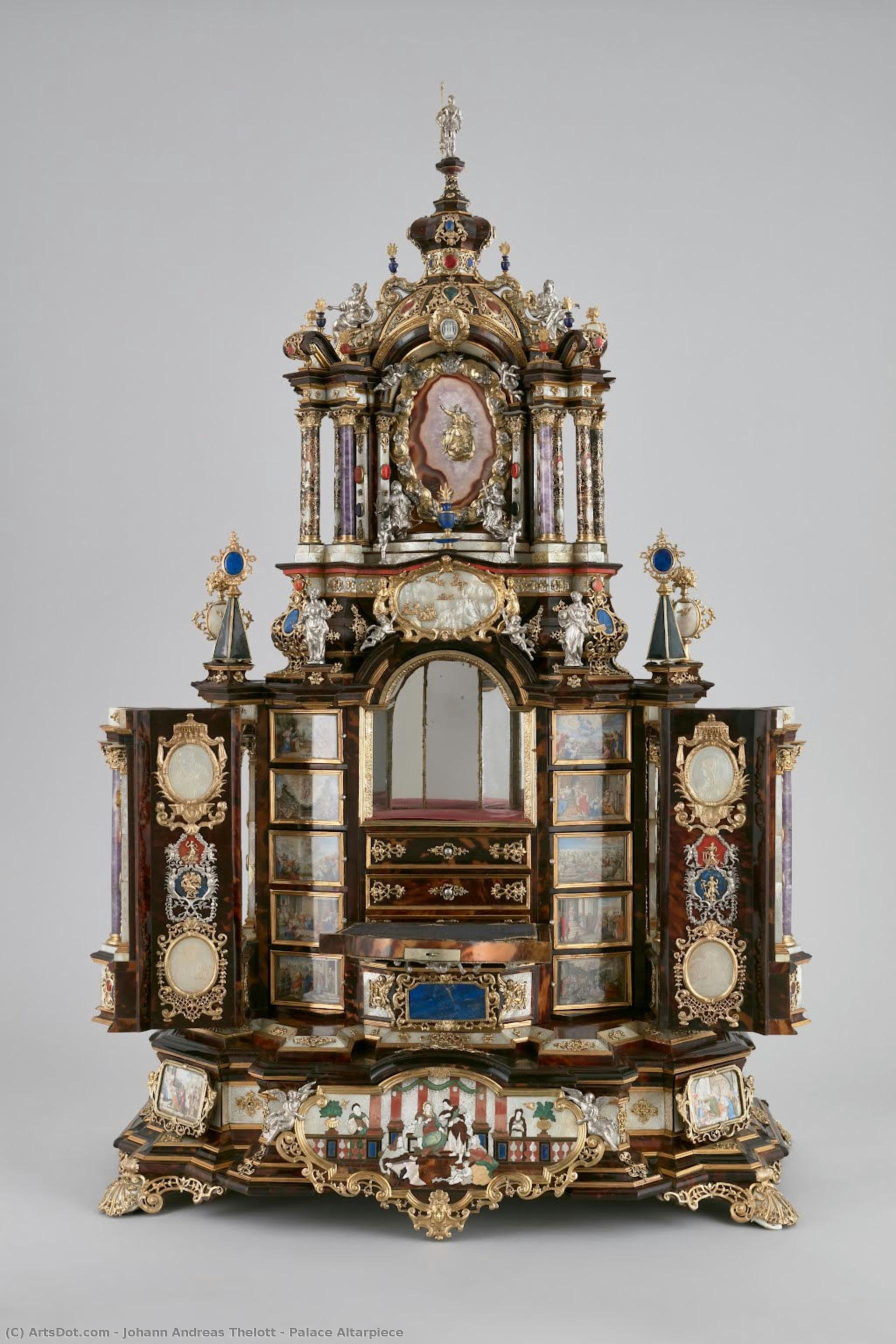
Palace Altarpiece – Precízna Dokonalosť Barokovej Výtvarnej Umelosti
Johann Andreas Thelott bol významným predstaviteľom barokovej výtvarníctva v Augsburgu, kde jeho tvorba odráža filozofiu Carela de Moora mladšieho – umelca, ktorý sa vyznačoval mimošiovým pozorním a šikovným prevedením. Tento obraz zobrazuje impozantný oltár, ktorý bol súčasťou bohatého rodinného sídla Potockých v Krakove okolo roku 1887. Jeho kúpa medzi rokmi 1966 až 1967 zabezpečila jeho zachovanie ako hodnotného artefaktu histórie slovenského umenia.Pozadie História a Kontext
Oltár bol vytvorený v období vrcholného baroka, obdobia výrazného kultúrneho rozvoja a náboženského záujmu. Tento štýl sa vyznačoval dramatickým využitím svetla a tieňov, bohatými dekoratívnymi prvkami a často zobrazoval svätých alebo biblické príbehy s vysokou úrovňou detailu. Kunsthistorické analýzy ukazujú, že obraz odkazuje na obdobie Habsburgskej monarchie a reflektuje estetické hodnoty tej doby. Jeho umiestnenie v Krakove však neznamená len historický kontext, ale aj spojenie s bohatou kultúrnou tradíciou mesta.Výtvarný Štýl a Technika
Johann Andreas Thelott sa držal filozofie Carela de Moora mladšieho – umelca, ktorý si získal uznanie ako majster *fijnschilding* – štyľa charakterizovaného jemnými detailmi, atmosférickymi efektami a pokojným realizmom. Jeho tvorba bola ovplyvnená Gerrit Douom a Fransom van Mierisom, ktorí boli jeho súčasníci a spolupracovníci. Použitie zlatého rámu a komplexných vyrezávaní zdôrazňuje bohatosť materiálov použitých pri výrobe oltára. Zároveň je pozoruhodné presnosť s ktorou boli vytvorené jednotlivé prvky obrazu – od pozostatkov dekoratívnych keramických nádob až po komplikovaný ciferník a knihy umiestnené v dolnej časti kompozície.Symbolizmus a Emocionálny Dopad
Oltár predstavuje komplexný symbolický jazyk, ktorý vyjadruje náboženskú vieru a hodnoty doby svojho vzniku. Statívy zobrazujú svätých – pravdepodobne Ježiša Krista a Matky Bohyne Marii – ktoré sú umiestnené v centre obrazu a na pravom okraji. Ich pozície sú starostelivo zvolené tak, aby vyjadrovali duchovnú hodnotu a význam kresťanského náboženského učenia. Celá kompozícia má vytvoriť pocit pokoja a úcty k svätému miestu – oltáru. Výrazná estetická hodnota obrazu je potvrdená jeho kvalitným prevedením, ktoré umožňuje reprodukciu vysokou rozlíšením.Podobné diela


Biografia umelca
Carel de Moor: A Dutch Master of Subtle Detail
Carel de Moor (the Younger), born on February 25, 1655, in Leiden, Netherlands, was a pivotal figure in the development of Dutch Golden Age painting. His life and career unfolded within a vibrant artistic landscape, shaped by the legacy of his father, Carel de Moor (the Elder), an ebony woodworker and art dealer, and influenced by masters like Gerrit Dou and Frans van Mieris. De Moor’s journey wasn't one of dramatic innovation but rather a meticulous refinement of existing techniques, earning him recognition as a master of *fijnschilding* – a style characterized by subtle details, atmospheric effects, and a quiet realism. He stands as a testament to the enduring power of observation and skillful execution within the Dutch artistic tradition.Early Training and Influences
De Moor’s early education was deeply rooted in his family's trade and artistic connections. His father, a skilled craftsman and art dealer, exposed him to the world of art from a young age. Recognizing his son’s innate talent for drawing, he sent Carel to Gerrit Dou (1613–75), a renowned Leiden master known for his atmospheric effects and meticulous rendering of textures. This early mentorship instilled in De Moor a deep appreciation for observation and a commitment to capturing the nuances of light and shadow. Later, seeking a bolder brush handling, he traveled to Amsterdam to study with Abraham van den Tempel (1622/23–72), another influential painter whose work emphasized realism and psychological insight. These formative experiences laid the foundation for De Moor’s distinctive style, blending the lessons of his teachers into a cohesive and personal artistic vision.Style and Technique
De Moor's paintings are distinguished by their remarkable subtlety and restraint. Unlike some of his contemporaries who favored dramatic compositions or bold colors, he cultivated a more understated approach, focusing on capturing fleeting moments and conveying psychological depth through carefully rendered details. His works often feature figures engaged in quiet activities – a woman listening to a scolding, a couple sharing a private moment, or a scholar absorbed in his studies. These scenes are presented with an almost photographic realism, achieved through meticulous attention to texture, light, and shadow. He employed a technique of *sfumato*, blurring outlines and softening edges to create a sense of atmosphere and ambiguity. This careful control of detail, combined with a masterful understanding of color and composition, is what sets De Moor’s work apart.Notable Works and Commissions
De Moor's career spanned several decades, during which he produced a substantial body of work encompassing history paintings, genre scenes, and portraits. He was a prolific member of the Leiden Guild of St. Luke, holding various leadership positions, including headman and dean, demonstrating his influence within the artistic community. Among his most celebrated works are *The Duet* (1674), a captivating depiction of two women engaged in conversation; and his series of paintings illustrating the life of Saint Bruno, commissioned for the Charterhouse Monastery in Paris. These later works showcase De Moor’s evolving style, incorporating elements of both realism and classical influence. His dedication to his craft is evident in the numerous drawings he created, many of which are now housed in museums worldwide.Legacy and Historical Significance
Carel de Moor (the Younger) remains a significant figure in Dutch Golden Age painting, representing a crucial link between the earlier masters and subsequent generations of artists. His commitment to subtlety, realism, and psychological insight established him as a leading exponent of *fijnschilding*. He wasn’t a revolutionary; rather, he perfected existing techniques, contributing significantly to the development of a refined and nuanced style that continues to be admired for its quiet beauty and profound observation of human nature. His influence can be seen in the work of later Dutch painters, solidifying his place as a master of detail and a testament to the enduring legacy of Leiden’s artistic tradition.
johann andreas thelott
1655 - 1734 , Germany
Základné informácie
- Artistic Movement Or Style: Neoclassical
- Artists Or Movements Influenced By This Artist: ["Le Sueur's style influenced later artists."]
- Artists Who Influenced This Artist:
- Vouet
- Poussin
- Date Of Birth: 1616-11-19
- Date Of Death: 1655-04-30
- Full Name: Eustache Le Sueur
- Nationality: French
- Notable Artworks:
- Angel and Hagar
- Tobias and Tobit
- Martyrdom St Lawrence
- Life of St Bruno
- Place Of Birth: Paris, France
Súvisiace články

The Dramatic Flourish: Exploring the Baroque Movement's Enduring Legacy in Art History
Explore the dramatic world of Baroque art! Discover iconic artists like Caravaggio & Rubens, defining techniques, and its lasting impact on art history. Expert insights for collectors & enthusiasts at ArtsDot.

The Visceral Stage: Exploring Dramatic Narratives & Emotional Intensity in Baroque Art
Explore the dramatic world of Baroque art! Discover iconic masters like Caravaggio & Rembrandt, their techniques, and the movement's lasting impact. Expert insights for collectors & enthusiasts at ArtsDot.

Baroková Dráma: Umenie, ktoré prináša nádheru do domova
Objavte nádheru barokového štýlu! Spoznajte jeho históriu, kľúčové prvky a inšpirujte sa tipmi pre váš domov. Kvalitné reprodukcie diel od .

Top 10 majstrovských diel baroka: Umění a dekor pre váš domov
Ponorte sa do sveta baroka! Objavte top 10 majstrovských diel od Caravaggia, Rembrandta a ďalších slávnych maliarov. Reprodukcie obrazov pre luxusný dekor vášho domova na ArtsDot.com.
The Dramatic Flourish: Exploring Baroque Painting's Emotional Intensity & Artistic Innovations
Explore the dramatic world of Baroque painting! Discover its history, defining characteristics, iconic artists like Caravaggio & Rubens, and lasting influence on Western art. Expert insights for collectors.


