


1


Обновлено Октябрь 2026 · рейтинг на основе нашего показателя популярности (количество поисковых запросов, посещений и заказов для каждой работы) · 2 работ Samuel Rosenberg в нашем каталоге
Вкратце
Самое известное произведение Samuel Rosenberg — это Lower Fifth Avenue (1936). Вы можете увидеть его в Senator John Heinz History Center в городе Питтсбург. В нашем каталоге представлено 2 работ Samuel Rosenberg; в этом путеводителе мы выбрали 2 самых известных произведений с указанием года создания, музея и истории каждого шедевра.
2 музеев, в которых находится большинство картин со страницы.
| Музей | Город | Работы Samuel Rosenberg | Картины из этого списка |
|---|---|---|---|
 Senator John Heinz History Center |
Питтсбург | 1 | Lower Fifth Avenue |
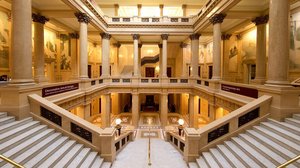 Carnegie Museum of Art |
Питтсбург | 1 | Untitled |
Все представленные на этой странице работы Samuel Rosenberg, датированные 1936 годом, расположены в порядке их известности.
Выберите год, чтобы увидеть его работы.
В начале списка — Lower Fifth Avenue (1936).
40 лет. Samuel Rosenberg родился в 1896, а работа Lower Fifth Avenue датируется 1936 годом.
В нашем каталоге 2 работ художника Samuel Rosenberg.
Большинство из них можно найти в Senator John Heinz History Center (Питтсбург) и Carnegie Museum of Art (Питтсбург). Полный список музеев представлен выше.
In the heart of Pittsburgh, amidst the steep hills and the heavy, industrial atmosphere of a changing century, lived an artist whose work served as a profound mirror to his community. Samuel Rosenberg was not merely a painter but a chronicler of the human condition, capturing the shifting tides of life in the Hill District through decades of social and economic upheaval. Born in 1896, his roots were deeply embedded in the immigrant experience, as his parents arrived from Austria-Hungary. This connection to the multiethnic, layered populations of his home city provided the emotional foundation for a career that would span nearly six decades, during which he transformed from a traditional portraitist into a master of light and abstraction.
His early years were marked by a burgeoning passion for the visual arts, nurtured within the local settlement houses and under the guidance of mentors like Jacob R. Coblens. During this formative period, Rosenberg developed a disciplined ability to draw from memory, a skill that would later underpin his more complex compositions. His initial foray into the art world was defined by the intimacy of portraiture, where he utilized chiaroscuro and a confident command of light to capture the essence of his subjects. As he matured, his gaze turned outward toward the urban landscape, finding beauty in the very grit and gloom that others might overlook—the uneven houses, the polluted air, and the resilient spirit of the neighborhoods around him.
The trajectory of Rosenberg’s style was as dynamic as the era he inhabited. During the 1930s, his work became deeply entwined with the American Regionalist movement. He turned his brush toward the social realities of the Great Depression, creating poignant, socially conscious depictions of life in Pittsburgh's Hill District. Works such as Eviction served as powerful testimonies to the hardships faced by residents during this era of economic struggle. He did not shy away from the "dirty air" or the industrial shadows; instead, he found a way to imbue these scenes with an emotional weight that ensured Pittsburgh’s place in the broader narrative of American art.
As the world descended into the darkness of World War II, Rosenberg’s artistic language underwent another profound metamorphosis. His subjects shifted from the literal to the allegorical, using Jewish iconography and universal symbols to process the horrors of the Holocaust and the widespread human misery of the conflict. This period of allegory bridged the gap between his representational roots and a burgeoning interest in abstraction. By the late 1940s and into the 1950s, he began to explore Abstract Expressionism, moving away from recognizable forms toward a focus on pure emotion, color, and shape. His technique became increasingly sophisticated, employing sequential layers of translucent color and transparent glazes that allowed his canvases to appear as if they were emitting light rather than merely reflecting it, much like the luminous quality of stained glass.
Beyond the canvas, Rosenberg’s impact was felt most deeply through his devotion to teaching. As a professor at Carnegie Mellon University and a leader in various community art programs, he became a revered figure for generations of artists. He possessed a rare ability to foster freedom of expression, encouraging his students to find their own voices within the "adventure" of art. His pedagogical influence is perhaps most famously noted by the caliber of his pupils, which included luminaries such as:
Throughout his life, Rosenberg’s work was recognized on the national stage, with exhibitions at prestigious institutions such as the Museum of Modern Art, the Whitney Museum of American Art, and the Corcoran Gallery. Despite this international reach, he remained steadfastly loyal to Pittsburgh, believing that an artist should find something meaningful to say about their own surroundings. He left behind a monumental body of work—over 500 paintings, hundreds of sketches, and numerous collages—that stands as a testament to a life spent observing, interpreting, and ultimately illuminating the complexities of the twentieth century.
