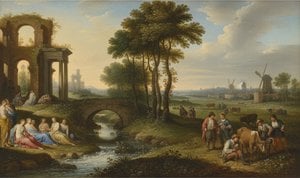
Фламандский живописец в римской Аркадии
Ян Франс ван Блумен, имя, возможно, не столь широко известное, как имена некоторых его современников, тем не менее занимает важное место в традиции пейзажной живописи XVIII века Рима. Родился в Антверпене в 1662 году в семье с глубокими художественными корнями – его братья Питер и Норберт также посвятили себя живописи – ван Блумен стал знаменитым летописцем римской сельской местности, получив ласковое прозвище “Орицонте” или “Горизонти” за мастерское изображение дальних перспектив. Его история – это история семейного сотрудничества, художественной миграции и, в конечном итоге, обретения уникального голоса в ярком гобелене итальянского пейзажа.
Раннее обучение, вероятно, проходило под чутким руководством Питера, заложив основу для будущих свершений Яна Франса. Формальные занятия с Антоном Губау в Антверпене между 1681 и 1684 годами оказались поворотными, познакомив его со стилем “бамбоччанти” – сценами повседневной жизни на фоне римских или средиземноморских пейзажей – темой, которая будет звучать на протяжении всей его карьеры. Краткое пребывание в Париже около 1682 года, за которым последовало время, проведенное в Лионе вместе с Адрианом ван дер Кабелем, расширило его художественные горизонты, прежде чем магнетическое притяжение Рима взяло верх.
Рим: Установление традиции “ведута”
1688 год ознаменовал поворотный момент, когда Ян Франс и его братья поселились в самом сердце Рима, зарегистрировавшись в приходе Сант’Андреа делле Фратте. Это переезд был не просто сменой обстановки; это было погружение в процветающее художественное сообщество и стремление запечатлеть красоту римской Кампаньи. Ван Блумен быстро зарекомендовал себя как ведущий живописец *ведута* – видов – специализируясь на классических пейзажах, которые перекликались с эстетическими принципами, провозглашенными более ранними мастерами, такими как Клод Лоррен и Гаспар Дюге. Его успех не был мгновенным, но он был устойчивым, подпитываемым заказами от видных покровителей, включая королеву Елизавету Фарнезе, римскую знать и даже папские круги.
Связи в художественном сообществе были крепкими; Каспар ван Виттель был крестным отцом его первого ребенка, что свидетельствует о духе сотрудничества того времени. Он стал активным членом Bentvueghels – общества для голландских и фламандских художников в Риме, где он получил прозвище “Орицонте”, признавая его мастерство в передаче обширных пейзажей. Несмотря на этот местный успех, полное принятие в престижную Академию Сан-Лука было отложено до конца жизни – возможно, это отражение преобладающих римских предпочтений других художественных стилей или нежелания полностью принять пейзажную живопись как высокое искусство.
Художественный стиль и влияния
Картины ван Блумена характеризуются своей безмятежной красотой и скрупулезным вниманием к деталям, предлагая идеализированные видения римской сельской местности. Он черпал вдохновение из наследия Клода Лоррена и Гаспара Дюге, используя такие приемы, как рецессия через несколько планов, мягкое теплое освещение и интеграция классических и религиозных мотивов. Однако он был не просто копировальщиком; он разработал отличительный стиль, сосредоточенный на “усадебных видах” – изображениях благородных поместий, расположенных в Кампанье, плавно сочетая современные сцены с аркадийским идеалом.
Pittura di tocco, техника, включающая использование небольших, энергичных мазков кистью – своего рода импрессионистского нанесения точек – для создания текстуры и атмосферы. Этот подход придавал его пейзажам ощущение непосредственности и живости, запечатлевая игру света и тени на холмистых ландшафтах и древних руинах. Он часто сотрудничал с художниками-фигуристами, такими как Карло Маратти, Плацидо Костанци и Помпео Батони, особенно в более поздние годы, когда брался за более амбициозные композиции, хотя он был умел имитировать их стили самостоятельно. Его самым плодотворным сотрудничеством, вероятно, было сотрудничество с Плацидо Костанци, которого он считал лучшим соавтором в картинах, изображающих сцены из “Бегства в Египет”.
Наследие и непреходящее влияние
Вклад Яна Франса ван Блумена выходит за рамки его индивидуальных полотен; он сыграл важную роль в формировании традиции итальянского пейзажа. Его скрупулезное наблюдение природы, в сочетании с классической чувствительностью, повлияло на поколения художников, которые последовали за ним. В то время как его брат Питер получил признание за батальные сцены и живопись животных, Ян Франс вырезал себе нишу мастера *ведута*, запечатлев сущность римской сельской местности с непревзойденным мастерством. Он также был умелым художником стаффажа, часто добавляя фигуры в пейзажи – иногда даже рисуя их сам – демонстрируя свою универсальность.
Его пейзажные рисунки, которые иногда путают с рисунками Питера, часто содержали воображаемые руины, демонстрирующие его творческую фантазию. Хотя он столкнулся с некоторыми трудностями в полном признании римской художественной элитой, работы ван Блумена продолжали пользоваться спросом у проницательных коллекционеров и покровителей на протяжении всей его жизни. Сегодня его картины предлагают окно в Рим XVIII века, предоставляя не только красивые изображения пейзажа, но и ценную информацию о культурных ценностях и эстетических предпочтениях той эпохи. Его безмятежные и вызывающие воспоминания портреты римской сельской местности продолжают очаровывать зрителей, укрепляя его место как значимой фигуры в истории европейского искусства.
Вопросы и ответы
Можно ли изучить работы Ян Франс Ван Блумен по темам?
Атлас сюжетов для Ян Франс Ван Блумен — это страница, на которой произведения художника распределены по темам.
Из какой страны Ян Франс Ван Блумен?
Ян Франс Ван Блумен родился в Бельгия.
В каком городе и стране родился(ась) Ян Франс Ван Блумен?
Ян Франс Ван Блумен родился в городе Антверпен, страна — Бельгия.
Где и в каком году родился Ян Франс Ван Блумен?
Ян Франс Ван Блумен родился в Антверпен, 1662 год.
Как я могу увидеть все произведения, созданные Ян Франс Ван Блумен?
Все работы Ян Франс Ван Блумен на этот сайт можно просмотреть на странице Все произведения искусства художника.
Существует ли виртуальный 3D-тур по работам Ян Франс Ван Блумен?
Работы Ян Франс Ван Блумен можно увидеть в 3D-галерее на странице художника 3D-музей.
Можно ли просматривать работы Ян Франс Ван Блумен по настроению?
Работы Ян Франс Ван Блумен можно просматривать по настроению на странице Комната настроения, где произведения распределены в соответствии с их эмоциональной окраской.