
- Главная

- Печать на холсте
- Якоб Йордаенс
- Четыре Евангелиста

 Заказать репродукцию Купить цифровое изображение
 Поделиться
 Поделиться
 Details
 Добавить в избранное

 Скачать
 Похожие работы
 X-Ray
X-Ray
 Слайд-шоу
Четыре Евангелиста
 Масло на холсте
- Настенное искусство
- Baroque Style
 1620
1620- Раннее Новое время
 133.0 x 118.0 cm
 Лувр
Лувр
Жикле / Арт-принт
Печать (жикле) или холст музейного качества с быстрыми сроками изготовления и широким выбором вариантов отделки.
 Узнать больше



P118B $10

P118H $10

P118W $10

P438Z $10

P508JH $12

P508YH $12

P805H $10

P805Z $10

P919BZ $10

P919G $10

P919XJ $10

P959ZH $10

P968JZ $12

W106C $8

W218G $10

W218JH $8

W218Y $10

W307PJ $10

W316G $10

W316PJ $8

W316Y $10

W398PJ $8

W4111J $10

W500HY $15

W500JH $15

W692G $12

W849H $8

W940BG $15

W953PJ $8




Выберите один из наших стандартных размеров, соответствующих оригинальным пропорциям произведения искусства.

Вы можете указать свои собственные размеры, чтобы репродукция идеально подошла под конкретную раму или пространство. Если выбранный вами размер не будет соответствовать пропорциям оригинала, мы либо обрежем произведение, либо дополним изображение зеркальным отражением краев или однотонной заливкой. Перед началом производства вам будет отправлен цифровой макет для утверждения.
Пожалуйста, обратите внимание, что предварительный просмотр на экране не отображает фактическую обрезку или расширение изображения. Только макет точно покажет финальную композицию.
Несмотря на возможность заказа индивидуальных размеров, мы рекомендуем выбирать размер из предопределенного списка, чтобы сохранить оригинальные пропорции.
Доставка по всему миру () за 2 недели вместо стандартных 4/5 недель. (1 Июль)

Бесплатная экспресс-доставка по всему миру

Высококачественный льняной холст

Полное страхование доставки

Гарантия возмещения таможенных пошлин

Гарантия точного соответствия цветов

Политика возврата в течение 60 дней (только при наличии дефектов)

Гарантия возврата 100% средств

Предложение оптовых скидок
 Вариант со стеклом доступен только для размеров менее 110 см

Четыре Евангелиста
Жикле / Арт-принт
Размер репродукции
-


Итоговая стоимость
-
Описание предмета коллекционирования
Четыре Евангелиста: Величие Барокко и Человеческое Созерцание
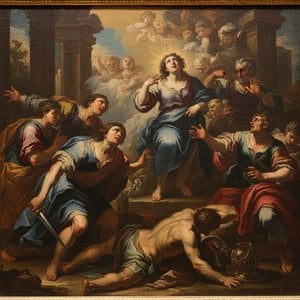
В мире искусства редко удается создать произведение, которое одновременно поражает своей технической виртуозностью и глубоким духовным содержанием. "Четыре Евангелиста" Якоба Йордаенса – именно такой шедевр. Написанный в 1620 году, этот полотно не просто изображает четырех пожилых мужей, погруженных в изучение священных текстов; оно является воплощением эпохи барокко, пронизанным драматизмом света и тени, реалистичностью и стремлением к передаче человеческих эмоций. В центре композиции – динамичная диагональная линия, устремляющая взгляд зрителя вглубь картины, создавая ощущение движения и совместного интеллектуального поиска.
Йордаенс, мастер своего дела, использует характерные для барокко приемы: яркий контраст между светом и тенью (чиароскуро), детализированную прорисовку лиц и одежды, а также теплые, землистые тона – глубокие коричневые, приглушенные красные и нежные белые. Эти цвета создают атмосферу уюта и интимности, в то время как белый наряд одного из евангелистов становится ярким фокусом, центром внимания. Полотно дышит жизнью, благодаря мастерскому владению техникой живописи – художник с поразительной точностью передает не только физические черты фигур, но и их внутреннее состояние, их сосредоточенность и глубокую задумчивость.
Влияние Северного Возрождения и Человеческий Аспект
Работа Йордаенса – это яркий пример слияния религиозной тематики с повседневной жизнью. Он черпал вдохновение в работах северных итальянских мастеров, таких как Джакопо Бассано и Паоло Веронезе, но при этом сохранял свой собственный стиль, отличающийся реализмом и вниманием к деталям. В отличие от многих своих современников, которые стремились к совершенству в Италии, Йордаенс остался верен своим корням, создавая произведения, отражающие жизнь фламандского общества. Его евангелисты – это не идеализированные святые, а обычные люди, увлеченные своей работой и стремящиеся к познанию истины.
Интересно отметить, что в картине присутствует фигура Авраама Графеуса, хранителя зала Антиверпской гильдии Святого Луки. Его изображение свидетельствует о важности образования и знаний в эпоху Йордаенса. Положение евангелистов – сидящие, склонившиеся над книгой и свитком – подчеркивает их увлеченность учебой и духовным поиском. Их сосредоточенные лица и совместная работа говорят о том, что они не просто читают, а размышляют, анализируют и делятся своими знаниями.
Символизм и Эмоциональное Воздействие
Каждое из лиц евангелистов символизирует одного из четырех апостолов – Матфея, Марка, Луки и Иоанна. Их жесты, выражения лиц, поза – все это не случайно. Они отражают суть их миссии: провозглашение Евангельского послания. В картине присутствует ощущение глубокой духовности и стремления к просветлению. Драматическое освещение, подчеркивающее контуры лиц и рук, создает атмосферу напряженности и сосредоточенности. "Четыре Евангелиста" – это не просто религиозное произведение искусства; это гимн человеческому разуму, любознательности и стремлению к истине.
Эта работа станет прекрасным дополнением к любой коллекции произведений искусства, а ее высококачественная репродукция – идеальным украшением для интерьера. Она не только поразит своей красотой и техническим совершенством, но и вдохновит на размышления о вечных ценностях.
Похожие произведения


Биография художника
A Flemish Master of Life’s Abundance: Jacob Jordaens
Jacob Jordaens, born in Antwerp in 1593, stands as a pivotal figure in the vibrant tapestry of the Flemish Baroque. Unlike many of his contemporaries who sought artistic enlightenment in Italy, he remained firmly rooted in his native Flanders, cultivating a distinctive style that celebrated the joys and realities of everyday life with remarkable energy and warmth. His father, a successful linen merchant, provided him with a comfortable upbringing, affording him an education befitting his social standing before he embarked on his artistic journey under the tutelage of Adam van Noort – also the master of Peter Paul Rubens. This formative training instilled in Jordaens a solid foundation in meticulous technique and a keen understanding of composition, yet he swiftly diverged to forge his own unique path, establishing himself as a distinct voice within the artistic landscape. In 1616, he solidified his connection to the established Antwerp art world by marrying Van Noort’s daughter, Katharina, creating a family bond that profoundly influenced his creative trajectory.The Painter of Peasant Revelry and Baroque Grandeur
Jordaens' artistic output was remarkably diverse, encompassing a wide spectrum of subjects – from grand religious narratives and mythological scenes to allegorical compositions brimming with symbolism, lively genre paintings depicting peasant life, and even portraits capturing the essence of his patrons. However, he is perhaps most renowned for his boisterous depictions of peasant festivals and tavern scenes—works that radiate an infectious energy and an uninhibited celebration of earthly pleasures. Paintings such as *The King Drinks* (also known as the Feast of the Bean King) exemplify this characteristic style: crowded compositions teeming with robust figures engaged in lively revelry, rendered in warm, glowing colors and dramatic chiaroscuro. These scenes weren’t merely celebrations of merriment; they often carried subtle moralizing undertones, reflecting the complex relationship between indulgence and restraint that characterized 17th-century society. Yet, Jordaens was equally adept at handling grander, more formal commissions. His involvement in decorating the Huis ten Bosch palace near The Hague – alongside collaborations with Rubens – showcased his ability to create monumental allegorical works that seamlessly integrated painting and architecture, transforming entire rooms into immersive visual narratives.Influences and a Distinct Artistic Voice
While Jordaens never ventured to Italy, as many of his contemporaries did, he was deeply influenced by the artistic currents flowing through Northern Europe, particularly those emanating from Italy. He studied the works of masters like Jacopo Bassano, Paolo Veronese, and Caravaggio—artists whose techniques and sensibilities resonated with the Flemish spirit. The influence of Caravaggio is particularly striking in Jordaens’s use of light and shadow – a technique known as *chiaroscuro* – which dramatically intensifies the emotional impact of his scenes. However, Jordaens didn't simply imitate these influences; he skillfully synthesized them with his own Flemish sensibilities, creating a style that was uniquely his own. He distinguished himself from Rubens and Van Dyck in his preference for realism over idealized beauty, embracing a more direct and unrefined approach to depicting the human form. His figures are often substantial, even corpulent, their faces flushed with health and vitality—a testament to his commitment to portraying the authentic realities of life. This dedication to naturalism, combined with his masterful command of color and composition, set him apart from his contemporaries and firmly established him as a leading figure in Flemish Baroque painting.Major Works and Artistic Development
Throughout his prolific career, Jordaens produced an astonishing volume of work, demonstrating remarkable versatility across various genres. Key works include *The Return of the Holy Family from Egypt*, a dramatic narrative brimming with emotional intensity; *Argus and Mercury*, a dynamic mythological scene showcasing his technical skill and compositional prowess; and numerous genre paintings depicting scenes of everyday life—from bustling tavern gatherings to lively market squares. His artistic development can be traced through a progression from more tightly controlled, formally structured compositions in his early years to increasingly loose and exuberant arrangements as he matured. Notably, his later works often feature a greater emphasis on movement, color, and the depiction of human emotion, reflecting a shift towards a more expressive and personal style. The influence of his pupils is also evident in many of these paintings, suggesting that Jordaens was not merely a painter but also an educator, shaping the artistic landscape of Antwerp for generations to come.Legacy and Historical Significance
Jacob Jordaens’s legacy extends far beyond his individual masterpieces. He played a crucial role in preserving and developing the traditions of Flemish painting during a period of significant change. His commitment to depicting the realities of everyday life—particularly the lives of ordinary people—challenged traditional artistic hierarchies and offered a fresh perspective on the world around him. His influence can be seen in the work of later artists, including Jan Steen, who shared his penchant for portraying lively genre scenes with a touch of humor and social commentary. Jordaens’s paintings continue to resonate with audiences today, offering a glimpse into the vibrant culture and complex values of 17th-century Flanders—a testament to the enduring power of his artistic vision. His ability to seamlessly blend realism with allegory, sensuality with morality, and grandeur with intimacy solidifies his position as one of the most compelling and influential figures in the history of Baroque art.
Якоб Йордаенс
1593 - 1678 , Бельгия
Основные сведения
- Artistic Movement Or Style: Фламандский барокко
- Artists Or Movements Influenced By This Artist: ['Ян Стен']
- Artists Who Influenced This Artist:
- Адам ван Ноорт
- Рубенс
- Date Of Birth: 19 мая 1593
- Date Of Death: 18 октября 1678
- Full Name: Якоб Йордаенс
- Nationality: Нидерландский барокко
- Notable Artworks:
- «Возвращение Святой семьи из Египта»
- «Праздник короля»
- Place Of Birth: Антверпен, Бельгия
Похожие статьи

10 Шедевров Барокко: Искусство, изменившее мир | ArtsDot.com
Погрузитесь в мир барокко! 10 шедевров Караваджо, Рембрандта и других великих художников. Узнайте историю создания культовых картин и найдите идеальную репродукцию для вашего интерьера на ArtsDot.com


The Golden Age Reforged: Dramatic Realism & Religious Zeal in Spanish Baroque Art
Explore the dramatic world of Spanish Baroque art! Discover masters like Zurbarán & the powerful influence of religious zeal on painting techniques – a guide for collectors and enthusiasts.
The Dramatic Flourish: Exploring Baroque Painting's Emotional Intensity & Artistic Innovations
Explore the dramatic world of Baroque painting! Discover its history, defining characteristics, iconic artists like Caravaggio & Rubens, and lasting influence on Western art. Expert insights for collectors.

Топ-10 шедевров масляной живописи, изменивших искусство навсегда | ArtsDot.com
Погрузитесь в мир великих шедевров масляной живописи! От Леонардо да Винчи до Ван Гога – узнайте истории создания самых известных картин, техники художников и их влияние на искусство. Репродукции музейного качества на ArtsDot.com. Explore the full collection online!

10 Шедевров Раннего Нидерландского Живописи: История Искусства в Вашем Интерьере
Погрузитесь в мир Раннего нидерландского живописи! Откройте 10 шедевров Яна ван Эйка, Рогира ван дер Вейдена и других мастеров. История искусства, техника исполнения и вдохновение для вашего интерьера на ArtsDot.com.



