


 Предпросмотр
 Поделиться
 Поделиться
 Детали произведения
 Руководство

 Скачать
 Похожие работы
 Рентгенография
 Слайд-шоу
 Статистика
Предикация святого Гери ( ) также известна как Пастырское Учение


 Читать далее
Масляная репродукция ручной работы
Картина маслом на холсте в выбранном вами размере и раме, написанная на заказ нашими художниками. ( Перейти к печати Перейти к цифровым изображениям)




P118B $10

P118H $10

P118W $10

P438Z $10

P508JH $12

P508YH $12

P805H $10

P805Z $10

P919BZ $10

P919G $10

P919XJ $10

P959ZH $10

P968JZ $12

W106C $8

W218G $10

W218JH $8

W218Y $10

W307PJ $10

W316G $10

W316PJ $8

W316Y $10

W398PJ $8

W4111J $10

W500HY $15

W500JH $15

W692G $12

W849H $8

W940BG $15

W953PJ $8




Выберите один из наших стандартных размеров, соответствующих оригинальным пропорциям произведения искусства.

Вы можете указать собственные размеры, чтобы картина идеально вписалась в выбранную раму или пространство. Если выбранный вами размер не соответствует пропорциям оригинала, мы либо обрежем полотно, либо расширим его за счет дополнительных элементов, написанных вручную. Цифровой макет будет отправлен вам на утверждение перед началом производства.
Обратите внимание, что предварительный просмотр на экране не отражает фактическую обрезку или расширение. Только макет точно покажет окончательную композицию.
Хотя доступны индивидуальные размеры, мы рекомендуем выбирать вариант из предопределенного списка, чтобы сохранить исходные пропорции.
После оформления заказа команда ArtsDot.com свяжется с клиентом по электронной почте для уточнения деталей и предоставит предварительный макет
Доставка по всему миру () за 3–4 недели вместо стандартных 5 недель. (22 Сентябрь). Без компромиссов в качестве.

Бесплатная экспресс-доставка по всему миру

Высококачественный льняной холст

Полное страхование доставки

Гарантия возмещения таможенных пошлин

Гарантия точного соответствия цветов

100-дневная политика возврата (только при обнаружении дефектов)

Гарантия возврата 100% средств

Предложение оптовых скидок
 Вариант со стеклом доступен только для размеров менее 110 см

Предикация святого Гери ( ) также известна как Пастырское Учение
Техника репродукции
Размер репродукции
-


Итоговая стоимость
$ 413
A Sacred Sermon in Gothic Splendor
In the heart of late fifteenth-century Brussels, amidst a city vibrating with religious fervor and burgeoning civic pride, an enigmatic hand captured a moment of profound spiritual instruction. The Predication de Saint Gery, also known as L'Instruction Pastorale, serves as more than a mere historical record; it is a window into the soul of the Gothic era. Attributed to the mysterious Master of the View of Saint Gudula, this monumental panel painting invites the viewer into a densely populated, sacred assembly. At its center, Saint Gery stands elevated upon a platform, his commanding presence acting as the spiritual anchor for a diverse congregation. Here, the boundaries between the earthly and the divine blur, as clergy, nobles, and common citizens gather under the weight of a holy message, their faces etched with the solemnity of the moment.
The composition is a masterclass in late Medieval narrative density. The artist employs a structured architectural framework—featuring elegant columns topped with Corinthian capitals and sweeping arched doorways—to organize the bustling crowd. While the perspective retains the slightly flattened, iconic quality characteristic of the Gothic style rather than the deep recession of the later Renaissance, this choice enhances the clarity of the sermon. Every figure is placed with deliberate intent, creating a rhythmic flow that guides the eye from the elevated Saint Gery down through the layers of the faithful. The presence of subtle details, such as a small dog resting in the corner or the meticulous rendering of a scribe at work, adds a layer of human intimacy to the grander religious spectacle.
Technique and the Radiance of Tempera
To behold a reproduction of this masterpiece is to appreciate the painstaking technical prowess of the Flemish tradition. Executed using tempera on wood, the painting relies on the meticulous layering of pigments to achieve its rich, jewel-toned palette. Deep crimsons, celestial blues, and lush greens emerge from the wooden support with a luminous quality that only traditional binding media can provide. The artist likely incorporated fine gold leaf to catch the light, lending a divine shimmer to the architectural highlights and the ornate drapery of the figures. This technique creates a tactile richness; one can almost sense the weight of the heavy fabrics and the smooth, cold surface of the stone columns.
The stylistic hallmarks of the Master are evident in the elongated limbs and graceful silhouettes of the human forms, which convey a sense of nobility and spiritual aspiration. There is a captivating tension between geometric precision and expressive dynamism within the work. For the discerning collector or interior designer, this piece offers a sophisticated interplay of texture and color. The contrast between the rigid architectural lines and the fluid, expressive gestures of the congregation provides a visual complexity that makes it a commanding focal point in any curated space. It is an artwork that does not merely decorate a wall but breathes life and historical gravity into its surroundings.
Symbolism and Lasting Emotional Resonance
Beyond its aesthetic brilliance, the Predication de Saint Gery is steeped in a symbolic language that speaks to the themes of authority, piety, and community. The architecture itself acts as a metaphor for the Church: a structured, enduring foundation that frames and protects the faithful. The social hierarchy is visually articulated through clothing and positioning, yet all are united by their shared attention to the pulpit, suggesting a communal pursuit of truth. This sense of shared purpose creates an emotional resonance that transcends the centuries, evoking feelings of reverence and contemplative peace.
For those seeking to bring a piece of history into a modern interior, this painting offers an unparalleled opportunity. It is a work of profound narrative depth, perfect for spaces designed to inspire thought and quiet reflection. Whether placed in a library, a formal study, or a grand living hall, a high-quality reproduction of this Flemish treasure serves as a testament to the enduring power of sacred art. It remains a breathtaking tribute to the artistic fervor of Brussels, capturing a vanished world with a clarity that continues to captivate the modern imagination.
Похожие произведения


Биография художника
The Enigmatic Master of the View of Saint Gudula: A Brussels Visionary
The identity of the “Master of the View of Saint Gudula,” a pivotal figure in 15th-century Flemish painting, remains tantalizingly elusive. Active primarily in Brussels between 1480 and 1499, this artist’s work—characterized by intimate portraits, serene religious scenes, and subtly integrated urban landscapes—has captivated scholars for centuries. While definitively pinning down his name or precise origins has proven difficult, a compelling body of evidence suggests he was a highly skilled painter deeply rooted in the artistic traditions of both Bruges and Antwerp, yet possessing a distinctly individual style.
Early speculation often linked him to Aert van den Bossche, due to stylistic similarities and a shared signature—“Harnoult van den Boske”—registered with the Bruges Guild of St. Luke in 1505. However, closer examination reveals subtle but crucial differences in palette, composition, and brushwork, leading many art historians to believe he represents a separate, albeit related, artistic lineage. Max J. Friedländer’s seminal work, “Early Netherlandish Painting,” played a significant role in establishing the Master of Saint Gudula as a distinct figure, grouping several works together based on stylistic coherence and identifying key influences – notably the meticulous realism and emotional depth of Rogier van der Weyden, alongside the refined elegance of Hans Memling.
A Portraitist of Prominence and Religious Devotion
The Master’s oeuvre is remarkably diverse, encompassing a range of subjects. He excelled in portraiture, producing exquisitely rendered depictions of prominent church patrons – individuals who commissioned works to secure their legacy and demonstrate piety. These portraits are not merely likenesses; they convey a sense of personality, social standing, and spiritual depth. His subjects often engage in contemplative gestures or hold symbolic objects, subtly reinforcing the themes of faith and virtue.
Alongside his portraiture, the Master created numerous religious paintings. These works frequently feature scenes from the lives of saints—particularly Saint Jerome, a favorite subject among Flemish artists—and biblical narratives. His depictions are characterized by a remarkable attention to detail, particularly in rendering fabrics, textures, and facial expressions. A notable example is “Young Man Holding a Book,” currently housed at The Metropolitan Museum of Art, which exemplifies his mastery of capturing psychological nuance and conveying a sense of quiet contemplation.
The Urban Canvas: Landscapes Woven into Religious Scenes
Perhaps the most distinctive aspect of the Master’s work is his incorporation of urban landscapes—specifically, the view of Saint Gudula's cathedral in Brussels—into his religious compositions. This seemingly minor detail elevates his paintings beyond mere devotional images; they become windows onto a specific time and place, offering glimpses into the daily life and architectural beauty of 15th-century Brussels. The precise construction of the belfry, visible in many of his works, provides a chronological marker, allowing scholars to date his activity with increasing accuracy.
The inclusion of these urban vistas suggests a deep connection between the artist and his city—a sense of belonging and an appreciation for its visual richness. It’s hypothesized that he may have trained with artists who specialized in landscape painting, or perhaps developed this technique independently, recognizing its potential to enrich and contextualize his religious subjects.
Influences and Legacy
The Master of the View of Saint Gudula stands as a crucial link between the more rigid conventions of Early Netherlandish art and the burgeoning naturalism that would characterize later generations. He absorbed influences from masters like Hans Memling, whose meticulous detail and refined elegance are evident in his work, while simultaneously forging his own unique artistic voice. His subtle use of color, his nuanced portrayal of human emotion, and his innovative integration of urban landscapes have left a lasting impact on Flemish painting.
Despite the ongoing debate surrounding his identity, the Master of the View of Saint Gudula remains an important figure in the history of art. His paintings offer a valuable insight into the cultural and artistic landscape of 15th-century Brussels—a testament to the skill, creativity, and enduring mystery of this enigmatic artist.

master of the view of saint gudule
1480 - 1499
Основные сведения
- Artistic Movement Or Style: Early Netherlandish
- Artists Or Movements Influenced By This Artist: ['Flemish Primitives']
- Artists Who Influenced This Artist: ['Rogier van der Weyden']
- Date Of Birth: 1480
- Date Of Death: 1499
- Full Name: Master of the View of Saint Gudula
- Nationality: Netherlandish
- Notable Artworks:
- Young Man Holding a Book
- Legend of Saint Barbara
- Place Of Birth: Brussels, Belgium
Похожие статьи

High Medieval Art: 10 Masterpieces That Shaped an Era | ArtsDot
Journey through High Medieval Art! Explore 10 iconic masterpieces – from Giotto's frescoes to stunning Gothic cathedrals. Discover the stories behind these timeless paintings, sculptures & illuminated manuscripts. Find museum-quality art reproductions at ArtsDot.com.

Late Medieval Masterpieces: 10 Artworks That Defined an Era | ArtsDot
Journey through 10 defining Late Medieval masterpieces – from Giotto's frescoes to Jan van Eyck’s realism. Explore the stories, techniques & vibrant colors of Gothic art. Find museum-quality reproductions and elevate your home decor with ArtsDot.com! Discover all masterpieces on ArtsDot.com
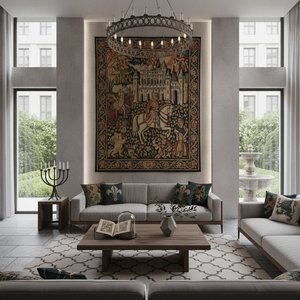
Timeless Elegance: How to Integrate High Medieval Art into Your Modern Interior Design
Discover how to infuse your modern home with the divine light of High Medieval art. From gilded illuminated manuscripts to Gothic-inspired textures, learn expert tips for integrating timeless elegance and historical grandeur into contemporary interior design.

The Shadow of Faith: Exploring Gothic Art's Spiritual Intensity & Architectural Innovation
Explore the spiritual intensity & architectural innovation of Gothic art! Discover the symbolism behind cathedrals, stained glass & master artists like Giotto and Monet. A deep dive into medieval history & artistic expression.

The Radiant Dusk of Medieval Vision: Exploring Late Gothic Art's Synthesis of Faith, Form & Emotionality (c. 1300-1500)
Explore the exquisite beauty & spiritual depth of Late Gothic art (c. 1300-1500). Discover key artists, symbolism, and its lasting influence on the Renaissance. Expert insights at ArtsDot.
