

- 215.0 x 192.0 cm


The picture follows your choices: , .
Описание предмета
 Развернуть текст
Биография художника
Сандро Боттичелли (1445-1510) – великий художник Ренессанса, создатель «Рождения Венеры» и «Весны». Его элегантный стиль, мифологические сюжеты и влияние на искусство продолжают восхищать!
Масляная репродукция ручной работы
Картина маслом на холсте в выбранном вами размере и раме, написанная на заказ нашими художниками. ( Переключиться на печать Перейти к цифровым изображениям)
More about this painting
 Примерить в интерьере
 Отправить
 Поделиться
 Подробнее
 Руководство

 Скачать
 Похожие объекты
 Рентгенография
 Слайд-шоу
 Q&A
Q&A Статистика
Order your painting in four simple steps
Take your time. You can change any answer; the price in your order card follows each choice.
1 Step one of four
Which size would you like?
These sizes keep the proportions of the original painting. The drawing shows your choice on a wall, above a two-metre sofa.
Or give your own measurements
Выберите один из наших стандартных размеров, соответствующих оригинальным пропорциям произведения искусства.

Введите необходимую ширину и высоту, чтобы репродукция подошла к вашей раме или стене. Поскольку работа выполняется вручную, при изменении пропорций художник может немного увеличить область вокруг картины или, наоборот, обрезать края — выбор за вами. Перед началом работы мы пришлем вам цифровой макет на утверждение. Изображение на этой странице не является точным результатом — увидеть реальный вид можно только на макете.
2 Step two of four
How should it be prepared: rolled, stretched or framed?
The prices below are for the size you chose in step one.
Choose the edges of the stretched canvas
Choose your frame

White $1

Blurside $1

Extended $1

P118B $10

P118H $10

P118W $10

P438Z $10

P508JH $12

P508YH $12

P805H $10

P805Z $10

P919BZ $10

P919G $10

P919XJ $10

P959ZH $10

P968JZ $12

W106C $8

W218G $10

W218JH $8

W218Y $10

W307PJ $10

W316G $10

W316PJ $8

W316Y $10

W398PJ $8

W4111J $10

W500HY $15

W500JH $15

W692G $12

W849H $8

W940BG $15

W953PJ $8

H24-GOLD $30

H24-SILVER $30

H36-GOLD $45

H36-SILVER $45
В раме
Moulding: . Overall size with the frame: .
3 Step three of four
Would you like anything changed in the painting?
Most people answer no. Because each painting is made by hand, our artist can also adapt it for you.
After order, ArtsDot.com team will email client for instructions and provide a mockup preview
4 Step four of four
A few finishing options
All of them are optional. The answers already selected cost nothing extra.
Who paints it?
Доставка по всему миру () за 3–4 недели вместо стандартных 5 недель. (1 Ноябрь). Без компромиссов в качестве.
A nameplate, as in a museum?
Детали гравировки на бронзовой плакетке
This elegant plaque features the artist's name and the title of the artwork, finely engraved for a timeless presentation.
It is made from bronze with a refined, elegant finish. The text is precisely laser-engraved for a sharp and permanent result. Measuring 9x2 cm, the plaque is compact yet easy to read. It's built to be durable and scratch-resistant, offering a professional, museum-quality look. Mounting is simple thanks to the included adhesive backing.
Информация об акриловой табличке
The plaque includes essential engraved details such as the artist's name, the title of the artwork, the date it was created, the type of media used-like oil on canvas or watercolor-a brief description of the piece, and a QR code that links to the complete artwork information.
It is crafted from clear acrylic, offering a sleek, modern appearance. The text is UV-engraved in black to ensure strong visual contrast. With a size of 10x15 cm, it ensures optimal readability. It comes equipped with two metal hooks for secure wall mounting. The plaque is designed to be weather-resistant, making it suitable for various environments, and it includes interactive features that work seamlessly with smartphone scanning.
Информация о чёрной акриловой табличке
This elegant plaque includes engraved information such as the artist's name, the title of the artwork, the date it was created, the type of media used (like oil on canvas or watercolor), a short description of the artwork, and a QR code for quick access to more information.
The plaque itself is made from refined black acrylic with a premium finish. The text is laser-engraved in white for high contrast and readability. Its size is 10x15 cm, designed to be easy to read. It comes with two metal hooks for professional mounting. The design is sleek and fits any interior style. It is also weather-resistant and durable, with built-in digital integration for mobile compatibility.
A protective varnish?
When do you need it?
✓ Check and order
Your painting, as you ordered it

Holy Trinity (Pala della Convertite)
Материал репродукции
Размер репродукции
-

Ведущий мастер элитного уровня
Более высокая детализация, изысканность и дополнительное время на создание работы
-

Рама для репродукции
-
-
Для произведений искусства или репродукций, размер которых превышает 105 см (приблизительно 41 дюйм) по любой из сторон, рама будет доставлена в разобранном виде (в виде комплекта). Этот метод обеспечивает безопасную доставку и предотвращает повреждения при транспортировке.
Требуется профессиональная сборка — это не продукт для самостоятельной сборки (DIY).
Комплект должен быть собран, а холст натянут опытным мастером по багетным рамам с использованием клеевого ПВА (не входит в комплект), струбцин для натяжки холста и зажимов, чтобы удерживать подрамник ровным до полного высыхания клея. Неправильная сборка или неравномерное натяжение холста могут привести к необратимому повреждению произведения искусства и не являются гарантийным случаем.
 Для произведений искусства или репродукций, размер которых превышает 105 см (приблизительно 41 дюйм) по любой из сторон, рама будет доставлена в разобранном виде (в виде комплекта). Этот метод обеспечивает безопасную доставку и предотвращает повреждения при транспортировке.
В комплект входят все бруски из массива дерева, точно вырезанные по размеру.
Собирается с помощью предоставляемых винтов, а также столярного клея для угловых соединений, который не входит в комплект и должен быть приобретен вашим мастером.
Требуются профессиональные инструменты, не входящие в комплект: щипцы для натяжки холста (натяжитель) и зажимы, чтобы удерживать рейки ровно во время высыхания клея.
Важно:
Для соединения углов требуется клей для дерева, перекладины необходимо зафиксировать струбцинами до полного высыхания клея, а для натяжки холста на собранную раму требуются щипцы для натяжки холста. Ни один из этих инструментов не входит в комплект. Пожалуйста, убедитесь в наличии опытного мастера по багетным работам перед заказом рамы такого размера.

Экспликация
-
-

Защитный лак
Глянцевый лак (насыщает цвета, защищает от воздействия света и влаги)
-

Настроить мою картину
Примеры возможных изменений: замена лица на фото клиента; добавление домашнего питомца (например, замена кошки на собаку); добавление скрытого сообщения на фоне; изменение пейзажа или элементов фона.
-

Срочно
Доставка по всему миру () за 3–4 недели вместо стандартных 5 недель. (1 Ноябрь). Без компромиссов в качестве.
-
Экспресс-доставка
Доставка по всему миру () в течение 5 недель. (8 Ноябрь).
Включено
Итоговая стоимость
$ 263
Вариант со стеклом доступен только для размеров менее 110 см
Included with every order
- Бесплатная экспресс-доставка по всему миру
- Высококачественный льняной холст
- Полное страхование при транспортировке
- Гарантия возврата таможенных пошлин
- Гарантия точного цветового соответствия
- 100-дневный период возврата (только при обнаружении дефектов)
- Гарантия возврата 100% средств
- Скидка при заказе нескольких работ


Artistic Significance
This painting is a prime example of Botticelli's skill in capturing religious scenes with deep emotional resonance. The central figure of Jesus Christ on the cross is surrounded by angels and other figures, all engaged in various activities such as praying or mourning his death. The scene is set against a hillside backdrop, emphasizing the solemnity of the moment.Composition and Symbolism
The composition of the painting is noteworthy for its balance and harmony. Jesus Christ is positioned at the center, drawing the viewer's attention to the crucifixion. The angels surrounding him add a sense of sorrow and reverence, while the other figures in the background contribute to the overall sense of mourning.Historical Context
The Holy Trinity (Pala della Convertite) was painted during a period of significant religious fervor in Italy. Botticelli's work reflects the spiritual and artistic trends of his time, blending traditional Christian themes with Renaissance humanism.Other Works by Sandro Botticelli
Botticelli is known for several other notable works, including:- Portrait of a Young Man (37 x 28 cm, National Gallery, London)
- Adoration of the Magi (12) (131 x 131 cm, National Gallery, London)
- Adoration of the Magi (11) (50 x 136 cm, National Gallery, London)
Purchase a Handmade Oil Painting Reproduction
At ArtsDot.com, you can find high-quality, handmade oil painting reproductions of Botticelli's works. Each piece is carefully crafted by skilled artists to capture the essence and beauty of the original paintings. Experience the artistry of Sandro Botticelli in your own home with a reproduction from ArtsDot.com. For more information on Sandro Botticelli and his works, visit Holy Trinity (Pala della Convertite).Вопросы и ответы
Для каких целей рекомендуется использовать «Holy Trinity (Pala della Convertite)», Боттичелли?
Рекомендуемый способ использования репродукции «Holy Trinity (Pala della Convertite)», Боттичелли — Accent. Она также может служить для других целей.
Является ли произведение «Holy Trinity (Pala della Convertite)», Боттичелли общественным достоянием?
Статус авторского права для «Holy Trinity (Pala della Convertite)», Боттичелли: произведение находится в является общественным достоянием — срок действия авторского права истек. Это определяет, допускается ли свободное воспроизведение изображения.
Из чего создано произведение «Holy Trinity (Pala della Convertite)»?
Техника исполнения работы «Holy Trinity (Pala della Convertite)», Боттичелли — Acrylic On Canvas. Репродукции стремятся максимально точно передать особенности этой техники.
Похожие произведения


Боттичелли
1445 - 1510, Италия
Биография художника
Early Life and Florentine Beginnings
Sandro Botticelli, born Alessandro di Mariano di Vanni Filipepi around 1445 in Florence, Italy, emerged during a period of extraordinary cultural ferment—the Early Renaissance. His life was deeply rooted in the city’s artistic and social fabric; he never strayed far from his neighborhood of Ognissanti, a testament to both familial ties and the vibrant creative ecosystem that nurtured him. His father, Mariano Filipepi, initially a goldsmith and later a tanner, provided an early exposure to craftsmanship and meticulous detail—qualities that would profoundly influence Botticelli’s artistic approach. Though initial reports suggested training as a goldsmith, he soon found his calling under the tutelage of Fra Filippo Lippi, a leading painter of the time. This apprenticeship proved pivotal, immersing him in the techniques and aesthetics of the Florentine school while also connecting him to influential patrons like the Medici family. Botticelli’s early years were shaped by the bustling atmosphere of Florence, a city brimming with artistic innovation and political intrigue—a backdrop that would profoundly impact his creative vision.A Style Defined by Grace and Myth
Botticelli’s artistic style is instantly recognizable for its lyrical beauty, characterized by elegant linearity, flowing contours, and a delicate use of color. He masterfully bridged the gap between the late Gothic traditions and the burgeoning Renaissance aesthetic, absorbing influences from masters like Fra Angelico and Paolo Uccello yet forging a uniquely personal vision. His figures possess an ethereal quality, often depicted with elongated proportions and graceful poses that convey both serenity and a subtle melancholy. A defining feature of his work is the frequent incorporation of classical mythology—a reflection of the humanist interests sweeping through Renaissance Florence. He didn’t merely illustrate these ancient tales; he imbued them with new layers of meaning, exploring themes of love, beauty, and spiritual longing. Botticelli's approach to composition was revolutionary for its time, moving away from the rigid conventions of medieval art towards a more dynamic and expressive style. His use of color was equally innovative, favoring delicate pastel hues that created an atmosphere of dreamlike beauty.Iconic Masterpieces and Artistic Development
Botticelli’s legacy rests upon a handful of iconic paintings that continue to captivate audiences centuries later. The Birth of Venus, completed around 1486, stands as perhaps his most celebrated work—an allegorical depiction of the goddess emerging from a seashell, embodying Renaissance ideals of beauty and harmony. Its graceful composition, delicate color palette, and evocative symbolism have made it an enduring symbol of the era. Equally renowned is Primavera, created around 1482, a complex and enigmatic painting celebrating spring and love, populated with symbolic figures drawn from classical mythology. These works showcase Botticelli’s mastery of composition, his ability to create atmospheric depth, and his profound understanding of human emotion. His artistic journey unfolded in distinct phases. The early 1470s saw him focusing on religious subjects, honing his technical skills and establishing a reputation for skillful execution. The 1480s marked the peak of his creative powers, with the creation of his most famous mythological paintings. However, the late 1490s witnessed a shift in his style, influenced by the fervent preaching of Girolamo Savonarola—a Dominican friar who condemned what he saw as the decadence and moral corruption of Florence. This period resulted in more austere and emotionally charged works, reflecting a growing spiritual intensity.Major Works
- The Birth of Venus (c. 1486): An iconic depiction embodying Renaissance ideals of beauty.
- Primavera (c. 1482): A complex allegorical painting celebrating spring and love.
- Adoration of the Magi (1475-1476): Demonstrates early mastery of composition and perspective.
- Mystic Nativity (1501): Reflects a shift towards spiritual themes in his later career.
Legacy and Rediscovery
Following his death in 1510, Botticelli’s reputation gradually faded into obscurity. For nearly three centuries, his work was largely forgotten, overshadowed by the achievements of High Renaissance masters like Leonardo da Vinci and Michelangelo. However, a remarkable rediscovery occurred in the late 19th century with the rise of the Pre-Raphaelite Brotherhood—a group of English artists who rejected academic conventions and sought inspiration in the art of the early Italian Renaissance. They were captivated by Botticelli’s linear grace, vibrant colors, and poetic sensibility, recognizing him as a kindred spirit. This renewed appreciation sparked a widespread reassessment of his work, establishing him as one of the most important artists of the Early Renaissance. Today, Botticelli is celebrated for his unique artistic vision, his masterful technique, and his enduring ability to evoke beauty, emotion, and spiritual contemplation. His influence can be seen in subsequent generations of artists who have sought to capture the same sense of grace and elegance in their own work. He remains a symbol of Florentine artistic achievement and a testament to the power of Renaissance humanism.


Похожие статьи

Топ-25 шедевров Сандро Боттичелли: искусство Ренессанса для вашего дома
Погрузитесь в мир Сандро Боттичелли! 25 шедевров Ренессанса – "Рождение Венеры", "Весна" и другие культовые картины. Узнайте историю, технику и вдохновение великого художника. Репродукции высокого качества для вашего интерьера на ArtsDot.com.

Late Medieval Masterpieces: 10 Artworks That Defined an Era | ArtsDot
Journey through 10 defining Late Medieval masterpieces – from Giotto's frescoes to Jan van Eyck’s realism. Explore the stories, techniques & vibrant colors of Gothic art. Find museum-quality reproductions and elevate your home decor with ArtsDot.com! Discover all masterpieces on ArtsDot.com
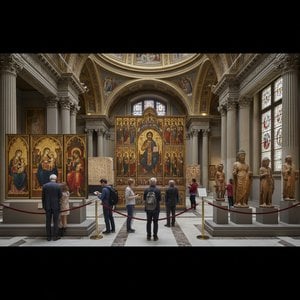
Sacred Narratives Embodied: A Comprehensive Exploration of Religious Iconography in Art History
Explore the rich history of religious iconography in art! Discover symbolism, movements & masterpieces from Byzantine to Renaissance periods. Expert insights for collectors and enthusiasts at ArtsDot.