Portretul lui Max Liebermann

Descoperă cele 100 cele mai faimoase picturi ale lui Max Liebermann

Actualizat Octombrie 2026 · clasat în funcție de scorul nostru de popularitate (căutări, vizite și comenzi pentru fiecare operă) · 280 lucrări ale lui Max Liebermann în catalogul nostru

Pe scurt

Dacă cunoști o pictură a lui Max Liebermann, probabil este Ora liberă la orfelinatul din Amsterdam (1876). Self Portrait with Kitchen Still LIfe (1873) și Corner of a Dutch Village with Washing Hung up to Dry (1890) completează cele trei piese pe care oamenii le recunosc imediat. Catalogul nostru conține 280 lucrări ale lui Max Liebermann. Mai jos sunt cele 100 opere cele mai cunoscute, fiecare cu anul creării, locul unde poate fi găsită și trăsăturile care o fac specială.

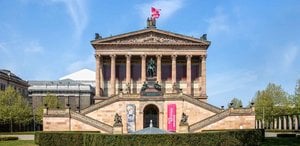
1847 – 1935, Berlin Impressionist realism Cele mai multe lucrări: Alte Nationalgalerie

Începe de aici: cele mai importante 10 picturi ale lui Max Liebermann

1
Ora liberă la orfelinatul din Amsterdam (1876) de Max Liebermann

Ora liberă la orfelinatul din Amsterdam

1876 · Ulei pe pânză

“Free Hour at Amsterdam Orphanage” de Max Liebermann este o operă impresionistă fascinantă care surprinde cu delicatețe un moment din viața comunitară în secolul XIX. Acest tablou invită privitorii într-o curte exterioară unde femei și copii se adună, creând o scenă bogată în interacțiuni sociale și patrimoniu cultural. Liebermann nu doar că a încercat să surprindă adevărul unei anumite perioade istorice, ci și să îl transforme în artă sensibilă la…

2
Self Portrait with Kitchen Still LIfe (1873) de Max Liebermann

Self Portrait with Kitchen Still LIfe

1873 · Oil On Canvas · Stadtisches Museum, Gelsenkirchen

To stand before Max Liebermann’s Self Portrait with Kitchen Still Life is not merely to observe a painting; it is to step directly into the vibrant, sun-drenched moments of late nineteenth-century Berlin. Created in 1873, this oil on canvas captures more than just a likeness; it encapsulates the artist's profound belief that true beauty resides within the quotidian—the humble objects and simple acts of daily life. Liebermann, a master whose…

3
Corner of a Dutch Village with Washing Hung up to Dry (1890) de Max Liebermann

Corner of a Dutch Village with Washing Hung up to Dry

1890 · Oil On Panel · Harvard Art Museums, Cambridge

The air feels heavy with the scent of damp fabric and the salt of a nearby coast. In this corner of a Dutch village, time seems to pause, caught in the soft, overcast light of 1890. A white building dominates the immediate view, its red door and blue shutters providing the only sharp interruptions to the muted, earthy tones of the village. Above the doorway, laundry hangs from a line,…

4
Portrait of Richard Strauss (1918) de Max Liebermann

Portrait of Richard Strauss

1918 · Oil · Alte Nationalgalerie, Berlin

This 1918 impressionist painting by Max Liebermann presents a black and white portrait of Richard Strauss. The subject is depicted sitting in a chair with his hands clasped together, wearing a suit and tie. He is shown with a mustache and appears to be looking directly at the viewer. To provide depth to the scene, the background features a curtain behind the seated man.

5
Restaurant De oude Vink (1905) de Max Liebermann

Restaurant De oude Vink

1905 · Oil

There is a certain quietude found in the middle of a crowd, a feeling captured here in 1905. In Restaurant De oude Vink, we find ourselves seated among patrons enjoying a meal under the dappled shade of trees. The scene is one of casual, unhurried leisure. Green chairs are scattered around tables, some occupied by figures lost in conversation, others left empty as if the guests have only just stepped…

6
Self-portrait (1916) de Max Liebermann

Self-portrait

1916 · Oil On Canvas · Kunsthalle Bremen, Bremen

An older man sits in a moment of quiet creation, his presence filling the space with a heavy, contemplative dignity. He faces the viewer directly, his gaze steady and unblinking, even as his hands remain occupied with the tools of his trade. In his right hand, he holds a palette, while his left hand brings a brush toward an easel, capturing a fragment of life in real-time. The light enters…

7
The Preserve Makers (1879) de Max Liebermann

The Preserve Makers

1879 · Oil On Canvas · Museum der bildenden Künste, Leipzig

The Preserve Makers is a somber and intimate realist painting that captures a group of women gathered within a dimly lit, rustic interior. The composition is dense and crowded, utilizing a shallow depth of field that brings the figures into the immediate foreground to create a sense of enclosure and shared labor. These women are engaged in the communal task of preparing vegetables, their presence evoking a sense of quiet…

Mai multe favorite de la Max Liebermann, de la 11 la 100

11The farrier (1874) de Max LiebermannThe farrier1874 · Staatliche Kunsthalle Karlsruhe 12Young Boys Bathing at Zandvoort (1896) de Max LiebermannYoung Boys Bathing at Zandvoort1896 13Albert Einstein (1879–1955) (1922) de Max LiebermannAlbert Einstein (1879–1955)1922 · Royal Society 14Portrait Study of Emil Rathenau (1908) de Max LiebermannPortrait Study of Emil Rathenau1908 · Alte Nationalgalerie 15Portrait Dr. Wilhelm Bode (1909) de Max LiebermannPortrait Dr. Wilhelm Bode1909 · Alte Nationalgalerie 16The Siblings (1876) de Max LiebermannThe Siblings1876 · Staatliche Kunstsammlungen 17Swimmers (1875) de Max LiebermannSwimmers1875 · Muzeul de Artă Dallas 18The Basketweavers (Die Korbflechter) (1872) de Max LiebermannThe Basketweavers (Die Korbflechter)1872 · Staatliche Kunsthalle Karlsruhe 19Infant school in Amsterdam (1880) de Max LiebermannInfant school in Amsterdam1880 · Alte Nationalgalerie 20Road in Dutch Village (1885) de Max LiebermannRoad in Dutch Village1885 21Girl from Laren Peeling Potatoes with Sleeping Child in a Basket (1887) de Max LiebermannGirl from Laren Peeling Potatoes with Sleeping Child in a Basket1887 · Museum Kunst der Westküste 22The Net Menders (1888) de Max LiebermannThe Net Menders1888 · Hamburger Kunsthalle 23Dr. Max Linde (1897) de Max LiebermannDr. Max Linde1897 · National Gallery Prague 24Going to School in Laren - Composition Study (1898) de Max LiebermannGoing to School in Laren - Composition Study1898 25Rider by the Sea Facing Left (1900) de Max LiebermannRider by the Sea Facing Left1900 26Samson and Delilah (1902) de Max LiebermannSamson and Delilah1902 · Städel Museum 27Painting of the artist's mother (1900) de Max LiebermannPainting of the artist's mother1900 · Slovak National Gallery 28Two Riders on the Beach to the left (1901) de Max LiebermannTwo Riders on the Beach to the left1901 29Copy of the Bohémienne after Frans Hals (Young woman) (1870) de Max LiebermannCopy of the Bohémienne after Frans Hals (Young woman)1870 · Staatliche Kunsthalle Karlsruhe 30The Terrace at the Hotel Louis C. Jacob in Nienstedten on the Elbe (1902) de Max LiebermannThe Terrace at the Hotel Louis C. Jacob in Nienstedten on the Elbe1902 · Hamburger Kunsthalle 31Two riders on the beach (1903) de Max LiebermannTwo riders on the beach1903 · Muzeul Wallraf-Richartz 32Man with parrots (1900) de Max LiebermannMan with parrots1900 33Dutch Farmhouse with Woman (1882) de Max LiebermannDutch Farmhouse with Woman1882 · Frye Art Museum 34Rider on the Beach (1904) de Max LiebermannRider on the Beach1904 35On the Alster in Hamburg (1910) de Max LiebermannOn the Alster in Hamburg1910 · Staatliche Kunstsammlungen Dresden 36The Lifeguard's cart (1908) de Max LiebermannThe Lifeguard's cart1908 37Self-portrait (1908) de Max LiebermannSelf-portrait1908 · Muzeul Wallraf-Richartz 38Self-Portrait with Panama Hat (1911) de Max LiebermannSelf-Portrait with Panama Hat1911 39Self-Portrait with Straw Hat (1914) de Max LiebermannSelf-Portrait with Straw Hat1914 · Dordrechts Museum 40Self-portrait, standing in three-quarter figure, both hands in trouser pockets (Selbstbildnis, stehend in Dreiviertelfigur, beide Hände in den Hosentaschen) (1915) de Max LiebermannSelf-portrait, standing in three-quarter figure, both hands in trouser pockets (Selbstbildnis, stehend in Dreiviertelfigur, beide Hände in den Hosentaschen)1915 · Alte Nationalgalerie 41Self-Portrait with Palette to the Left (1912) de Max LiebermannSelf-Portrait with Palette to the Left1912 · Berlinische Galerie 42Käthe Liebermann – The Artist's Daughter (1916) de Max LiebermannKäthe Liebermann – The Artist's Daughter1916 43The artist's daughter riding (1913) de Max LiebermannThe artist's daughter riding1913 · Muzeul Wallraf-Richartz 44Study: Bust of a Man / Bust of a Woman – Two-sided Painting (1875) de Max LiebermannStudy: Bust of a Man / Bust of a Woman – Two-sided Painting1875 · Muzeul Național din Cracovia 45Ulrich von Wilamowitz Moellendorff (1915) de Max LiebermannUlrich von Wilamowitz Moellendorff1915 46Sketches of Jozef Israëls (1912) de Max LiebermannSketches of Jozef Israëls1912 · Ben Uri Gallery and Museum 47Portrait of the Berlin Garden Director Albert Brodersen (1920) de Max LiebermannPortrait of the Berlin Garden Director Albert Brodersen1920 48Self portrait in painting smock (Selbstbildnis im Malkittel) (1922) de Max LiebermannSelf portrait in painting smock (Selbstbildnis im Malkittel)1922 · Colecțiile Statale de Pictură din Bavaria 49Portrait of Jeanette Cornelia A. Onnes van Nijenrode-Cockuijt (1883-1936) (1918) de Max LiebermannPortrait of Jeanette Cornelia A. Onnes van Nijenrode-Cockuijt (1883-1936)1918 · Centraal Museum 50Portrait August Batschari (1918) de Max LiebermannPortrait August Batschari1918 · Westfälisches Landesmuseum 51Self-Portrait (1922) de Max LiebermannSelf-Portrait1922 52The Liebermann Family (1926) de Max LiebermannThe Liebermann Family1926 · Stiftung Stadtmuseum 53Self-Portrait with sports cap at the easel (1925) de Max LiebermannSelf-Portrait with sports cap at the easel1925 · Alte Nationalgalerie 54The Fisherman (1926) de Max LiebermannThe Fisherman1926 55A Dutch lacemaker (1881) de Max LiebermannA Dutch lacemaker1881 · Hamburger Kunsthalle 56Gerhart Hauptmann (1912) de Max LiebermannGerhart Hauptmann1912 · Hamburger Kunsthalle 57The Surgeon Dr. Ferdinand Sauerbruch (1932) de Max LiebermannThe Surgeon Dr. Ferdinand Sauerbruch1932 · Hamburger Kunsthalle 58Digging for Potatoes in the Dunes at Zandvoort (1895) de Max LiebermannDigging for Potatoes in the Dunes at Zandvoort1895 · Germanisches Nationalmuseum 59Bust Selfportrait in Paiting Overall (1922) de Max LiebermannBust Selfportrait in Paiting Overall1922 · Stiftung Brandenburger Tor 60Study for Flax Barn in Laren (1886) de Max LiebermannStudy for Flax Barn in Laren1886 · Grohmann Museum 61On the Beach at Noordwijk (1908) de Max LiebermannOn the Beach at Noordwijk1908 62Children Bathing in the Sea (1899) de Max LiebermannChildren Bathing in the Sea1899 · Colecțiile Statale de Pictură din Bavaria 63Landschaft mit schafherde de Max LiebermannLandschaft mit schafherde 64Albert einstein de Max LiebermannAlbert einstein 65Arbeiterin im rübenfeld de Max LiebermannArbeiterin im rübenfeld 66Flower Terrace in the Wannsee Garden, Facing East (1924) de Max LiebermannFlower Terrace in the Wannsee Garden, Facing East1924 67Recess in the Amsterdam Orphanage - View of the Inner Courtyard, Study (1876) de Max LiebermannRecess in the Amsterdam Orphanage - View of the Inner Courtyard, Study1876 · Alte Nationalgalerie 68Terrace in the Garden near the Wannsee toward Southwest (1919) de Max LiebermannTerrace in the Garden near the Wannsee toward Southwest1919 69Flowers at the Gardener's House toward the Northwest (sketch) (1921) de Max LiebermannFlowers at the Gardener's House toward the Northwest (sketch)1921 70The Flower Terrace in the Wannsee Garden, Facing Northwest (1923) de Max LiebermannThe Flower Terrace in the Wannsee Garden, Facing Northwest1923 · Stadtisches Museum 71Old Men's Home in Amsterdam, Study (1880) de Max LiebermannOld Men's Home in Amsterdam, Study1880 72Study Head of a Man (also known as Sephardic Jew with a Prayer Shawl, Facing Left) (1878) de Max LiebermannStudy Head of a Man (also known as Sephardic Jew with a Prayer Shawl, Facing Left)1878 · Kunsthaus Zürich 73View of the Wannsee with sailing boats (1924) de Max LiebermannView of the Wannsee with sailing boats1924 · Alte Nationalgalerie 74View over the Tall Linden Hedge into the Cutting Garden toward the West (1929) de Max LiebermannView over the Tall Linden Hedge into the Cutting Garden toward the West1929 75The Terrace in the Wannsee Garden toward the Northwest (1926) de Max LiebermannThe Terrace in the Wannsee Garden toward the Northwest1926 76Parrot Avenue (1902) de Max LiebermannParrot Avenue1902 · Kunsthalle Bremen 77Table with Pieces of Meat (1877) de Max LiebermannTable with Pieces of Meat1877 · Neue Pinakothek 78Birch grow de Max LiebermannBirch grow 79A rider on the beach de Max LiebermannA rider on the beach 80Amsterdam Orphans in the Garden (1885) de Max LiebermannAmsterdam Orphans in the Garden1885 81The Surgeon, Ferdinand Sauerbruch (1932) de Max LiebermannThe Surgeon, Ferdinand Sauerbruch1932 82Outdoor Garden on the Havel, Nikolskoe (1916) de Max LiebermannOutdoor Garden on the Havel, Nikolskoe1916 83The Cutting Garden in Wannsee toward the West, with a Woman Gardener on the Path (1924) de Max LiebermannThe Cutting Garden in Wannsee toward the West, with a Woman Gardener on the Path1924 84Flowers at the Gardener's House (1927) de Max LiebermannFlowers at the Gardener's House1927 85Terrace in the Garden near the Wannsee toward Northwest (1916) de Max LiebermannTerrace in the Garden near the Wannsee toward Northwest1916 · Museum of Fine Arts 86The Circular Bed in the Hedge Garden with a Woman Watering Flowers (1925) de Max LiebermannThe Circular Bed in the Hedge Garden with a Woman Watering Flowers1925 87Portrait of Felix Liebermann (1865) de Max LiebermannPortrait of Felix Liebermann1865 88Jewish Street in Amsterdam (1908) de Max LiebermannJewish Street in Amsterdam1908 · Städel Museum 89Still life of meat (Fleischstillleben) (1878) de Max LiebermannStill life of meat (Fleischstillleben)1878 · Colecțiile Statale de Pictură din Bavaria 90Hand of an officer of the Haarlem Guard (1876) de Max LiebermannHand of an officer of the Haarlem Guard1876 91Grain Harvest (1874) de Max LiebermannGrain Harvest1874 · Westfälisches Landesmuseum 92Amsterdam Orphanage (1876) de Max LiebermannAmsterdam Orphanage1876 · Arp Museum Bahnhof Rolandseck 93Terrace in the Garden near the Wannsee towards Northwest (1916) de Max LiebermannTerrace in the Garden near the Wannsee towards Northwest1916 · Museum of Fine Arts 94Nets and Sails Spread over a Meadow: Study for the Net Menders (1884) de Max LiebermannNets and Sails Spread over a Meadow: Study for the Net Menders1884 · Muzeul Israel 95Shoemaker (1881) de Max LiebermannShoemaker1881 · Alte Nationalgalerie 96Girl Sewing with Cat - Dutch Interior (1884) de Max LiebermannGirl Sewing with Cat - Dutch Interior1884 97Village Pond in Etzenhauser - Village Idyll (1879) de Max LiebermannVillage Pond in Etzenhauser - Village Idyll1879 98Village Street in MIlitsh - Landscape with Pond (1883) de Max LiebermannVillage Street in MIlitsh - Landscape with Pond1883 99Children's playground in Tiergarten park in Berlin (1885) de Max LiebermannChildren's playground in Tiergarten park in Berlin1885 100Privy Councilor Benjamin Liebermann (1887) de Max LiebermannPrivy Councilor Benjamin Liebermann1887

Picturile lui Max Liebermann, perioadă cu perioadă

Cele mai picturate opere ale lui Max Liebermann

Cele patru teme care apar cel mai des în aceste lucrări, fiecare cu cel mai cunoscut exemplu al său.

Unde poți vedea picturile lui Max Liebermann

Cele 8 muzee care dețin cele mai multe dintre picturile de pe această pagină.

Muzeu Oraș Lucrări lui Max Liebermann Picturi din această listă
Alte Nationalgalerie, BerlinAlte Nationalgalerie Berlin 17 Portrait of Richard Strauss, Portrait Study of Emil Rathenau, Portrait Dr. Wilhelm Bode
Hamburger Kunsthalle, HamburgHamburger Kunsthalle Hamburg 8 The Net Menders, The Terrace at the Hotel Louis C. Jacob in Nienstedten on the Elbe, A Dutch lacemaker
Colecțiile Statale de Pictură din Bavaria, MunchenColecțiile Statale de Pictură din Bavaria Munchen 7 Self portrait in painting smock (Selbstbildnis im Malkittel), Children Bathing in the Sea, Still life of meat (Fleischstillleben)
Muzeul Wallraf-Richartz, KölnMuzeul Wallraf-Richartz Köln 6 Two riders on the beach, Self-portrait, The artist's daughter riding
Staatliche Kunsthalle Karlsruhe, KarlsruheStaatliche Kunsthalle Karlsruhe Karlsruhe 5 The farrier, The Basketweavers (Die Korbflechter), Copy of the Bohémienne after Frans Hals (Young woman)
Stadtisches Museum, GelsenkirchenStadtisches Museum Gelsenkirchen 3 Self Portrait with Kitchen Still LIfe, The Flower Terrace in the Wannsee Garden, Facing Northwest
Kunsthalle Bremen, BremenKunsthalle Bremen Bremen 3 Self-portrait, Parrot Avenue
Staatliche Kunstsammlungen Dresden, DresdaStaatliche Kunstsammlungen Dresden Dresda 3 Alfred von Berger, On the Alster in Hamburg

Max Liebermann deceniu cu deceniu: o piesă remarcabilă pentru fiecare

Lucrări pe deceniu

Alege o deceniu pentru a vedea piesa sa de rezistență.

Întrebările tale despre picturile lui Max Liebermann

Care este cea mai celebră pictură a lui Max Liebermann?Vezi răspunsul

În topul listei se află Ora liberă la orfelinatul din Amsterdam (1876). Următoarele sunt: Self Portrait with Kitchen Still LIfe (1873) și Corner of a Dutch Village with Washing Hung up to Dry (1890).

Câți ani avea Max Liebermann când a fost creată Ora liberă la orfelinatul din Amsterdam?Vezi răspunsul

29 ani. Max Liebermann s-a născut în 1847, iar Ora liberă la orfelinatul din Amsterdam datează din 1876.

Care sunt cele mai cunoscute 10 picturi ale lui Max Liebermann?Vezi răspunsul

Ora liberă la orfelinatul din Amsterdam, Self Portrait with Kitchen Still LIfe, Corner of a Dutch Village with Washing Hung up to Dry, Portrait of Richard Strauss, Restaurant De oude Vink, Self-portrait, The Preserve Makers, Schreitender Bauer, KIRCHGANG IN Laren și Alfred von Berger. Veți găsi anul și muzeul fiecăruia în lista de mai sus.

Câte picturi a creat Max Liebermann?Vezi răspunsul

În catalogul nostru avem 280 lucrări ale lui Max Liebermann, datate între 1865 și 1932.

Unde puteți vedea celebrele picturi ale lui Max Liebermann?Vezi răspunsul

Le vei găsi pe majoritatea în Alte Nationalgalerie (Berlin), Hamburger Kunsthalle (Hamburg) și Colecțiile Statale de Pictură din Bavaria (Munchen). Lista muzeelor de mai sus oferă detalierea completă.

Când a pictat Max Liebermann cele mai cunoscute opere?Vezi răspunsul

În 1910s, mai mult decât în orice altă perioadă: 18 dintre cele 100 piese de pe această pagină datează de atunci, Portrait of Richard Strauss dintre acestea.

Care sunt primele și ultimele picturi ale lui Max Liebermann care au fost realizate?Vezi răspunsul

Cea mai veche piesă de aici este Portrait of Felix Liebermann (1865); cea mai recentă este The Surgeon Dr. Ferdinand Sauerbruch (1932).

Ce teme apar cel mai des în picturile lui Max Liebermann?Vezi răspunsul

Man (10), Portrait (6) și Garden scene (6), din un total de 100 piese de pe această pagină.

Cu ce materiale a pictat cel mai des Max Liebermann?Vezi răspunsul

Oil On Canvas, utilizat în 29 dintre cele 100 piese de pe această pagină.

Din ce mișcare artistică a făcut parte Max Liebermann?Vezi răspunsul

Impressionist realism, așa cum puteți observa în piesele de pe această pagină.

Ce opere ale lui Max Liebermann puteți vedea la Alte Nationalgalerie?Vezi răspunsul

Pe această pagină poți vedea 9 dintre piesele din cadrul Alte Nationalgalerie, Berlin, inclusiv Portrait of Richard Strauss, Portrait Study of Emil Rathenau și Portrait Dr. Wilhelm Bode.

Pot obține o reproducere a unei picturi a lui Max Liebermann?Vezi răspunsul

Da. Fiecare pictură de pe această pagină este disponibilă ca reproducere pictată manual în ulei sau ca print, în dimensiunea care vă conveni. Accesați pagina picturii pentru a comanda.

Cunoașteți-l pe Max Liebermann

A Life Immersed in Light: The World of Max Liebermann

Max Liebermann, o figură emblematică a artei germane de la sfârșitul secolului al XIX-lea și începutul celui de al XX-lea, nu a fost un artist născut în tradiție. Fiind fiul unui om de afaceri evreu din Berlin, viața sa artistică a fost marcată de o explorare continuă, de la studii juridice și filozofice la o pasiune neîngrădită pentru pictură. Deși inițial îndrumat spre carierele respectabile ale dreptului și filosofiei la Universitatea din Berlin, chemarea sa adevărată a răsunat mult mai puternic din pânză decât de pe tronul judecătorească. Această perioadă timpurie de explorare intelectuală a modelat cu siguranță ochiul său observator și abordarea gânditoare în reprezentarea lumii din jurul său. Un salt deliberat – studii în Weimar, Paris și Țările de Jos – a aprins cu adevărat pasiunea sa artistică, expunându-l la stiluri diverse și punând bazele unei cariere definite de captarea momentelor fugare cu o sensibilitate exquisită la lumină și culoare. Liebermann nu picta doar ceea ce vedea; el traducea esența însăși a experienței pe pânză. Lucrările sale timpurii au adesea reprezentat scene din viața de zi cu zi, în special cele ale clasei muncitoare, fiind realizate cu un naturalism care sfida estetica romantică dominantă a vremii. Aceste picturi nu erau menite să fie comentarii sociale, ci mai degrabă portrete onestă și pline de demnitate a existenței umane.

Embracing Impressionism in a German Context

Dezvoltarea artistică a lui Liebermann a fost profund influențată de expunerea sa la realismul francez și, în mod crucial, de mișcarea impresionistă. Spiritul lui Édouard Manet – curajul său, respingerea convențiilor academice, concentrarea pe viața contemporană – a rezonat adânc cu Liebermann. Cu toate acestea, el nu a replicat pur și simplu ceea ce vedea în Paris; mai degrabă, a adaptat aceste principii la o sensibilitate germană, creând un impresionism unic. Paleta sa s-a luminat, pensulele sale au devenit mai libere și mai spontane, iar subiecții săi s-au deplasat către scene de agrement burghez și frumusețea liniștită a grădinii sale din apropierea lacului Wannsee. Această grădină, în special, a devenit un motiv recurent pe parcursul carierei sale, oferind un sanctuar față de lumea schimbătoare și o sursă nesfârșită de inspirație pentru explorările sale despre lumină și atmosferă. El nu picta doar flori și frunziș; el captura sentimentul verii, căldura soarelui, briza ușoară șuierând printre frunze. Dincolo de peisaje, Liebermann s-a stabilit ca un portretist solicitat, realizând peste 200 de lucrări comandate, inclusiv reprezentări iconice ale unor figuri precum Albert Einstein și Paul von Hindenburg. Aceste portrete nu erau simple semblante; ele erau studii perspicace ale caracterului, dezvăluind viețile interioare ale subiecților săi prin gesturi și expresii subtile.

A Champion of Artistic Freedom

Liebermann nu era mulțumit doar să picteze; el a pledat activ pentru inovația artistică și independența. Recunoscând constrângerile sufocante impuse de instituția de artă tradițională, el a devenit o forță motrice din spatele Secesiunii Berlineză din 1898, conducând acest grup avantgardist timp de peste un deceniu. Secesiunea a pus în discuție normele convenționale, oferind o platformă artiștilor care lucrau în afara limitelor tradiției academice. Acest angajament față de libertatea artistică s-a extins dincolo de propria sa muncă; Liebermann credea cu tărie că arta ar trebui să fie liberă să exploreze viziunea sa fără interferențe din partea presiunilor politice sau ideologice. Alegerea sa în Academia Prusacă de Arte în 1909 și președinția sa ulterioară în 1920 au fost mărturii ale influenței sale crescânde în lumea artei germane, dar aceste poziții i-au adus, de asemenea, față cu fața cu valul tot mai mare de antisemitism și naționalism care ar amenința în cele din urmă munca sa.

Shadows of a Changing World: Legacy and Resilience

Ascensiunea Nazismului a aruncat o umbră întunecată asupra anilor târziu ai lui Liebermann. Poziția sa principială împotriva discriminării a dus la demisia sa din Academia Prusacă în 1933, un act curajos care a semnalat refuzul său de a compromite valorile sale. În ciuda persecuțiilor tot mai mari, el a continuat să picteze, găsind consolare și scop în arta sa. A murit la Berlin în 1935, lăsând în urmă un bogat moștenire de picturi, gravuri și o dedicare profundă a libertății artistice. Soția sa, Martha, s-a sinucis tragic în 1943 pentru a evita deportarea, un testament tulburător al ororilor Holocaustului. În anii următori războiului, opera lui Liebermann a fost parțial ignorată, dar în ultimele decenii există o apreciere sporită a contribuțiilor sale la istoria impresionismului german și modernă. Astăzi, el este amintit nu numai ca un pictor strălucit, ci și ca un avocat curajos pentru exprimarea artistică și un simbol al rezistenței împotriva tiraniei. Pânzele sale continuă să captiveze privitorii cu frumusețea lor luminoasă, observații perspicace și umanitate durabilă.

Key Achievements & Lasting Influence

  • "The Twelve-Year-Old Jesus in the Temple": Această lucrare timpurie a stârnit dezbateri considerabile din cauza reprezentării sale neconvenționale a lui Iisus, provocând iconografia religioasă tradițională.
  • Leadership of the Berlin Secession: Rolul său decisiv în conducerea acestui grup avantgardist a pus în discuție normele artistice și a deschis calea pentru arta modernă în Germania.
  • Presidency of the Prussian Academy of Arts: O recunoaștere semnificativă a meritelor sale artistice, deși compromisă de ascensiunea Nazismului.
  • Masterful Portraiture: Abilitatea sa de a captura esența subiecților săi în peste 200 de portrete comandate a consolidat reputația sa ca pictor de renume.
  • Influence on German Impressionism: Liebermann a tradus cu succes principiile impresionismului într-un context german unic, inspirând generații de artiști.

Toate cele 280 de lucrări ale lui Max Liebermann →