Portretul lui François Boucher

Your Guide to the 100 Most Famous François Boucher Paintings

Actualizat Octombrie 2026 · clasat în funcție de scorul nostru de popularitate (căutări, vizite și comenzi pentru fiecare operă) · 377 lucrări ale lui François Boucher în catalogul nostru

In short

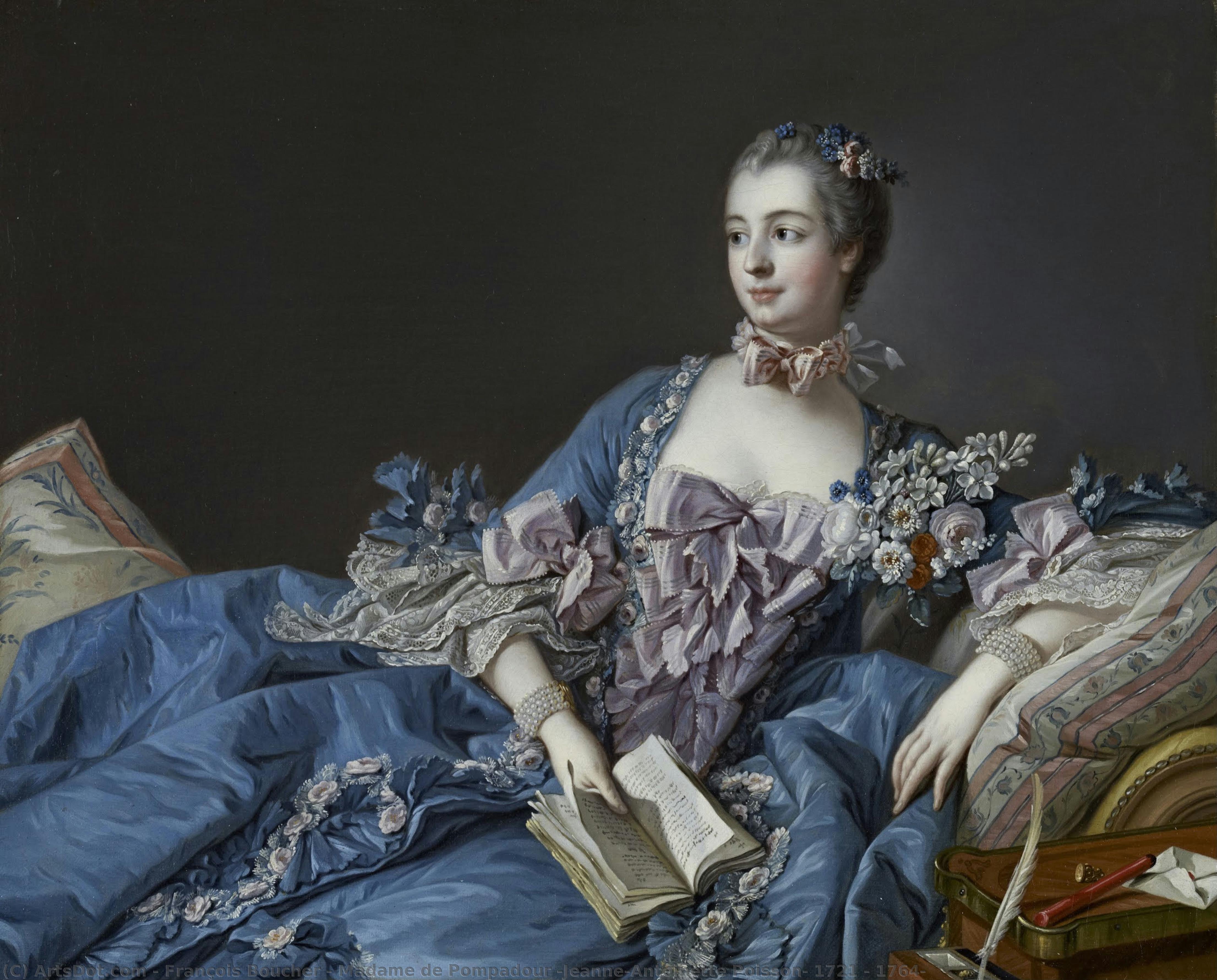
François Boucher's best-known piece is Diana getting out of her bath (1742). Next on the list are Bouguereau Song of the Angels and Madame de Pompadour (Jeanne-Antoinette Poisson, 1721 - 1764) (1758). We have 377 works by François Boucher in our catalogue; this guide picks out the 100 best known, with the year, the museum and the story of each piece.

1703 – 1770, Paris Rococo elegance Cele mai multe lucrări: Muzeul Ermitaj

The 10 François Boucher paintings to know first

1
Diana getting out of her bath (1742) de François Boucher

Diana getting out of her bath

1742 · Oil On Canvas

François Boucher created Diana getting out of her bath in 1742. The work centers on the Roman goddess Diana, portrayed in a state of nudity. She is situated within a dense forest setting, a natural environment that provides the backdrop for her emergence from the water.

2
Bouguereau Song of the Angels de François Boucher

Bouguereau Song of the Angels

Oil On Canvas

The air in this 18th-century French Rococo scene vibrates with an invisible melody. At the center, the quiet devotion of Mary and the infant Jesus anchors the composition. Around them, a choir of heavenly beings gathers to perform. One angel rests on the left, another occupies the middle, while two more flank the right side. They hold lyres, flutes, and strings, their movements precise and graceful. The music of the…

3
Madame de Pompadour (Jeanne-Antoinette Poisson, 1721 - 1764) (1758) de François Boucher

Madame de Pompadour (Jeanne-Antoinette Poisson, 1721 - 1764)

1758 · Oil On Canvas · Scottish National Gallery, Edinburgh

To gaze upon this portrait of Madame de Pompadour is to step directly into the gilded salons of 18th-century France, a world steeped in exquisite taste and whispered intrigue. Painted around 1758 by the master hand of François Boucher, this work transcends mere likeness; it captures an ephemeral moment of cultivated grace. The subject, Jeanne-Antoinette Poisson, is presented not just as a woman of high standing, but as an embodiment…

4
Madame Bergeret (1766) de François Boucher

Madame Bergeret

1766 · Oil On Canvas · National Gallery of Art, Washington

François Boucher’s “Madame Bergeret,” completed in 1766, stands as a quintessential exemplar of Rococo artistry—a style synonymous with aristocratic refinement and sensual beauty. More than just a depiction of a woman, it's an immersive experience into the opulent aesthetic sensibilities of Louis XV’s court, capturing not merely likeness but also an idealized vision of feminine grace.

5
The Interrupted Sleep (1750) de François Boucher

The Interrupted Sleep

1750 · Ulei pe pânză · Metropolitan Museum of Art, New York

In the heart of the French Rococo era, few works capture the ephemeral magic of a summer afternoon as tenderly as François Boucher’s The Interrupted Sleep. Created in 1750, this masterpiece serves as a window into an idealized world where the rigors of reality are replaced by a soft, melodic dreamscape. The painting invites the viewer to step into a lush, sun-drenched woodland, where the boundaries between music, nature, and…

6
The Setting of the Sun de François Boucher

The Setting of the Sun

Oil On Canvas

In the luminous realm of 18th-century French artistry, few works capture the ephemeral magic of twilight as profoundly as François Boucher’s The Setting of the Sun. This masterpiece serves as a breathtaking window into the Rococo era, an age defined by its pursuit of elegance, pleasure, and a certain dreamlike sensuality. As the sun descends, the canvas erupts into a dramatic and opulent spectacle, where the boundaries between the earthly…

7
Pastoral Scene (1745) de François Boucher

Pastoral Scene

François Boucher’s “Pastoral Scene,” painted in 1745, isn't merely a depiction of a rural landscape; it’s a carefully constructed invitation into an idealized world—a sanctuary of innocence and leisure nestled within the heart of France. The painting immediately draws the viewer in with its soft palette of browns, beiges, and muted greens, evoking a sense of gentle warmth and timeless serenity. Two young figures – a boy and girl –…

8
Venus at Vulcan (1769) de François Boucher

Venus at Vulcan

1769 · Oil On Canvas · Kimbell Art Museum, Fort Worth

François Boucher’s “Venus at Vulcan’s Forge,” painted in 1769, isn't merely a depiction of mythological figures; it’s a vibrant embodiment of reconciliation and the potent dance between opposing forces. Rooted firmly within the opulent Rococo style that defined late 18th-century France, the painting transports us to a dramatic tableau inspired by Virgil’s *Aeneid*. Here, Venus, goddess of love and beauty, and Vulcan, god of fire and craftsmanship, find themselves caught…

9
The Toilette (1742) de François Boucher

The Toilette

1742 · Oil On Canvas · Muzeul Thyssen-Bornemisza, Madrid

In the soft, luminous atmosphere of François Boucher’s 1742 masterpiece, La Toilette, we are invited to step into a world of refined grace and quiet domesticity. This exquisite oil on canvas serves as a quintessential window into the Rococo era—a period defined by its celebration of pleasure, light, and the delicate nuances of everyday life. The scene unfolds within a richly appointed room, where the warmth of a fireplace anchors…

10
Boreas Abducting Oreithyia (1769) de François Boucher

Boreas Abducting Oreithyia

1769 · Oil On Canvas · Kimbell Art Museum, Fort Worth

François Boucher’s “Boreas Abducting Oreithyia,” completed in 1769, is a captivating distillation of classical mythology rendered with the characteristic exuberance and sensual grace that defined the Rococo style. This painting, measuring an impressive 273 x 205 cm, transports us to a moment of violent disruption – a dramatic retelling of Ovid’s tale from the *Metamorphoses*, where the icy North Wind god, Boreas, forcibly claims the Athenian princess Oreithyia.

Numbers 11 to 100: more François Boucher paintings

11Juno Asking Aeolus to Release the Winds (1769) de François BoucherJuno Asking Aeolus to Release the Winds1769 · Kimbell Art Museum 12Study for The Bath of Venus (1751) de François BoucherStudy for The Bath of Venus1751 · Muzeul Ermitaj 13Painter in his Studio de François BoucherPainter in his StudioMuzeul Luvru 14The Setting of the Sun (1752) de François BoucherThe Setting of the Sun1752 · Wallace Collection 15Young Woman Sleeping (1760) de François BoucherYoung Woman Sleeping1760 · Muzeul Ermitaj 16The Forest (1740) de François BoucherThe Forest1740 · Muzeul Luvru 17Vertumnus and Pomona de François BoucherVertumnus and PomonaColecțiile Statale de Pictură din Bavaria 18Madame de Pompadour (1754) de François BoucherMadame de Pompadour1754 · National Gallery of Victoria 19Mill at Charenton (1758) de François BoucherMill at Charenton1758 · Muzeul de Artă din Toledo 20Madame de Pompadour (1758) de François BoucherMadame de Pompadour1758 · Victoria and Albert Museum 21Young Country Girl Dancing (1770) de François BoucherYoung Country Girl Dancing1770 · Art Gallery of Ontario 22Blond Odalisque (L'Odalisque Blonde) (1752) de François BoucherBlond Odalisque (L'Odalisque Blonde)1752 · Alte Pinakothek 23The Mill (1751) de François BoucherThe Mill1751 · Muzeul Luvru 24The Afternoon Meal (1739) de François BoucherThe Afternoon Meal1739 · Muzeul Luvru 25Imaginary Landscape with the Palatine Hill from Campo Vaccino (1730) de François BoucherImaginary Landscape with the Palatine Hill from Campo Vaccino1730 · Metropolitan Museum of Art 26Pastorale (1760) de François BoucherPastorale1760 · Staatliche Kunsthalle Karlsruhe 27Vertumnus and Pomona (1757) de François BoucherVertumnus and Pomona1757 · Fine Arts Museums of San Francisco 28Death of Meleager (1727) de François BoucherDeath of Meleager1727 · Los Angeles County Museum of Art 29Venus in the Workshop of Vulcan (1757) de François BoucherVenus in the Workshop of Vulcan1757 · Yale University Art Gallery 30Standing Nude Girl de François BoucherStanding Nude GirlAlbertina 31Arcadian Nymphs Making Music (1770) de François BoucherArcadian Nymphs Making Music1770 · Victoria and Albert Museum 32Triumph of Venus de François BoucherTriumph of VenusMuzeul Ermitaj 33Landscape with a Pond (1746) de François BoucherLandscape with a Pond1746 · Muzeul Ermitaj 34Washerwomen (1768) de François BoucherWasherwomen1768 · Metropolitan Museum of Art 35The Billet-Doux de François BoucherThe Billet-Doux 36Venus and Mercury Instructing Cupid (1738) de François BoucherVenus and Mercury Instructing Cupid1738 · Los Angeles County Museum of Art 37Monument to Mignard (1735) de François BoucherMonument to Mignard1735 · Los Angeles County Museum of Art 38Venus Demanding Arms from Vulcan for Aeneas (1732) de François BoucherVenus Demanding Arms from Vulcan for Aeneas1732 · Muzeul Luvru 39Young Girl and Eros (1750) de François BoucherYoung Girl and Eros1750 · Detroit Institute of Arts 40The Rising of the Sun (1750) de François BoucherThe Rising of the Sun1750 · Muzeul Plantin-Moretus 41Hercules and Omphale (1735) de François BoucherHercules and Omphale1735 · Muzeul de Artă Fine Pushkin 42Project for a Cartouche: An Allegory of Minerva, Fame, History and Faith Overcoming Ignorance and Time (1727) de François BoucherProject for a Cartouche: An Allegory of Minerva, Fame, History and Faith Overcoming Ignorance and Time1727 · Los Angeles County Museum of Art 43A young lady holding a pug dog (1745) de François BoucherA young lady holding a pug dog1745 · Art Gallery of New South Wales 44Saint John the Baptist (1755) de François BoucherSaint John the Baptist1755 · Minneapolis Institute of Art 45Bathing Nymph (1747) de François BoucherBathing Nymph1747 · Art Institute of Chicago 46River Landscape with an Antique Temple (1762) de François BoucherRiver Landscape with an Antique Temple1762 · Muzeul Thyssen-Bornemisza 47The Modiste (1746) de François BoucherThe Modiste1746 · Wallace Collection 48Head of a Young Girl (1750) de François BoucherHead of a Young Girl1750 · Muzeul Ermitaj 49The Beautiful Country Woman (1732) de François BoucherThe Beautiful Country Woman1732 · Muzeul Norton Simon 50The Distorted Child (1742) de François BoucherThe Distorted Child1742 · Staatliche Kunsthalle Karlsruhe 51Breakfast de François BoucherBreakfast 52Diana and Callisto (1760) de François BoucherDiana and Callisto1760 · Slovak National Gallery 53Cupids. Allegory of Painting (1760) de François BoucherCupids. Allegory of Painting1760 · Muzeul Ermitaj 54Pastoral (1730) de François BoucherPastoral1730 · Walters Art Museum 55A Pastoral Scene ('La Jardiniere Endormie') (1762) de François BoucherA Pastoral Scene ('La Jardiniere Endormie')1762 · Scottish National Gallery 56Virgin and Child with the Young Saint John the Baptist and Angels (1765) de François BoucherVirgin and Child with the Young Saint John the Baptist and Angels1765 · Metropolitan Museum of Art 57The Cherry Gatherers (1768) de François BoucherThe Cherry Gatherers1768 · Kenwood House 58A Pastoral Scene ('L'Offrande a la Villageoise') (1761) de François BoucherA Pastoral Scene ('L'Offrande a la Villageoise')1761 · Scottish National Gallery 59Allegory of Autumn (1753) de François BoucherAllegory of Autumn1753 · Metropolitan Museum of Art 60The Education of Cupid (1742) de François BoucherThe Education of Cupid1742 · Palatul Charlottenburg 61The Birth of Venus (1740) de François BoucherThe Birth of Venus1740 · Nationalmuseum 62The Judgement of Susannah (1720) de François BoucherThe Judgement of Susannah1720 · National Gallery of Canada 63The Sleep of Loves (1725) de François BoucherThe Sleep of Loves1725 64Rebecca Receiving from the Hands of Eliezer the Gifts of Abraham (1728) de François BoucherRebecca Receiving from the Hands of Eliezer the Gifts of Abraham1728 65The Sacrifice of Gideon (1728) de François BoucherThe Sacrifice of Gideon1728 66Rest at the Fountain (1730) de François BoucherRest at the Fountain1730 · Colecțiile Statale de Pictură din Bavaria 67The Hunting Breakfast, Sketch. (1733) de François BoucherThe Hunting Breakfast, Sketch.1733 68"La Fontaine", Rococo Scene at the Fountain (1728) de François Boucher"La Fontaine", Rococo Scene at the Fountain1728 69Rebecca receives Abraham's gifts from Eliezer (1725) de François BoucherRebecca receives Abraham's gifts from Eliezer1725 · Musée des Beaux-Arts de Strasbourg 70Mercury Confiding the Infant Bacchus to the Nymphs (1733) de François BoucherMercury Confiding the Infant Bacchus to the Nymphs1733 · Wallace Collection 71Bacchus and Erigone (1745) de François BoucherBacchus and Erigone1745 · Wallace Collection 72Bird-Catching Cherubs (1732) de François BoucherBird-Catching Cherubs1732 · Rhode Island School of Design Museum of Art 73Head of a Young Woman (1732) de François BoucherHead of a Young Woman1732 · Cleveland Museum of Art 74'La vie champêtre' (1728) de François Boucher'La vie champêtre'1728 · Belton House 75La Femme au Chat: Les caresses dangereuses (1731) de François BoucherLa Femme au Chat: Les caresses dangereuses1731 · Fine Arts Museums of San Francisco 76The Bird Catchers (1748) de François BoucherThe Bird Catchers1748 · J. Paul Getty Museum 77Putti with Birds (1730) de François BoucherPutti with Birds1730 · Honolulu Museum of Art 78sleeping Amor (1728) de François Bouchersleeping Amor1728 79boy playing with a dog (1728) de François Boucherboy playing with a dog1728 · Musée d'Art et d'Histoire de Cholet Native Name 80Allegory of Autumn: Putti Playing with a Goat (1730) de François BoucherAllegory of Autumn: Putti Playing with a Goat1730 81Five Naked Children Playing by a Rocky Pool (1732) de François BoucherFive Naked Children Playing by a Rocky Pool1732 · National Trust 82The Forges of Vulcan (1737) de François BoucherThe Forges of Vulcan1737 83Pastoral Subject. The Sleeping Shepherdess (1743) de François BoucherPastoral Subject. The Sleeping Shepherdess1743 · Palais Bourbon 84The Marriage of Cupid and Psyche (1744) de François BoucherThe Marriage of Cupid and Psyche1744 · Musée des Beaux-Arts de Rouen 85Stable interior with amorous scene (1735) de François BoucherStable interior with amorous scene1735 · Musée Cognacq-Jay 86Air: Three Putti with Birds (1741) de François BoucherAir: Three Putti with Birds1741 · Victoria and Albert Museum 87The Egg Seller (1734) de François BoucherThe Egg Seller1734 · Wadsworth Atheneum 88Cupid and the Three Graces (1738) de François BoucherCupid and the Three Graces1738 · Calouste Gulbenkian Museum 89Cupids in Conspiracy (1740) de François BoucherCupids in Conspiracy1740 · Cleveland Museum of Art 90Music and Dance (1740) de François BoucherMusic and Dance1740 · Cleveland Museum of Art 91Mercury Entrusting the Infant Bacchus to the Nymphs of Nysa (1734) de François BoucherMercury Entrusting the Infant Bacchus to the Nymphs of Nysa1734 · Cincinnati Art Museum 92Rural idyll (1735) de François BoucherRural idyll1735 · Colecțiile Statale de Pictură din Bavaria 93The Nest, also known as the Berger Present (1737) de François BoucherThe Nest, also known as the Berger Present1737 94Young Lady with a Muff (1737) de François BoucherYoung Lady with a Muff1737 95Putti as Fisherman (1744) de François BoucherPutti as Fisherman1744 · Museum of Fine Arts 96Cupid Wounding Psyche (1741) de François BoucherCupid Wounding Psyche1741 · Los Angeles County Museum of Art 97Young Woman with Flowers in Her Hair (1734) de François BoucherYoung Woman with Flowers in Her Hair1734 · Muzeul de Artă Plastică din Boston 98The Rest of the Holy Family during the Flight into Egypt (1744) de François BoucherThe Rest of the Holy Family during the Flight into Egypt1744 · Statens Museum For Kunst 99Leopard hunt (1736) de François BoucherLeopard hunt1736 · Musée de Picardie 100Crocodile hunt (1739) de François BoucherCrocodile hunt1739 · Musée de Picardie

François Boucher's paintings, period by period

What François Boucher painted most

The four subjects that come up most often in these pieces, each with its best-known example.

Where you can see François Boucher's paintings

Cele 8 muzee care dețin cele mai multe dintre picturile de pe această pagină.

Muzeu Oraș Lucrări lui François Boucher Picturi din această listă
Muzeul Ermitaj, Sankt PetersburgMuzeul Ermitaj Sankt Petersburg 12 Study for The Bath of Venus, Young Woman Sleeping, Triumph of Venus
Metropolitan Museum of Art, New YorkMetropolitan Museum of Art New York 13 The Interrupted Sleep, Imaginary Landscape with the Palatine Hill from Campo Vaccino, Washerwomen
Muzeul Luvru, ParisMuzeul Luvru Paris 8 Painter in his Studio, The Forest, The Mill
Los Angeles County Museum of Art, Los AngelesLos Angeles County Museum of Art Los Angeles 6 Death of Meleager, Venus and Mercury Instructing Cupid, Monument to Mignard
Wallace Collection, LondraWallace Collection Londra 21 The Setting of the Sun, The Modiste, Mercury Confiding the Infant Bacchus to the Nymphs
Scottish National Gallery, EdinburghScottish National Gallery Edinburgh 5 Madame de Pompadour (Jeanne-Antoinette Poisson, 1721 - 1764), A Pastoral Scene ('La Jardiniere Endormie'), A Pastoral Scene ('L'Offrande a la Villageoise')
Cleveland Museum of Art, ClevelandCleveland Museum of Art Cleveland 5 Head of a Young Woman, Cupids in Conspiracy, Music and Dance
Kimbell Art Museum, Fort WorthKimbell Art Museum Fort Worth 4 Venus at Vulcan, Boreas Abducting Oreithyia, Juno Asking Aeolus to Release the Winds

Decade by decade: the best-known François Boucher piece of each

Lucrări pe deceniu

Pick a decade to see its standout piece.

François Boucher: quick answers about the paintings

What is François Boucher's best-known painting?See the answer

Top of the list is Diana getting out of her bath (1742). Right behind it: Bouguereau Song of the Angels and Madame de Pompadour (Jeanne-Antoinette Poisson, 1721 - 1764) (1758).

What age was François Boucher when creating Diana getting out of her bath?See the answer

39 years old. François Boucher was born in 1703, and Diana getting out of her bath dates from 1742.

What are François Boucher's top 10 paintings?See the answer

Diana getting out of her bath, Bouguereau Song of the Angels, Madame de Pompadour (Jeanne-Antoinette Poisson, 1721 - 1764), Madame Bergeret, The Interrupted Sleep, The Setting of the Sun, Pastoral Scene, Venus at Vulcan, The Toilette și Boreas Abducting Oreithyia. You'll find the year and the museum of each in the list above.

How many works by François Boucher are in your catalogue?See the answer

We have 377 works by François Boucher in our catalogue, dated 1720 to 1770.

In which museums can you see François Boucher's famous works?See the answer

You'll find most of them in Muzeul Ermitaj (Sankt Petersburg), Metropolitan Museum of Art (New York) și Muzeul Luvru (Paris). The museum list above has the full breakdown.

When did François Boucher make the most famous pieces?See the answer

In 1730s, more than any other time: 28 of the 100 pieces on this page date from then, The Afternoon Meal among them.

What are François Boucher's first and last famous pieces?See the answer

The earliest piece here is The Judgement of Susannah (1720); the most recent is Young Country Girl Dancing (1770).

Which subjects did François Boucher paint most often?See the answer

Woman (21), Trees (14) și Man (10), out of the 100 pieces on this page.

Which medium shows up most in François Boucher's paintings?See the answer

Oil On Canvas, used in 45 of the 100 pieces on this page.

What style or movement is François Boucher known for?See the answer

Rococo elegance, as you can see in the pieces on this page.

Which famous François Boucher paintings are at the Muzeul Ermitaj?See the answer

You can see 6 of the pieces on this page at the Muzeul Ermitaj, Sankt Petersburg, including Study for The Bath of Venus, Young Woman Sleeping și Triumph of Venus.

Where can I order a François Boucher reproduction?See the answer

Yes. Every painting on this page is available as a hand-painted oil reproduction or a print, in the size that suits you. Just open the painting's page to order.

François Boucher's story

Tinerețe și Formare Artistică

În agitația străzilor din Paris, Franța, povestea lui François Boucher a început pe 29 septembrie 1703. S-a născut într-o cămin în care artele vizuale erau deja un mod de viață, fiind fiul lui Nicolas Boucher, un om care își câștiga existența ca designer de dantelă. Această expunere timpurie la complexitatea modelelor și a designului a modelat, cel mai probabil, ochiul tânărului pentru detalii mult înainte ca acesta să atingă o pensulă de pânză. Tatăl său i-a oferit primele lecții, insuflându-i abilitățile fundamentale necesare pentru a naviga prin cercurile artistice competitive ale orașului.

Pe măsură ce tânărul creștea, talentul său a atras atenția celor deja consacrați în acest meșteșug. La vârsta de șaptesprezece ani, François Boucher a fost ucenit de François Lemoyne, un om de un statut semnificativ. Această perioadă de instruire a fost însă scurtă, deoarece drumul tânărului artist a luat o întorsătură bruscă după doar trei luni. El a trecut de la îndrumarea lui Lemoyne la munca sub îndrumarea gravorului Jean-François Cars, o tranziție care i-a permis să stăpânească precizia liniei și mecanica gravurii.

Ambiția și talentul s-au întâlnit curând într-un moment de mare triumf. În 1720, François Boucher a obținut o distincție ce avea să îi schimbe cursul vieții: a câștigat prestigiosul Grand Prix de Rome. Această victorie nu a fost o realizare minoră, marcându-l ca pe o forță în ascensiune printre egai, oferindu-i impulsul necesar pentru a trece dincolo de atelierele din Paris și pentru a pășește spre scenele mai grandioase ale artei europene.

Dezvoltarea Artistică și Influența Italiană

După obținerea prestigiosului Grand Prix de Rome, tânărul artist și-a îndreptat privirea spre Italia. A ajuns în Roma în 1728 pentru a studia la Academia Franceză, o perioadă care avea să îi modeleze fundamental sensibilitățile artistice. Idealele clasice pe care le-a întâlnit în lumina italiană și operele maeștrilor nu i-au oferit doar tehnici de pictură; ele i-au insuflat o nouă modalitate de a vedea lumea. S-a simțit atras de pinceta expresivă și de abordarea picturală, rustică, a maeștrilor baroci, o preferință care, în cele din urmă, l-ar fi distins de tradițiile academice mai rigide ale contemporanilor săi.

La întoarcerea sa în Franța, ascensiunea sa prin ierarhiile instituțiilor de artă a fost rapidă. A fost admis la Académie Royale de Peinture et de Sculpture în 1731, iar până în 1734, obținuse deja statutul de pictor istoric în cadrul Academiei. Această recunoaștere oficială a pus fundamentul unei cariere care urma să treacă, în scurt timp, de la studiul liniștit al formelor clasice la viața agitată și opulentă a curții franceze. Primele sale succese s-au clădit pe această călăreagă între o instruire riguroasă și lecțiile pline de viață și expresivitate învățate în anii petrecui în străinătate.

Patroni, Atelierul și Comenziile

Succesul în curtea franceză cerea adesea mai mult decât simplul talent; acesta necesita favoarea celor care dețineau cheile gustului regal. François Boucher a găsit un aliat atât de puternic în Madame de Pompadour, influentă amantes a regelui Ludovic al XV-lea. Legătura lor a fost profundă, ea devenind cea mai prominentă clientă a sa, comandând o varietate de lucrări care au ajutat la definirea limbajului vizual al erei sale. Prin sprijinul ei, reputația sa s-a transformat, evoluând de la cea a unui pictor priceput la cea a unei figuri centrale în însăși identitatea curții franceze.

Influența sa a permeat, în cele din urmă, chiar și instituțiile care guvernau arta franceză. În 1755, a fost numit Director al Fabricii Regale Gobelins, o poziție care i-a permis viziunii sale să se extindă în domeniul artelor decorative. De asemenea, și-a pus măiestria în serviciul atelierelor de la Beauvais, unde designurile sale erau transformate în opere textile de o frumusețe rară. Creativitatea sa nu era limitată la suprafața pânzei; el a explorat lumea teatrului, proiectând atât costumele, cât și decorurile care dădeau viață spectacolelor dramatice. Această versatilitate a asigurat faptul că estetica sa era simțită în fiecare colț al vieții aristocratice, de la pereții unui palat până pe scena unei piesă de teatru.

Apogeul recunoașterii sale oficiale a sosit în anul 1765, când a fost numit Premier Peintre du Roi. Acest titlu de Pictor Principal al Regelui a marcat ascensiunea sa la culmea profesiei sale. François Boucher devenise un om al cărui nume era sinonim cu întreaga epocă, un creator a cărui operă era râvnită de cele mai înalte puteri ale țării. Cariera sa a fost o ascensiune constantă prin ierarhiile Academiei, evoluând de la statutul de profesor la cel de rector, pentru a ajunge, în cele din urmă, în serviciul coroanei însăși.

Tehnică și Stilul Rococo

François Boucher a navigat prin universul artei cu o preferință pentru luminozitate și frumusețe, întorcând adesea spatele umbrelor grele ale trecutului. Mâna sa era ghidată de o pictură delicată, care privilegia culorile luminoase și o paletă pastelată și revigorantă. El a căutat să surprindă o senzație de plăcere și grație, utilizând adesea compoziții asimetrice pentru a crea o senzație de mișcare și naturalețe. Această abordare i-a permis să transforme chiar și cele mai serioase narațiuni mitologice în scene de pasiune și erotism intim, unde zeii păreau mai degrabă amanturi jucăuși decât divinități îndepărtate.

Există o anumită provocare în felul în care el privea lumea naturală. El a remarcat faimos că natura era "trop verte et mal éclairée"—prea verde și prost iluminată—sugerând că lumea brută, neîmprospătată, îi lipsea rafinamentul pe care el dorea să îl ofere. În loc de realitatea aspră a mediului exterior, a preferat să construiască un tărâm idealizat și idilic. În mâinile sale, peisajul devenea o scenă pentru recreere și frumusețe, un loc în care lumina părea să cadă întotdeauna perfect pentru a flata pielea subiectelor sale.

Abilitatea sa se extindea dincolo de pânză, până la însăși texturile subiectelor sale. Poseda o atenție meticuloasă la detalii, în special atunci când reda luciozimea materialelor fine sau finețea pielii umane. Această precizie tehnică l-a ajutat să definească limbajul vizual al Rococo-ului francez, creând o lume a luxului și a rafinamentului care reflecta gusturile curții. Opera sa nu era doar despre reprezentarea unei scene, ci despre crearea unei atmosfere de eleganță și de delectare sofisticată.

Lucrări Cheie și Capodopere

Pe măsură ce talentul său înflorea în sălile Academiei, François Boucher a căutat să își demonstreze valoarea prin marii narațiuni ale antichității. În 1734, el a prezentat Rinaldo și Armida ca pe morceau de réception, o operă care a semnalat ascensiunea sa printre maeștrii epocii. Această piesă i-a permis să demonstreze o stăpânire deplină a dramei mitologice, pregătind terenul pentru o carieră definită de căutarea grației și de reprezentarea frumuseții idealizate.

Pă তুল său a găsit cele mai frecvente subiecte în domeniul divin și al senzualității. În jurul anului 1740, el a finalizat Nașterea lui Venus, o pânză care surprinde zeița emerjând din spuma mării. Această fascinație pentru feminin și pentru mitologie a continuat în anii 1750. În 1751, a realizat Toaleta lui Venus și Venus, consolând Amorul, lucrări care puneau accent pe texturile moi ale pielii și pe natura jucăușă și intimă a compozițiilor sale. Aceste picturi reflectau o lume în care chiar și zeii trăiau într-o stare de relaxare rafinată.

Dincolo de mituri, mâna lui François Boucher a fost frecvent solicitată pentru a surprinde chipurile celor care dețineau frâiele influenței franceze. Portretul Marquise de Pompadour din 1756 rămâne o înregistrare semnificativă a celei mai importante patrone a sa. Prin astfel de portrete, el a tradus eleganța curții într-un limbaj vizual al nuanțelor pastelate și al unei poised sofisticate.

  • Rinaldo și Armida (1734)
  • Nașterea lui Venus (aprox. 1740)
  • Toaleta lui Venus (1751)
  • Venus, consolând Amorul (1751)
  • Portretul Marquise de Pompadour (1756)

Unde pot fi admirate lucrările astăzi

Pentru a fi martori ai moștenirii acestui pictor, este nevoie de o călătorie prin numeroase țări, deoarece măiestria sa a depășit cu mult granițele Franței. În Paris, Muzeul Luvru adăpostește mai multe dintre pânzele sale, păstrând vie esența vieții de curte pe care a rederut-o cu atâta grijă. Într-un alt colț al lumii, cei care caută amprenta sa în America vor descoperi o parte semnificativă din opera sa la Metropolitan Museum of Art din New York, unde scenele sale de relaxare și cele mitologice rămân expuse publicului. Prezența sa se simte în numeroase săli de expoziție, arta sa fiind râvnită de mulți care au prețuit eleganța deosebită a pensulei sale.

Răspândirea talentului său se întinde până în marile colecții din Est și din Vest. La Sankt Petersburg, Muzeul Ermitaj găzduiește operele sale, menținând vie viziunea sa pentru cei care se pierd printre galeriile sale vaste. Între timp, în Fort Worth, Kimbell Art Museum păstrează lucrări care permit privitorilor moderni să întâlnească paletele cromatice delicate și temele mitologice ce i-au definit cariera. Picturile sale rezidă în aceste sanctuare diverse, așteptând ca un ochi curios să le descopere.

Toate cele 377 de lucrări ale lui François Boucher →