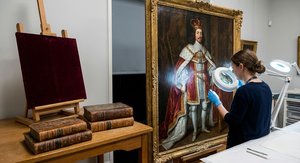
Sylvanus Redgate: A Chronicle of Ilkeston and Beyond
Sylvanus Redgate (1827-1907) wasn’t a name etched into the grand halls of European art academies, yet his canvases hold a remarkable resonance, particularly for those familiar with the industrial heartland of Nottinghamshire. Born in Ilkeston, a town rapidly transforming under the pressures of the Industrial Revolution, Redgate's life and artistic journey were inextricably linked to this burgeoning community – a connection that profoundly shaped his subject matter and distinctive style. His work offers a poignant glimpse into Victorian England, capturing not just portraits but also the spirit of a region undergoing dramatic change.
Redgate’s early life remains somewhat shrouded in mystery, though it's known he received some formal training in London before returning to Ilkeston around 1850. This return marked a pivotal shift; he established himself as a local artist, quickly gaining recognition for his ability to portray the people and landscapes of his surroundings with remarkable accuracy and sensitivity. Unlike many artists of the era who sought fame in the capital, Redgate found his niche documenting the lives of Ilkeston’s inhabitants – miners, mill workers, shopkeepers, and members of the local gentry. His portraits weren't idealized representations; they were honest depictions of individuals, capturing their character and bearing with a keen observational eye.
The Palette of Industry: Redgate’s Subject Matter
Redgate’s artistic focus was remarkably consistent throughout his career. He primarily painted portraits – often commissioned by local businesses, families, or the Ilkeston Local Board – but he also produced an impressive body of landscape work. However, it's the portraits that truly define his legacy. His subjects weren’t merely rendered; they were imbued with a sense of humanity and dignity. He frequently depicted miners, their faces etched with the hardships of their profession, alongside mill workers, their hands calloused from labor. These weren’t romanticized images of toil; Redgate presented them with unflinching realism, acknowledging both the dignity and the struggles inherent in their lives.
His landscapes, too, reflected the changing environment of Ilkeston. He captured the burgeoning industrial scene – factories billowing smoke into the sky, canals winding through the town, and the surrounding countryside gradually being transformed by urbanization. There’s a subtle melancholy to many of these scenes, a sense of loss for the rural past juxtaposed with the relentless march of progress. The use of muted colors and atmospheric perspective contributes significantly to this feeling – he wasn't interested in vibrant spectacle but rather in conveying mood and atmosphere.
Technique and Style: A Realist’s Approach
Redgate’s artistic style can be characterized as a refined form of realism. He was meticulous in his observation, paying close attention to detail – the texture of clothing, the wrinkles on faces, the nuances of expression. His brushwork is generally smooth and controlled, creating a sense of solidity and presence within the portraits. He employed a technique reminiscent of Dutch masters, particularly in his use of light and shadow to sculpt form and create depth. Unlike some contemporary artists who embraced Impressionism’s fleeting effects, Redgate prioritized clarity and accuracy, aiming for a direct representation of his subjects.
His portraiture is notable for its psychological insight. He didn't simply record physical likenesses; he sought to capture the inner lives of his sitters. A careful study of his portraits reveals a remarkable ability to convey personality – a quiet dignity, a subtle sadness, or an underlying strength. This depth of characterization elevates his work beyond mere documentation and establishes it as genuine artistic achievement.
Notable Works and Legacy
Several of Redgate’s works have achieved considerable recognition. The portrait of William Sudbury, the last chairman of the Ilkeston Local Board, is a particularly striking example of his ability to capture authority and gravitas. His depiction of Henry Dawson, a prominent local figure, showcases his skill in portraying character through subtle details. And, of course, there’s the iconic image of James Grundy, a miner whose portrait became a symbol of Ilkeston's working class.
Despite not achieving widespread fame during his lifetime, Sylvanus Redgate’s legacy has been steadily growing in recent decades. His work is now recognized as an important document of Victorian England and a testament to the lives of ordinary people. His paintings are held in public collections across the UK, and his portraits continue to resonate with viewers today, offering a poignant reminder of a bygone era and the enduring spirit of Ilkeston.
Redgate’s Influence: A Local Voice
Redgate's significance lies not just in his technical skill but also in his commitment to portraying the lives of those often overlooked by mainstream art. He served as a visual chronicler of his community, preserving a record of its people and places for posterity. His work has inspired subsequent generations of artists to explore local themes and to give voice to marginalized communities. Redgate’s legacy is a powerful reminder that great art can emerge from unexpected sources – in this case, the industrial heartland of Nottinghamshire.