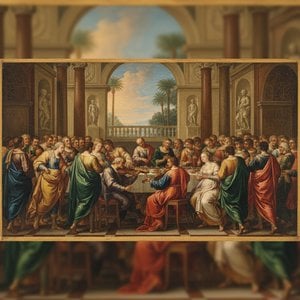
Alessandro Varotari (Padovanino) – Viață și Moștenire
Povestea artistică a lui Alessandro Varotari, cunoscut sub pseudonimul de Padovanino, începe în inima Italiei, la Padova, în anul 1588. Într-o epocă în care talentul era adesea o moștenire de familie, Padovanino a fost modelat de prezența tatălui său, Dario Varotari cel Mai Tânăr, un pictor și arhitect local care i-a oferit primele lecții de bază. Însă, dincolo de instruirea familială, destinul său artistic a fost profund marcat de influența magistrală a lui Titian, un stil care ar fi rămas pilonul central al întregii sale creații, oferindu-i acea sensibilitate vizuală unică ce l-ar fi definit pe parcursul carierei.
Tranziția către maturitate artistică a avut loc odată cu mutarea sa la Veneția în 1614, un oraș care i-a oferit scena perfectă pentru a se impune ca un pictor de excepție. Perioada sa de activitate reprezintă o punte estetică fascinantă, situată la intersecția dintre Manierismul tardiv și Barocul incipient. Această dualitate îi permitea să îmbine elementele stilisticii complexe cu o nouă viziune dramatică, o capacitate demonstrată chiar și în călătoriile sale la Roma, unde a câștigat recunoaștere pentru abilitatea sa extraordinară de a crea copii de o calitate remarcabilă ale cap-operelor maeștrilor Renașcinței.
Pășele sale artistice sunt caracterizate printr-o forță narativă tulburătoare și o senzualitate care captează privirea. Padovanino a demonstrat o măiestrie deosebită în evocarea scenelor mitologice și istorice, transformând pânzele în ferestre către lumi pline de dramă. Printre cele mai memorabile lucrări ale sale se numără compoziții precum „Samson și Delilah”, „Orfeu încântând animalele” sau „Venus dormind cu Cupiți”, lucrări care reflectă atât rigoarea tehnică, cât și capacitatea sa de a transmite emoție pură. Importanța sa a fost recunoscută chiar și în proiectele de prestigiu, cum ar fi contribuția la mozaicurile Bazilicii San Marco din Veneția și decorarea Cുംvintului Santa Maria Maggiore.
Moștenirea sa nu se limitează doar la obiectele de artă create, ci și la impactul său asupra generațiilor viitoare de pictori venețieni. În calitate de mentor respectat, el a ghidat talente precum Pietro Liberi și Giulio Carpioni, contribuind la evoluția școlii de pictură din Veneția. Chiar dacă a fost adesea lăudat pentru abilitatea sa de a copia maeștrii, compozițiile sale originale și capacitatea de a adapta tradițiile clasice la noile gusturi ale secolului al XVII-lea îi asigură un loc permanent în istoria artei. Prin dedicarea sa față de stilul titianesc, Alessandro Varotari a ajutat la conservarea și răspândirea moștenirii unuia dintre cei mai mari maeștri italieni, rămânând o figură esențială în transformarea estetică a epocii sale.
Tinerețea și Formarea Artistică
Povestea artistică a lui Alessandro Varotari începe în inima Italiei, fiind născut în anul 1588 în orașul Padua. Într-un mediu unde arta era respirația cotidiană, Padovanino a crescut într-o familie de artiști, fiind destinat de la început să pășească pe acest drum sublim. Tatăl său, Dario Varotari cel Mai Tânăr, un pictor și arhitect local respectat, i-a oferit primele lecții de bază, modelându-i sensibilitatea estetică încă din primii ani de viață. Printre influențele sale formative, stilul maestru al lui Titian a ocupat un loc central, devenind o ancoră estetică ce i-ar guverna întreaga abordare artistică pe parcursul unei cariere pline de virtuozitate.
Evoluția Carierei și Stilul Artistic
În anul 1614, Padovanino a făcut pasul decisiv către Veneția, un oraș care i-a oferit scena perfectă pentru a se impune rapid ca un pictor de o măiestrie remarcabilă.
Perioada sa artistică a fost una de o complexitate fascinantă, situându-se exact la granița dintre Manierismul tardiv și Barocul incipient, reușind să îmbine armonios elemente din ambele stiluri într-o estetică unitară.
Călătoriile sale la Roma, efectuate în două etape distincte — la mijlocul anilor 1610 și în 1625 — i-au oferit o perspectivă vastă, aducându-și recunoaște pentru capacitatea excepțională de a crea copii de o calitate înaltă ale cap-operelor unor maeștri ai Renașanței.
Caracteristicile sale cheie rezidă în forța narativă a picturilor sale, într-o senzualitate captivantă și într-o respectare devotată a tradiției titianesque. Alessandro Varotari a demonstrat o măiestrie deosebită în evocarea scenelor mitologice și a celor istorice, transformând fiecare compoziție într-o poveste vizuală plină de viață.
Lucrări Majore și Comenzi
Cunoscutele sale capodopere includ compoziții pline de dramă și eleganță, precum „Samson și Delilah”, „Orfeu încântând animalele”, „Venus dormind cu putti”, „Cele Trei Grații” și „Semiramis chemând la arme”. Talentele sale nu s-au limitat doar la pictura pe pânză, artistul contribuind la bogăția vizuală a Veneției prin realizarea unor mozaicuri pentru Basilica San Marco în anul 1619. În plus, Alessandro Varotari a fost implicat în proiecte decorative de o importanță spirituală și estetică remarcabilă pentru Biserica Santa Maria Maggiore. Un exemplu magistral al capacității sale de a gestiona compoziții complexe și de a transmite o narativă dramatică este scena de luptă de amploare „Victoria Carnuților asupra Normandilor”, o operă care demonstrează măiestria sa în a surprinde intensitatea momentului istoric.
Influență și Moștenire
Moștenirea artistică a lui Alessandro Varotari nu se limitează doar la paginile istoriei artei, ci se extinde prin influența sa profundă asupra generațiilor de pictori care au urmat. În calitate de mentor respectat, Padovanino a modelat talentul unor pictori venețieni de primă cetate, oferind îndrumări esențiale unor nume precum Pietro Liberi, Bartolomeo Scaliger, Pietro della Vecchia și Giulio Carpioni. Această capacitate de a transmite cunoștințe a transformat studioul său într-un adevărat nucleu de creație artistică în Veneția.
Dincolo de succesul propriu, renunțația familiei Varotari a fost consolidată de talentul surorii sale, Chiara Varotari, o portretistă de mare renume, a cărei prezență în mediul artistic a întărit prestigioul acestei dinastii de creatori. Totodată, impactul său educațional a fost marcant chiar și în cercurile intelectuale, avându-și printre studenți figuri notabile precum Caterina Tarabotti, o intelectuală remarcabilă a epocii.
Deși a fost adesea lăudat pentru abilitatea sa extraordinară de a recrea capodopere ale maeștrilor Renașanței, adevărata mărturie a geniului său rezidă în compozițiile sale originale. Prin această fuziune între respectul pentru tradiție și viziunea proprie, Padovanino își asigură un loc permanent în istoria artei, fiind un pod vital între estetica trecutului și evoluția stilurilor viitoare.
Semnificația Istorică
Alessandro Varotari reprezintă o punte esențială între perioada Manierismului și cea a Barocului, reușind să adapteze tradițiile artistice anterioare la gusturile în continuă evoluție ale epocii. Opera sa reflectă climatul cultural vibrant al Veneției secolului al XVII-lea, un centru major pentru artă și comerț, capturând esența unei perioade de transformare profundă. Prin devotamentul său față de stilul lui Titian, artistul a contribuit esențial la Păstrarea Tradiției, ajutând la conservarea și răspândirea moștenirii unuia dintre cei mai mari maeștri ai Italiei.
Întrebări și răspunsuri
Unde pot vedea profilul cromatic al lucrărilor lui Alessandro Varotari?
Modul în care Alessandro Varotari utilizează culoarea în lucrările enumerate pe acest site web poate fi explorat pe pagina Genoma Paletei a artistului.
Unde și când s-a născut Alessandro Varotari?
Alessandro Varotari s-a născut în Padova, în anul 1588.
Cum pot găsi lucrările lui Alessandro Varotari dintr-o anumită paletă de culori?
Pentru a găsi lucrări de Alessandro Varotari dintr-o anumită paletă de culori, accesați pagina După paletă de culori a artistului.