Early Life and Career
Maurice de Vlaminck, born April 4th, 1876, in the heart of Paris, France, possessed an artistic spirit nurtured from a young age by parents deeply rooted in music – his father, a violinist, instilled discipline and precision, while his mother, hailing from Lorraine, cultivated musical sensitivity. This formative influence would profoundly shape his approach to art, fostering an instinctive connection between emotion and visual expression. He embarked on his artistic journey relatively late in life, around the age of twenty, initially pursuing self-education before honing his skills with unwavering dedication.The Fauvist Movement and Artistic Style
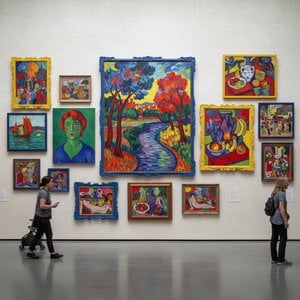
Vlaminck stands as a cornerstone of the Fauvist movement (1904-1908), a revolutionary artistic endeavor that irrevocably altered the landscape of early 20th-century painting. Alongside luminaries like André Derain and Henri Matisse, he formed an avant-garde collective determined to dismantle established conventions and champion a radically new aesthetic vision. The Fauvist style is characterized by its audacious embrace of color—a deliberate departure from naturalistic representation—serving as a conduit for raw emotion rather than objective observation. Thick, visible brushstrokes dominate his canvases, conveying dynamism and spontaneity with palpable energy. Furthermore, Vlaminck simplified forms, prioritizing expressive power over meticulous detail, reducing landscapes and objects to their essential essence. Notable early masterpieces include “Sur le zinc” (At the Bar), a poignant depiction of urban life bathed in vibrant hues, and “L’homme à la pipe,” capturing a solitary figure enveloped in smoky atmosphere with remarkable immediacy.Influences and Artistic Development
Impressionism served as an initial catalyst for Vlaminck's artistic explorations, imparting techniques focused on capturing fleeting moments and the transformative effects of light—a legacy that resonates throughout his oeuvre. However, Vincent van Gogh exerted a particularly profound influence, sparking admiration after witnessing a retrospective exhibition. This fascination materialized in Vlaminck’s stylistic choices: mirroring Van Gogh’s expressive brushwork and conveying an intense emotional core. Cézanne's exploration of geometric forms and tonal harmonies subsequently steered Vlaminck towards a palette characterized by subdued monochromatic tones from 1908 onwards, marking a pivotal shift in his artistic trajectory.Major Achievements and Historical Significance
Vlaminck’s participation in the Salon d’automne exhibitions – notably in 1905 – solidified Fauvism's position as a vanguard movement within modern art. His canvases became emblems of rebellion against academic traditions, embodying an uncompromising commitment to artistic innovation. Today, Vlaminck’s paintings are revered for their visceral energy and emotional depth—a testament to his unwavering dedication to capturing the essence of human experience through color and form. He bridged the divide between Impressionism and Expressionism, propelling artistic discourse toward uncharted territories and securing his place as a pivotal figure in art history.Legacy and Available Works
Vlaminck’s legacy extends far beyond the confines of the easel; his works reside in prestigious museums across continents—a testament to their enduring appeal and artistic merit. Pieces like “Bougival” and “The Bridge at Chatou” continue to captivate audiences with their luminous colors and evocative compositions. ArtsDot proudly presents a curated selection of Vlaminck’s masterpieces, offering enthusiasts the opportunity to immerse themselves in the brilliance of his Fauvist vision—a timeless celebration of artistic passion and innovation.Întrebări și răspunsuri
Pot explora operele lui Maurice de Vlaminck în funcție de spectrul de culori?
Pagina Indice Spectral organizează operele lui Maurice de Vlaminck în funcție de culoare.
Pot studia utilizarea culorii de către Maurice de Vlaminck în toate lucrările sale?
Modul în care Maurice de Vlaminck utilizează culoarea în lucrările enumerate pe acest site web poate fi explorat pe pagina Genoma Paletei a artistului.
Unde pot vizualiza operele lui Maurice de Vlaminck într-o galerie 3D?
Operele de artă ale lui Maurice de Vlaminck pot fi vizualizate într-o galerie 3D, pe pagina Galerie 3D a artistului.