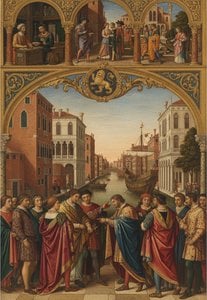
Gerard David: Un maestru al portretului flamând timpuriu
Gerard David, născut în jurul anului 1460 la Oudewater, în Ținuturile de Jos, și decedat tragic la Bruges în jurul anului 1523, reprezintă o figură esențială în lumea înfloritoare a picturii flamânde timpurii. Deși este adesea eclipsat de contemporanii săi mai flamboyant, precum Jan van Eyck sau Rogier van der Weyden, realismul meticulos al lui David, profunzimea sa psihologică și utilizarea inovatoare a culorii l-au consacrat în liniște ca unul dintre cei mai importanți artiști ai erei sale. Cariera sa s-a desfășurat în principal în centrul comercial vibrant al orașului Bruges, un oraș renumit pentru comerțul prosper de artă și atmosfera sa cosmopolită – un cadru care i-a modelat profund viziunea artistică. Moștenirea lui David nu este definită de narațiuni grandioase și de amploare, ci mai degrabă de o capacitate extraordinară de a surprinde esența experienței umane în portrete și altare remarcabil de detaliate și subtil de expresive.Primii ani și formarea artistică
Informațiile referitoare la anii formativi ai lui David rămân parțial elusive, ascunse în lacunele tipice ale înregistrărilor istorice pentru artiștii vremii sale. Totuși, este acceptat în general că și-a petrecut începutul maturității la Bruges, consacrându-se rapid ca membru respectat al breaslei de pictori a orașului până în 1494. Un aspect crucial este faptul că David a fost ucenic al renumitului maestru Antonello da Messina, care venise recent la Bruges și adusese cu sine o influență distinct de tip venețian – o paletă vibrantă și o abordare mai liberă și mai expresivă a formei. Această expunere s-a dovedit transformatoare, injectând un dinamism în opera lui David care l-a distins de convențiile stilistice predominante de atunci. De asemenea, a beneficiat enorm de la îndrumarea lui Hugo van der Goes, al cărui emoționalism puternic și compoziții dramatice au lăsat, fără îndoială, o urmă indelibilă asupra dezvoltării sale artistice. Influența lui Jan van Eyck este, de asemenea, evidentă în atenția sa meticuloasă la detalii și în măiestria utilizării vopselei cu ulei, deși David a dezvoltat, în cele din urmă, un stil mai reținut și psihologic nuanțativ.Opere cheie și stil artistic
Opera lui David este caracterizată printr-un nivel extraordinar de realism, realizat prin observație minuțioasă și o înțelegere fără precedent a anatomiei și expresiei umane. Spre deosebire de reprezentările adesea idealizate preferate de unii dintre contemporanii săi, David și-a pictat subiectele cu o onestitate remarcabilă, surprinzându-le personalitățile individuale și stările emoționale cu o grație subtilă. Portretele sale sunt deosebit de remarcabile pentru profunzimea lor psihologică; el nu se limitează doar la a înregistra asemănări, ci încearcă să transmită viața interioară a celor pictați. Portretul Ducului de Urbino (circa 1465-1466) exemplifică această abordare, dezvăluind un joc complex între putere și vulnerabilitate în privirea subiectului. Dincolo de portrete, David a excelat în realizarea altarelor, în special în Poliptichul Misericordia (1460-1462), care demonstrează măiestria sa în perspectivă, culoare și compoziție narativă. Detaliile sunt uimitoare – de la pliurile hainelor până la expresiile fețelor personajelor – iar impactul emoțional este profund. Cea mai faimoasă lucrare a sa, Judecata lui Cambyses (c. 1485-1490), o pereche de reprezentări terifiant de realiste ale execuției macabre a lui Sisamnes, demonstrează dorința sa de a înfrunta teme dificile și de a explora aspectele întunecate ale naturii umane. Impactul visceral al scenei este amplificat de utilizarea magistrală a culorii și luminii de către David, creând o atmosferă dramatică și tulburătoare.Influență și moștenire
Influența lui David asupra generațiilor ulterioare de artiști a fost considerabilă, deși adesea indirectă. Realismul său meticulos și perspicacitatea psihologică au servit drept model pentru mulți portraitisti care l-au urmat, în timp ce utilizarea sa inovatoare a culorii a ajutat la deschiderea drumului către dezvoltările ulterioare ale picturii renascentiste. Este considerat una dintre figurile cheie în stabilirea Brugesului ca un centru major de producție artistică în primii ani ai secolului al XVI-lea. În ciuda faptului că a fost somewhat trecut pe lângă în timpul vieții sale și timp de secole întregi după aceea, opera lui David este tot mai recunoscută pentru frumusețea sa profundă și valoarea artistică. Astăzi, picturile sale sunt posesii prețuite ale muzeelor din întreaga lume, oferind privitorilor o perspectivă rară asupra minții și sufletului unui artist cu adevărat excepțional. Moștenirea sa rezidă nu doar în strălucirea tehnică a artei sale, ci și în capacitatea sa de a surprinde complexitatea experienței umane cu o sensibilitate și o îndemânare remarcabile.Context istoric și semnificație
Cariera artistică a lui David s-a desfășurat într-o perioadă de schimbări sociale, economice și culturale semnificative în Europa. Ascensiunea clasei comerciale în orașe precum Bruges a creat o cerere pentru portrete și alte opere de artă care să reflecte bogăția și statutul lor. În același timp, redescoperirea antichității clasice a stimulat un interes reînnoit pentru umanism și realism în artă. Opera lui David reflectă ambele tendințe – portretele sale sunt adesea comisionate de patroni bogați, în timp ce atenția sa meticuloasă la detalii și perspicacitatea psihologică demonstrează o înțelegere profundă a naturii umane. Picturile sale oferă perspective valoroase asupra vieții sociale și culturale din Bruges în sfârșitul secolului al XV-lea și începutul secolului al XVI-lea. Mai mult, cariera lui David a coincis cu o perioadă de rivalitate artistică intensă între pictorii flamânzi și cei italieni, iar succesul său a ajutat la consolidarea reputației școlii flamande ca fiind una dintre forțele artistice de prim plan în Europa.Întrebări și răspunsuri
Unde pot fi găsite operele lui Marco Palmezzano grupate pe palete de culori?
Pagina După palete de culori grupează operele lui Marco Palmezzano în funcție de paletele de culori utilizate.
Unde pot vizualiza operele lui Marco Palmezzano într-o galerie 3D?
Operele de artă ale lui Marco Palmezzano pot fi vizualizate într-o galerie 3D, pe pagina Muzeu 3D a artistului.
Care sunt cele mai vizionate opere ale lui Marco Palmezzano?
Pagina Statistici a lui Marco Palmezzano prezintă statistici calculate pe baza operelor de artă ale artistului listate pe acest site.