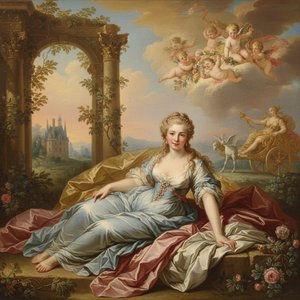
François Louis Lonsing: A Master of Baroque Portraiture
François Louis Lonsing (1739 – 1799) stands as a prominent figure in French Baroque art, celebrated for his exquisitely rendered portraits that captured the grandeur and sophistication of the aristocratic elite during the reign of Louis XVI. Born into a family with artistic inclinations, Lonsing’s early life remains somewhat obscure, yet he swiftly established himself as a respected artist within Parisian circles. His style—characterized by meticulous detail, luminous color palettes, and an unwavering commitment to capturing psychological nuance—earned him considerable acclaim and secured his place among the leading portrait painters of his era.
- Early Training & Influences: Lonsing’s artistic education began under Jean-Baptiste Tourtois, a renowned sculptor whose influence instilled in him a profound appreciation for classical ideals and sculptural modeling techniques. This formative period exposed him to the stylistic conventions prevalent at the time, shaping his approach to portraiture and fostering an enduring fascination with capturing human form with precision.
- Notable Commissions & Artistic Style: Lonsing’s career flourished through numerous commissions from wealthy patrons—members of the nobility and aristocracy—who sought depictions of themselves and their families. His canvases frequently showcased opulent interiors, richly adorned costumes, and carefully posed subjects bathed in diffused light, reflecting the aesthetic sensibilities of the Baroque period. He skillfully employed chiaroscuro – dramatic contrasts between light and dark – to sculpt form and convey emotion, creating images that were both aesthetically pleasing and psychologically insightful.
Key Works & Artistic Achievements
Among Lonsing’s most celebrated paintings are ‘Profil d’homme,’ a captivating Baroque portrait showcasing a confident man & rich textures. Explore this 18th-century masterpiece! This work exemplifies his mastery of technique and demonstrates his ability to convey inner character through subtle gestures and facial expressions. Similarly, 'Autoportrait' – a Rococo portrait of an older artist—reveals Lonsing’s self-awareness and artistic introspection. The painting’s delicate brushwork and harmonious color scheme exemplify the elegance and refinement characteristic of Rococo art.
- ‘Portrait d’Honoré Gabriel Riqueti, Comte de Mirabeau (1749 1791)’: This portrait captures Mirabeau's commanding presence and intellectual intensity. Lonsing skillfully portrays the statesman's gaze and posture, conveying his determination and conviction.
Historical Significance & Legacy
Lonsing’s oeuvre reflects the broader cultural landscape of Louis XVI’s France—a period marked by artistic innovation alongside social upheaval. His portraits served as visual emblems of aristocratic status and power, documenting the lives of influential figures who shaped the political and intellectual currents of their time. Despite the turbulent events leading up to the French Revolution, Lonsing continued to produce works that upheld traditional artistic standards, securing his reputation as a bastion of Baroque elegance and demonstrating the enduring appeal of classical portraiture.