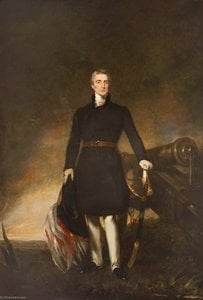
1782 - 1847

Informații rapide

  • Nationality: United Kingdom
  • Top-ranked work: The Duke of Wellington (1769–1852)
  • Museums on this site:
    • Art Institute of Chicago
    • National Portrait Gallery
    • National Maritime Museum
    • English Heritage
    • Muzeul Național Soares dos Reis
  • Also known as:
    • John Philip Simpson
    • Τζον Σίμπσον
    • Джон Симпсон
    • 約翰·辛普森
  • Lifespan: 65 years
  • Works on this site: 22
  • Typical colors: phthalo green
  • Copyright status: Public domain

John Simpson: A Life in Portraiture

Early Life and Training

  • Born in London in 1782, John Simpson embarked on a career as a portrait painter during a vibrant period of British art.
  • He received his foundational training at the prestigious Royal Academy, honing his skills and establishing himself within the artistic community.
  • Crucially, Simpson spent several years as an assistant to Sir Thomas Lawrence, PRA – a leading portraitist of the era. This mentorship profoundly shaped his style and approach to capturing likenesses.

Artistic Development and Style

  • Simpson’s early work reflects the influence of Sir Thomas Lawrence, characterized by a refined technique and attention to detail. He quickly gained recognition for his ability to create flattering and accurate portraits.
  • He exhibited regularly at the Royal Academy from 1807 until his death, demonstrating consistent productivity and engagement with the art world.
  • While primarily a portraitist, Simpson’s work occasionally ventured beyond conventional society portraiture, hinting at a broader artistic sensibility.

Major Achievements and Commissions

  • Royal Patronage: In 1834, Simpson received a significant commission to travel to Portugal and paint portraits in Lisbon.
  • His success led to an appointment as Painter to the Queen of Portugal, solidifying his reputation on the international stage.
  • Notable Sitters: Simpson painted numerous prominent figures, including William IV and many other notable individuals of his time. His portraits provide valuable visual records of British society during the 19th century.

‘The Captive Slave’ and Rediscovery

  • A Turning Point: Simpson's painting, ‘The Captive Slave,’ created a significant shift in his artistic legacy. It remained largely unseen for nearly 180 years.
  • Acquisition and Recognition: The Art Institute of Chicago acquired the work in 2008, bringing it to public attention.
  • Abolitionist Significance: ‘The Captive Slave’ is now recognized as a powerful statement against slavery. It demonstrates Simpson's capacity for venturing beyond conventional portraiture and engaging with important social issues.

Legacy and Historical Significance

  • Despite some contemporary criticism suggesting his work lacked “instinct and penetration,” John Simpson established a successful career as a respected portrait painter.
  • Family of Artists: He had two sons who also pursued artistic careers – Charles, who died young, and Philip, who found success with small domestic subjects.
  • Enduring Impact: The rediscovery of ‘The Captive Slave’ has elevated Simpson's status, highlighting his talent and the painting’s importance as a symbol of the abolitionist movement. He is now recognized not only for his technical skill but also for his contribution to social commentary through art.

Quiz rapid

Fiecare întrebare are un singur răspuns corect.

Întrebare 1:
John Simpson was a student and assistant to which prominent British painter?
Întrebare 2:
Simpson received a commission that led him to paint portraits in which European capital city?
Întrebare 3:
What is the title of John Simpson's rediscovered painting, now considered his masterpiece and a significant work of abolitionist art?
Întrebare 4:
According to a 19th-century biographer, Sidney Lee, what was a noted characteristic of Simpson's portraiture?
Întrebare 5:
Besides John Simpson, how many of his sons also practiced as artists?

Întrebări și răspunsuri

Pot să explorez lucrările lui John Simpson pe categorii de mișcări artistice?

Pagina Toate mișcările de artă grupează operele lui John Simpson pe mișcări artistice.

Există o prezentare generală a tuturor subiectelor pictate de John Simpson?

Pagina Atlas pe teme clasifică operele lui John Simpson pe teme.

Din ce epocă face parte John Simpson?

John Simpson a activat în perioada 19th Century. Această perioadă situează activitatea artistului în context istoric.

Există un tur virtual 3D al operelor lui John Simpson?

Pagina Galerie 3D a lui John Simpson prezintă operele de artă ale artistului într-o galerie virtuală tridimensională.

Cum pot urmări evoluția creațiilor lui John Simpson, an de an?

Există o cronologie a lucrărilor lui John Simpson: pagina Cronologia operelor de artă a artistului ordonează operele în funcție de data creației.

Pot să explorez lucrările lui John Simpson în funcție de starea de spirit?

Pagina Galerie pe stări de spirit lui John Simpson organizează operele de artă ale artistului în funcție de starea de spirit.

Care sunt cele mai vizionate opere ale lui John Simpson?

Pagina Statistici a lui John Simpson prezintă statistici calculate pe baza operelor de artă ale artistului listate pe acest site web.

Există o listă completă a operelor lui John Simpson?

Toate lucrările lui John Simpson de pe acest site web pot fi explorate în pagina Toate operele de artă a artistului.

Cum pot găsi lucrările lui John Simpson pe o temă specifică?

Pentru a găsi lucrări realizate de John Simpson pe o temă specifică, accesați pagina După cuvinte cheie a artistului, unde operele sunt grupate pe cuvinte cheie.