Moștenirea Luminoasă a lui Franz Bischoff
Franz Albert Bischoff se impune ca o figură de o influență discretă, dar profundă, în istoria artei americane, un pictor al cărui pensul a reușit să surprindă esența efemeră a luminii și sufletul senin al peisajului californian. Născut în 1864 la Steinschönau am Inn, în Austria, primii săi ani de viață au fost îmbibați în bogatele tradiții decorative ale Imperiului Austro-Ungar. Această formare fundamentală în design aplicat, acuarelă și decorarea ceramicii i-a insuflat o atenție meticuloasă la detalii și un respect profund pentru armonia culorilor. Când a emigrat în Statele Unite la vârsta de cincisprezece ani, a purtat cu sine o sensibilitate din Vechiul Lume care s-ar fi contopit, în cele din urmă, cu optimismul înfloritor al Vestului American, creând un stil care era, în același timp, tehnic precis și emoționant.
Pe măsură ce cariera sa s-a desfășurat prin peisajele industriale din New York, Ohio și Michigan, Bischoff a obținut inițial o recunoaștere considerabilă prin arta delicată a picturii pe porțelan. Această disciplină necesita o măiestrie extraordinară în amestecarea culorilor și în finisarea detaliilor, abilități care aveau să devină ulterior semnătura compozițiilor sale de peisaj. Capacitatea sa de a manipula glazuri și lavaje subtile i-a permis să insufleze viață porțelanului, un precursor al calităților eterice găsite în lucrările sale ulterioarde în ulei. Această intersecție unică între precizia decorativă și sensibilitatea atmosferică i-a definit identitatea artistică în momentul tranziției de la lumea meticuloasă a ceramicii la orizonturile vaste ale frontierii americane.
Impresionismul și Lumina Californiei
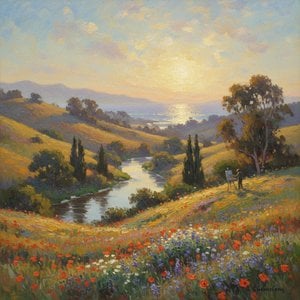
Adevărata metamorfoză a artei lui Bischoff a avut loc la sosirea sa în California, unde topografia dramatică și condițiile atmosferice unice i-au oferit o nouă muză. Adoptând principiile mișcării impresioniste, el a căutat să captureze momentele efemere de lumină care definesc regiunea. Tehnica sa a devenit un dialog sofisticat între lavajele delicate de acuarelă și glazurile subtile de ulei, rezultând pânze care par să strălucească din interior. Poseda o capacitate rară de a destila informații vizuale complexe în compoziții armonioase, fie că era vorba despre a picta măreția aspră a lanțurilor montane sau ceața moale, de coastă, a Pacificului.
Opera sa servește drept o înregistrare vibrantă a lumii naturale într-o epocă transformatoare a istoriei americane. Prin ochii săi, trăim următoarele experienții:
- Cloud Shadows: O capodoperă din 1912, unde munții dramatic și copacii vibranți prind viață printr-o lentilă impresionistă, oferind o privire senină asupra puterii naturii.
- Pasadena Foothills: O pictură uimitoare din 1917 în ulei, care surprinde frumusețea esențială a peisajului american, evidențiind capacitatea sa de a reda lumina peste terenul ondulat.
- Mist-Veiled Days, Monterey: O explorare evocatoare a atmosferei de coastă, unde jocul dintre ceață și mare demonstrează măiestria sa în subtilitatea tonală.
O Impresie Durabilă în Istoria Artei
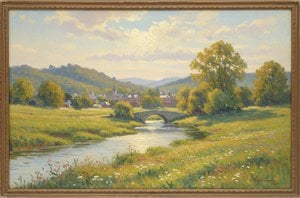
Dincolo de simpla reprezentare a peisajelor, opera lui Bischoff întruchipează un sentiment de nostalgie și venerație pentru frumusețea nemodificată a naturii. Tablourile sale, precum magistrala Landscape at Saint Valery-sur-Somme, demonstrează o capacitate de a uni rădăcinile europene cu experiențele americane, îmbinând eleganța structurată a formării sale cu energia sălbatică și spontană a coastei Californiei. El nu picta pur și simplu ceea ce vedea; el picta modul în care se simțea lumina, îmbânașindu-și subiectele cu un sentiment de pace și permanență.
Semnificația istorică a lui Franz Bischoff rezidă în rolul său de punte între artele decorative și pictura de peisaj de fine art. Aducend meticulozitatea picturii pe porțelan la scară grandioasă, specifică uleiurilor impresioniste, el a creat o nișă care îi aparținea în mod unic. Astăzi, lucrările sale rămân prețuite pentru capacitatea lor de a transporta privitorul într-o eră trecută a descoperirilor și a splendoarei naturale, amintindu-ne de puterea durabilă a unei atingeri delicate și a unei viziuni luminoase.
Întrebări și răspunsuri
Unde pot găsi statistici despre operele lui Franz Bischoff?
Pagina Statistici a lui Franz Bischoff prezintă statistici calculate pe baza operelor de artă ale artistului listate pe acest site web.
Există o relatare cronologică a carierei lui Franz Bischoff?
Pagina Cronologie a lui Franz Bischoff este o cronologie interactivă, bazată pe derularea paginii, care prezintă lucrările artistului în ordine cronologică, grupate pe perioade reprezentative ale carierei sale.
Cum pot găsi lucrările lui Franz Bischoff pe o temă specifică?
Pentru a găsi lucrări realizate de Franz Bischoff pe o temă specifică, accesați pagina După cuvinte cheie a artistului, unde operele sunt grupate pe cuvinte cheie.