Portretul lui Floris van Dyck

Ghidul tău pentru cele mai faimoase 6 picturi ale lui Floris van Dyck

Actualizat Octombrie 2026 · clasat în funcție de scorul nostru de popularitate (căutări, vizite și comenzi pentru fiecare operă) · 6 lucrări ale lui Floris van Dyck în catalogul nostru

Pe scurt

Cea mai cunoscută operă a lui Floris van Dyck este Laid Table with Cheeses and Fruit (detail) (1615). O poți găsi la Rijksmuseum din Amsterdam. Următorii din listă sunt Laid Table with Cheese, Fruit and a Berkemeyer (1610) și Laid Table (1622). În catalogul nostru avem 6 lucrări ale lui Floris van Dyck; acest ghid selectează cele 6 cele mai cunoscute, incluzând anul, muzeul și povestea fiecărei piese.

1575 – 1651, Delft Cele mai multe lucrări: Rijksmuseum

Cele 10 picturi ale lui Floris van Dyck pe care trebuie să le cunoști prima dată

1
Laid Table with Cheeses and Fruit (detail) (1615) de Floris van Dyck

Laid Table with Cheeses and Fruit (detail)

1615 · Oil · Rijksmuseum, Amsterdam

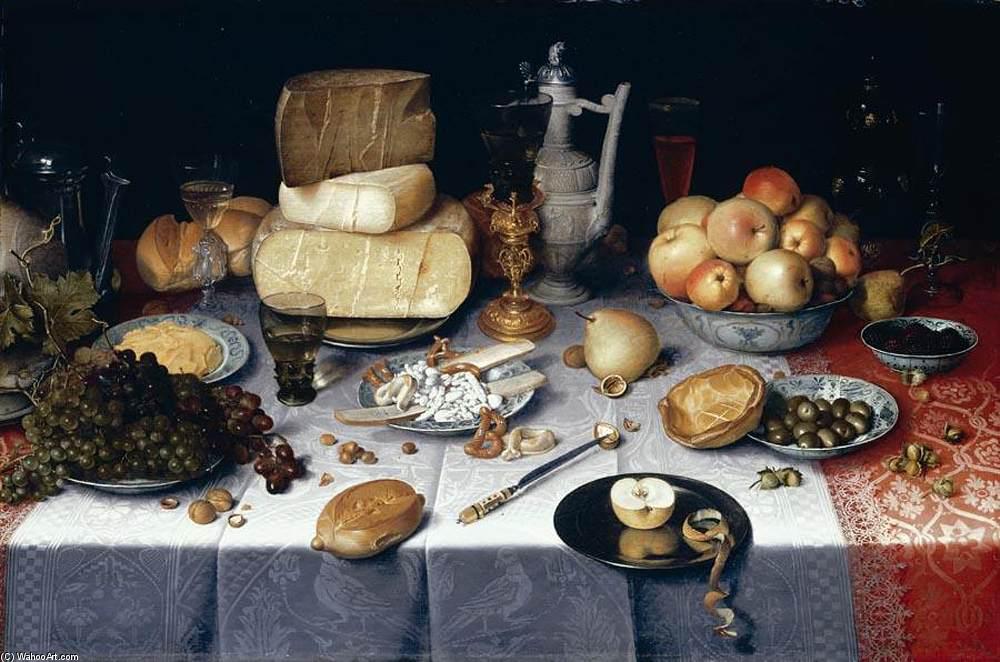
In the quiet, contemplative realm of Dutch Golden Age still life, few artists captured the ephemeral beauty of a moment as exquisitely as Floris Claesz van Dijck. His work, Laid Table with Cheeses and Fruit (detail), serves as a breathtaking masterclass in the art of observation. At first glance, the viewer is greeted by a scene of deceptive simplicity: a table draped in white cloth, scattered with the bountiful offerings…

Reproducere pictată manual în ulei de la $175 29 × 35 cm
Comandă pictură manuală Citește povestea ei

Cele mai picturate opere ale lui Floris van Dyck

Cele patru teme care apar cel mai des în aceste lucrări, fiecare cu cel mai cunoscut exemplu al său.

Unde poți vedea picturile lui Floris van Dyck

Cele 3 muzee care dețin cele mai multe dintre picturile de pe această pagină.

Muzee Oraș Lucrări lui Floris van Dyck Picturi din această listă
Rijksmuseum, AmsterdamRijksmuseum Amsterdam 2 Laid Table with Cheeses and Fruit (detail), Laid Table with Cheeses and Fruit
National Gallery, LondraNational Gallery Londra 1 Laid Table
Frans Halsmuseum, HarenFrans Halsmuseum Haren 1 Still-Life with Fruit, Nuts and Cheese

Anul după an: cele mai cunoscute piese ale lui Floris van Dyck

Piesele datate ale lui Floris van Dyck de aici acoperă o perioadă de 13 ani, de la 1610 la 1622. Parcurgeți-le an de an.

Lucrări pe an

Alege un an pentru a vedea lucrările sale.

Floris van Dyck: răspunsuri rapide despre picturi

Care este cea mai cunoscută pictură a lui Floris van Dyck?Vezi răspunsul

În topul listei se află Laid Table with Cheeses and Fruit (detail) (1615), Rijksmuseum, Amsterdam. Imediat după aceasta: Laid Table with Cheese, Fruit and a Berkemeyer (1610) și Laid Table (1622).

Ce vârstă avea Floris van Dyck când a creat Laid Table with Cheeses and Fruit (detail)?Vezi răspunsul

40 ani. Floris van Dyck s-a născut în 1575, iar Laid Table with Cheeses and Fruit (detail) datează din 1615.

Câte lucrări ale lui Floris van Dyck se află în catalogul dumneavoastră?Vezi răspunsul

În catalogul nostru avem 6 lucrări ale lui Floris van Dyck, datate între 1610 și 1622.

În ce muzee poți vedea operele celebre ale lui Floris van Dyck?Vezi răspunsul

Le vei găsi pe majoritatea în Rijksmuseum (Amsterdam), National Gallery (Londra) și Frans Halsmuseum (Haren). Lista muzeelor de mai sus oferă detalierea completă.

În ce perioadă a creat Floris van Dyck cele mai faimoase opere?Vezi răspunsul

În 1610, mai mult decât în orice altă perioadă: 2 dintre cele 6 piese de pe această pagină datează de atunci, Laid Table with Cheese, Fruit and a Berkemeyer dintre acestea.

Care sunt primele și ultimele opere celebre ale lui Floris van Dyck?Vezi răspunsul

Cea mai veche piesă de aici este Laid Table with Cheese, Fruit and a Berkemeyer (1610); cea mai recentă este Laid Table (1622).

Ce picturi celebre ale lui Floris van Dyck se află la Rijksmuseum?Vezi răspunsul

Pe această pagină poți vedea 2 dintre piesele din cadrul Rijksmuseum, Amsterdam, inclusiv Laid Table with Cheeses and Fruit (detail) și Laid Table with Cheeses and Fruit.

Unde pot comanda o reproducere Floris van Dyck?Vezi răspunsul

Da. Fiecare pictură de pe această pagină este disponibilă ca reproducere pictată manual în ulei sau ca print, în dimensiunea care vă conveni. Accesați pagina picturii pentru a comanda.

Povestea lui Floris van Dyck

The Master of the Banquet Still Life

In the quiet, contemplative realm of the Dutch Golden Age, few artists captured the ephemeral beauty of a moment as exquisitely as Floris Claesz van Dijck. A pioneer of the still-life genre, his work serves as a breathtaking masterclass in the art of observation. Born in Delft, Netherlands, his early life and travels would eventually shape him into one of the most significant figures in the development of the banketje, or banquet still life. This specific subgenre, characterized by tables laid with bountiful offerings of cheese, fruit, nuts, and fine tableware, found its definitive voice through his meticulous brushwork.

Van Dijck's artistic journey was marked by a profound connection to the broader European art scene. Around 1600, he was documented in Rome, where he moved within influential circles, including a friendship with Joseph van Arpino. This period of exposure to Italian influences likely contributed to the sophisticated light and texture found in his later works. Upon returning to the Netherlands in 1606, he settled in Haarlem, a city that would become his primary home and the stage for his greatest achievements. In this vibrant artistic hub, he became an established presence, eventually joining the Haarlem Guild of St. Luke and serving as its dean.

A Symphony of Light and Texture

The true magic of Van Dijck’s oeuvre lies in his ability to breathe life into inanimate objects. He did not merely paint surfaces; he explored the very essence of matter. Through a masterful manipulation of illumination, he created a world where one can almost feel the velvety skin of an apple or the cool, reflective sheen of a polished pewter plate. Unlike the more aggressive shadows seen in the works of the Caravaggisti, Van Dijck employed a soft, diffused glow that sculpted his subjects, creating an illusion of depth and tactile reality.

His technical prowess allowed him to differentiate between various states of existence with extraordinary precision:

  • The crispness of a fruit's skin under the light.
  • The translucent delicacy of a fine wine glass.
  • The heavy, crumbly richness of a piece of cheese.
This level of descriptive detail transformed simple meal scenes into profound sensory experiences, inviting the viewer to linger on the beauty of the mundane.

Legacy and Historical Significance

Beyond his individual technical skill, Floris Claesz van Dijck holds a vital place in art history as an innovator. Alongside Nicolaes Gillis, he is credited with inventing the ontbijt, or breakfast and banquet display piece. His influence rippled through the Dutch Golden Age, shaping the trajectories of subsequent painters such as Pieter Claesz and Roelof Koets. He acted as a bridge between the stylized elegance of Mannerism and the robust naturalism of the Baroque period.

While his surviving works are remarkably rare—with fewer than twenty known pieces existing today—their impact remains monumental. Most of his masterpieces are now preserved in prestigious institutions like the Rijksmuseum and the National Gallery, serving as enduring testaments to a man who could turn a simple table setting into a profound exploration of light, order, and the fleeting nature of life.