Portretul lui Anton Dorph

Ghidul tău pentru cele mai faimoase 5 picturi ale lui Anton Dorph

Actualizat Noiembrie 2026 · clasat în funcție de scorul nostru de popularitate (căutări, vizite și comenzi pentru fiecare operă) · 5 lucrări ale lui Anton Dorph în catalogul nostru

Pe scurt

Cea mai cunoscută operă a lui Anton Dorph este En bondepige (1854). O poți găsi la Statens Museum For Kunst din Copenhaga. Următorii din listă sunt Småpiger som leger i klitterne på vej hjem fra skole (1863) și Oil sketch for the Road to Emmaus (1878). În catalogul nostru avem 5 lucrări ale lui Anton Dorph; acest ghid selectează cele 5 cele mai cunoscute, incluzând anul, muzeul și povestea fiecărei piese.

1831 – 1914, Horsens Cele mai multe lucrări: Statens Museum For Kunst

Cele 10 picturi ale lui Anton Dorph pe care trebuie să le cunoști prima dată

1
En bondepige (1854) de Anton Dorph

En bondepige

1854 · Oil On Canvas · Statens Museum For Kunst, Copenhaga

A young woman stands within the frame of a rustic doorway, her attention anchored to the delicate movement of needlework. The light enters from the upper right, brushing against the rough texture of a stone wall and the soft folds of her apron. To her side, white garlic hangs in silent clusters, a pale contrast to the deep greens of the climbing rose bush that winds around the entrance. At…

Reproducere pictată manual în ulei de la $183 28 × 36 cm
Comandă această piesă Mai multe detalii despre această piesă
5
Catching Garfish. Early Morning de Anton Dorph

Catching Garfish. Early Morning

The painting is a scene from the early morning in calm weather where a fisherman with outstretched arms is about the throw a stone to frighten the fish so that they swim into a drift net floating on the surface of the sea. The fisherman is also suggestive of a religious motif depicting a Christ figure. This was probably also the artist

Reproducere pictată manual în ulei de la $183 38 × 26 cm Aceeași dimensiune ca originalul $697 156 × 109 cm Comandă în dimensiunea originală →
Comandă pictură manuală Citește povestea ei

Unde poți vedea picturile lui Anton Dorph

Cele 2 muzee care dețin cele mai multe dintre picturile de pe această pagină.

Muzee Oraș Lucrări lui Anton Dorph Picturi din această listă
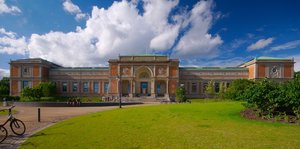
Statens Museum For Kunst, CopenhagaStatens Museum For Kunst Copenhaga 4 En bondepige, Småpiger som leger i klitterne på vej hjem fra skole, Oil sketch for the Road to Emmaus
Parlamentul Danemarڪei, CopenhagaParlamentul Danemarڪei Copenhaga 1 Catching Garfish. Early Morning

Deceniu cu deceniu: cea mai cunoscută operă a lui Anton Dorph din fiecare

Lucrări pe deceniu

Alege o deceniu pentru a vedea piesa sa de rezistență.

Anton Dorph: răspunsuri rapide despre picturi

Care este cea mai cunoscută pictură a lui Anton Dorph?Vezi răspunsul

În topul listei se află En bondepige (1854), Statens Museum For Kunst, Copenhaga. Imediat după aceasta: Småpiger som leger i klitterne på vej hjem fra skole (1863) și Oil sketch for the Road to Emmaus (1878).

Ce vârstă avea Anton Dorph când a creat En bondepige?Vezi răspunsul

23 ani. Anton Dorph s-a născut în 1831, iar En bondepige datează din 1854.

Câte lucrări ale lui Anton Dorph se află în catalogul dumneavoastră?Vezi răspunsul

În catalogul nostru avem 5 lucrări ale lui Anton Dorph, datate între 1854 și 1890.

În ce muzee poți vedea operele celebre ale lui Anton Dorph?Vezi răspunsul

Le vei găsi pe majoritatea în Statens Museum For Kunst (Copenhaga) și Parlamentul Danemarڪei (Copenhaga). Lista muzeelor de mai sus oferă detalierea completă.

Care sunt primele și ultimele opere celebre ale lui Anton Dorph?Vezi răspunsul

Cea mai veche piesă de aici este En bondepige (1854); cea mai recentă este Olieskitse til Jesus og Samaritanerinden ved brønden (1890).

Ce picturi celebre ale lui Anton Dorph se află la Statens Museum For Kunst?Vezi răspunsul

Pe această pagină poți vedea 4 dintre piesele din cadrul Statens Museum For Kunst, Copenhaga, inclusiv En bondepige, Småpiger som leger i klitterne på vej hjem fra skole și Oil sketch for the Road to Emmaus.

Unde pot comanda o reproducere Anton Dorph?Vezi răspunsul

Da. Fiecare pictură de pe această pagină este disponibilă ca reproducere pictată manual în ulei sau ca print, în dimensiunea care vă conveni. Accesați pagina picturii pentru a comanda.

Povestea lui Anton Dorph

The Painter of Fishermen’s Souls

Anton Laurids Johannes Dorph, born on February 15th, 1831, in the Danish town of Horsens, remains one of the most evocative voices in nineteenth-century Scandinavian art. The son of Professor Niels Vinding Dorph and Louise Amalie Bloch, he was destined for a life steeped in culture, yet his heart found its true resonance not in the halls of academia, but amidst the salt spray and rugged simplicity of the Danish coast. Dorph possessed a rare, empathetic vision that allowed him to transcend mere documentation; he did not simply paint scenes of maritime labor, but rather captured the very essence of the human spirit struggling and thriving against the elemental forces of nature.

His artistic journey began in earnest at the Royal Academy of Art in Copenhagen, where he entered in 1845. Under the rigorous guidance of masters such as Christoffer Wilhelm Eckersberg, Dorph mastered the foundational principles of composition and light that would define his career. However, it was his subsequent period of study with Wilhelm Marstrand between 1849 and 1850 that breathed life into his technique. Marstrand introduced him to a more fluid, atmospheric approach, teaching him how to capture the fleeting nuances of light—a skill that became vital when depicting the misty mornings and shifting tides of the Zealand coast. This period of refinement culminated in the Academy's silver medal in 1849, an achievement that signaled his arrival as a significant talent in the Danish art scene.

A Legacy of Light and Devotion

Dorph’s oeuvre is characterized by a profound duality, oscillating between the gritty realism of genre painting and the transcendent solemnity of religious art. He gained widespread acclaim for his series of works depicting the fishermen of Zealand, paintings that resonated deeply with the Danish public. In these works, such as Hornfiskefangst med drivvod, tidlig morgen, one can sense the quiet tension of the sea and the rhythmic toil of the coastal communities. His ability to imbue a simple scene of fishing with a sense of monumental dignity made his work a staple in many Danish homes, where reproductions of his maritime scenes hung as symbols of national identity and pastoral beauty.

Parallel to his fascination with rural life was Dorph’s significant contribution to ecclesiastical art. He became a sought-after creator of altarpieces, utilizing his mastery of light to evoke the divine. Works like Kristus velsigner disciplene demonstrate his ability to marry the human element with the sacred, creating compositions that feel both physically present and spiritually elevated. This religious devotion was not merely a stylistic choice but an extension of his broader interest in the profound, often unseen, emotional depths of his subjects. Whether portraying a weary fisherman or a biblical figure, Dorph sought the underlying truth of the soul.

Recognition and Historical Resonance

The trajectory of Dorph’s career was marked by several prestigious milestones that cemented his reputation among his contemporaries. His portrait of the actor C.N. Rosenkilde in 1856, displayed at the Royal Danish Theatre, served as a pivotal moment of public recognition. Furthermore, his talent for capturing character was honored with the Neuhausen Prize in 1857 following his portrait of the sculptor Evens. These accolades were complemented by his travels to Italy between 1859 and 1861, funded by an Academy stipend, which allowed him to absorb the warmth of Mediterranean light and integrate new, vibrant textures into his repertoire.

Though he may not have reached the international heights of some of his contemporaries, Dorph’s historical significance lies in his role as a chronicler of a vanishing way of life. He captured the transition of Denmark from a traditional, agrarian, and maritime society toward a more modern era. Through his brush, the salt-stained hands of the fisherman and the quiet reverence of the church altar are preserved forever. His work remains a testament to the power of realism to touch upon the eternal, leaving behind a legacy that continues to resonate with anyone moved by the intersection of nature, labor, and faith.