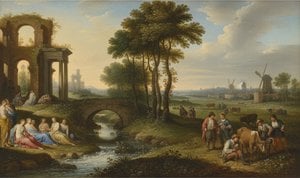
Sufletul Seren al Peisajului Olandez
Anthonie Jacobus van Wijngaerdt, un nume care șoptește despre liniște și grație pastorală, rămâne o voce profundă, deși discretă, în marea tapiserie a artei olandeze din secolul al XIX-lea. Născut în 1808, în vibrantul oraș portuar Rotterdam, opera sa vieții a devenit un omagiu durabil adus simplității ritmate a existenței rurale. Deși acea epocă era adesea marcată de schimbările dramatice ale Romantismului și de ascensiunea erei industriale, Van Wijngaerdt a ales o cale diferită — una a observației meticuloase și a unei conexiuni spirituale profunde cu peisajul olandez. Canvasurile sale nu strigă printr-o măreție teatrală; în schimb, ele invită privitorul într-un sanctuar al păcii, unde lumina blândă a Țărilor de Jos luminează frumusețea umilă a animalelor, a familiilor de țărani și a întinsurilor verzi ale deșertului.
Fundamentele măiestriei sale au fost puse în Rotterdam, sub privirea atentă a unor mentori influenți. A studiat sub îndrumarea lui Johann Ernst Meyer, un pictor al cărui angajament față de accentul pus de mișcarea romantică asupra naturii a oferit scânteia esențială pentru propria evoluție artistică a lui Van Wijngaert. Ulterior, abilitățile sale au fost rafinate prin ucenicia lui Jacob de Meijer, un profesor de artă al cărui talent pentru scenele pădurilor i-ar fi lăsat o amprentă durabilă compozițiilor artistului. Aceste influențe timpurii i-au întipărit o reverență față de lumea organică, învățându-l că o singură fir de iarbă îmbibată cu rouă sau textura îmbătrânită a unui prim de grâu vechi pot deține la fel de multă greutate narativă ca orice scenă istorică epică. Pentru a-și lărgi orizonturile și pentru a căuta noi inspirații, Van Wijngaerdt a întreprins călătorii de studiu semnificative în bazinul Rinului din Germania și în Belgia, experiențe care i-au îmbogățit paleta și i-au profundit înțelegerea perspectivei atmosferice.
Măiestria Luminii și a Realismului Pastoral
Opera lui Anthonie Jacobus van Wijngaerdt este o mărturie a puterii realismului atunci când acesta este căsătorit cu o sensibilitate poetică. Colecția sa de aproximativ lag 150 de picturi servește drept o fereastră către un mod de viață dispărut, caracterizat printr-un angajament neclintit față de detalii. El poseda o abilitate rară de a reda texturi care par aproape tactile la atingere — blana grea și aspră a unei vaci care pășește, translucența delicată a luminii care se filtrează prin frunzele de vară și asprimea uneltelor agricole. Tehnica sa nu a fost niciodată despre simplă imitarea; era despre capturarea însăși esenței atmosferei. Folosind schimbări subtile de culoare și o utilizare magistrală a perspectivei atmosferice, reușea să creeze un sentiment imens de profunzime, făcând ca orizonturile îndepărtate ale peisajelor sale să pară vaste și vii.
Paleta sa artistică era intenționat restrânsă, favorizând nuanțe mate, pământii, care oglindeau tonurile naturale ale peisajului olandez. Această alegere a culorii a îmbuinat lucrările sale cu un sentiment palpabil de mulțumire și liniște. În capodopere precum Shepherds In A Summer Landscape sau <Wood Gathering, se poate simți respectul profund al artistului pentru subiectele pe care le-a portretizat. Nu există artificii în reprezentarea sa a vieții țărănești; dimpotrivă, există un realism demn care celebrează măreția liniștită a muncii și coexistența armonioasă a omului cu natura. Opera sa prezintă adesea motive recurente care ancoră compozițiile sale în realitatea epocii:
- Animalele ca Ancore: V cattle și oile sunt poziționate frecvent în peisajele sale, servind nu doar ca subiecte, ci și ca simboluri ale fertilității pământului și ale pulsului constant al vieții rurale.
- Elementul Uman: Familiile de țărani angajați în sarcini agricole zilnice oferă o bătaie narativă scenelor sale, pictând un sentiment de comunitate și continuitate.
- Textura Arhitecturală: Coșurile îmbătrânite și structurile rustice sunt randate cu o asemenea precizie încât devin personaje în sine, ancorând peisajul într-un timp și un loc precis.
Moștenire și Semnificație Istorică
Pe măsură ce cariera lui Van Wijngaerdt a progresat, viața sa l-a purs de la sălile de instruire din Gouda — unde a servit ca instructor de artă la Stadstekenschool până în 1857 — până pe străzile istorice din Haarlem. Această perioadă de predare și deplasare i-a permis să își rafineze rolul nu doar de pictor, ci și de păstrător al tradiției peisajului olandez. Deși s-ar putea să nu fi atins statutul de iconă globală al contemporanilor săi precum Rembrandt, semnificația sa constă în capacitatea de a conserva sufletul idealului pastoral olandez din secolul al XIX-lea. El a capturat un moment în istorie în care legătura dintre oameni și pământul lor era încă palpabil intimă.
Astăzi, lucrările lui Anthonie Jacobus van Wijngaerdt continuă să rezoneze atât cu colecționarii, cât și cu istoricii de artă. Picturile sale servesc drept documente istorice vitale ale peisajului și structurii sociale olandeze. Într-o lume tot mai accelerată, capacitatea sa de a îngheța un moment de liniște absolută oferă un sentiment profund de răgaz. El rămâne un maestru al subtilității, un pictor care a înțeles că adevărata frumusețe este adesea găsită în cele mai liniștite colțuri ale pământului, așteptând cu răbdare să fie observată de cei care au ochii capabili să o vadă.
Întrebări și răspunsuri
Unde și când s-a născut Anthonie Jacobus Van Wijngaerdt?
Anthonie Jacobus Van Wijngaerdt s-a născut în Rotterdam, în anul 1808.
Unde pot fi explorate operele lui Anthonie Jacobus Van Wijngaerdt organizate pe culori?
Operele lui Anthonie Jacobus Van Wijngaerdt pot fi explorate pe criterii de culoare în pagina Indice Spectral a artistului.
Pot să explorez lucrările lui Anthonie Jacobus Van Wijngaerdt în funcție de starea de spirit?
Pagina Galerie pe stări de spirit lui Anthonie Jacobus Van Wijngaerdt organizează operele de artă ale artistului în funcție de starea de spirit.