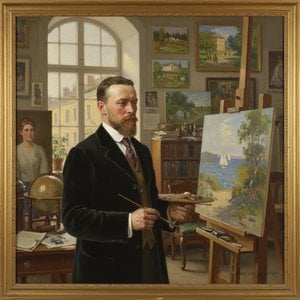
Primii Ani, Familia și Educația
Albert Edelfelt s-a născut pe 21 iulie 1854, în Porvoo, Finlanda. Tatăl său, Carl Albert Edelfelt, era un finlandez vorbitor de suedeză și arhitect, în timp ce mama sa, Alexandra Edelfelt, s-a născut Alexandra Brandt. Primii ani ai vieții sale au fost modelați de liniștea și frumusețea împrejurimilor din Porvoo. Încet, pasiunea sa pentru desen l-a condus, încă din anul 1869, către școala de desen a Societății de Artă Finlandeză, unde a început studiile formale care i-ar fi definit destinul artistic.
Călătoria sa de formare a depășit granițele Finlandei, pe măsură ce căuta o instruire tehnică tot mai profundă. Între anii 1873 și 1874, a petrecut timp la Academia de Artă din Antwerp, unde s-a concentrat pe mecanica picturii istorice. Această perioadă de studiu i-a oferit fundația necesară pentru marea sa mutare în Franța. În 1874, s-a înmatriculat la École Nationale des Beaux-Arts din Paris. Acolo, a studiat sub îndrumarea lui Jean-Léon Gérôme, rafinându-și capacitatea de a gestiona compoziții complexe și de a răspunde cerințelor specifice ale instruirii academice de înalt nivel.
Călătoria artistică și anii parizieni
În anul 1874, la vârsta de nouăsprezece ani, Albert Edelfelt a plecat spre Paris, un oraș care avea să îi schimbe destinul. Într-un atelier modest de pe 24 Rue Bonaparte, împărțit cu un prieten venit tot din Finlanda, tânărul artist își căuta primele mele de aterizare, departe de liniștea căminului. Această perioadă de început, marcată de simplitate, a fost esențială pentru consolidarea identității sale. Până în 1876, atelierul său se mutase pe 81 boulevard du Montparnasse, iar în acei ani de transformare profundă, Albert Edelfelt a început să se elibereze de constrângerile formale ale educației academice primite anterior, descoperind o nouă modalitate de a percepe lumina și de a interpreta lumea din jurul său.
Viața sa pariziană a fost modelată de întâlnirile din atelierele și cercurile sociale ale metropolei. A legat o prietenie strânsă cu pictorul Jules Bastien-Lepage, o relație care i-a influențat profund abordarea picturii pe pânză. Totodată, a dezvoltat o afinitate cu Jean-Baptiste Pasteur, fiul celebrului chimist Louis Pasteur. Aceste conexiuni l-au plasat chiar în epicentrul unui peisaj artistic în continuă transformare, un moment în care atenția se muta spre observarea vieții așa cum se manifesta ea, în toată autenticitatea sa. În 1881, s-a stabilit într-un nou atelier situat la 147, avenue des Villiers, continuând să își rafineze măiestria pe parcursul deceniului.
Tehnică și Stil Artistic
Abordarea sa față de pânză era profund înrădăcinată într-un stil naturalistic, preferând o perspectivă realistă care căuta să documenteze viața așa cum se manifesta ea în realitate. Această dedicare observării directe l-a condus adesea către practica picturii în aer liber, capturând modul în care lumina se așează peste un peisaj sau asupra unui subiect. În aceste momente de creație, el s-a îndepărtat de tradițiile academice rigide și formale ale primilor sale ani de studiu, pentru a îmbrățișa tehnici mai fluide, cu influențe impresioniste. Această evoluție este vizibilă în modul în care a gestionat lumina și atmosfera în opere precum The Eklöf Boys on the Veranda of Villa Sjökulla.
Tematica sa aborda adesea greutatea istoriei, folosind pensula pentru a reda detaliile intense ale conflictelor trecute. Picturile sale depindeau frecvent de scene din lungul șir de războaie care au implicat rușii, suedezi și finlandezi, moment în care acorda o atenție minuțioasă texturilor epocii respective. Albert Edelfelt a fost un contributor de excepție la Era de Aur a artei finlandeze, utilizându-și măiestria tehnică pentru a crea o punte între pictura istorică formală și o modalitate de a vedea lumea mult mai modernă, bazată pe observație pură.
Opere Remarcabile și Realizări
Pinsula sa a reușit să surprindă intensitatea tăcută a descoperirilor științifice și mișcările simple, dar profunde, ale vieții. În anul 1886, a pictat Louis Pasteur dans son laboratoire de l, o operă ce a explorat cu atenție mediul de lucru al chimistului. Această legătură cu familia Pasteur s-a continuat prin celebrul său Portrait of Louis Pasteur. Aceste studii magistrale ale luminii și ale subiectului i-au adus recunoaștere în Franța, culminând cu numirea sa în Legiunea de Onoare în 1886. Ulterior, la Expoziția Universală de la Paris din 1889, a fost onorat cu o medalie de aur.
Există o liniște aparte în pictura Boys Playing on the Shore (1884). Aceasta rămâne una dintre cele mai semnificative opere ale sale, capturând o clipă de pură tinerețe încadrată de peisaj. Capacitatea sa de a observa lumea cu o acuratețe rară l-a condus spre numirea de Comisar pentru participarea Finlandei la Expoziția Universală de la Paris în 1900. Stilul său a navigat armonios între rigoarea ceremoniilor picturii istorice și spontaneitatea observării oamenilor în decorurile lor naturale.
- Louis Pasteur dans son laboratoire de l (1886)
- Boys Playing on the Shore (1884)
- Portrait of Louis Pasteur
Moștenire și Influență
Albert Edelfelt a fost printre primii pictori finlandezii care au reușit să își asculte locul în peisajul artistic internațional. El a adus un sentiment profund al identității finlandeze pe scena europeană, făcând cultura patriei sale vizibilă mult dincolo de granițele acesteia. Angajamentul său față de mișcarea artistică realistă din Finlanda a ajutat la modelarea modului în care țara se vedea pe sine prin intermediul picturii, îndepărtându-se de subiectele idealizate către o reprezentare mai onestă a vieții. Această abordare a ajutat la consolidarea limbajului vizual al unei națiuni într-o perioadă de schimbări semnificative.
Prezența sa în atelierele din Paris și Antwerp a lăsat o amprentă profundă asupra generațiilor care i-au urmat. Artiști finlandezii mai tineri, printre care Akseli Gallen-Kallela și Gunnar Berndtson, s-au inspirat din metodele sale și din capacitatea sa de a naviga prin lumea artistică europeană. El a ajutat la deschiderea drumului pentru acești artiști, oferind un pod între tradițiile locale și stilurile în continuă evoluție ale continentului. Influența sa a fost simțită în modul în care aceștia abordau lumina, peisajul și figura umană.
În istoria artei finlandeze, el este adesea considerat cea mai importantă figură de la a doua jumătate a secolului al XIX-lea până la prima jumătate a secolului al XX-lea. Opera sa rămâne un punct de referință pentru dezvoltarea unei estetici naționale. Capacitatea sa de a îmbina instruirea academică formală cu observarea vieții de zi cu zi a ajutat la definirea Epocii de Aur a Artei Finlandeze.
Unde pot fi admirate operele sale astăzi
Pentru a experimenta personal măiestria pincelății sale, un călător ar putea să călătorească spre Helsinki. Ateneum Art Museum găzduiește o parte semnificativă din creația sa, inclusiv pictura din 1877 Queen Bianca. Aceste opere sunt integrate în cea mai mare colecție de artă finlandeză din țară. Acolo, poți descoperi reprezentările sale ale vieții rurale și ale scenelor istorice, unde lumina pare adesea să imite atmosfera liniștită a peisajelor pe care le-a studiat odinioară.
În Paris, prezența sa artistică este simțită în mai multe locații emblematice. Musée d'Orsay adăpostește portretul său din 1885 al lui Louis Pasteur, o lucrare care constituie un studiu liniștit și concentrat al omului în mediul său de lucru. Între timp, în apropiere, Musée Pasteur păstrează, de asemenea, mai multe dintre lucrările sale, multe dintre acestea concentrându-se pe viața de familie și pe mediul științific care l-a înconjurat în timpul perioadei sale petrecute în Franța.
- Queen Bianca (1877)
- Louis Pasteur (1885)
Întrebări și răspunsuri
Unde pot vizualiza operele lui Albert Edelfelt într-o galerie 3D?
Operele de artă ale lui Albert Edelfelt pot fi vizualizate într-o galerie 3D, pe pagina Galerie 3D a artistului.
Există o listă completă a operelor lui Albert Edelfelt?
Toate lucrările lui Albert Edelfelt de pe acest site web pot fi explorate în pagina Toate operele de artă a artistului.
Din ce epocă face parte Albert Edelfelt?
Albert Edelfelt a activat în perioada Secolul al XIX-lea. Această perioadă situează activitatea artistului în context istoric.