


 Previzualizare
 Trimite
 Distribuie
 Detalii despre lucrare

 Descarcă
 Produse similare
 Radiografie
 Diapozitive automate
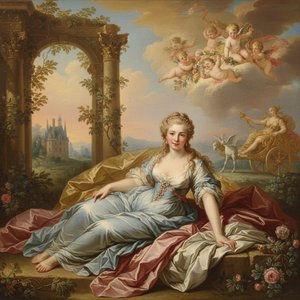
Marie Louise de Parme


 Vezi mai mult
Reproducere pictată manual în ulei
Pictură în ulei pe pânză, realizată manual de artiștii noștri la dimensiunea și ramele dorite de dumneavoastră, pe comandă. ( Cumpără print Cumpără imagine)




P118B $10

P118H $10

P118W $10

P438Z $10

P508JH $12

P508YH $12

P805H $10

P805Z $10

P919BZ $10

P919G $10

P919XJ $10

P959ZH $10

P968JZ $12

W106C $8

W218G $10

W218JH $8

W218Y $10

W307PJ $10

W316G $10

W316PJ $8

W316Y $10

W398PJ $8

W4111J $10

W500HY $15

W500JH $15

W692G $12

W849H $8

W940BG $15

W953PJ $8




Alegeți dintre dimensiunile noastre prestabilite, care respectă proporțiile originale ale operei de artă.

Puteți introduce propriile dimensiuni pentru a se potrivi unui anumit cadru sau spațiu. Dacă dimensiunea selectată nu corespunde proporțiilor imaginii originale, vom decupa opera de artă sau vom extinde pictura cu elemente suplimentare pictate manual. O simulare digitală vă va fi trimisă pentru aprobare înainte de începerea producției.
Vă rugăm să rețineți că previzualizarea de pe ecran nu reflectă decuparea sau extinderea reală. Doar macheta va arăta cu exactitate compoziția finală.
Deși sunt disponibile dimensiuni personalizate, vă recomandăm să selectați o dimensiune din lista predefinită pentru a păstra proporțiile originale.
După plasarea comenzii, echipa ArtsDot.com va contacta clientul prin e-mail pentru instrucțiuni și îi va furniza o previzualizare a machetei
Livrare în întreaga lume () în 3-4 săptămâni, în loc de cele 5 săptămâni standard. (13 August). Fără compromisuri în ceea ce privește calitatea.

Livrare expres gratuită la nivel mondial

Pânză de in de înaltă calitate

Asigurare completă pentru transport

Garanție de rambursare a taxelor vamale

Garanția fidelității culorilor

Politica de retur în 60 de zile (doar pentru defecte)

Garanție de rambursare 100%

Ofertă pentru comenzi multiple
 Opțiunea cu sticlă este disponibilă doar pentru dimensiuni de sub 110 cm

Marie Louise de Parme
Tehnică de reproducere
Dimensiune reproducere
-


Preț total calculat
$ 263
Descriere operă de artă
MARIE LOUISE DE PARME DIT AUTREFOIS MARIE AMELIE CHRISTINE DE SAXE – Un Portrait Élégué à la Lumière Classique
La peinture intitulée « Marie Louise de Parma » attribuée à Anton Raphael Mengs représente une jeune femme, symbole d’une époque fascinante où les formes élégantes du baroque cédèrent progressivement au charme raffiné du néoclassicisme. Cette œuvre est bien plus qu'une simple représentation visuelle; elle témoigne d’une sensibilité artistique profondément marquée par les idéaux esthétiques de son temps et par une maîtrise technique remarquable. Mengs, né en 1728 à Ustí nad Labem, Bohemia (aujourd’hui République tchèque), fut un véritable pont entre deux mouvements artistiques majeurs, héritier des traditions italiennes tout en embrassant les principes renouvelés inspirés par la philosophie et l'histoire de Grèce antique. Cette rencontre avec le passé classique allait définir son esthétique personnelle et influencer durablement son œuvre.Une Composition Élaborée dans les Couleurs Pastel
La peinture adopte une composition centrée sur la jeune princesse Marie Louise, légèrement décentrée au sein d’un paysage intérieur évoquant un jardin royal. Cette disposition offre une certaine profondeur visuelle tout en mettant en valeur la figure féminine comme élément dominant de l'ensemble. La palette chromatique est dominée par des nuances délicates de rose pâle, crème et vert tendre – une combinaison typique du néoclassicisme qui privilégie une esthétique douce et harmonieuse. Cette tonalité pastel crée une atmosphère calme et raffinée, reflétant les valeurs morales et intellectuelles de l’époque Lumière. Les couleurs sont utilisées avec parcimonie mais avec précision pour renforcer la beauté et l'équilibre de la scène.La Maîtrise Technique du Néoclassicisme : Une Peinture Multi-Couches
Mengs maîtrisait parfaitement les techniques picturales propres au néoclassicisme, notamment le travail des couleurs et les effets d’ombrage subtils obtenus grâce à plusieurs couches de peinture appliquée avec soin. Cette méthode permettait d'obtenir une douceur remarquable et une profondeur chromatique exceptionnelle, caractéristique du mouvement artistique qui cherchait à imiter la beauté idéale de l'art grec ancien. Les matériaux utilisés étaient soigneusement sélectionnés : toile préparée avec précision et peintures à l’huile élaborées avec pigments naturels pour assurer une luminosité optimale et une fidélité aux couleurs originales. Cette attention aux détails témoigne du souci artistique du peintre et de sa volonté de créer une œuvre véritablement remarquable.Symbolisme Floral et Idéal Élégué : Une Expression d'Élégance et de Dignité
Bien que la peinture soit dépourvue de mouvements dramatiques ou d’expressions émotionnelles fortes, elle véhicule un sentiment profond de calme et de dignité – valeurs essentielles à l’époque où Mengs travaillait. Les fleurs qu’Marie Louise tient dans ses mains sont probablement une référence aux idéaux esthétiques du néoclassicisme : elles représentent la pureté et la beauté idéale, conformément aux principes philosophiques qui guidaient les artistes de cette période. Cette interprétation symbolique souligne l'importance de l'équilibre et de la raison dans l’appréciation artistique et reflète une certaine sensibilité morale propre à Mengs.Un Portrait Élégué au Louvre : Une Œuvre Précieuse pour les Collectionneurs
« Marie Louise de Parma » est aujourd’hui conservée au musée du Louvre, où elle constitue un exemple remarquable de la peinture néoclassique française du XVIIIe siècle. Cette œuvre fascinante offre aux amateurs d'art et aux passionnés d'histoire une opportunité unique de découvrir le talent artistique d'Anton Raphael Mengs et de témoigner de l’esprit élégant et raffiné de son temps. Une reproduction haute qualité permettrait de profiter pleinement de la beauté et de la richesse des détails picturaux, offrant ainsi un magnifique ajout à toute collection privée ou décoration intérieure.Opere similare


Biografie artist
A Bridge Between Worlds: The Life and Art of Anton Raphael Mengs
Anton Raphael Mengs emerged during a fascinating period in European art, a time when the ornate flourishes of the Rococo were beginning to yield to a renewed appreciation for classical ideals. Born in 1728 in Ústí nad Labem, Bohemia – a region now part of the Czech Republic – his artistic journey was profoundly shaped by both his lineage and the intellectual currents of the Enlightenment. His father, Ismael Mengs, a Danish painter who found patronage at the Dresden court, recognized young Anton’s exceptional talent early on. This recognition led to a pivotal move in 1741: a relocation to Rome, where the budding artist was immersed in the study of ancient masterpieces and the works of Renaissance masters like Raphael. It was this exposure that would indelibly mark his aesthetic sensibilities, instilling within him a deep reverence for classical form, clarity, and composition – qualities that would become hallmarks of his mature style. The early years were dedicated to meticulous copying, not merely as an exercise in technique but as a profound act of artistic pilgrimage, absorbing the essence of Raphael’s genius. His father's influence instilled within him a disciplined approach to art, prioritizing precision and intellectual rigor alongside creative expression. This dedication would prove invaluable as Mengs embarked on his formative years in Rome, where he diligently studied the works of Titian, Correggio, and Michelangelo – artists who championed monumental grandeur and masterful illusionism. He quickly gained renown for his skill in replicating celebrated paintings, demonstrating an uncanny ability to capture not only visual likeness but also the spirit of artistic tradition. This practice honed his technical prowess while simultaneously cultivating a deep understanding of compositional principles and stylistic nuances—skills that would serve as bedrock for his subsequent endeavors.From Dresden to Madrid: A Career Across Courts
Mengs’ career unfolded across several prominent European courts, each leaving its unique imprint on his artistic development. In 1749, he secured a prestigious position as court painter to Frederick Augustus II., Elector of Saxony, a role that provided both financial stability and the freedom to maintain a base in Rome – the epicenter of his artistic inspiration. However, it was his frescoes that truly established his reputation. The *Parnassus* at Villa Albani in Rome, completed around 1761, became an instant sensation, lauded for its harmonious composition, elegant figures, and subtle yet powerful evocation of classical mythology. This work wasn’t simply a decorative flourish; it was a deliberate assertion – a conscious effort to synthesize Baroque grandeur with emerging Neoclassical ideals. The fresco skillfully employed pyramidal structure and chiaroscuro—techniques perfected by Caravaggio—to create depth and drama while simultaneously adhering to the principles of clarity and proportion championed by Winckelmann. It solidified Mengs’ position as a leading voice in shaping artistic taste during his time. Following his tenure in Saxony, Mengs accepted an invitation from King Charles III of Spain, relocating to Madrid where he undertook ambitious commissions for royal palaces. His masterpiece, the ceiling fresco adorning the Banqueting Hall of Palacio Real, exemplifies his mastery of monumental decoration and spatial illusion. The subject matter—Triumphal Arch of Titus and Temple of Victory—was chosen to honor imperial grandeur and reinforce the monarchy’s legitimacy, reflecting the prevailing political climate of the era. Mengs skillfully blended Italianate elegance with Spanish sensibilities, demonstrating a remarkable ability to adapt artistic styles to diverse cultural contexts.The Winckelmann Connection: Shaping Neoclassical Thought
A crucial turning point came with his profound friendship and collaboration with Johann Joachim Winckelmann, the pioneering art historian whose writings would become foundational to the Neoclassical movement. Winckelmann’s seminal treatise *Geschichte der Kunst der Griechen und Römer* argued for a return to the perceived purity and simplicity of ancient Greek art, advocating for an aesthetic based on reason, order, and idealized forms—a stark contrast to the exuberant ornamentation characteristic of the Rococo. Mengs wholeheartedly embraced Winckelmann's vision, recognizing its intellectual underpinning and translating it into tangible artistic expressions. Together, they believed that true beauty resided not in superficial embellishment but in the underlying principles of harmony and proportion found in classical antiquity. This conviction fueled Mengs’ artistic endeavors, propelling him to create works imbued with a sense of noble restraint and serene contemplation—a stylistic hallmark of Neoclassicism. Mengs' unwavering devotion to Winckelmann extended beyond mere intellectual agreement; it manifested in their shared pursuit of artistic excellence. They corresponded regularly, exchanging ideas about technique and aesthetics, fostering a dynamic dialogue that shaped Mengs’ artistic trajectory. Winckelmann’s influence permeated his oeuvre, informing his compositional choices and guiding him toward an aesthetic rooted in classical ideals—a legacy that continues to resonate within the annals of art history.Legacy and Influence: A Pioneer of His Time
Anton Raphael Mengs died in Rome in 1779, leaving behind a legacy that extended far beyond his impressive body of work. He was more than just a painter; he was a pivotal figure in the transition from one artistic era to another—a bridge between Baroque grandeur and Neoclassical restraint. His meticulous attention to detail, combined with his masterful command of illusionistic techniques—inherited from Titian and Correggio—established him as a towering achievement of his time. He served as director of the Vatican Painting School, nurturing a new generation of artists committed to upholding classical principles and achieving artistic perfection. As Rudolf Wittkower eloquently remarked: “In last analysis, he is at least as much a terminus as it is an origin,” encapsulating Mengs’ enduring significance as a herald of Neoclassicism—a movement that would forever alter the course of European art history. His influence continues to inspire artists today, reminding us of the transformative power of embracing timeless ideals and striving for artistic excellence.
Anton Raphael Mengs
1728 - 1779 , Cehia
Detalii rapide
- Artistic Movement Or Style: Neoclasicism
- Artists Who Influenced This Artist:
- Raphael
- Winckelmann
- Date Of Birth: 12 martie 1728
- Date Of Death: 29 iunie 1779
- Full Name: Anton Raphael Mengs
- Nationality: German
- Notable Artworks:
- Parnassus
- The Dream of Joseph
- Place Of Birth: Ústí nad Labem, Cehia
Articole similare

Top 10 Capodopere Rococo: Arta, Istorie și Decor Excepțional | ArtsDot.ro
Descoperă top 10 capodopere Rococo de la Fragonard, Boucher și Watteau! Explorează istoria artei, tehnicile și culorile vibrante ale stilului Rococo. Reproduceri de artă excepționale pentru decorul perfect pe ArtsDot.ro.

Sir Anthony van Dyck: Courtly Portraiture & the Shaping of Baroque Identity
Explore the life & legacy of Sir Anthony van Dyck, the leading court painter of his era. Discover his innovative portraiture, Baroque masterpieces, and investment potential for discerning collectors. Learn more at ArtsDot.

The Rococo Aesthetic: Opulence, Rebellion & the Pursuit of Pleasure in 18th-Century Art
Explore the opulent world of Rococo art! Discover its origins, key artists like Watteau & Boucher, and lasting influence on design. Expert insights for collectors & enthusiasts.

Jean-Marc Nattier: Rococo Portraiture & Aristocratic Patronage
Explore the exquisite Rococo portraits of Jean-Marc Nattier, favored by French aristocracy. Discover his artistic techniques, patronage network, and lasting legacy – a guide for discerning collectors.
François Boucher: Rococo Master of Myth, Sensuality, and the French Court
Explore the captivating world of François Boucher, master of Rococo painting! Discover his iconic works, aristocratic patronage, and lasting influence on French art history. Learn more at ArtsDot.



