

 Previzualizare
 Trimite
 Distribuie
 Detalii despre lucrare

 Descarcă
 Produse similare
 Radiografie
 Diapozitive automate
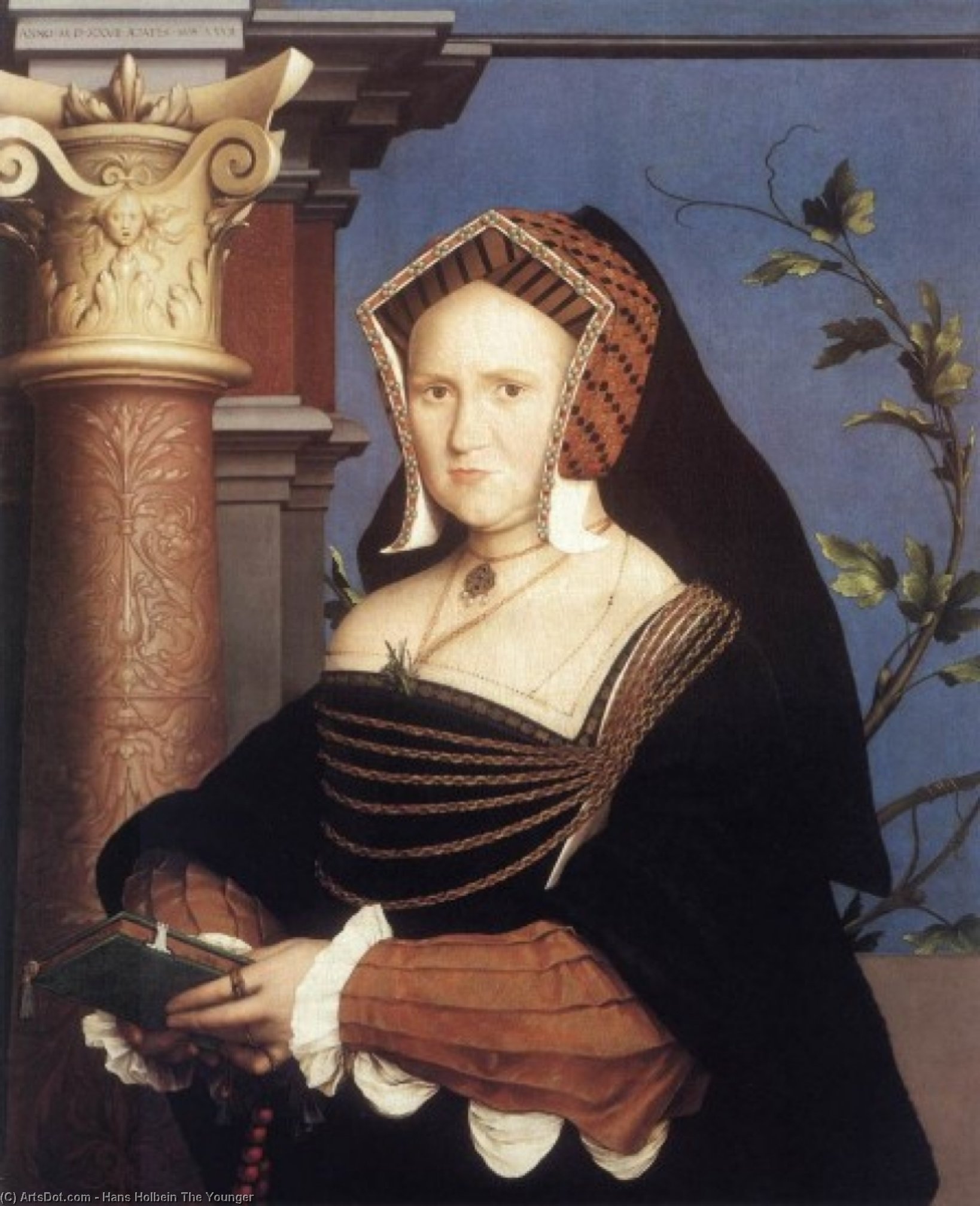
Portraitul lui Lady Mary Guildford


 Vezi mai mult
Reproducere pictată manual în ulei
Pictură în ulei pe pânză, realizată manual de artiștii noștri la dimensiunea și ramele dorite de dumneavoastră, pe comandă. ( Comandă versiunea tipărită Comută la imagine)




P118B $10

P118H $10

P118W $10

P438Z $10

P508JH $12

P508YH $12

P805H $10

P805Z $10

P919BZ $10

P919G $10

P919XJ $10

P959ZH $10

P968JZ $12

W106C $8

W218G $10

W218JH $8

W218Y $10

W307PJ $10

W316G $10

W316PJ $8

W316Y $10

W398PJ $8

W4111J $10

W500HY $15

W500JH $15

W692G $12

W849H $8

W940BG $15

W953PJ $8




Alegeți dintre dimensiunile noastre prestabilite, care respectă proporțiile originale ale operei de artă.

Puteți introduce propriile dimensiuni pentru a se potrivi unui anumit cadru sau spațiu. Dacă dimensiunea selectată nu corespunde proporțiilor imaginii originale, vom decupa opera de artă sau vom extinde pictura cu elemente suplimentare pictate manual. O simulare digitală vă va fi trimisă pentru aprobare înainte de începerea producției.
Vă rugăm să rețineți că previzualizarea de pe ecran nu reflectă decuparea sau extinderea reală. Doar macheta va arăta cu exactitate compoziția finală.
Deși sunt disponibile dimensiuni personalizate, vă recomandăm să selectați o dimensiune din lista predefinită pentru a păstra proporțiile originale.
După plasarea comenzii, echipa ArtsDot.com va contacta clientul prin e-mail pentru instrucțiuni și îi va furniza o previzualizare a machetei
Livrare în întreaga lume () în 3-4 săptămâni, în loc de cele 5 săptămâni standard. (9 August). Fără compromisuri în ceea ce privește calitatea.

Livrare expres gratuită la nivel mondial

Pânză de in de înaltă calitate

Asigurare completă pentru transport

Garanție de rambursare a taxelor vamale

Garanția fidelității culorilor

Politica de retur în 60 de zile (doar pentru defecte)

Garanție de rambursare 100%

Ofertă pentru comenzi multiple
 Opțiunea cu sticlă este disponibilă doar pentru dimensiuni de sub 110 cm

Portraitul lui Lady Mary Guildford
Tehnică de reproducere
Dimensiune reproducere
-


Preț total calculat
$ 263
Descriere operă de artă
A Portrait of Grace and Power: Unveiling Hans Holbein’s “Portrait of Lady Mary Guildford”
Hans Holbein the Younger's "Portrait of Lady Mary Guildford" is more than just a painting; it’s a meticulously crafted window into the opulent world of 16th-century England. Completed around 1527, this oil on oak panel captures not merely the likeness of a noblewoman but also her status, piety, and the subtle power she wielded within the court of Henry VIII. The painting resides today in the Saint Louis Art Museum, a testament to its enduring beauty and historical significance, and it’s a work that continues to fascinate art historians and collectors alike.
Holbein, a German artist who spent much of his career in England, was renowned for his ability to render human form with astonishing realism and psychological depth. He moved beyond simple likenesses, striving instead to capture the very essence of his subjects – their character, mood, and social standing. In “Portrait of Lady Mary Guildford,” this ambition is brilliantly realized. The subject, Lady Mary Wotton, wife of Sir Henry Guildford, a prominent courtier, is presented with an almost regal composure. Her gaze meets the viewer directly, inviting engagement and revealing a quiet strength.
The painting’s composition immediately draws attention to several key elements. Lady Mary wears a dark, richly draped gown, indicative of her elevated social position. The ruffled collar, a fashionable detail of the era, adds a touch of elegance and sophistication. Noticeably, she holds a book and a rosary – symbols deeply rooted in Christian piety, suggesting a devout nature. However, it’s not merely religious devotion that defines her; there's an underlying sense of self-assurance, a subtle defiance conveyed through her posture and the directness of her gaze. The background, featuring two classical columns and a vase, creates a sense of depth and grandeur, further emphasizing Lady Mary’s importance within the scene.
The Northern Renaissance Style: Precision and Psychological Insight
“Portrait of Lady Mary Guildford” is firmly rooted in the Northern Renaissance style, a movement characterized by its emphasis on realism, meticulous detail, and psychological observation. Unlike the idealized representations prevalent in Italian Renaissance art, Holbein’s work prioritized accuracy and a profound understanding of human anatomy and expression. He employed a technique known as *sfumato*, subtly blurring lines and softening edges to create an illusion of depth and volume – particularly evident in the folds of her gown and the delicate rendering of her hands.
Holbein’s mastery of light and shadow is equally remarkable. The painting is bathed in a soft, diffused light that highlights Lady Mary's features and creates a sense of intimacy. He skillfully uses chiaroscuro – the dramatic contrast between light and dark – to sculpt her form and draw attention to key details, such as the texture of her dress and the expression on her face. This careful manipulation of light not only enhances the visual impact of the painting but also contributes to its overall emotional resonance.
A Window into Tudor Court Life
“Portrait of Lady Mary Guildford” offers a valuable glimpse into the social and cultural landscape of Tudor England. The portrait reflects the importance of patronage – wealthy individuals like Sir Henry Guildford commissioned artists to create works that would enhance their status and demonstrate their wealth and influence. The lavish setting, with its classical columns and ornate vase, speaks volumes about the court’s appreciation for luxury and refinement.
Interestingly, this particular portrait is a copy of another painting by Holbein, which resides in the Royal Collection at Windsor Castle. The slight variations between the two versions suggest that it was likely produced in Holbein’s workshop during his time in England, highlighting the artist’s influence and the dissemination of his style. The existence of both paintings allows art historians to study Holbein’s techniques and understand how his work evolved over time.
Reproductions: Bringing a Masterpiece Home
ArtsDot.com is proud to offer meticulously crafted hand-painted oil painting reproductions of “Portrait of Lady Mary Guildford.” Our skilled artists replicate Holbein’s masterful technique, using the finest materials to ensure that each reproduction captures the essence and beauty of the original. We understand that owning a piece of art history is a significant investment, which is why we offer a range of sizes and customization options to suit your individual needs and budget.
Whether you’re an art enthusiast, a collector seeking to expand your collection, or simply someone who appreciates exquisite craftsmanship, a reproduction of “Portrait of Lady Mary Guildford” will be a stunning addition to your home or office. It's a timeless masterpiece that continues to captivate viewers with its grace, power, and enduring beauty. Explore our selection today and bring a piece of Tudor history into your life.
Photo Description: The painting is a portrait of a woman wearing a black dress with a ruffled collar. She has long hair that is pulled back in a ponytail. The woman appears to be looking at the viewer, possibly smiling or frowning. In the background, there are two columns and a vase. One column is located on the left side of the painting, while the other is situated on the right side. The vase can be seen in the middle of the scene, slightly behind the woman. Size: Unknown Date: Unknown ARTIST INFORMATION: ================== Artist: Hans Holbein the Younger Birth Year: 1497 Death Year: 1543 Birth City: Augsburg Birth Country: Italy Biography:A Life Etched in Detail: The World of Hans Holbein the Younger
Born around 1497 in the free imperial city of Augsburg, Germany, Hans Holbein the Younger emerged as a defining figure of the Northern Renaissance—a master portraitist whose work continues to resonate with breathtaking realism and psychological depth. His upbringing within an artistically gifted family laid the foundation for his exceptional talent; his father was Michael Holbein; his brother was Sigmund Holbein (died 1540). He had two sons, both artists and printmakers: Ambrosius Holbein (c. 1494 – c. 1519) and Hans Holbein the Younger (c. 1497 – 1543), who both had their first painting lessons from their father.\nHolbein was born in Augsburg but worked mainly in Basel as a young artist. At first, he painted murals and religious works, and designed stained glass windows and illustrations for books from the printer Johann Froben. He also painted an occasional portrait, making his international mark with portraits of humanist Desiderius Erasmus. When the Reformation reached Basel, Holbein worked for reformist clients while continuing to serve traditional religious patrons. His Late Gothic style was enriched by artistic trends in Italy, France, and the Netherlands, as well as by Renaissance humanism. The result was a combined aesthetic uniquely his own.\nHolbein travelled to England in 1526 in search of work with a recommendation from Erasmus. He was welcomed into the humanist circle of Thomas More, where he quickly built a high reputation. He returned to Basel for four years, then resumed his career in England in 1532 under the patronage of Anne Boleyn and Thomas Cromwell. By 1535, he was King's Painter to Henry VIII. In this role, he produced portraits and festive decorations, as well as designs for jewellery, plate, and other precious objects. His portraits of the royal family and nobles are a record of the court in the years when Henry was asserting his supremacy over the Church of England.\nHolbein's art has sometimes been called realist, since he drew and painted with a rare precision. His portraits were renowned in their time for their likeness, and it is through his eyes that many famous figures of his day are pictured today, such as Erasmus and More. He was never content with outward appearance, however; he embedded layers of symbolism, allusion, and paradox in his art, to the lasting fascination of scholars. In the view of art historian Ellis Waterhouse, his portraiture \"remains unsurpassed for sureness and economy of statement, penetration into character, and a combined richness and purity of style.\"\n\n== Biography ==\n\n\n=== Early career ===\n\nHolbein was born in Augsburg but worked mainly in Basel. At first, he painted murals and religious works, and designed stained glass windows and woodcuts. The surviving prints that can be attributed to him are few and a new one has recently been added to the group, an Annunciation to the Virgin in the collection of the Universitätbibliothek in Erlangen.\n\n== Life ==\nHolbein was born in Augsburg but worked mainly in Basel. At first, he painted murals and religious works, and designed stained glass windows and woodcuts. The surviving prints that can be attributed to him are few and a new one has recently been added to the group, an Annunciation to the Virgin in the collection of the Universitätbibliothek in Erlangen.\n\n== Gallery ==\n\n\n== See also ==\nEarly Renaissance paintingOpere similare


Biografie artist
A Life Etched in Detail: The World of Hans Holbein the Younger
Born around 1497 in Augsburg, Germany, Hans Holbein the Younger emerged as a defining figure of the Northern Renaissance—a master portraitist whose work continues to resonate with breathtaking realism and psychological depth. His upbringing within an artistically gifted family laid the foundation for his exceptional talent; his father, Hans Holbein the Elder, was a respected painter and printmaker who instilled in young Hans a meticulous approach to observation and technique. This early training wasn’t merely about mastering brushstrokes or mixing pigments—it was about learning to *see*, to capture not just likeness but the very essence of a subject. Holbein's initial artistic explorations occurred within his father’s workshop, where he honed his skills before embarking on a journey that would lead him through Switzerland and ultimately to the heart of the English court.From Basel to the Tudor Court: A Rising Star
After completing his apprenticeship, Holbein traveled extensively throughout Switzerland, establishing himself as an independent artist with a growing reputation. He spent several formative years in Basel, creating not only striking portraits but also religious works and intricate woodcut designs—most notably the haunting series depicting the *Dance of Death*. These early pieces reveal a burgeoning mastery of composition and a developing fascination with capturing the complexities of human emotion. His father’s influence was paramount; Holbein inherited his meticulous attention to detail and unwavering dedication to artistic excellence. The Basel workshop fostered an environment where observation reigned supreme—a crucial element in Holbein's future success as a portraitist. He skillfully blended German artistic traditions with influences from the Italian Renaissance, absorbing techniques that would elevate his craft to unprecedented heights. It was in 1526 that fate intervened, drawing Holbein towards England, an event that would irrevocably alter his artistic trajectory. He arrived bearing a letter of introduction from Erasmus, the renowned humanist scholar, which opened doors to the influential circles of English society. His talent quickly captivated prominent figures like Sir Thomas More, who became both a patron and a subject for several compelling portraits. This connection proved pivotal, leading to Holbein’s appointment as a court painter to King Henry VIII in 1536—a position he held, with some interruptions, until his untimely death in 1543. During this period, Holbein documented the grandeur of Tudor England and immortalized its rulers, solidifying his place in history as one of the most celebrated artists of his time.The Art of Perception: Style and Masterpieces
Holbein's artistic style is characterized by an extraordinary commitment to realism, achieved through painstaking attention to detail in rendering textures, fabrics, and the subtle nuances of facial features. He didn’t simply *paint* portraits; he meticulously constructed them, layer upon layer, capturing not just physical appearances but also the personality and inner life of his sitters. His innovative compositions further enhanced the impact of his work, often employing symbolic objects or backgrounds to convey deeper meaning. The Ambassadors (1533) stands as a testament to this approach—a complex and symbolically rich double portrait showcasing both Holbein’s technical brilliance and intellectual depth. The anamorphic skull subtly embedded within the painting serves as a stark *memento mori*, reminding viewers of the inevitability of death. This masterful use of perspective and symbolism exemplifies Holbein's dedication to conveying more than just visual likeness—he aimed to capture the spirit of his subjects and communicate profound philosophical ideas. His numerous portraits of Henry VIII established a lasting image of royal power, portraying him with unflinching honesty and capturing his regal demeanor. He skillfully rendered Henry VIII’s physical features with remarkable accuracy, reflecting Holbein's unwavering commitment to realism. Beyond technical skill, Holbein possessed an exceptional ability to convey psychological depth—a hallmark of his portraits that distinguishes them from earlier depictions of monarchs. Other notable works include the stunning *Portrait of Nikolaus Kratzer* (1528), a masterpiece of realism and scientific detail—a testament to Holbein’s fascination with observation and his desire to represent subjects in their entirety. He didn't merely record appearances—he captured moments in time, preserving them for posterity.Legacy and Influence: A Lasting Impression
Holbein’s artistic journey was shaped by a confluence of influences, blending the precision of German artistic traditions with the compositional principles of the Italian Renaissance. He admired the work of Albrecht Dürer and other German masters while also studying Italian art during his travels, absorbing their techniques and incorporating them into his own unique style. His legacy is profound; Holbein’s portraits set a new standard for realism and psychological insight in portraiture, influencing generations of artists who followed. His depictions of key figures during the Tudor period provide invaluable insights into the lives and personalities of those who shaped English history. He remains one of the most admired and studied painters of the Renaissance—a master whose work continues to inspire and enthrall audiences worldwide.
Hans Holbein cel Tânăr
1497 - 1543 , Germania
Detalii rapide
- Artistic Movement Or Style: Renaissance Kunst
- Artists Or Movements Influenced By This Artist: ['Spätere Porträtkunst']
- Artists Who Influenced This Artist: ['Albrecht Dürer']
- Date Of Birth: c. 1497
- Date Of Death: October or November 1543
- Full Name: Hans Holbein der Jüngere
- Nationality: Germanisch-Schwäbisch
- Notable Artworks:
- Die Botschafter
- Porträt Heinrich VIII.
- Porträt Erasmus
- Place Of Birth: Augsburg, Germania
Articole similare

The Enduring Legacy of Oil on Canvas: Technique, History & Aesthetic Impact
Explore the rich history & techniques of oil painting – from Renaissance masters to Impressionism. Discover pigments, layering methods, and why this timeless medium endures. Expert insights for artists & art enthusiasts.

Hans Holbein the Younger: A Renaissance Portraitist's Mastery of Realism & Psychological Insight
Explore the life & art of Hans Holbein the Younger, a Renaissance master renowned for his strikingly realistic portraits and psychological insight. Discover iconic works like 'The Ambassadors' and delve into his lasting legacy.

Oil on Canvas: A Historical & Technical Exploration of a Timeless Artistic Medium
Explore the rich history & enduring techniques of oil painting on canvas. Discover the science behind its longevity, conservation practices, and contemporary relevance. Expert insights for art enthusiasts.

The Enduring Power of Painting: A Historical & Contemporary Exploration of Form and Emotion
Explore the rich history & enduring techniques of oil painting with ArtsDot. Discover masterpieces, learn about art collecting, and find authentic handmade reproductions crafted by skilled artists.
Portrete pe Pânză: Imortalizarea Iubitorilor prin Artă – O Explorare a Legăturii Emoționale și a Moștenirii Familiale
Imortalizați iubirea și legăturile familiale cu portrete personalizate realizate de artiști profesioniști. Descoperiți tehnici artistice rafinate, reproducerea capodoperelor și sfaturi pentru conservarea moștenirii dumneavoastră. Calitate superioară garantată!



