


Imaginea respectă alegerile tale: , .
Descriere obiect de colecție
Explore Max Klinger’s 'Bather,' a poignant bronze sculpture embodying Symbolist realism & emotional depth. Discover its expressive form & studio-lit beauty.
 Vezi mai mult
Biografie artist
Max Klinger (1857-1920): pictor simbolist german, renumit pentru gravurile evocatoare și explorarea adâncimii psihologice. Descoperă 'Glovă găsită' și o artă revoluționară!
Comandă în patru pași simpli
Nu vă grăbiți. Puteți modifica orice răspuns; prețul din coșul de comandă se actualizează în funcție de fiecare alegere.
1 Pasul unu din patru
On which medium should it be printed?
Canvas is printed with giclée inks and can be stretched or framed like a painting; paper comes flat, or framed behind glass.
2 Pasul doi din patru
Ce dimensiune doriți?
Aceste dimensiuni păstrează proporțiile tabloului original. Ilustrația prezintă alegerea dumneavoastră pe un perete, deasupra unei canapele de doi metri.
Sau introduceți propriile dimensiuni
Alegeți dintre dimensiunile noastre prestabilite, care respectă proporțiile originale ale operei de artă.

Introduceți lățimea și înălțimea necesare pentru a se potrivi ramei sau peretelui dumneavoastră. O printare poate fi doar tăiată, niciodată extinsă dincolo de dimensiunea imaginii originale, astfel încât o dimensiune cu o formă diferită va pierde o parte din imagine. Vă trimitem o simulare digitală pentru aprobare înainte de a imprima orice. Imaginea afișată pe această pagină nu prezintă tăierea reală — doar simularea arată acest lucru.
3 Pasul trei din patru
Cum ar trebui pregătită: rulată, întinsă pe pânză sau înramată?
Prețurile de mai jos sunt pentru dimensiunea aleasă la primul pas.
Alege marginile tabloului pe pânză întinsă
Alege cadrul tău

Alb lei1

Margini difuze lei1

Extins lei1

P118B lei10

P118H lei10

P118W lei10

P438Z lei10

P508JH lei12

P508YH lei12

P805H lei10

P805Z lei10

P919BZ lei10

P919G lei10

P919XJ lei10

P959ZH lei10

P968JZ lei12

W106C lei8

W218G lei10

W218JH lei8

W218Y lei10

W307PJ lei10

W316G lei10

W316PJ lei8

W316Y lei10

W398PJ lei8

W4111J lei10

W500HY lei15

W500JH lei15

W692G lei12

W849H lei8

W940BG lei15

W953PJ lei8

H24-GOLD lei30

H24-SILVER lei30

H36-GOLD lei45

H36-SILVER lei45
Înramat
Ramă: . Dimensiuni cu ramă: .
4 Pasul patru din patru
Câteva opțiuni de finisare
Toate sunt opționale. Răspunsurile deja selectate nu implică costuri suplimentare.
Livrare în întreaga lume () în 2 săptămâni, în loc de cele 4/5 săptămâni standard. (22 Noiembrie)
O plăcuță de identificare, ca la muzeu?
Detalii plăcuță din bronz gravat
This elegant plaque features the artist's name and the title of the artwork, finely engraved for a timeless presentation.
It is made from bronze with a refined, elegant finish. The text is precisely laser-engraved for a sharp and permanent result. Measuring 9x2 cm, the plaque is compact yet easy to read. It's built to be durable and scratch-resistant, offering a professional, museum-quality look. Mounting is simple thanks to the included adhesive backing.
Detalii plăcuță din acril transparent
The plaque includes essential engraved details such as the artist's name, the title of the artwork, the date it was created, the type of media used-like oil on canvas or watercolor-a brief description of the piece, and a QR code that links to the complete artwork information.
It is crafted from clear acrylic, offering a sleek, modern appearance. The text is UV-engraved in black to ensure strong visual contrast. With a size of 10x15 cm, it ensures optimal readability. It comes equipped with two metal hooks for secure wall mounting. The plaque is designed to be weather-resistant, making it suitable for various environments, and it includes interactive features that work seamlessly with smartphone scanning.
Detalii placă din acril negru
This elegant plaque includes engraved information such as the artist's name, the title of the artwork, the date it was created, the type of media used (like oil on canvas or watercolor), a short description of the artwork, and a QR code for quick access to more information.
The plaque itself is made from refined black acrylic with a premium finish. The text is laser-engraved in white for high contrast and readability. Its size is 10x15 cm, designed to be easy to read. It comes with two metal hooks for professional mounting. The design is sleek and fits any interior style. It is also weather-resistant and durable, with built-in digital integration for mobile compatibility.
Un lac protector?
Când aveți nevoie de el?
✓ Verifică și comandă
Your print, as you ordered it

Bather
Tehnică de reproducere
Dimensiune reproducere
-

Ramă pentru reproducere artistică
-
-
Pentru opere de artă sau reproduceri care depășesc 105 cm (aproximativ 41 de inch) pe oricare dintre laturi, cadrul va fi livrat demontat, sub formă de kit. Această metodă asigură o livrare sigură și previne deteriorarea în timpul transportului.
Este necesară asamblarea profesională – acest produs nu este de tip DIY (de făcut singur).
Kitul trebuie asamblat, iar pânza întinsă, de către un legător de cadre experimentat, utilizând adeziv pentru lemn (neinclus în colet), o cheie pentru întinderea pânzei și cleme pentru a menține barele la unghi drept în timp ce adezivul se usucă. Asamblarea incorectă sau tensiunea neuniformă a pânzei pot deteriora permanent opera de artă și nu sunt acoperite de garanția noastră.
 Pentru opere de artă sau reproduceri care depășesc 105 cm (aproximativ 41 de inch) pe oricare dintre laturi, cadrul va fi livrat demontat, sub formă de kit. Această metodă asigură o livrare sigură și previne deteriorarea în timpul transportului.
Toate barele din lemn masiv sunt incluse, tăiate cu precizie la dimensiunea necesară.
Asamblat cu șuruburile incluse, plus adeziv pentru lemn pentru îmbinările de colț, care nu este furnizat și trebuie achiziționat de către tâmplarul dumneavoastră.
Sunt necesare unelte profesionale care nu sunt incluse: o șipte de întindere a pânzei (tensionator) și cleme pentru a menține barele la unghi drept în timp ce adezivul se usucă.
Important:
Îmbinările de colț necesită adeziv pentru lemn, barele trebuie fixate cu clești de strângere până când adezivul este complet uscat, iar întinderea pânzei pe cadrul asamblat necesită un clește pentru întins pânza. Niciunul dintre aceste elemente nu este inclus în kit. Vă rugăm să consultați un încadrator profesionist cu experiență înainte de a comanda această dimensiune.

Etichetă de prezentare
-
-

Lac de protecție
Lac lucios (intensifică nuanțele și oferă protecție împotriva luminii și a umidității)
-

Livrare rapidă
Livrare la nivel mondial () în 2 săptămâni, în loc de cele 4/5 săptămâni standard. (22 Noiembrie)
-
Livrare rapidă
Livrare la nivel mondial în , în 4-5 săptămâni. (29 Noiembrie).
Inclus
Preț total calculat
lei 301
Opțiunea cu sticlă este disponibilă doar pentru dimensiuni de sub 110 cm
Inclus în fiecare comandă
- Livrare expres gratuită la nivel mondial
- Pânză de in de înaltă calitate
- Asigurare completă pentru transport
- Garanție de rambursare a taxelor vamale
- Garanția fidelității culorilor
- Politica de retur în 100 de zile (doar pentru defecte de fabricație)
- Garanție de rambursare 100%
- Ofertă pentru comenzi multiple


A Silent Reflection: The Soul of Max Klinger’s Bather
In the quiet intersection where the tangible world of Realism meets the ethereal realm of Symbolism, Max Klinger’s “Bather” resides as a profound masterpiece of psychological depth. Created in 1908, this bronze sculpture does not merely present a figure submerged in water; it captures a fleeting, heavy moment of introspection. To gaze upon the Bather is to witness more than a physical form; it is to encounter a state of being—a serene yet sorrowful stillness that speaks to the universal human experience of vulnerability and contemplation. The figure’s posture, draped in subtle, flowing lines, invites the viewer into a private sanctuary of thought, making it an ideal centerpiece for those who appreciate art that stirs the subconscious.
The technical mastery displayed in this work is nothing short of extraordinary. Executed in bronze, the sculpture utilizes a sophisticated patination process that grants the metal an almost otherworldly glow. The dark, rich tones of the bronze create a striking contrast against its surroundings, allowing the light to dance across the contours of the female form and the intricate folds of her drapery. Klinger’s dedication to realism is evident in the way he captures the weight and texture of the material, yet he transcends mere imitation through his use of organic, curvilinear shapes. This harmony between the physical accuracy of the bronze and the fluid, rhythmic lines of the composition creates a visual melody that is both soothing and deeply moving.
Symbolism and the Dawn of Modern Anxiety
As a pioneer of German Symbolism, Klinger was deeply invested in exploring the hidden currents of the human psyche. During the dawn of the 20th century, a period marked by rapid industrialization and shifting social structures, "Bather" serves as an anchor for the era's collective anxieties and dreams. The sculpture moves beyond the literal depiction of a woman bathing to become a vessel for unspoken burdens and quiet resilience. Every curve of the body and every shadow cast by the studio lighting suggests a narrative complexity—a story of loss, longing, or perhaps a momentary escape from the pressures of the modern world.
For the discerning collector or interior designer, this piece offers an unparalleled opportunity to introduce emotional intelligence into a space. Whether placed in a minimalist contemporary gallery or a richly textured classical study, the Bather commands attention through its quiet intensity. It is not a work that shouts for recognition; rather, it waits to be discovered by those who seek depth and meaning in their surroundings. Owning a high-quality reproduction of this work allows one to bring the haunting beauty of Klinger’s vision into the home, providing a constant source of inspiration and a window into the profound mysteries of the human spirit.
Întrebări și răspunsuri
Unde pot achiziționa o imagine digitală a "Bather" de Max Klinger?
O imagine digitală a operei "Bather" de Max Klinger poate fi achiziționată pe pagina sa de Imagine digitală de înaltă rezoluție: descărcare imagine digitală de înaltă rezoluție.
Unde pot găsi statistici despre "Bather" de Max Klinger?
Pagina Statistici pentru "Bather" de Max Klinger prezintă statistici privind vizitele publice: numărul de vizite lunare ale acestei opere, o comparație cu cele mai vizionate lucrări ale artistului și proveniența vizitatorilor.
Ce origine națională stă la baza Symbolism-ului din "Bather"?
Lucrarea de Symbolism „Bather” a fost creată de un artist născut în Germania.
Mai multe detalii despre această pictură
 Comandă pictură realizată manual
 Trimite prin felicitare
 Distribuie
 Detalii despre lucrare
 Ghid
Ghid

 Descarcă imaginea
 Produse similare
 Galerie foto
 Întrebări și răspunsuri
 Statistici
Opere similare


Max Klinger
1857 - 1920, Germania
Biografie artist
The Shadowed World of Max Klinger: A Pioneer of Symbolism
Max Klinger, born in Leipzig in 1857, wasn’t merely an artist; he was a translator of the unseen—a chronicler of dreams and anxieties that lay just beneath the surface of everyday life. His artistic journey began not with immediate acclaim but with a deliberate, almost melancholic descent into the psychological depths, forging a unique vision that would profoundly influence the course of modern art. Initially trained at the Academy of Fine Arts in Karlsruhe under Karl Gussow, Klinger’s early work reflected the prevailing aesthetic of his time—detailed depictions of urban life and social commentary, yet it was his profound fascination with the etchings of masters like Menzel and Goya that truly ignited his imagination. These artists demonstrated a remarkable ability to convey not just visual representation but also narrative complexity and intense emotionality – qualities Klinger would masterfully harness throughout his career. He wasn’t content simply to *show* the world; he sought to *reveal* its hidden currents, its unspoken fears, and its elusive desires.From Realism's Embrace to Symbolic Depths
Klinger’s artistic evolution was marked by a deliberate shift away from straightforward realism towards a more subjective and symbolic language. His early paintings often mirrored the social realities of late 19th-century Germany – scenes of bustling city streets, portraits of bourgeois figures, and depictions of working-class life. However, this phase proved merely a stepping stone. The true turning point arrived with his groundbreaking series of etchings, *Paraphrase on the Finding of a Glove* (1881). This ambitious project, comprising ten meticulously crafted plates, wasn’t a literal illustration of an event but rather a fragmented, dreamlike exploration of desire, loss, and the intricate complexities of human relationships. The glove itself became a potent symbol – a relic imbued with memory, longing, and the ephemeral nature of connection. This series established Klinger as a leading voice in the Symbolist movement, demonstrating his extraordinary ability to transform ordinary objects into vehicles for profound psychological insight. He wasn’t interested in simply *showing* what things looked like; he wanted to convey *what they represented*, their hidden meanings and emotional resonance.Sculpture, Printmaking, and the Exploration of Myth
Klinger's artistic output was remarkably diverse, encompassing painting, sculpture, and printmaking – though it’s arguably in the realm of graphic arts that he achieved his most enduring legacy. His prints are characterized by their meticulous technique, dramatic use of light and shadow, and haunting imagery. He wasn’t afraid to tackle challenging themes—mortality, sexuality, and the darker aspects of the human psyche. Beyond *Paraphrase on the Finding of a Glove*, works like his depictions of Faustian bargains – exploring themes of ambition, sacrifice, and the corrupting influence of power – and mythological scenes – drawing inspiration from ancient legends and folklore – reveal a fascination with archetypal narratives and universal human struggles. His sculptural work, though less prolific than his prints, was equally ambitious. A prime example is his monumental installation in homage to Beethoven at the Vienna Secession in 1902—a powerful testament to the composer’s genius and a bold statement of artistic innovation. The sculpture, depicting Beethoven as a Greek god presiding over a vast, ethereal landscape, challenged conventional notions of beauty and form, inviting viewers to contemplate the sublime power of art and music. Klinger's sculptures were often deliberately unsettling, designed to provoke thought and emotion rather than simply provide aesthetic pleasure.Influences and Artistic Development
Klinger’s artistic development was shaped by a confluence of influences – from the meticulous realism of Menzel and Goya to the evocative symbolism of Japanese woodblock prints and the philosophical ideas of Arthur Schopenhauer and Friedrich Nietzsche. He deeply admired the works of these masters, absorbing their techniques and incorporating their sensibilities into his own practice. His early exposure to Japanese art instilled in him a profound appreciation for simplicity, elegance, and the use of negative space – qualities that would later inform his printmaking style. Furthermore, Klinger’s engagement with philosophical currents—particularly Schopenhauer's pessimism and Nietzsche's critique of traditional morality—fueled his exploration of darker themes and his willingness to confront uncomfortable truths about human nature. He wasn’t simply an imitator; he synthesized these diverse influences into a uniquely personal artistic vision.Legacy and Influence: A Bridge to Modernity
Max Klinger’s influence extended far beyond his own lifetime. He paved the way for Expressionism, Surrealism, and other avant-garde movements that sought to explore the inner world of human experience. His emphasis on symbolism, psychological depth, and subjective interpretation resonated with artists grappling with the anxieties and uncertainties of the modern age. The artist’s exploration of dreamlike states and subconscious desires anticipated the work of later Surrealists like Salvador Dalí and René Magritte. Even in more recent times, Klinger's ideas continue to inspire contemporary artists. In 1991, the Moscow art collective Inspection Medical Hermeneutics created “Klinger’s Boxes,” an installation directly inspired by his work – a testament to the enduring power of his vision. He remains a crucial figure in understanding the transition from 19th-century academic traditions to the radical experimentation of the 20th century. His art invites us to confront our own shadows, to delve into the mysteries of the human psyche, and to recognize the profound beauty that can be found even in the darkest corners of existence.Articole similare

Capodopere ale Secolului al XIX-lea: 10 Lucrări de Artă Esențiale pentru Decorul Tău
Descoperă 10 capodopere ale secolului al XIX-lea! Explorează romantismul lui Delacroix, impresionismul lui Monet și realismul lui Courbet. Găsește inspirație pentru decorul tău cu reproduceri de artă de calitate muzeală pe ArtsDot.com.

Max Klinger: Symbolism, Science & the Subconscious – A German Master's Legacy
Explore the captivating world of Max Klinger, a pivotal German Symbolist artist. Discover his groundbreaking prints, psychological themes, & influence on modern art movements like Expressionism. Expert analysis and insights.
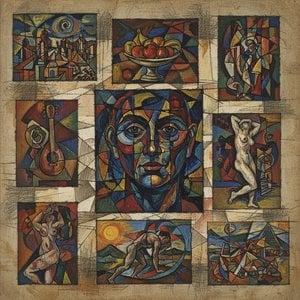
Cubismul Expresionist: 10 Capodopere Esențiale pentru Decoruri de Artă Rafinate | ArtsDot.ro
Descoperă cele mai importante 10 capodopere ale Cubismului Expresionist! Explorează poveștile lui Picasso, Braque și alți artiști revoluționari. Reproduceri de artă de calitate muzeală pentru un decor interior unic. ArtsDot.ro