


 Vezi în context
 Trimite
 Distribuie
 Detalii
 Ghidul

 Descarcă
 Produse similare
 Radiografie
 Diaporama
 Statistici
0


 Citește mai mult
Reproducere pictată manual în ulei
Pictură în ulei pe pânză, realizată manual de artiștii noștri la dimensiunea și ramele dorite de dumneavoastră, pe comandă. ( Comută pe versiunea Print Treci la imagine digitală)




P118B lei10

P118H lei10

P118W lei10

P438Z lei10

P508JH lei12

P508YH lei12

P805H lei10

P805Z lei10

P919BZ lei10

P919G lei10

P919XJ lei10

P959ZH lei10

P968JZ lei12

W106C lei8

W218G lei10

W218JH lei8

W218Y lei10

W307PJ lei10

W316G lei10

W316PJ lei8

W316Y lei10

W398PJ lei8

W4111J lei10

W500HY lei15

W500JH lei15

W692G lei12

W849H lei8

W940BG lei15

W953PJ lei8




Alegeți dintre dimensiunile noastre prestabilite, care respectă proporțiile originale ale operei de artă.

Introduceți lățimea și înălțimea de care aveți nevoie, pentru a se potrivi ramei sau peretelui dumneavoastră. Această lucrare este pictată manual, așa că pentru o dimensiune cu o formă diferită, artistul poate picta puțin mai mult în jurul imaginii sau poate tăia puțin din margini — dumneavoastră decideți. Vă vom trimite o simulare digitală pentru aprobare înainte de a începe pictarea. Imaginea afișată pe această pagină nu reprezintă rezultatul real — doar simularea este reprezentativă.
După plasarea comenzii, echipa ArtsDot.com va contacta clientul prin e-mail pentru instrucțiuni și îi va furniza o previzualizare a machetei
Livrare în întreaga lume () în 3-4 săptămâni, în loc de cele 5 săptămâni standard. (24 Octombrie). Fără compromisuri în ceea ce privește calitatea.

Livrare expres gratuită la nivel mondial

Pânză de in premium

Asigurare completă pentru transport

Garanție de rambursare a taxelor vamale

Garanția fidelității culorilor

Politica de retur în 100 de zile (doar pentru defecte)

Garanție de rambursare 100%

Reducere pentru comenzi multiple
 Opțiunea cu sticlă este disponibilă doar pentru dimensiuni de sub 110 cm

0
Tip de reproducere
Dimensiune reproducere
-


Preț total
lei 1218
A Glimpse into Melancholy Beauty: The Soul of Modigliani’s “0”
Amedeo Clemente Modigliani, a name that resonates with an enduring fascination for the sublime—a blend of sorrow and exquisite grace—stands as one of the most poignant figures in early 20th-century artistic expression. His oeuvre, primarily comprised of haunting portraits and evocative nudes, continues to captivate audiences worldwide, cementing his place among the luminaries of Expressionism. In the composition known as “0,” we encounter a deceptively simple arrangement that transcends mere visual representation. Featuring a woman’s visage rendered with Modigliani's signature elongated proportions, the piece embodies a profound meditation on human vulnerability and inner contemplation.
To encounter this work is to step into a world where the boundaries of the human silhouette are gracefully redefined. The painting presents a portrait of a woman with flowing hair, her eyes closed in a gesture that speaks volumes about her internal state. This deliberate concealment is not interpreted as sadness or despair, but rather as an invitation to introspection; it suggests a profound stillness beneath the surface of outward appearance. As she appears to be looking off into the distance or perhaps drifting into sleep, the viewer is drawn into her private sanctuary of thought.
The Expressionist Spirit and the Art of Distortion
Emerging from the crucible of European intellectual ferment at the dawn of the century, Expressionism rejected Impressionistic objectivity in favor of conveying subjective emotional experience. Modigliani’s stylistic approach aligns perfectly with this movement's ethos. The deliberate elongation of the face and torso isn’t merely an aesthetic choice; it serves as a powerful tool for conveying psychological depth, mirroring the artist’s own preoccupation with capturing the elusive essence of human emotion. Through the architectural feat of the canvas, he creates a sense of verticality that draws the viewer upward, much like the soaring lines of Gothic cathedrals.
The technique is further enriched by a masterful use of chiaroscuro—the dramatic contrast between light and shadow—which enhances the sculptural quality of the subject. While the main figure commands the foreground with her ethereal presence, the subtle inclusion of other figures in the periphery adds a layer of narrative complexity, suggesting a world that continues to move around her silent, meditative center. This interplay of light and form creates a rhythmic, almost musical grace that defies anatomical reality to reach a higher state of poetic truth.
A Timeless Addition for the Discerning Collector
For art lovers, collectors, and interior designers alike, a high-quality reproduction of this masterpiece offers more than just decoration; it provides an emotional anchor for any space. The painting’s palette and its hauntingly beautiful subject matter make it a versatile centerpiece, capable of inspiring a sense of calm and sophistication in modern living rooms, private studies, or curated galleries. It is a piece that invites the eye to linger, prompting a dialogue between the viewer and the profound melancholy captured on the canvas.
Owning a tribute to Modigliani’s vision means bringing into one's home a fragment of the École de Paris—a piece of history that celebrates the beauty found in fragility. Whether you are seeking to evoke a sense of bohemian elegance or looking for a profound conversation starter, this work stands as a testament to the enduring power of the human spirit and the transformative magic of modern art.
Întrebări și răspunsuri
"0" de Modigliani folosește contrastul puternic sau armonii delicate?
Analiza cromatică a operei "0" de Modigliani relevă un Statement contrast și o Discordant Palette armonie.
Pot folosi realitatea augmentată pentru a vedea "0" de Modigliani în camera mea?
Poți vizualiza "0" de Modigliani pe propriul tău perete folosind pagina Previzualizare AR a operei de artă, prin intermediul realității augmentate pe un dispozitiv compatibil.
„0” prezintă contraste puternice între lumină și întuneric?
Contrastul lumină-umbră din "0" este înregistrat ca Statement. Contrastul descrie cât de puternic diferă zonele luminoase de cele întunecate.
Opere similare


Biografie artist
A Life Etched in Longing: The World of Amedeo Modigliani
Amedeo Clemente Modigliani, a name synonymous with haunting beauty and melancholic grace, remains one of the most beloved and tragically romantic figures of early 20th-century art. Born in Livorno, Italy, in 1884 into a family steeped in Sephardic Jewish heritage, his life was marked by both profound artistic vision and persistent hardship. Frequent illness shadowed his youth – pleurisy and typhoid fever became unwelcome companions – perhaps instilling within him a sensitivity to fragility that would permeate his work.
Though born into relative comfort, the family’s financial fortunes waned, adding another layer of complexity to the young Modigliani's formative years. It was a childhood punctuated by intellectual stimulation, thanks to his mother and grandfather who introduced him to the works of Nietzsche, Baudelaire, and Lautréamont, laying the groundwork for an artistic sensibility that would reject conventional norms.
The pull of Paris proved irresistible, and in 1906, Modigliani embarked on a journey that would define his career. The city was then a crucible of artistic innovation, teeming with revolutionary ideas and challenging conventions. He immersed himself in the vibrant art scene, encountering giants like Pablo Picasso and Constantin Brâncuși, figures who profoundly shaped his aesthetic trajectory. Initially drawn to the burgeoning Cubist movement, Modigliani quickly found its rigid geometry too constricting for his expressive needs. His artistic spirit yearned for something more lyrical, more deeply rooted in human emotion.
He began a period of intense experimentation, absorbing influences from African sculpture – particularly its elongated forms and simplified features – and the archaic grace of Italian Renaissance art. This fascination with African art would become a cornerstone of his distinctive style, informing his sculptural endeavors and shaping his artistic vision.
The Sculpted Soul: Style and Innovation
Modigliani’s signature style emerged as a unique synthesis of these diverse inspirations. His portraits, arguably his most celebrated works, are instantly recognizable for their elongated faces and necks, almond-shaped eyes devoid of pupils, and an overall sense of serene melancholy. These were not merely likenesses; they were explorations of the inner life, capturing a profound psychological depth in each subject. He stripped away extraneous detail, focusing on essential forms to convey emotion with remarkable economy.
His nudes, often controversial during his lifetime, possess a similar quality – a quiet dignity and vulnerability that transcends mere physical representation. The figures are not overtly sensual but rather imbued with a sense of timeless beauty and existential longing. Modigliani’s masterful manipulation of line—a technique he honed through meticulous observation and relentless practice—became synonymous with his artistic idiom.
Notable Works
- Nude Bust (35 x 26 cm): A quintessential example of Modigliani’s elongated forms and expressive style, showcasing his mastery of the human figure.
- Reclining Nude with Loose Hair: Demonstrates his ability to capture the essence of femininity with a delicate balance of sensuality and vulnerability.
- Seated Female Nude (92 x 60 cm): A powerful depiction of the female form, characterized by its simplified shapes and serene composure.
- Portrait of Jeanne Hebuterne: Numerous portraits capturing his lover and muse, revealing a poignant emotional depth and intimate connection.
A Life Marked by Shadows
Modigliani’s personal life was as turbulent as his artistic journey. He struggled with poverty and addiction throughout much of his career, often relying on the generosity of friends and patrons. His relationship with Jeanne Hébuterne, a young artist herself, became the central emotional anchor in his life. They shared a deep love and mutual artistic understanding, but their happiness was tragically short-lived.
The pressures of poverty, Modigliani’s declining health, and Jeanne's pregnancy created an unbearable strain. In 1920, devastated by the birth of their daughter and overwhelmed by despair, Jeanne took her own life. Just days later, Modigliani succumbed to tubercular meningitis at the age of only 35.
Legacy of a Lost Generation
Despite facing little recognition during his lifetime, Amedeo Modigliani’s work experienced a dramatic surge in popularity after his death. His paintings and sculptures began to command increasingly high prices, and his distinctive style exerted a profound influence on subsequent generations of artists. He became an icon of the bohemian spirit, embodying the struggles and triumphs of a lost generation grappling with modernity and existential questions.
Today, Modigliani’s works are held in prestigious museums around the world, including the Osaka City Museum of Modern Art, the Musée d'Art Moderne de la Ville de Paris, and numerous private collections. His portraits continue to captivate viewers with their haunting beauty and emotional resonance, serving as a poignant reminder of a life lived on the edge – a life etched in longing, passion, and an unwavering commitment to artistic truth.

Modigliani
1884 - 1920 , Italia
Informații rapide
- Artistic Movement Or Style: Expresionism
- Artists Or Movements Influenced By This Artist: ['Modernism']
- Artists Who Influenced This Artist:
- Brâncuși
- Picasso
- Date Of Birth: 12 iulie 1884
- Date Of Death: 24 ianuarie 1920
- Full Name: Amedeo Clemente Modigliani
- Nationality: Italian
- Notable Artworks:
- Nud Bust
- Reclining Nude
- Seated Female Nude
- Place Of Birth: Livorno, Italia
Articole conexe
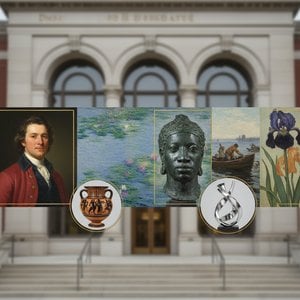
Capodopere la MFA Boston: 25 de opere de artă esențiale pentru iubitorii de frumos | ArtsDot.ro
Descoperă cele mai frumoase 25 de opere din Muzeul de Arte Frumoase Boston! Explorează poveștile lui Van Gogh, Monet și Sargent. Reproduceri tablouri de calitate muzeală & inspirație decor pe ArtsDot.com.

Expresionismul în Artă: 10 Capodopere Definitorii pentru Decorul Tău
Descoperă 10 capodopere expresioniste de la Munch, Van Gogh și Kandinsky! Explorează istoria artei moderne, emoțiile puternice și culorile vibrante. Reproduceri tablouri de calitate muzeală pentru un decor unic pe ArtsDot.com

Modigliani: Cele Mai Iconice 25 De Opere – Artă, Frumusețe și Decorațiuni de Lux
Descoperă cele mai frumoase 25 de opere Modigliani! Explorează portrete expresive, sculpturi unice și nuduri iconice. Află povestea fiecărei picturi și adaugă eleganță locuinței tale cu replici de artă de lux pe ArtsDot.com.

El Greco: Cele Mai Reprezentative 25 De Capodopere – Artă Sacră și Decorațiuni Excepționale
Descoperă cele mai frumoase 25 de picturi El Greco! Explorează capodoperele renascentiste, stilul unic al lui Doménikos Theotokópoulos și emoțiile puternice din arta sa sacră. Reproduceri de artă de calitate muzeală pe ArtsDot.com – inspiră-ți decorul!

Egon Schiele: Cele Mai Remarcabile 25 De Opere – Artă, Decorațiuni și Inspirație
Descoperă cele mai importante 25 de opere ale lui Egon Schiele! Explorează expresionismul austriac, portretele intense și autoportretele emoționante. Reproduceri artă de calitate muzeală & inspirație decor pe ArtsDot.com.


