


1


Atualizado em Outubro 2026 · classificado pela nossa pontuação de popularidade (pesquisas, visitas e pedidos de cada obra) · 29 obras de Valentin Ruths em nosso catálogo
Em resumo
Se você conhece uma pintura de Valentin Ruths, provavelmente é The Boat House At Hamburg Harbour -. Italian Landscape with Castle and Staffage (1850) e Ziegelhütten im Sabinergebirge (1867) completam as três obras que as pessoas reconhecem de imediato. Nosso catálogo possui 29 obras de Valentin Ruths. Abaixo estão as 29 mais conhecidas, cada uma com seu ano, onde encontrá-la e o que a torna especial.


Os quatro temas que surgem com mais frequência nestas obras, cada um com o seu exemplo mais conhecido.
Os 3 museus que detêm a maioria das pinturas desta página.
| Museus | Cidade | Obras de Valentin Ruths | Pinturas desta lista |
|---|---|---|---|
 Statens Museum For Kunst |
Copenhague | 2 | Wooded Hills behind a Meadow with a Peat Bog, Open Landscape with Low Hills. Summer |
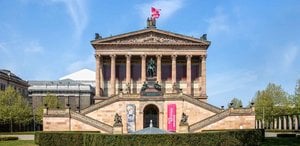 Alte Nationalgalerie |
Berlim | 1 | Beach on the Baltic Sea near Zoppot |
 Albert-König-Museum |
Südheide | 1 | Die Heide bei Bispingen |
Escolha uma década para ver a sua obra de destaque.
No topo da lista está The Boat House At Hamburg Harbour -. Logo atrás: Italian Landscape with Castle and Staffage (1850) e Ziegelhütten im Sabinergebirge (1867).
The Boat House At Hamburg Harbour -, Italian Landscape with Castle and Staffage, Ziegelhütten im Sabinergebirge, Im Inneren der Campagna, Wooded Hills behind a Meadow with a Peat Bog, Open Landscape with Low Hills. Summer, Beach on the Baltic Sea near Zoppot, Die Heide bei Bispingen, Mountain landscape with castle e Cows at the watering place. Encontrará o ano e o museu de cada uma na lista acima.
Temos 29 obras de Valentin Ruths em nosso catálogo, datadas de 1850 a 1905.
Encontrará a maioria deles em Statens Museum For Kunst (Copenhague), Alte Nationalgalerie (Berlim) e Albert-König-Museum (Südheide). A lista de museus acima apresenta o detalhamento completo.
Em 1900s, mais do que em qualquer outro momento: 6 das 29 obras nesta página datam dessa época, sendo Cows at the watering place delas.
A obra mais antiga aqui é Italian Landscape with Castle and Staffage (1850); a mais recente é Cows at the watering place (1905).
Landscape (3), Harbour (2) e Europe (2), de um total de 29 obras nesta página.
Pode ver 2 das obras nesta página no Statens Museum For Kunst, Copenhague, incluindo Wooded Hills behind a Meadow with a Peat Bog e Open Landscape with Low Hills. Summer.
Sim. Todas as pinturas nesta página estão disponíveis como uma reprodução a óleo pintada à mão ou uma impressão, no tamanho que melhor lhe convier. Basta abrir a página da pintura para fazer o seu pedido.
Born in Hamburg, Germany, in 1825, Valentin Ruths emerged as a significant figure in 19th-century German art, particularly renowned for his meticulously detailed watercolors and evocative depictions of the natural world and architectural scenes. While he initially pursued an apprenticeship in business before dedicating himself to artistic pursuits, it was his deep connection to his native landscape – specifically the River Elbe region and the surrounding moorlands – that would define his artistic legacy. Ruths’ work stands apart not merely for its technical skill but also for a quiet, contemplative approach to portraying nature, reflecting a shift away from the grand Romantic gestures of earlier generations.
Ruths' early training at the Munich Academy proved short-lived due to the tumultuous political climate following the 1848 revolutions. This disruption led him to Düsseldorf, where he studied under Johann Wilhelm Schirmer, a renowned landscape painter who instilled in him a profound appreciation for observation and the accurate rendering of light and atmosphere. A subsequent period of study in Rome further broadened his artistic horizons, exposing him to Italian landscapes and techniques. However, it was upon returning to Hamburg in 1857 that Ruths truly established himself as an independent artist, choosing to focus on capturing the subtle beauty of his homeland.
His artistic development can be characterized by a deliberate rejection of theatricality and genre conventions. Unlike some of his contemporaries, particularly those associated with the Barbizon School in France, Ruths eschewed dramatic figures or elaborate settings. Instead, he concentrated entirely on the intrinsic qualities of the landscape itself – the interplay of light and shadow, the textures of earth and water, the delicate hues of vegetation. This commitment to *paysage intime*—a pictorial genre emphasizing intimate observation—resulted in paintings that possess a remarkable immediacy and sense of presence. As Alfred Lichtwark, head of the Hamburg Kunsthalle, famously remarked, Ruths was “the foremost Hamburg landscape painter” of his time.
Ruths’ oeuvre is characterized by a remarkable consistency in subject matter and technique. He frequently depicted scenes from the Elbe region, capturing the moody atmosphere of its moorlands, the serene beauty of its riverbanks, and the charming architecture of its riverside towns. “The Moorland near Ehestorf” exemplifies this style perfectly, presenting a somber yet captivating view of a winding road through a desolate landscape, rendered with meticulous attention to detail and a masterful control of atmospheric perspective. Similarly, "Two Little Red Riding Hoods" showcases his ability to capture the essence of rural life, portraying peasant women in a muted palette and expressive brushwork.
Ruths’ technical skill is particularly evident in his watercolor technique. He employed a smooth, enamel-like glaze, eschewing the thick impasto favored by some other landscape painters. This approach allowed him to create subtle gradations of color and texture, conveying a remarkable sense of depth and luminosity. His use of light was consistently masterful, capturing the fleeting effects of sunlight on water, foliage, and stone with an almost photographic precision. The Woodland Gorge study demonstrates this perfectly, showcasing his ability to capture the ephemeral qualities of nature.
While often associated with the Romantic tradition, Ruths’ work represents a distinct departure from its more overtly emotional and dramatic tendencies. He embraced a more restrained and objective approach, prioritizing observation and accurate representation over subjective expression. This shift reflects broader changes in artistic sensibilities during the mid-19th century, as artists increasingly sought to capture the natural world with scientific rigor and aesthetic sensitivity.
Ruths’ work was highly regarded by his contemporaries, earning him recognition within the Hamburg art scene. His 1896 exhibition at the Kunstverein in der Kunsthalle cemented his reputation as a leading landscape painter. His paintings are now held in significant collections, including those of ArtsDot.com, testament to their enduring appeal and artistic merit.
Valentin Ruths’ legacy lies not only in the beauty of his individual works but also in his pioneering role as a landscape painter who championed a more direct and observational approach. His meticulous attention to detail, masterful control of color and light, and quiet reverence for nature continue to inspire artists today. His work serves as a reminder of the power of art to capture the essence of place and time, offering viewers a glimpse into the soul of the Hanseatic region.


