Portrait of Jean Dubuffet

Meet the 100 Most Famous Paintings by Jean Dubuffet

Updated Outubro 2026 · ranked by our popularity score (searches, visits and orders for each work) · 441 works by Jean Dubuffet in our catalogue

In short

If you know one Jean Dubuffet painting, it's probably Grand Maitre of the Outsider (1947). The Cow With The Subtle Nose (1954) and Monsieur Plume with Creases in his Trousers (Portrait of Henri Michaux) (1947) round out the three pieces people recognise right away. Our catalogue has 441 works by Jean Dubuffet. Below are the 100 people know best, each with its year, where to find it and what makes it special.

1901 – 1985, Le Havre Art brut Most works: Museu de Israel

Start here: the top 10 Jean Dubuffet paintings

1
Grand Maitre of the Outsider (1947) by Jean Dubuffet

Grand Maitre of the Outsider

1947 · Oil On Canvas

The canvas confronts the viewer with a face that seems to have been pulled directly from the earth. It is a portrait, yet it mocks the very idea of a formal likeness. An older male figure emerges from a deep, dark void, his features rendered in crude, simple shapes that feel urgent and unpolished. His eyes are wide, fixed in a stare that radiates annoyance, while his mouth hangs slightly…

2
The Cow With The Subtle Nose (1954) by Jean Dubuffet

The Cow With The Subtle Nose

1954 · Enamel

The Cow With The Subtle Nose is an artwork by Jean Dubuffet. Created in 1954, this work belongs to the Vaches series. It is also categorized within the Petites statues de la vie précaire series.

3
Monsieur Plume with Creases in his Trousers (Portrait of Henri Michaux) (1947) by Jean Dubuffet

Monsieur Plume with Creases in his Trousers (Portrait of Henri Michaux)

1947 · Oil On Canvas

The gaze of Monsieur Plume with Creases in his Trousers (Portrait of Henri Michaux) meets the viewer from across the years, a silent encounter frozen in 1947. Jean Dubuffet captures the essence of Henri Michaux within this singular frame, presenting a face that seems to hold a world of unspoken thought. The portrait exists as a direct confrontation between the subject and the observer, stripped of any unnecessary ornament.

5
Grand jazz band by Jean Dubuffet

Grand jazz band

Oil On Canvas

Grand jazz band, also known as Grand Jazz Band (New Orleans), is a painting by the French artist Jean Dubuffet. The work was created in December 1944. It depicts six African-American musicians performing as part of a jazz orchestra. The composition focuses on these figures as they engage with their instruments.

7
Logologie (1974) by Jean Dubuffet

Logologie

1974 · Screenprint · Museu de Israel, Jerusalém

In this 1974 work, titled Logologie, we find ourselves drawn into a scene of quiet, concentrated intensity. A group of men is gathered around a table, their bodies leaning inward as if caught in a moment of profound significance. The composition is anchored by a deep, saturated cobalt blue backdrop that meets a textured, tan-colored wall, creating a sharp, theatrical contrast. This division of space directs the eye immediately to…

More Jean Dubuffet favourites, 11 to 100

11Rue de l'Entourloupe (1963) by Jean DubuffetRue de l'Entourloupe1963 12Times and places (1979) by Jean DubuffetTimes and places1979 13Grande traite solitaire (The Large Solitary Milking) (1943) by Jean DubuffetGrande traite solitaire (The Large Solitary Milking)1943 14The Grand Arab (He Only Has Sand) (1947) by Jean DubuffetThe Grand Arab (He Only Has Sand)1947 · Art Institute of Chicago 15Man Eating a Small Stone (Homme mangeant une petite pierre) (1944) by Jean DubuffetMan Eating a Small Stone (Homme mangeant une petite pierre)1944 16Mangeurs d'oiseaux from Matière et mémoire ou les lithographies à l'école (1945) by Jean DubuffetMangeurs d'oiseaux from Matière et mémoire ou les lithographies à l'école1945 17Wall and Man (Mur et homme) (1945) by Jean DubuffetWall and Man (Mur et homme)1945 18Group of Faces IV (Suite de visages IV) (variant) (1946) by Jean DubuffetGroup of Faces IV (Suite de visages IV) (variant)1946 19Snack for Two (1945) by Jean DubuffetSnack for Two1945 20Decayed Walls at 34 Rue Lhomond (Les Murs vétustes du 34 rue Lhomond), rejected plate for the book Les Murs by Eugène Guillevic (1945) by Jean DubuffetDecayed Walls at 34 Rue Lhomond (Les Murs vétustes du 34 rue Lhomond), rejected plate for the book Les Murs by Eugène Guillevic1945 21Limbour as a Crustacean (1946) by Jean DubuffetLimbour as a Crustacean1946 22Woman II (Corps de dame II) (1950) by Jean DubuffetWoman II (Corps de dame II)1950 23Woman V (Corps de dame V) (1950) by Jean DubuffetWoman V (Corps de dame V)1950 24Woman VI (Corps de dame VI) (1950) by Jean DubuffetWoman VI (Corps de dame VI)1950 25The Poacher (Le Braconnier) (1953) by Jean DubuffetThe Poacher (Le Braconnier)1953 26Landscape with Ghosts (Paysage aux fantasmes) (1953) by Jean DubuffetLandscape with Ghosts (Paysage aux fantasmes)1953 27Landscape with Bulldog (Paysage au bouledogue) (1953) by Jean DubuffetLandscape with Bulldog (Paysage au bouledogue)1953 28Personnage (Femme nue) (1951) by Jean DubuffetPersonnage (Femme nue)1951 29Traveler in rich soil (1954) by Jean DubuffetTraveler in rich soil1954 30Eater (Mangeur) (1954) by Jean DubuffetEater (Mangeur)1954 31(Turbulent) Texturologie XXXII (Texturologie XXXII (turbulente)) (1958) by Jean Dubuffet(Turbulent) Texturologie XXXII (Texturologie XXXII (turbulente))1958 · Museu de Israel 32Statue of a Shadow (1958) by Jean DubuffetStatue of a Shadow1958 · Museu de Israel 33Clear Song of Soil (Claire Chanson du sol) (1960) by Jean DubuffetClear Song of Soil (Claire Chanson du sol)1960 · Museu de Israel 34Six Characters, Landscape Background (1961) by Jean DubuffetSix Characters, Landscape Background1961 35Figure, Black Background (Personnage fond noir) (1961) by Jean DubuffetFigure, Black Background (Personnage fond noir)1961 36Figure in a Landscape (1960) by Jean DubuffetFigure in a Landscape1960 37Site Plan (Plan de site) from the portfolio Eléments, Moments from Phenomena (Les Phénomènes) (1958) by Jean DubuffetSite Plan (Plan de site) from the portfolio Eléments, Moments from Phenomena (Les Phénomènes)1958 38Decoding (Déchiffrement) from the portfolio Scrap Plates II (Planches de rebut II) from Phenomena (Les Phénomènes) (1960) by Jean DubuffetDecoding (Déchiffrement) from the portfolio Scrap Plates II (Planches de rebut II) from Phenomena (Les Phénomènes)1960 39Figure with Hat in a Landscape (Personnage au chapeau dans un paysage) (1960) by Jean DubuffetFigure with Hat in a Landscape (Personnage au chapeau dans un paysage)1960 40Le Vin de barbe (1959) by Jean DubuffetLe Vin de barbe1959 41Stains (Salissures) from the portfolio Textures from Phenomena (Les Phénomènes) (1959) by Jean DubuffetStains (Salissures) from the portfolio Textures from Phenomena (Les Phénomènes)1959 42Torrent from the portfolio Waters, Stones, Sand (Eaux, Pierres, Sable) from Phenomena (Les Phénomènes) (1959) by Jean DubuffetTorrent from the portfolio Waters, Stones, Sand (Eaux, Pierres, Sable) from Phenomena (Les Phénomènes)1959 43Poster for As tu cueilli la fleur de barbe, Galerie Daniel Cordier, Paris, April 27 May 31, 1960 (1960) by Jean DubuffetPoster for As tu cueilli la fleur de barbe, Galerie Daniel Cordier, Paris, April 27 May 31, 19601960 44Disque no. 6 from Expériences musicales (1961) by Jean DubuffetDisque no. 6 from Expériences musicales1961 45Disque no. 2 from Expériences musicales (1961) by Jean DubuffetDisque no. 2 from Expériences musicales1961 46Ground Soil (Dispositif au sol) from the portfolio Clean Slates (Tables rases) from Phenomena (Les Phénomènes) (1958) by Jean DubuffetGround Soil (Dispositif au sol) from the portfolio Clean Slates (Tables rases) from Phenomena (Les Phénomènes)1958 47Le Mirivis des Naturgies (1962) by Jean DubuffetLe Mirivis des Naturgies1962 48Frontispiece from Le Mirivis de Naturgies by André Martel (1962) by Jean DubuffetFrontispiece from Le Mirivis de Naturgies by André Martel1962 49Comings and goings (1965) by Jean DubuffetComings and goings1965 50Trémolo sur l'oeil (1963) by Jean DubuffetTrémolo sur l'oeil1963 51Meal for Four III (1962) by Jean DubuffetMeal for Four III1962 52Comments (1978) by Jean DubuffetComments1978 53Memorable Facts III (Fiats mémorables III) from the series Memorable Facts (1978) by Jean DubuffetMemorable Facts III (Fiats mémorables III) from the series Memorable Facts1978 54Scenic triplex (1982) by Jean DubuffetScenic triplex1982 55Site visited (1981) by Jean DubuffetSite visited1981 56Joë Bousquet in Bed by Jean DubuffetJoë Bousquet in Bed 57Triumph and Glory by Jean DubuffetTriumph and Glory 58Six Fish and Bird (1943) by Jean DubuffetSix Fish and Bird1943 · Tel Aviv Museum of Art 59Apartment Houses, Paris (1946) by Jean DubuffetApartment Houses, Paris1946 60The Cow with the Subtile Nose by Jean DubuffetThe Cow with the Subtile Nose 61Double-Barreled Shotgun (1966) by Jean DubuffetDouble-Barreled Shotgun1966 · Art Institute of Chicago 62Portrait of a Man by Jean DubuffetPortrait of a ManMetropolitan Museum of Art 63Spinning round by Jean DubuffetSpinning round 64Weaver's vision by Jean DubuffetWeaver's vision 65Landscape of Algeria (1919) by Jean DubuffetLandscape of Algeria1919 66Walk in the forest (1921) by Jean DubuffetWalk in the forest1921 67Lecciones Botanica (1925) by Jean DubuffetLecciones Botanica1925 68Two female heads in profile (1934) by Jean DubuffetTwo female heads in profile1934 69Nu bedecked (1943) by Jean DubuffetNu bedecked1943 70Subway (1943) by Jean DubuffetSubway1943 71Arab with Footprints (1948) by Jean DubuffetArab with Footprints1948 · Staatliche Kunsthalle Karlsruhe 72The Villager with Close-Cropped Hair (1947) by Jean DubuffetThe Villager with Close-Cropped Hair1947 · Des Moines Art Center 73Large Black Landscape (Grand Paysage noir) (1946) by Jean DubuffetLarge Black Landscape (Grand Paysage noir)1946 74Untitled (1946) by Jean DubuffetUntitled1946 75It flute on the bump (1947) by Jean DubuffetIt flute on the bump1947 76Bedouin on a donkey (1948) by Jean DubuffetBedouin on a donkey1948 77Desert and Bedouin (1948) by Jean DubuffetDesert and Bedouin1948 78Arab camel saddled (1948) by Jean DubuffetArab camel saddled1948 79Joë Bousquet in Bed (1947) by Jean DubuffetJoë Bousquet in Bed1947 80Wall with Parachute (Mur au parachute) (1945) by Jean DubuffetWall with Parachute (Mur au parachute)1945 81Group of Faces VI (Suite de visages VI) (variant) (1946) by Jean DubuffetGroup of Faces VI (Suite de visages VI) (variant)1946 82Beach with Bathers (Plage aux baigneurs) (1944) by Jean DubuffetBeach with Bathers (Plage aux baigneurs)1944 83Portrait of Henri Michaux (1947) by Jean DubuffetPortrait of Henri Michaux1947 84Group of Faces I (Suite de visages I) (variant) (1946) by Jean DubuffetGroup of Faces I (Suite de visages I) (variant)1946 85Pierre Benoit (1946) by Jean DubuffetPierre Benoit1946 86Figure, Tree, House (Personnage, arbre, maison) (1946) by Jean DubuffetFigure, Tree, House (Personnage, arbre, maison)1946 87Group of Faces III (Suite de visages III) (variant) (1946) by Jean DubuffetGroup of Faces III (Suite de visages III) (variant)1946 88Misty Wall (Mur embué), rejected plate for the book Les Murs by Eugène Guillevic (1945) by Jean DubuffetMisty Wall (Mur embué), rejected plate for the book Les Murs by Eugène Guillevic1945 89Madame Mouche (1945) by Jean DubuffetMadame Mouche1945 90Arab (1948) by Jean DubuffetArab1948 91Sketchbook El Golea, II (1948) by Jean DubuffetSketchbook El Golea, II1948 92Building Facades (1946) by Jean DubuffetBuilding Facades1946 93Bedouin, Chevrier (1948) by Jean DubuffetBedouin, Chevrier1948 94Group of Suntanned Faces (Suite de visages bronzes) (1946) by Jean DubuffetGroup of Suntanned Faces (Suite de visages bronzes)1946 95Landscape with Onlooker (Paysage au veilleur) (1944) by Jean DubuffetLandscape with Onlooker (Paysage au veilleur)1944 96Sketchbook El Golea, II (1948) by Jean DubuffetSketchbook El Golea, II1948 97Wall with Black Borders (Mur aux marges noires), rejected plate for the book Les Murs by Eugène Guillevic (1945) by Jean DubuffetWall with Black Borders (Mur aux marges noires), rejected plate for the book Les Murs by Eugène Guillevic1945 98Léautaud sorcerer Redskin (1946) by Jean DubuffetLéautaud sorcerer Redskin1946 99Wall with Inscriptions (1945) by Jean DubuffetWall with Inscriptions1945 100Sketchbook El Golea, II (1948) by Jean DubuffetSketchbook El Golea, II1948

Jean Dubuffet's paintings, period by period

Contemporary

1943 – 1978 · 3 works in this list

What Jean Dubuffet painted most

The four subjects that come up most often in these pieces, each with its best-known example.

Where you can see Jean Dubuffet's paintings

The 6 museums that hold the most of the paintings on this page.

Museum City Works by Jean Dubuffet Paintings from this list
Museu de Israel, JerusalémMuseu de Israel Jerusalém 7 Logologie, (Turbulent) Texturologie XXXII (Texturologie XXXII (turbulente)), Statue of a Shadow
Art Institute of Chicago, ChicagoArt Institute of Chicago Chicago 2 The Grand Arab (He Only Has Sand), Double-Barreled Shotgun
Staatliche Kunsthalle Karlsruhe, KarlsruheStaatliche Kunsthalle Karlsruhe Karlsruhe 2 Arab with Footprints
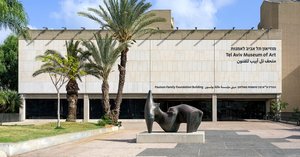
Tel Aviv Museum of Art, Tel AvivTel Aviv Museum of Art Tel Aviv 1 Six Fish and Bird
Metropolitan Museum of Art, Nova YorkMetropolitan Museum of Art Nova York 1 Portrait of a Man
Des Moines Art Center, Des MoinesDes Moines Art Center Des Moines 1 The Villager with Close-Cropped Hair

Jean Dubuffet decade by decade: one standout piece each

Works per decade

Pick a decade to see its standout piece.

Your questions about Jean Dubuffet's paintings

Which Jean Dubuffet painting is the most famous?See the answer

Top of the list is Grand Maitre of the Outsider (1947). Right behind it: The Cow With The Subtle Nose (1954) and Monsieur Plume with Creases in his Trousers (Portrait of Henri Michaux) (1947).

How old was Jean Dubuffet when Grand Maitre of the Outsider was made?See the answer

46 years old. Jean Dubuffet was born in 1901, and Grand Maitre of the Outsider dates from 1947.

What are the 10 best-known Jean Dubuffet paintings?See the answer

Grand Maitre of the Outsider, The Cow With The Subtle Nose, Monsieur Plume with Creases in his Trousers (Portrait of Henri Michaux), Bodies of Women (Corps de dames), Grand jazz band, Place for Awakenings, Logologie, Head of a Girl from the Assemblages d'empreintes series, Verbal Agreement Six Figures and Arab palm trees. You'll find the year and the museum of each in the list above.

How many paintings did Jean Dubuffet create?See the answer

We have 441 works by Jean Dubuffet in our catalogue, dated 1919 to 1982.

Where can you see Jean Dubuffet's famous paintings?See the answer

You'll find most of them in Museu de Israel (Jerusalém), Art Institute of Chicago (Chicago) and Staatliche Kunsthalle Karlsruhe (Karlsruhe). The museum list above has the full breakdown.

When did Jean Dubuffet paint the best-known pieces?See the answer

In 1940s, more than any other time: 46 of the 100 pieces on this page date from then, Grand Maitre of the Outsider among them.

Which famous Jean Dubuffet paintings came first and last?See the answer

The earliest piece here is Landscape of Algeria (1919); the most recent is Scenic triplex (1982).

What subjects show up most in Jean Dubuffet's paintings?See the answer

Abstract figures (4), Men (3) and Human figures (3), out of the 100 pieces on this page.

What materials did Jean Dubuffet paint with most?See the answer

Oil On Canvas, used in 4 of the 100 pieces on this page.

What art movement was Jean Dubuffet part of?See the answer

Art brut, as you can see in the pieces on this page.

Which Jean Dubuffet pieces can you see at the Museu de Israel?See the answer

You can see 4 of the pieces on this page at the Museu de Israel, Jerusalém, including Logologie, (Turbulent) Texturologie XXXII (Texturologie XXXII (turbulente)) and Statue of a Shadow.

Getting to know Jean Dubuffet

Primeiros Anos, Família e Formação

Jean Philippe Arthur Dubuffet nasceu em 31 de julho de 1901, em Le Havre, França. Criado nos confortáveis limites da burguesia abastada, como filho de grandes comerciantes de vinho, sua infância foi marcada por uma estabilidade e prosperidade que serviam de pano de fundo para um contraste silencioso com os impulsos crus e refinados que, mais tarde, definiriam sua produção criativa. Seus primeiros anos em Le Havre foram moldados por essa segurança doméstica, antes que o chamado da capital o atraísse para um tipo de existência inteiramente diferente.

Em 1918, Dubuffet mudou-se para Paris com o objetivo de buscar formação formal na Académie Julian. Tratava-se de um ambiente definido pelas estruturas rígidas da tradição acadêmica, um cenário projetado para incutir os padrões polidos da época. No entanto, as restrições formais da instituição não o cativaram. Após apenas seis meses, ele optou por deixar a Academia, considerando os métodos prescritos do treinamento acadêmico algo desagradável. Essa rejeição precoce às normas pedagógicas estabelecidas sinalizou uma preferência fundamental pela exploração independente em detrimento da segurança de uma técnica sancionada.

O Desenvolvimento da Arte Bruta

A ruptura de Jean Dubuffet com as restrições formais da academia foi impulsionada por uma profunda insatisfação com o cenário artístico estabelecido de sua época. Ele percebia as instituições culturais predominantes como ambientes estéreis que sufocavam a genuína expressão humanística. Para ele, os padrões polidos da era eram apenas uma camada superficial que obscurecia os impulsos brutos e inalterados do espírito humano. Essa convicção o levou a buscar um modo de criação mais autêntico, um que existisse inteiramente fora do alcance da tradição acadêmica.

Para definir essa busca, ele inventou o termo art brut, ou arte bruta. Este conceito não era meramente uma preferência estilística, mas uma rejeição radical da ideia de que a arte exigisse treinamento formal ou validação social para possuir significado. Jean Dubuffet fascinou-se pelas obras espontâneas e diretas produzidas por aqueles que não foram tocados pelas convenções culturais, incluindo crianças, prisioneiros e pacientes psiquiátricos. Seu interesse residia na pureza da visão desses indivíduos, desprovida do peso da tradição ou do desejo de reconhecimento profissional.

Seu compromisso com essa filosofia foi além da mera observação. Em 1948, ele fundou a Compagnie de l’Art Brut para promover o estudo e a preservação dessas expressões indomadas. Através desta organização, ele buscou oferecer uma plataforma para o "outsider", garantindo que a energia refinada do criador não treinado fosse reconhecida como uma força vital na criatividade humana. Seus esforços ajudaram a deslocar o foco da perfeição polida dos salões para o poder visceral do impulso imediato.

Técnica e Estilo Artístico

A abordagem de Jean Dubuffet em relação à tela era definida por uma rejeição absoluta às superfícies lisas e polidas que eram tão favorecidas pela tradição acadêmica. Durante as décadas de 1940 e 1950, sua obra assumiu uma presença pesada e tátil, quase visceral. Ele buscava transcender a mera representação ao criar superfícies densas e trabalhadas materialmente, que exigiam uma atenção física do espectador. Para alcançar esse efeito, ele recorreu à própria terra, incorporando substâncias não convencionais como areia, cascalho, asfalto, lama e pó de carvão em suas tintas. Essas adições transformaram o meio pictórico, que deixou de ser um simples pigmento para se tornar uma substância granulada e escultural, que espelhava as texturas brutas do mundo físico.

Essa preocupação obsessiva com a textura acabou dando lugar a um tipo diferente de linguagem visual. Em 1962, um rabisco casual feito durante uma conversa telefônica desencadeou o desenvolvimento do estilo Hourloupe. Este período marcou um afastamento do impasto espesso de seus anos anteriores, movendo-se, em vez disso, em direção a uma estética mais gráfica e estrutural. O ciclo Hourloupe é caracterizado por formas planas e interconectadas que parecem tecer-se umas nas outras. Essas formas são definidas por contornos pretos marcantes, criando uma sensação de complexidade espacial que parece, ao mesmo tempo, arquitetônica e espontânea.

Obras-Chave e Grandes Comissões

A evolução de sua linguagem visual é marcada por uma transição profunda, partindo do instinto primordial em direção ao rigor estrutural. Em 1943, Jean Dubuffet produziu Six Fish and Bird, uma obra que reflete seu compromisso inicial com a energia bruta e visceral do "outsider". Com o passar dos anos, seu foco transformou-se, migrando para as formas mais gráficas e simplificadas que vemos em Figure in Red (Personnage au costume rouge), de 1961. Esta litografia utiliza uma cor única e audaciosa para apresentar uma figura que encarna a essência inquietante e despojada de suas explorações de meio de carreira.

Seus anos tardios testemunharam um movimento em direção ao público e ao monumental. Em 1972, ele concluiu Group of Four Trees, uma escultura abstrata para espaços abertos. Esta obra foi uma comissão do banqueiro americano David Rockefeller para uma praça pública em Manhattan, representando um afastamento de suas texturas densas anteriores em favor do estilo Hourloupe. Esta abordagem utilizava linhas pretas nítidas para formar células entrelaçadas, um método que ele desenvolveu a partir de rabiscos casuais feitos durante uma conversa telefônica. Tais esculturas foram concebidas para serem apreciadas como desenhos expandidos para o espaço tridimensional.

  • Six Fish and Bird (1943)
  • Figure in Red (Personnage au costume rouge) (1961)
  • Group of Four Trees (1972)

Sucesso Internacional e Reconhecimento

O ímpeto de sua carreira sofreu uma mudança significativa em meados da década de 1940. Após sua primeira exposição individual na Galerie René Drouin, em Paris, em 1944, sua presença começou a se estender para além da capital francesa. Já em 1947, a Pierre Matisse Gallery proporcionou-lhe sua primeira mostra individual em Nova York, introduzindo sua abordagem não convencional ao mercado de arte americano. Este período marcou uma transição de um movimento localizado para uma presença que comandava atenção do outro lado do Atlântico.

Seu envolvimento com os Estados Unidos aprofundou-se quando viveu em Nova York, entre 1951 e 1952. Esta residência permitiu uma conexão mais estreita com a cena internacional, consolidando ainda mais sua reputação fora da Europa. O reconhecimento de sua visão em constante evolução continuou ao longo da década, culminando em uma retrospectiva de sua obra no Cercle Volney, em 1954. Esses anos o estabeleceram como uma figura de interesse significativo tanto para colecionadores quanto para instituições.

Legado e Influência Artística

O impacto de Jean Dubuffet na paisagem visual está profundamente enraizado em sua rejeição ao polimento acadêmico. Ao defender o conceito de Art Brut, ele redirecionou o olhar do mundo da arte para as expressões não refinadas de crianças, prisioneiros e pessoas com transtornos mentais. Essa busca por uma abordagem mais autêntica e humanística na criação de imagens estabeleceu uma ponte entre as tradições estruturadas da École de Paris e a energia bruta e indomada do "outsider". Ele buscou encontrar a verdade no que é puro e inalterado, afastando-se dos refinamentos estéreis das instituições estabelecidas para abraçar uma forma de criação muito mais visceral.

Sua influência persiste através de uma abordagem radical em relação à materialidade. Ao incorporar areia, cascalho e pó de carvão em suas telas, ele desafiou os limites do que constitui uma pintura. Essas técnicas não convencionais transformaram a superfície em uma presença tátil e física. Essa disposição para experimentar com a aspereza da vida cotidiana continua a servir de modelo para artistas que buscam contornar os padrões tradicionais de beleza em favor de algo mais primordial.

  • Group of Four Trees (1972)
  • Figure in Red (1961)

Anos Finais e Morte

As últimas décadas da vida de Jean Dubuffet foram marcadas por uma produção contínua e prolífica, que serviu como uma ponte entre suas raízes europeias e sua presença significativa na América. Ele permaneceu como uma figura constante no circuito de exposições internacionais, apresentando suas visões em constante evolução para públicos diversos em ambos os continentes. Sua capacidade de manter um nível tão elevado de produção garantiu que sua presença no cenário da arte contemporânea permanecesse sólida e inegável até seus dias finais.

Em seus anos tardios, seu foco deslocou-se em direção ao espacial e ao monumental. Este período testemunhou sua transição para além da tela, passando a dialogar com o ambiente por meio de obras de grande escala. Seu estilo Hourloupe, que surgiu de um rabisco casual durante uma conversa telefônica, deu origem a projetos arquitetônicos e escultóricos significativos. Essas obras, caracterizadas por formas que se entrelaçam e contornos pretos marcantes, transformaram seus experimentos bidimensionais em realidades tridimensionais que ocuparam espaços públicos.

Jean Dubuffet faleceu em Paris, em 12 de maio de 1985. Ele deixou para trás um corpo de trabalho que desafiou fundamentalmente os limites do que era considerado aceitável para as belas artes. Seu compromisso com o bruto e o não refinado permaneceu como o pilar central de sua identidade criativa até o seu último suspiro.

All 441 works by Jean Dubuffet →